11479
Mikhail Kostrov. "I like to love people"
Anatoly Golubovsky
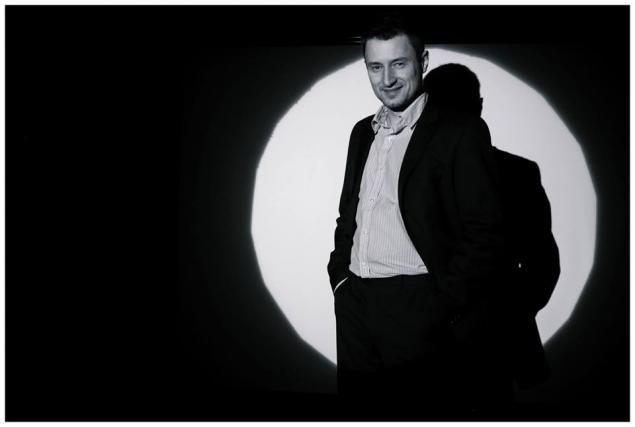
Mikhail Kostrov is a director, artistic director of the Black Square studio, a business coach and just an interesting and mysterious personality. In a year of regular communication, I can't say that I recognized him.
- Misha, let's start from the origins. How did you, a boy with a bright sports future, and even in such a turbulent time as the mid-nineties, get into the theater?
- It's very simple. My closest friend, with whom I have been friends since school, signed up for a pantomime theater, and I was late. And for some reason, I really wanted to go to the theater. Maybe because in the pioneer camp, as a child, Cipollino played some other fairy-tale characters... And so I was riding a tram, I saw an announcement - "Recruitment to the theater studio. Training is free. Shevchenenko Boulevard, 27. Third floor. Audition at that time." Small business cards. Anatoly Nikolayevich (Neelov, the founder of the Black Square Theater) may have preserved them. At that time, every summer, these cards were pasted all over Kyiv. They glued it everywhere - in the entrances, trams. PVA ads were flooded, it was impossible to tear them off, many hung for years. Perhaps even now they are hanging somewhere. Where repairs have not been done for a long time.
I saw, remembered, came. I passed the interview. I came to the exam. Passed. He passed disgustingly. Everyone was against my enrollment. But Neelov took me. With the wording "for sincerity".
I can say that with this decision he changed my whole life. For which I will always be infinitely grateful to him. He gave me a chance, which I used 200%. If we talk about why he did this... He is a man of great wisdom and tremendous life experience. He sees people very subtly, knows how to predict their growth. I have a lot of evidence of this.
In general, I was very lucky that I passed the exam for him, and not for myself. I wouldn't have taken myself then! :)
- Well, there are legends about Neelov's vision. As for the experience, did he have it at the time of your admission?
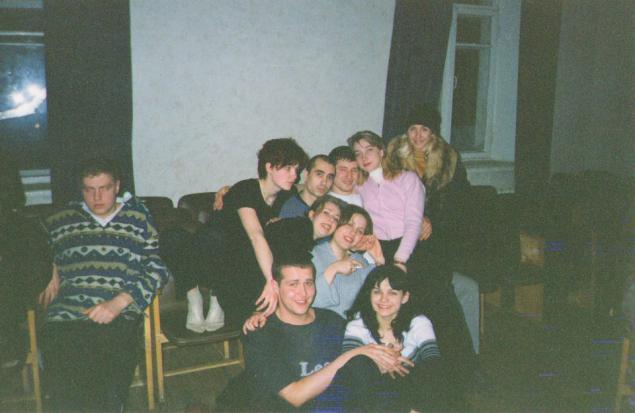
- First of all, it's not for us to judge. And, secondly... I entered in 1995. The studio had existed since 1991, that is, by that time it had already been four years. And, so that you understand, now 100-150 people come to the exam, and then from three to five thousand people watched it over the summer. People had less money, but more time. And there was no Internet. People were looking for something to do outside the mass media. What happened then? Five TV channels, video salons - and that's it. So, the theater studio was cool and interesting.
-Convincingly. You said that the theater studio radically changed your life. What do you think would have awaited you without the theater?
-I don't know. I don't like the subjunctive mood.
- I think so. Why did you choose Canada for further study?
- It's very simple. I have a sister there.
- You lived in Canada for five or six years
-Six.
- There you participated in the productions of Olga Shvedova.
-Yes. I played John in the play "Judas Iscariot". This is a very famous performance. She staged it in Canada. I played in Chekhov's stories and in something else, the name of which I don't remember because of the passage of time.
- That is, you were quite actively involved in the productions. Why, then, did he return?
- There are a lot of reasons. But, firstly, at that time it was better with work here. And it's still better. No matter how strange it may sound to people who think that if they swim across the ocean, then rivers of milk and jelly shores await them there. In general, in my specialty - directing, film directing, teaching, training - there is much more work here.
Secondly, Black Square at that time was just beginning to reach the level at which it is now. In 2006, there were no halls on Artem Street - there was only Shevchenko Boulevard. There was nothing, but it was going to be. And it was very interesting to participate in this to the best of my modest strength and capabilities.
- Are you internally more of a director or a coach, a teacher?
It's like asking, "You're more of a husband or a manager." These are completely different roles. They cannot be compared.
- Because they are in different spheres. I asked you about your professional skills, your husband is more related to the social sphere.
- I don't agree with you. I believe that "husband" and "wife" are professions. And everything else – love, sex – can be quite possible without a family. But if people get married, they must understand that "husband", "wife", "father", "mother" is a profession that involves a number of knowledge and responsibilities that are not related to love, sex and so on. And people of the XIX century understood this perfectly. But this is a separate topic. Therefore, I do not measure "who am more". When I am with students, I am a teacher. With top managers - a business coach, I shoot a film - a film director, in the theater - a theater director, I edit - an editor director. And in each role, I think and communicate with my colleagues in completely different ways. When I'm an actor, I don't direct. I'm an obedient :)
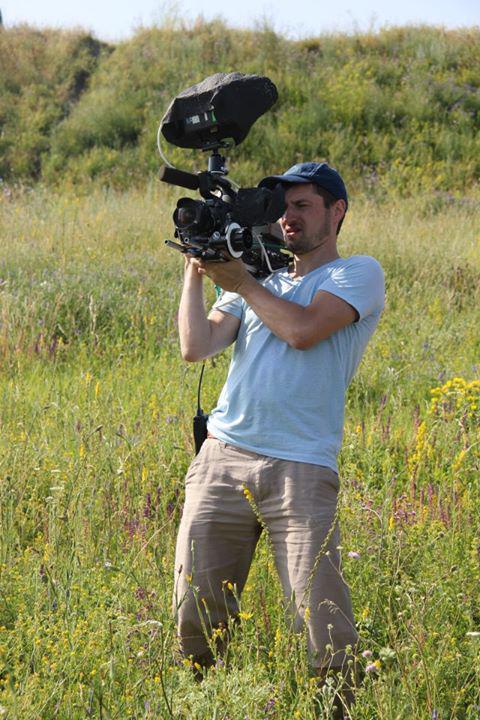
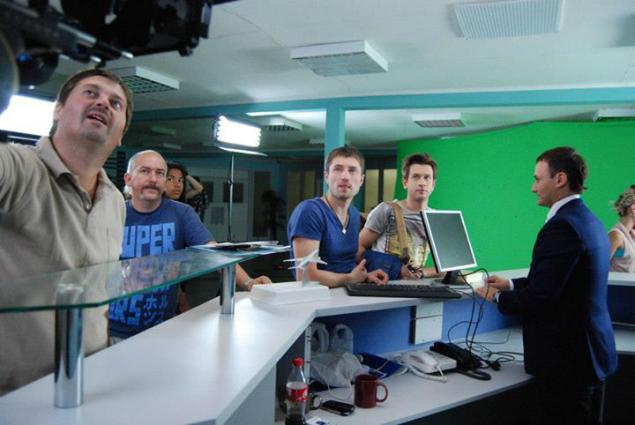
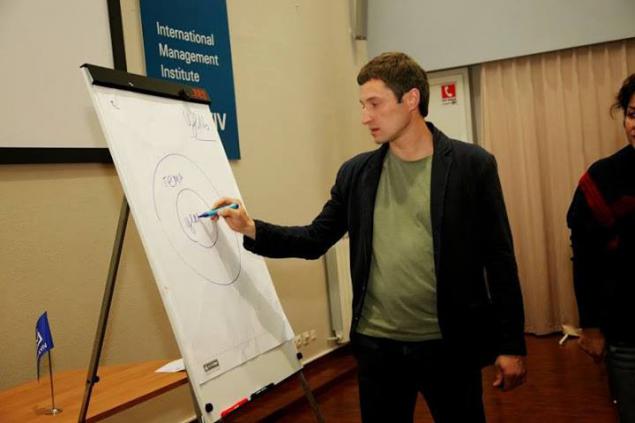
- Once, in class, when you were puffed up and your patience was exhausted, you said in your hearts that you could sit quietly in the studio and edit films for four tanks a month. And not to have all this headache with poorly trained students. But, apparently, you get a buzz from this headache?
Well, of course I like it. You can say anything in your hearts. And in general, you don't need to believe everything I say. Not because I'm not telling the truth, but because it's all very situational. At that moment, I thought so. And now I don't think so. I am a man of the situation.
- That is, in any situation you can play "the other you"?
- Not exactly. The question is in the situation and in the need.
- In the short film "Lunch Break" you have a very interesting acting job. Although in the classroom you have repeatedly emphasized that you are still more of a director.
- Perhaps a few years ago I had the right to some one-sidedness. :) But there is some development. Therefore, now my past is not relevant. Now I am anyone: an actor, a director, an artistic director of the studio, a teacher, and a business coach. At the right moment, you switch and develop in parallel in several specializations.
- In the short films "Children", and another one with Lena Kostrova and Anatoly Neelov, unfortunately, I could not find it now - the topics are necessary and deep, but quite difficult.
- This is a visible weight. People make the material heavy, the viewer. When we evaluate something, we, willingly or unwillingly, choose how to relate to it. You can treat yourself within your own stereotypes – cry, say "ugh, what an abomination", or you can move away. And consider the material. To go beyond your own "I". Maybe look at the material through the eyes of another person. Find something new for yourself in it. But, since it takes effort, then... So the topic is made difficult by the viewer. The director, most often, does not feel this heaviness.
- Well, I don't know. "Come and See" and "The Diamond Arm" will still be perceived differently. And the depth of the questions raised in the first does not negate its gravity.
-Of course. But this is a statement. What is the question?
- The question is - why are you raising these topics? Do you want to "pull" this problem to the surface?
-No. I'm investigating. I like to explore.
-Got it. Tell me, please, do you see and understand people well?
-No.
- Do you often make mistakes?
- I do not keep statistics of mistakes and successes. I'm not interested. But sometimes I am wrong. Like everyone else. Man is generally unknowable. Therefore, it is interesting to study it.
- Do you easily change your opinion about a person if you realize that you have made a mistake in your assessment?
-Of course. Both for good and for bad. This is sensible. You must be adequate to the situation.
- You don't like to participate in theatrical "graters". You consciously distance yourself. Isn't this a kind of self-withdrawal from an objective assessment of the situation and people? To avoid cognitive dissonance.
- Why do I need this? This is all unnecessary information. Firstly, most often these are absolutely pointless conversations. And, secondly, I prefer to think better about people. Very often, after observing the behavior and statements of a person, you realize that he did not leave you a chance to think well of him. Therefore, I try not to overload my brain with unnecessary information.
-In 2008, you won the Grand Prix of the Mobile Film Competition for the short film Signs.
- They are still trying to interview me about this. For me, this is strange and I don't see any point in it.
- Don't you see the point in the interview or does the very mention of the film now cause irritation?
- The film is cool. Recently, during an interview at the First National, I was asked to include it. I watched it, it is short - 3 minutes. It is good, still relevant. And the name "Signs" is correct, more accurate than the Russian "Inscriptions", since in English this word has a double meaning. A successful film. Lightweight, looks good. I shot it, in general, more for myself than for the competition. A competition is just a reason.
- You filmed it on your mobile phone. And he said in an interview that, in general, it doesn't matter what you shoot. What matters is that. Probably, how and for whom. That is, whether you do it for yourself.
-Of course. By and large, everything should be done first of all for yourself. Especially when you do something for others, you must feel an acute desire to spend yourself for the sake of these people.
- What would you like to shoot?
- I don't like such questions. This is very abstract. We need specifics.
-Ok. Tomorrow you are invited to Hollywood, offered a million-dollar fee, but they say to act from here to now. Nothing can be changed.
- It's very simple. Or you make a unique product, taking responsibility for all aspects of its uniqueness and no one dictates anything to you. That is, you are responsible both as a director and as an author, for absolutely all creative aspects and therefore you do everything as you see fit (within budget).
If you don't dictate the terms, then you have to dictate the prices. Because you, de facto, are hired not as a director, but as a director. It is clear that producers – general, executive, creative, etc. – are responsible for various qualities of the product and its artistic features, but in this case you are a semi-director. Because directing is an absolute profession.
And if in the first case you can work for a purely symbolic fee, then in the second - only for a high one.
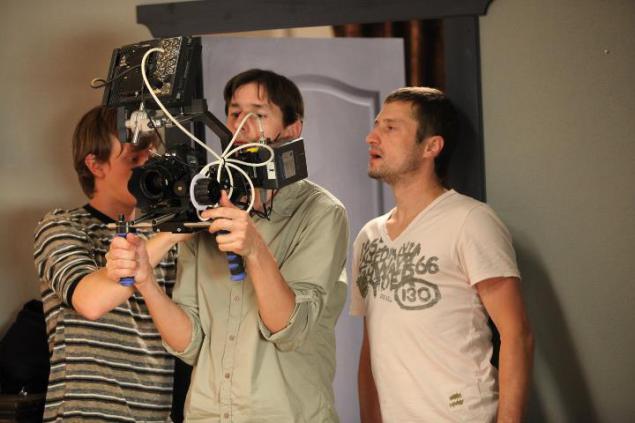
- Once in class you said that you don't understand how you can tolerate a person next to you who bothers you, you don't need them. And that you yourself can make it so that literally tomorrow he will not be in your life. Is it really so?
- I part with people very easily.
- I do not mean a breakup for objective reasons - a person has gone somewhere or the spheres of interest have gradually diverged, but namely the power option. To put it simply: "disappear from my life"
- Well, why so rude. There are much milder options. You can just stop communicating. The point is not that this person is "Doctor Evil". The most common situation in life is when a person seems to be pleasant, and you treat him well. He is just wonderful, but there is nothing new, interesting, communication with him does not bring you. Therefore, I don't want to waste time, and it's embarrassing to talk about it directly. Therefore, you just stop communicating. Time is an irreplaceable resource.
-Hmm. Then I understood it in a completely different way. Have you ever kicked someone out of your band in the studio?
- Very rarely. This was due to three things: disciplinary, intrapersonal (when I realize that the person is sick or inadequate) and technical, when the person does not accept me and my teaching methods. In such cases, I advised a teacher who would suit this person according to his psychological type and expectations. I think this is right.
- Is conducting trainings with commercial structures interesting from a material point of view, or does it allow you to develop some facet of your personality?
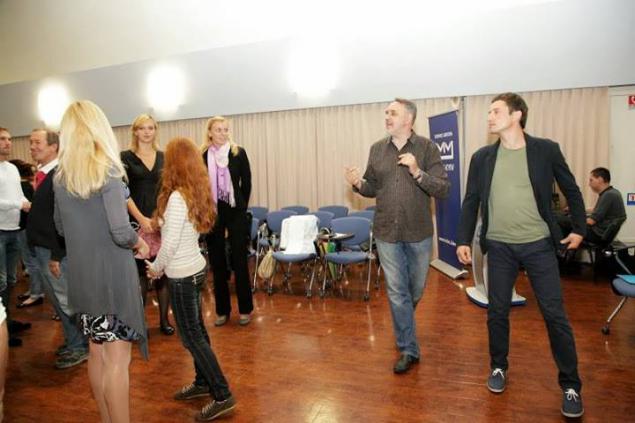
- Thank God, in my life, the material aspect is not decisive in anything. Money cannot be the goal at all. Just a resource. Business training is a challenge that allows you to once again test the effectiveness of the system. Training is always a very limited time. It's a day or two. Three at most. And sometimes for several hours. And during this time, people need to be trained. Now, as a business coach, I have such a level when I do it easily and effectively. The system is great. It includes only effective techniques and exercises, there is nothing superfluous.
All the coaches of the Black Square are in demand. We are hired by large, international companies, business schools. They say that "the viewer votes with the ruble." So, corporations and companies are doubly so. Because our work brings concrete results and allows us to improve the efficiency of work and the quality of life of people. For me, this is the biggest incentive. I like to do it. I like to love people. It motivates me.
- A traditional question. Immediate plans.
- To develop a school-studio. We are growing. Every year, the effectiveness of training improves. We want to train more people and do it better. So that the number of great actors, the number of hit performances grows. At the beginning of summer, ten people graduated. At least since my "B" course. This is out of about 200 who came to study. It would seem not much. But these are completely unique, absolutely original actors. There are no other such people anywhere else. They can play everywhere - in the cinema, in the theater. I would like the quality to constantly increase. Moreover, unlike the theater institute, we do not have the task of graduating 40 people a year. Less is better. They will be more valuable.
- However, Anatoly Nikolaevich spurs on - let's do more, there is no one to play.
-Yes. But the quality of the acting is what the theater stands on. So we'd better release 10, next 5 more. And they will not look like anyone else. Like Slava Nikonorov, Masha Krushinskaya, Dima Basiy, the Golovanovs, Alexei Kurilko, Lena Vakhrameyeva and many others. Our artists are the embodiment of the method of improvisation, they embody the idea, infect the audience with the invisible magic that makes our theater unique. When you leave the performance, and you remember these faces, the reactions, which are not carbon copies, very free, easy... The lightness of being, the joy of life returns. The world is getting better.
- Thank you and see you in class
-See you.