1760
Fire Museum
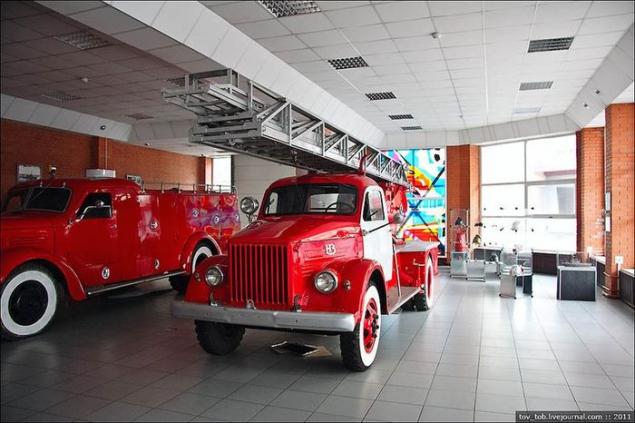
Author: Few know that the biggest part of the fire in Europe is located in Kiev. In general, then, this delights and end, as equipment parts, as usual, had long been the most advanced and well-known problem of shortage of fire stations in Kiev every year becomes more and more urgent. No, I'm wrong in this firehouse is another definite plus: the museum of fire equipment. Exhibits there are relatively few, but what is available, very well reflects all the stages of development of fire business in Kiev, and to get acquainted with the historical fire equipment can not only photos, but also in the scale of 1: 1 in the form of real samples. < br />
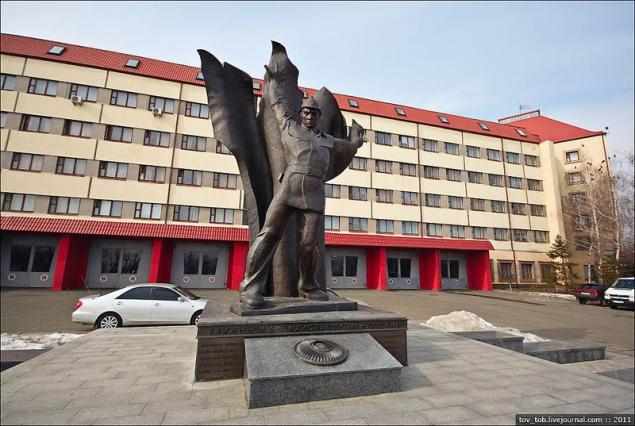
1. 25th fire station in Obolon was built simultaneously with the housing estate in the late 70s of the last century.
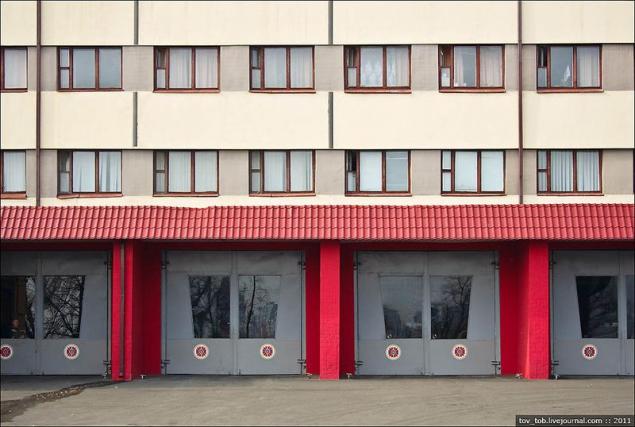
2. In the territory of the well arranged summer and winter sports facilities, where training of personnel in all of the Kiev garrison, as well as international competitions.
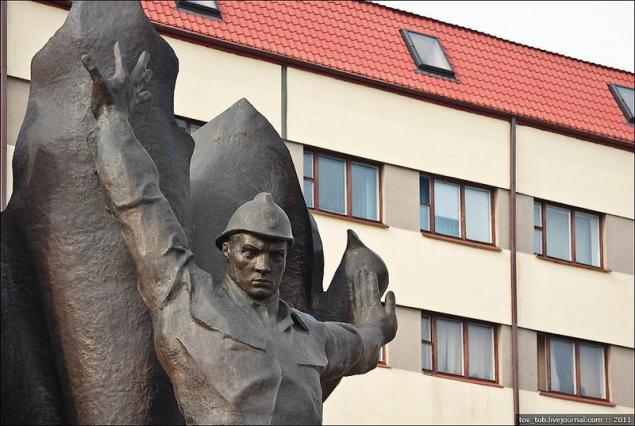
3. 4,048,874
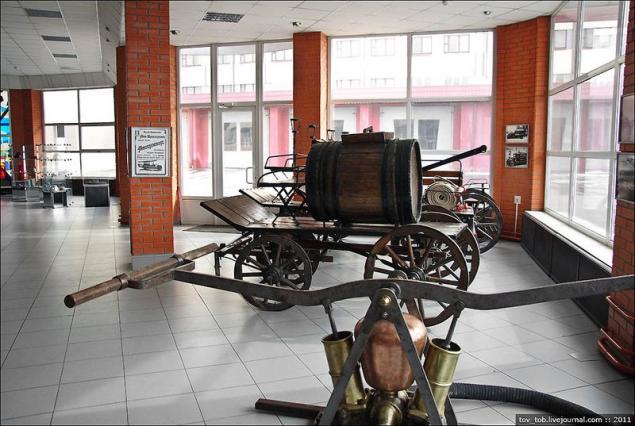
4. The museum is quite small. It was opened in early 2004, 12,120,975
5. The museum's exhibits provide an opportunity to understand how the fire fighting equipment looked for the last 120 years. Some of the exhibits have "twins" and consisted exclusively in service in Kiev garrison. By the way, all of the cars restored and operational.
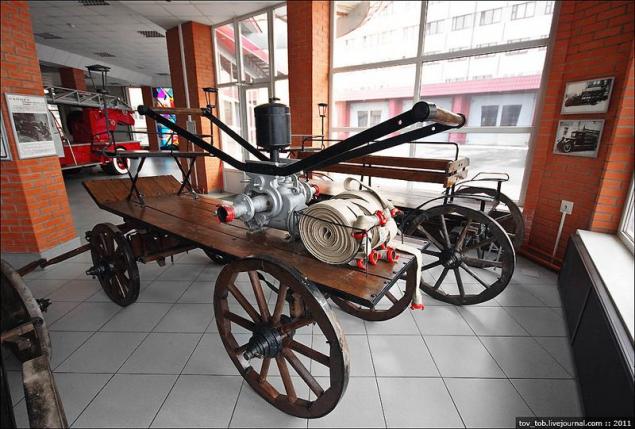
6. The problem of extinguishing fires occurred a long time ago. While many buildings were made of wood, it was particularly acute because originally a small fire could easily destroy half the city. Kiev is not an exception and has suffered several severe fires, including one of the most famous - a fire in 1811 at the hem. It was after this fire significantly increased attention to the problem and soon appeared in the city of the first fire. The first fire technique was straightforward: a few carts, harnessed horses. On the ground (pictured furthest) went firefighters and transported small tools: hooks, crowbars, etc. In subsequent transporting fire hoses, barrels with water and pump.
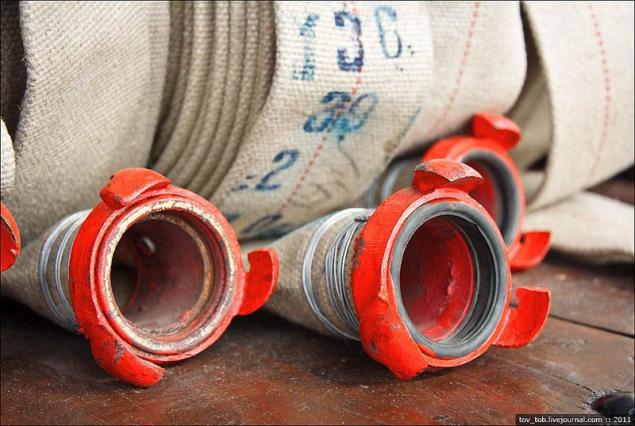
7. At that time, fire hoses were made of ordinary pieces of clothing, hence their name appeared.
8. 61,762,566
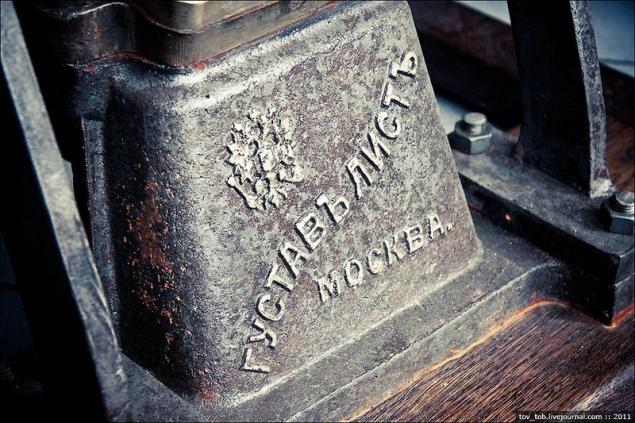
9. Hand Pump. For a long time he did not shake his ...
10.
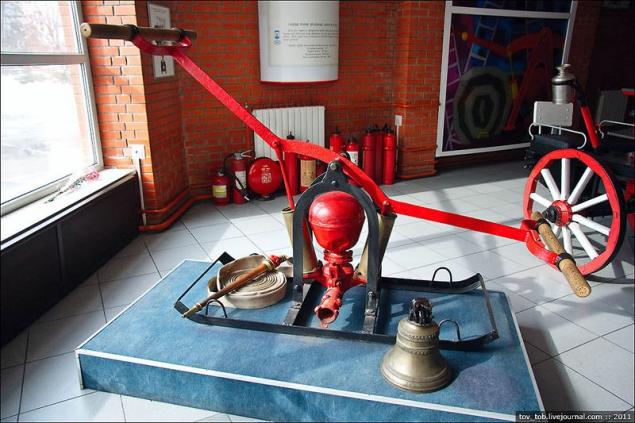
11. water injection brought several people who had to change constantly.

12.
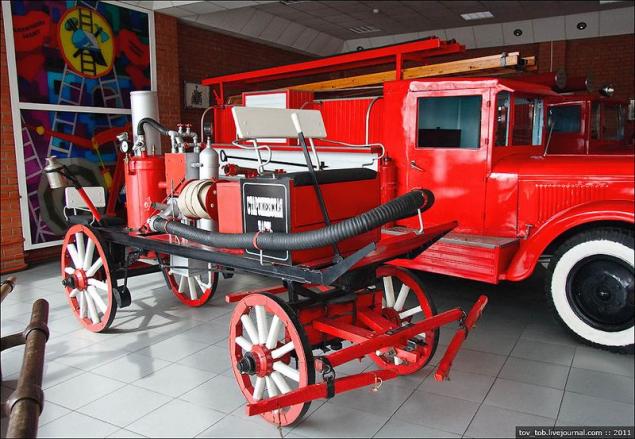
13. Subsequently, the hand pump was replaced by steam. This is not a fire engine because he was also a horse-drawn, but the performance of 1000 l / min - was obviously nicer manual labor. However, the pump was at least one significant flaw in the heating boiler required a lot of time - 15-20 minutes. Therefore, using this pump only large fires extinguished or burned if something very important. Existed for these pumps to about the 1920s.
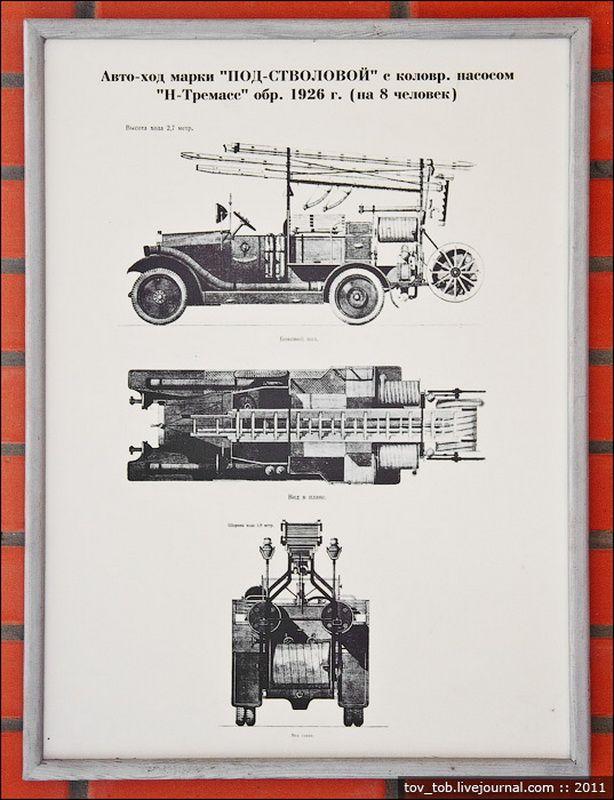
14. The first fire engine in Kiev appeared in 1913 on the chassis of the first "Mercedes". Vehicle to this day has not lived, and a rough idea of what had been the first fire engines are available for this photo. Firefighter car had a body "line". Fire brigade was located on the longitudinal benches backs to each other. Behind the fire was placed extension ladder in the pegs were boxes with fire tools, and installed in the rear of the pump and a fire hose reel.
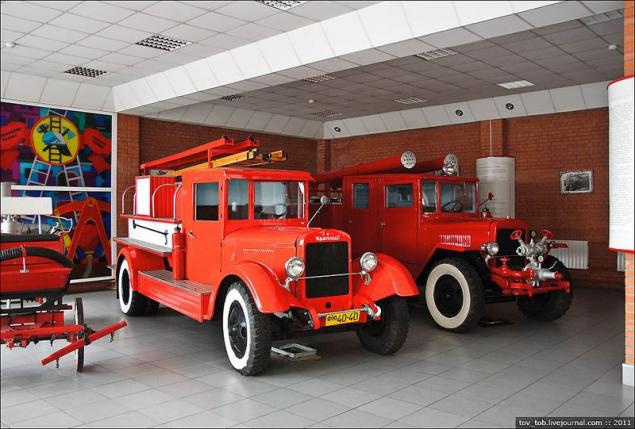
15. In the 20 years of the last century in USSR nachinachetsya domestic production of fire trucks on the basis of ZIS-5. In 1936, the first ZIS-5 was in Kiev garrison. Here the driver and the commander of the fire brigade were in the cabin windows, though the rest of the team is still along the boards on the outer seats. The most dangerous time of the year for the team was still winter, because water on the fire froze clothes that could cause the common cold and other illnesses.
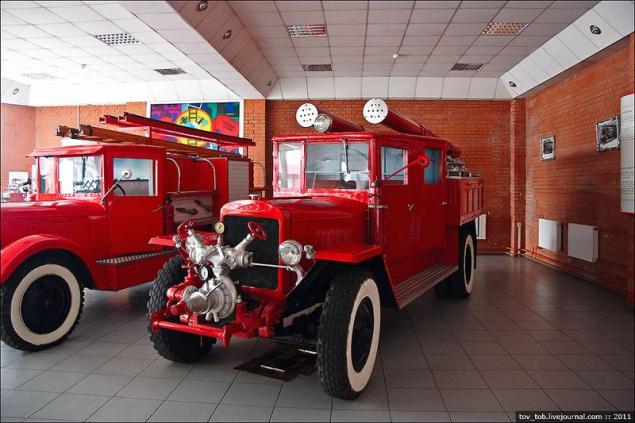
16. Modification of 1940 already had an extended cab, which put the whole team. The original was also placing the pump in front of the radiator grille. True winter it was a danger of freezing water in the pump.
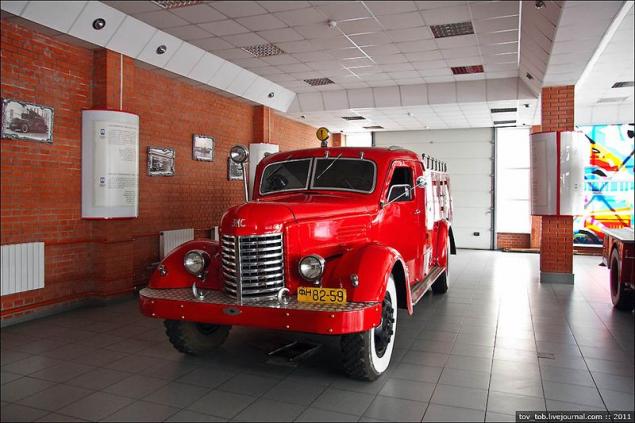
17. Another museum exhibit - ZIS-150. There were these machines by the fire in the 50-ies of the last century. Instance, located in the museum - difficult. This machine was transported exclusively fire hoses, which could fit inside a 100 pieces. Upon arrival at the fire hoses which are in special cassettes, unloaded with a special mechanism that will quickly increase the overall length of the sleeves up to a kilometer.
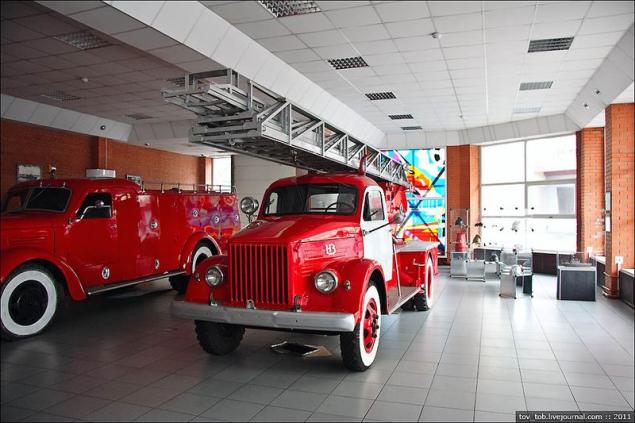
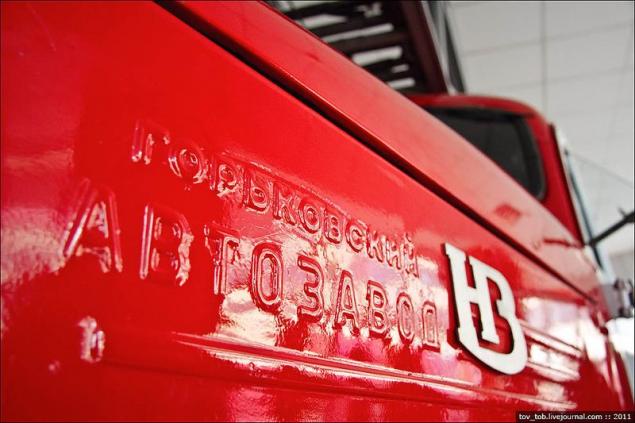
18. The last sample of large equipment - fire motor ladder chassis GAZ-51. Ladder here reaches a length of 17 meters, which was true in the period of mass construction of "Khrushchev" and virtually useless in our high-rise times.
19.
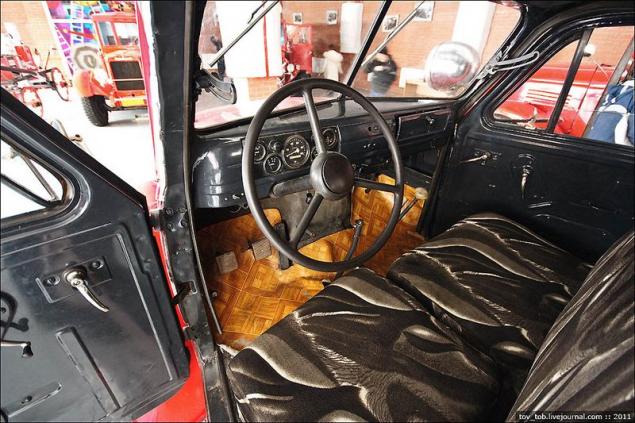
20. Cab GAZ-51:
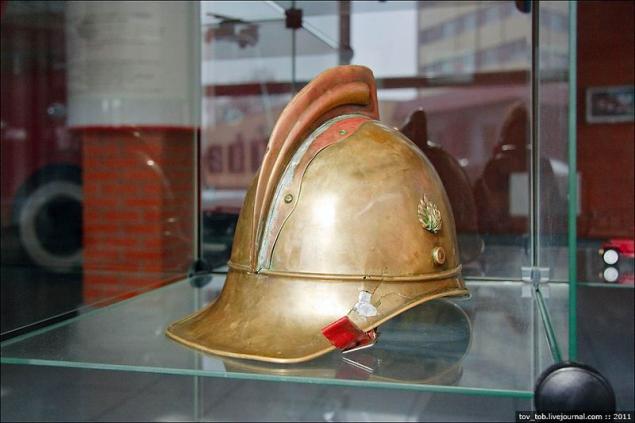
21. In large equipment, the museum can be found, and smaller exhibits. For example, helmets of different eras:
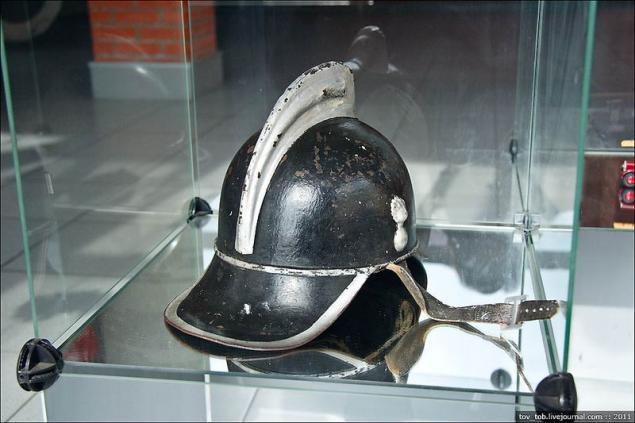
22.
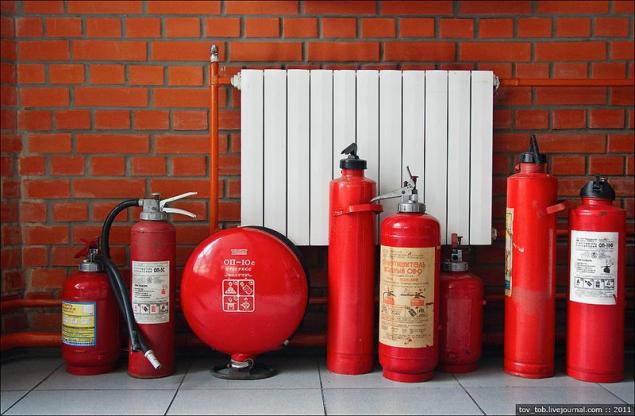
23. Familiar to all and not very familiar with fire extinguishers. By the way, mgsupgs yesterday published at the history of fire extinguishers.
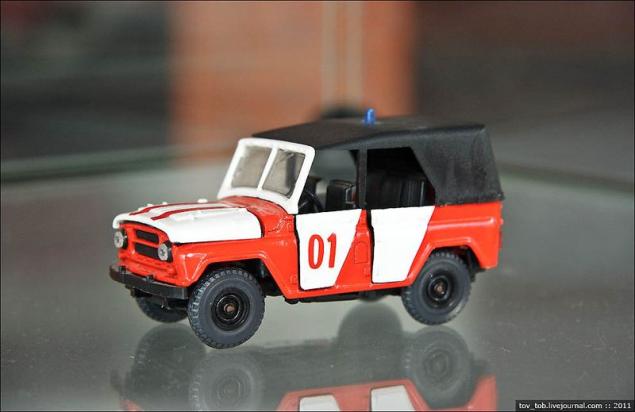
24. In the museum there is even a model


25. The model fire boats:
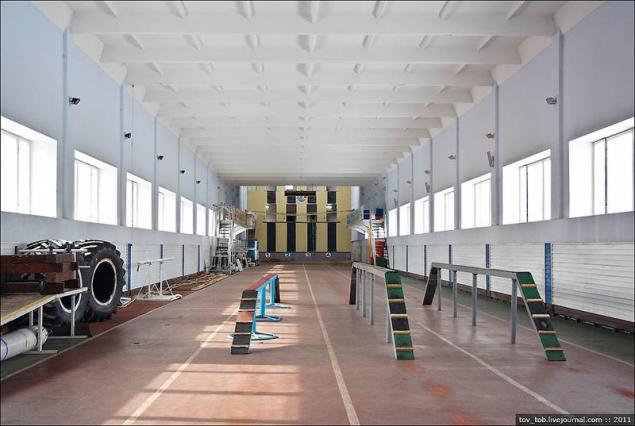
26. In fact the museum, you can also visit the training camp of the fire:
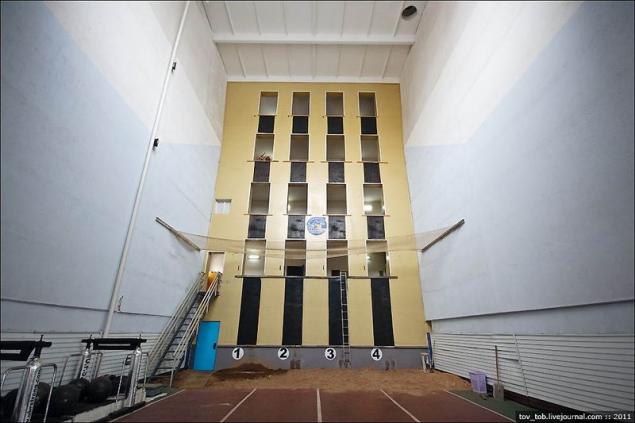
27. The most interesting thing here is in the end - the Assault staircase and several floors conditioned homes, which account for her to climb:
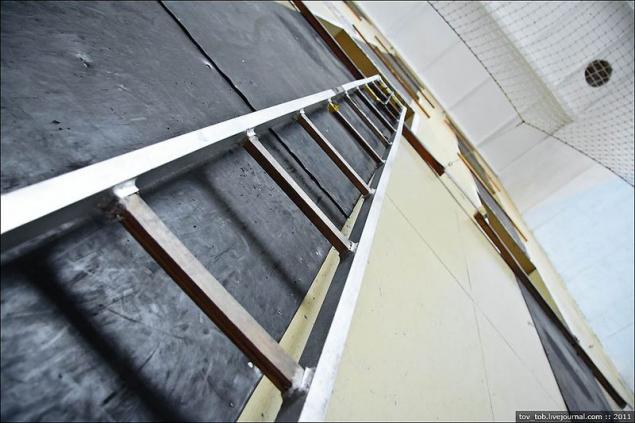
28. Staircase as a ladder, but very easy.
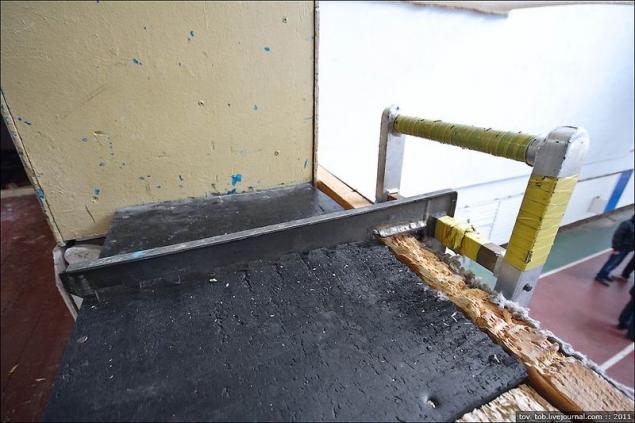
29. At the upper end of the ladder sticking pin, which splits the window on the next floor. Due to the teeth of the ladder securely enough in the window. He climbed the stairs to the next floor, picked up the stairs, broke a window, fixed on him the ladder and climb on.
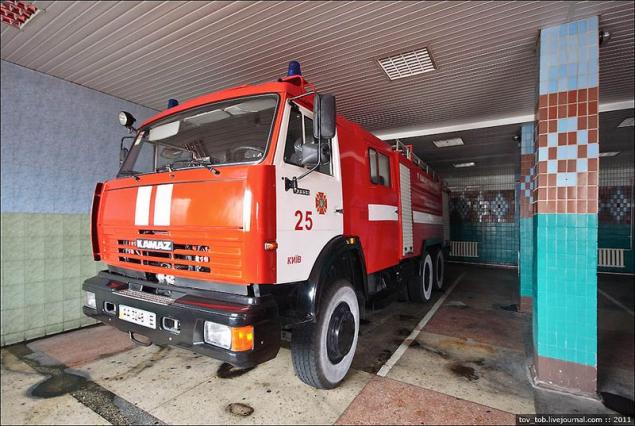
30. Let's look at itself and the fire department.
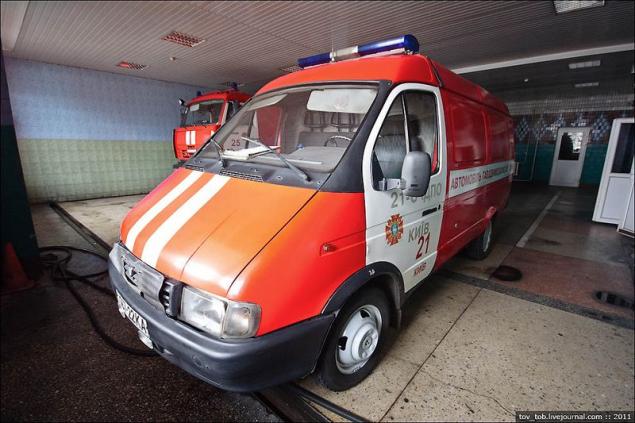
31. Car gazodymozaschitnoy service.

32.
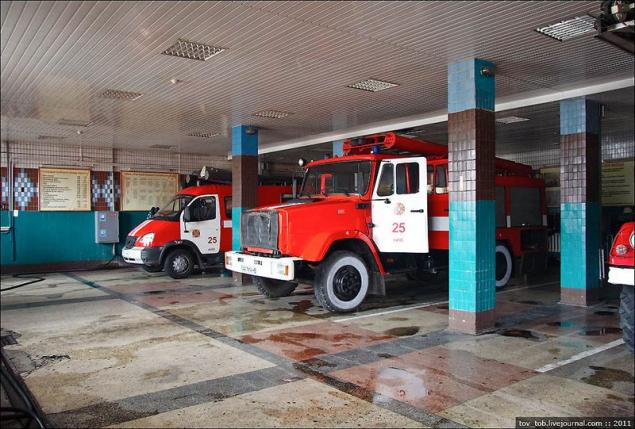
33. The main part of the art has long been obsolete ... 89,170,653
34. How to put out the house height of 30 floors or more - a problem which, I hope, Kiev still do not face.
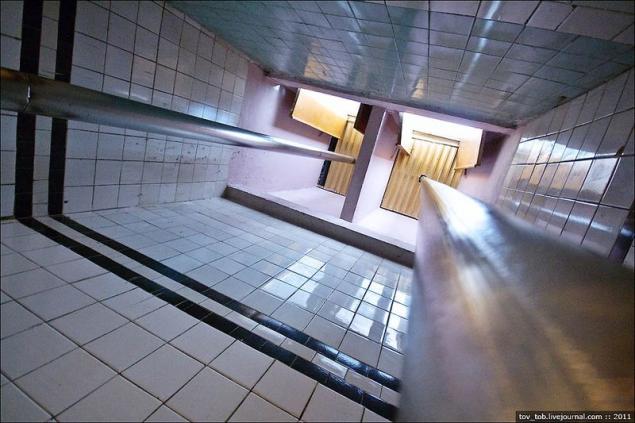
35.
36.
37. Finally, the famous pipes that descend fire alarm:
via source