9593
Underwater pyramids in Japan
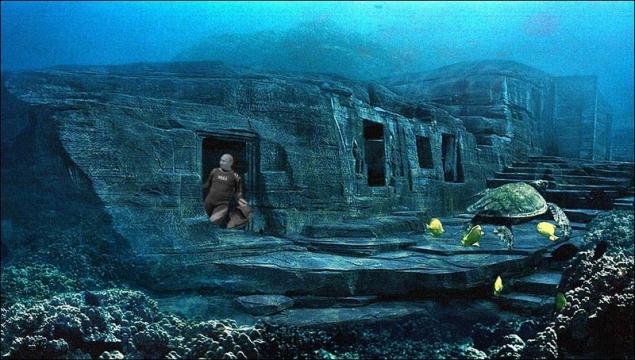
Yonaguni Island is located in western Japan. Yonaguni became famous in the mid-80s, when divers discovered mysterious rock terraces and pyramids with sharp corners underwater. There are still disputes, but no one knows what secrets the island holds. Scientists are inclined to believe that these pyramids were created artificially many millennia ago by an unknown civilization that disappeared from the face of the earth.
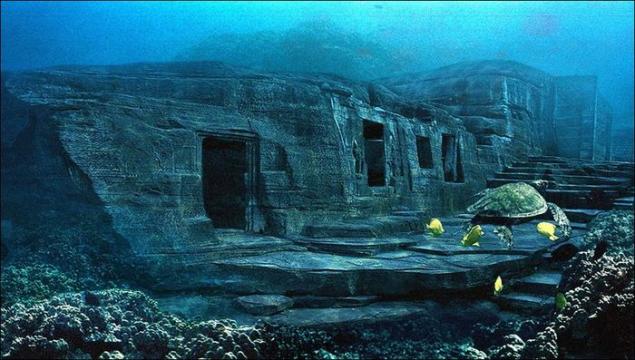
The mysterious underwater pyramids of Yonaguni Island off the coast of Japan are still controversial - is it a natural phenomenon, or a human creation? If the Yonaguni monument is man-made, it will radically change the history of mankind. The history of these underwater pyramids begins in 1986, when divers discovered an unusual formation of rocks at a depth of 25 meters underwater. These were rocks in the form of flat stepped terraces, pyramids and platforms. One of the tallest pyramids was 600 feet wide and 90 feet high.

Traces of processing and carving remained on the stone blocks, which confirms the theory of scientists that the Yonaguni monument is not a natural formation, but was created artificially. Masaki Kimura, a marine geologist at the University of Japan, has been studying underwater pyramids for more than 15 years. The scientist believes that this place is more than five thousand years old, but it was flooded 2 thousand years ago during an earthquake.
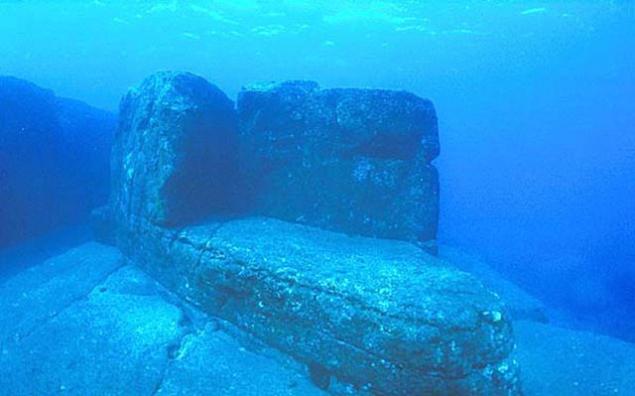
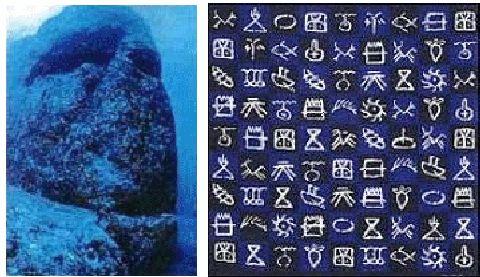
Other scientists believe that this structure is much older, including Terouaki Ishi, a professor of geology at the University of Tokyo. He determined that the terraces were submerged at the end of the last ice age, about 10,000 years ago. In this case, the Yonaguni pyramids are twice as old as the Egyptian pyramids. Interestingly, the number of artifacts found was about the same on land and underwater. Not far from the pyramids, a human head carved out of stone was found, on which many unknown hieroglyphs were carved. It is difficult to imagine that this is a natural formation.
The Japan Times added intrigue by publishing the legend of Yonaguni Island:
"There is a land of the Gods, called Nirai-Kanai, where the ancient gods live - this unknown distant place is the source of happiness for the whole world"
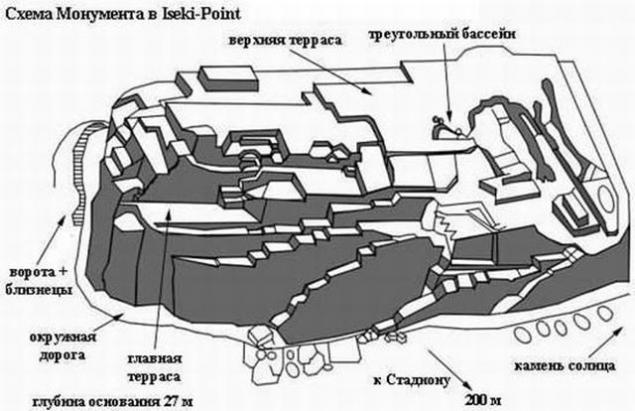
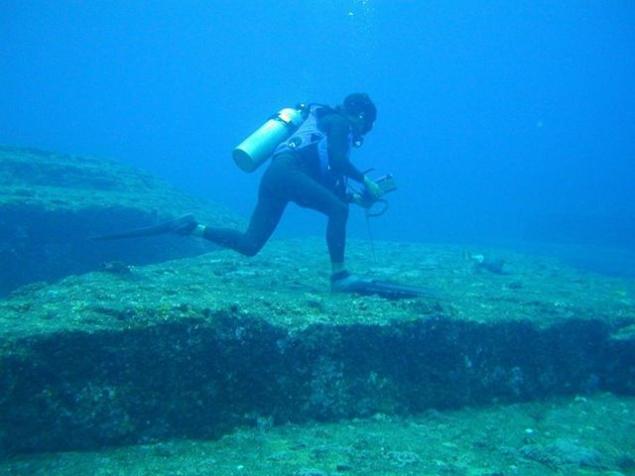
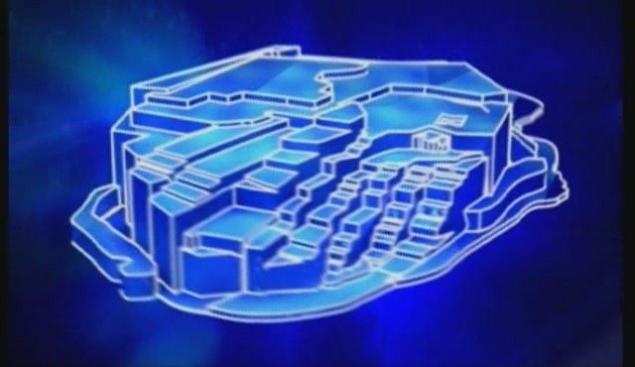
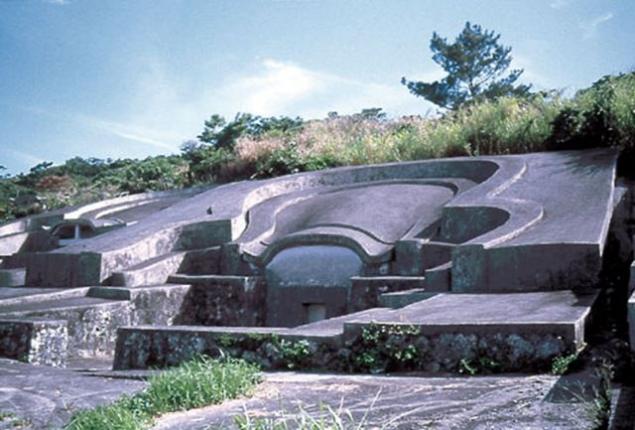
The opposite point of view was held by Robert Schoch, a professor of mathematics at Boston University. He believed that the pyramids of Yonaguni were formed naturally - this is how nature tried. According to him, this is natural tectonic activity, as evidenced by the photo below, which shows a similar formation on land, created by nature. There is also a possibility that the monument was formed naturally, but then was processed by people. Shoch held this opinion before he met Kimura. Kimura's arguments, more familiar with the monument's features, strongly influenced Shoch's opinion. Moreover, the arguments were supported by photographs of details that Schoch simply did not see during his dives, since he dived only a few times.

For all the similarities of the Yonaguni rocks, there are very strong differences between them. On a limited section of the Monument, elements of completely different types are very close to each other. For example: a face with sharp edges, round holes, a stepped descent, a perfectly straight narrow trench. If the reason was only natural erosion, then it would be logical to expect the same shapes throughout the entire piece of rock. The fact that such different elements are found side by side is a strong argument in favor of their artificial origin. Here is an example of one of such formations called the Turtle.

The next argument is that the blocks separated from the rock do not lie where they should fall under the influence of gravity. Instead, they are either collected in one place or absent altogether. If the object had been created by erosion, there would have been a lot of debris on the bottom next to it, like on the modern shores of the island. And this is not the case here.
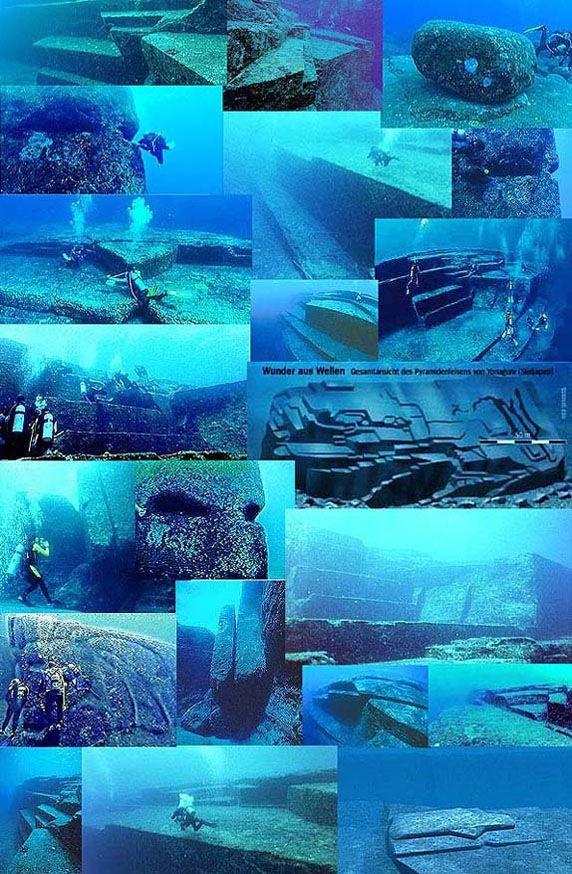
Moreover, very close, literally a few dozen meters away on the same rock made of the same rock, there is a radically different landscape. The fact that it was created by nature is indisputable. But even with the naked eye you can see its sharp difference from the processed part of the rock
The meeting of the two professional geologists was of literally epochal significance for the Yonaguni monument. If earlier Schoch adhered to the version of the natural nature of the object, then Kimura insisted on its completely artificial origin. As a result of taking into account all the available facts, both specialists agreed on a kind of "compromise", the two of them rejecting extreme points of view. They came to the conclusion that the Monument belongs to the so-called "terra formations", that is, the original natural "blank" was later changed and finalized by human hands. Such formations are not unusual, they were very common in the ancient world...
"After meeting Professor Kimura," Schoch later wrote, "I cannot completely rule out the possibility that the Yonaguni monument has been at least partially worked and altered by human hands. Professor Kimura pointed out a number of important elements that I did not see during my first, brief visit..."
However, the Yonaguni Monument has not been recognized by the Japanese government as a cultural heritage site that needs to be protected and preserved, although the existence of stone processing on the island has been proven. This is confirmed by the ancient catacombs of indeterminate age
Source: ruwhitejaguar.livejournal.com