28028
10 interesting facts about the giant anaconda
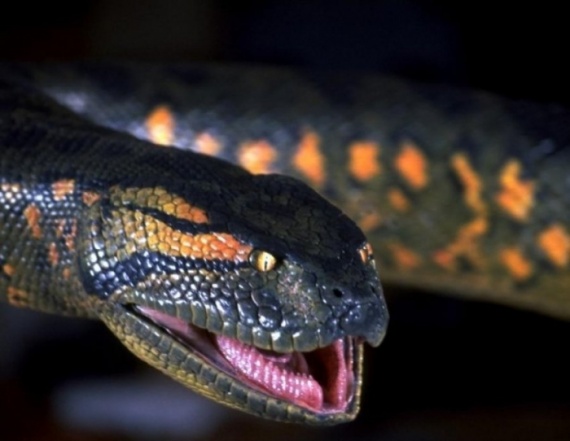
Snakes are unattractive creatures in themselves. Rarely do they cause sympathy and a desire to stroke them. In our latitudes, you are unlikely to meet someone larger than a viper or a grass snake. But traveling in the tropics, you have every chance to see the world's largest snake - a giant anaconda.
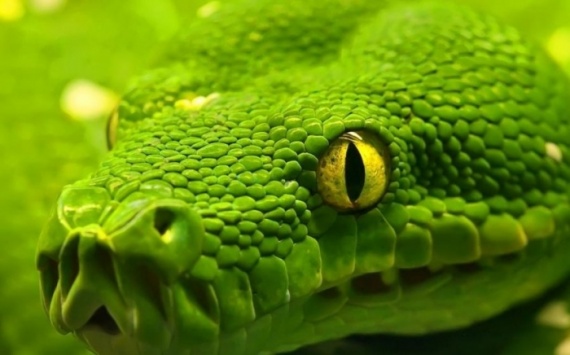
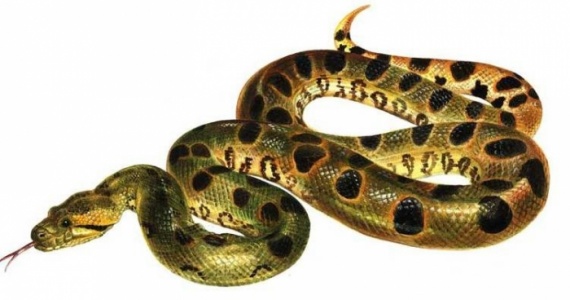
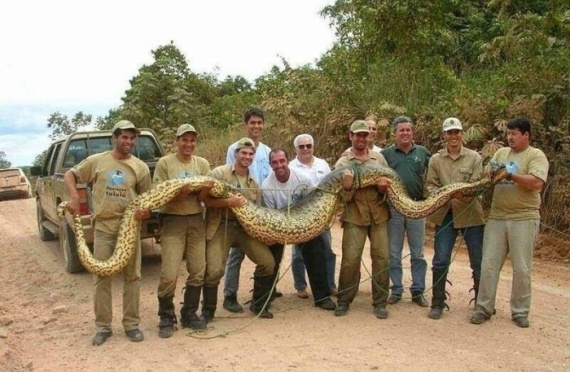
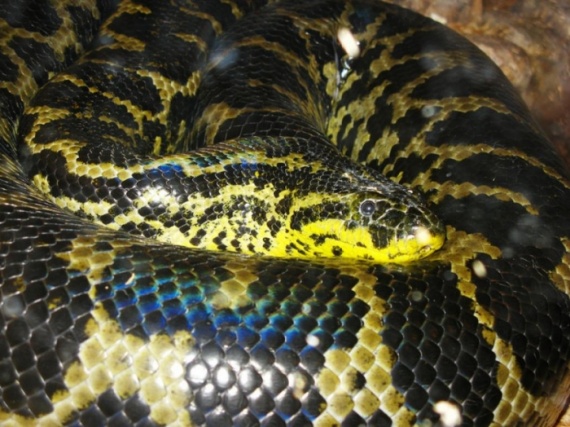
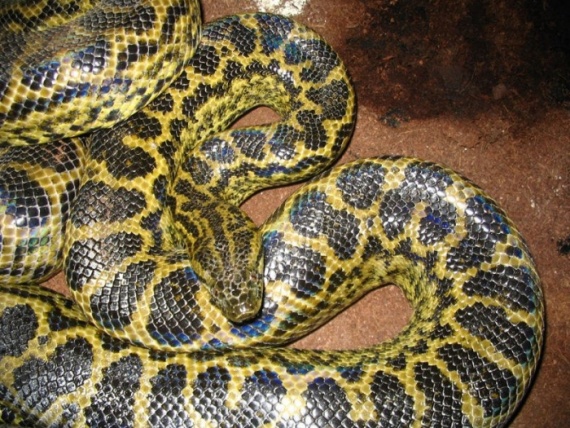
Let's start right away with the question that usually comes to everyone's mind first, about the length of the snake. On average, it is 5-6 meters. The longest of all the captured reptiles is considered to be the anaconda, almost eleven and a half meters long. It was not possible to keep this individual alive, but its length was officially registered. At the moment, the largest is a nine-meter snake living in the Zoological Society of New York. The weight of this smooth-skinned beauty is almost 130 kilograms. The color of anacondas is also quite unusual and very different from snakes of other species. It is mostly gray-green with two rows of large oblong brown spots arranged in a checkerboard pattern. On the sides there is a row of smaller yellow spots with black edging. This color perfectly masks the snake when it spends time in the bottom waters among fallen leaves and algae waiting for a new victim.
Snakes live in the tropical part of the Amazon in hard-to-reach places, so there is no accurate data on the number of anacondas.
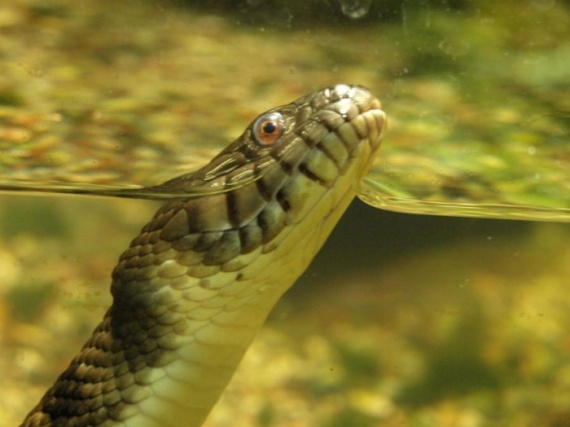
In old books on zoology, you can sometimes find the original name "water boa". Indeed, the anaconda belongs to one of the subspecies of boas and spends most of its time in the water. But now this subspecies has its own name - the giant anaconda.
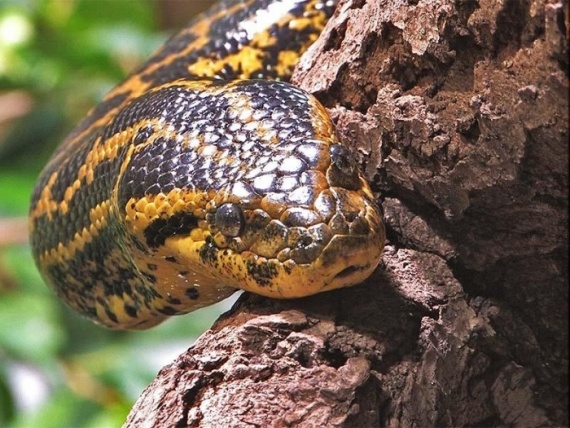
If the reservoir in which the giant anaconda lived has dried up and there is no other one nearby, then the snake buries itself in the wet silt and hibernates, which will last until the beginning of the rainy season. Anacondas cannot exist without water.
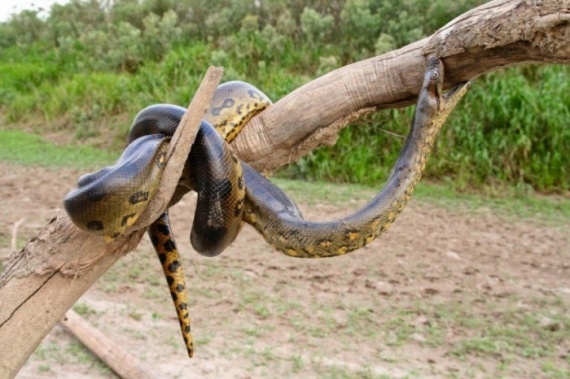
Even molting in this species takes place in water. The snake rubs against the river bottom and old snags, thereby pulling off the old cover.
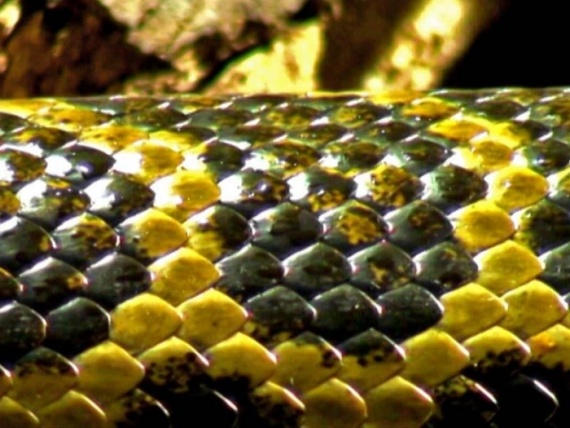
The anaconda feeds on various animals and birds, rarely fish. The snake waits for its victim motionless in the thickets, and when it approaches, it attacks and strangles with lightning speed, wrapping the rings of its strong body. By the way, female anacondas are much stronger and larger than males.
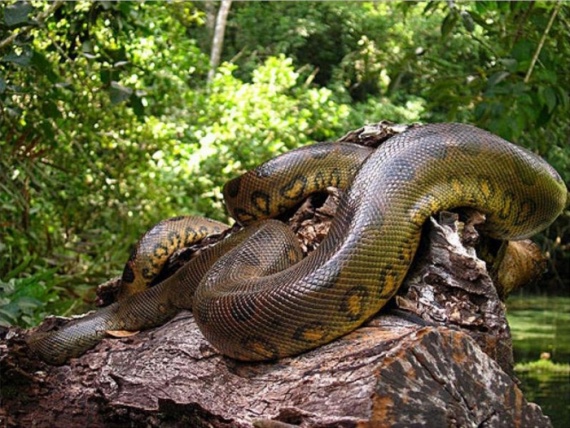
There are often cases of cannibalism among anacondas. As they say, the strongest survives. Also, cases have been described more than once when an anaconda attacked a jaguar and emerged victorious from the battle.
Stories that anacondas hypnotize their victims with their eyes and then poison them with their breath are nothing more than a myth. There are no facts confirming this.
Adults have practically no enemies in nature. Few people can cope with them. Basically, young animals die from a variety of predators.
The giant reptile is often mentioned in fiction books and has even become the main character of several American films.