9508
7 Most Amazing Volcanic Craters (12 Photos)
Craters of extinct and passive volcanoes are circular depressions in the ground formed by ancient volcanic activity. Let's take a look at the most interesting, beautiful and even inhabited craters.
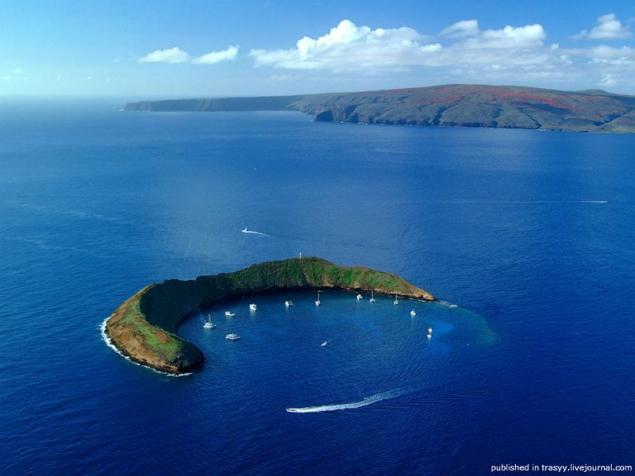
Molokini Crater Molokini
It was formed about 15 thousand years ago by lava bursting out of the crater of the volcano. Inside this natural rocky crescent are more than 250 species of fish, as well as 38 species of coral that are not found in the entire Pacific Ocean.
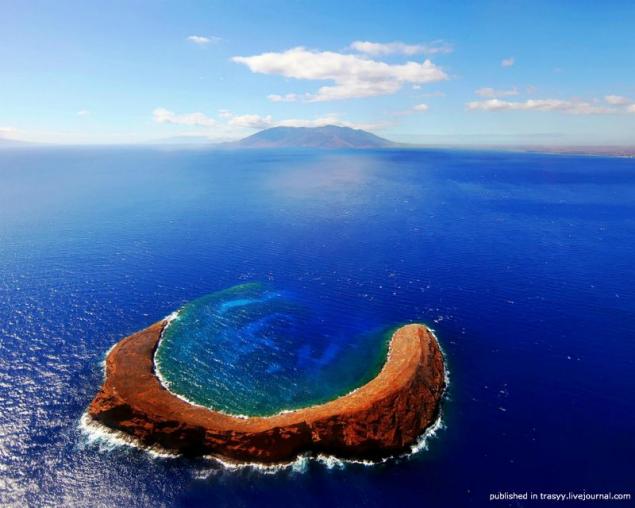
On the island itself, there is absolutely no soil, and only silent rocks rise around. That is why the surrounding waters are considered the cleanest in all the Hawaiian Islands.
Rocas Bainbridge Crater
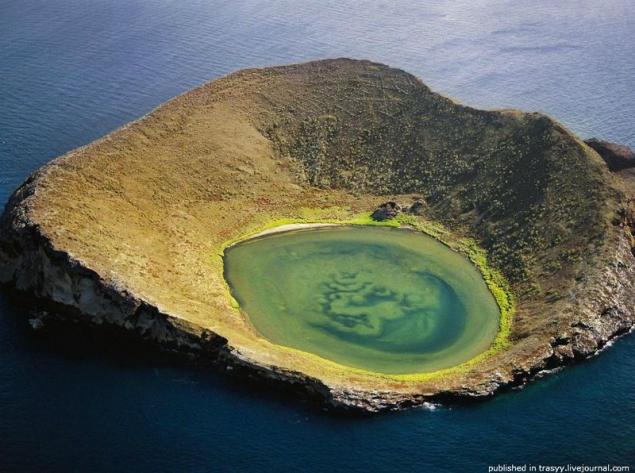
This wonderful crater is located in the Galapagos Islands. This is perhaps the most famous photo of this crater.
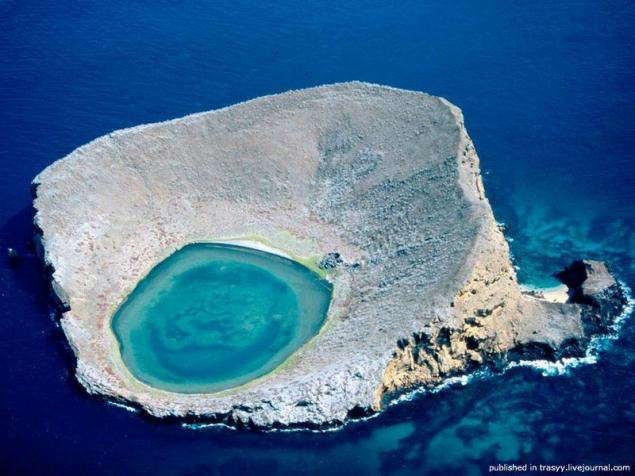
The islet is often visited by flamingos.
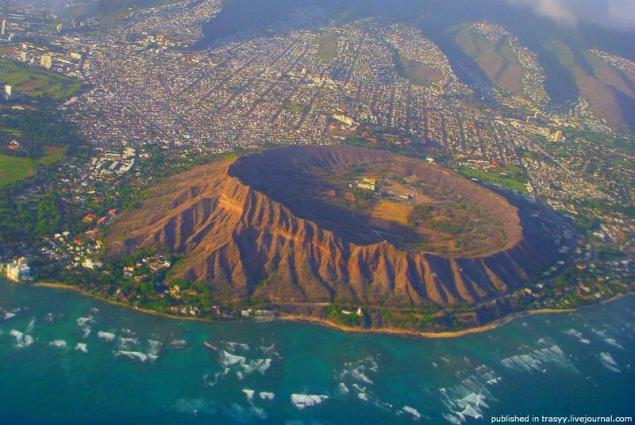
Koʻolau volcano
about 2.6 million years old, and the crater is about 200,000 years old, the volcano finally died out 150,000 years ago
Seongsan Ilchulbong Crater Seongsan Ilchulbong
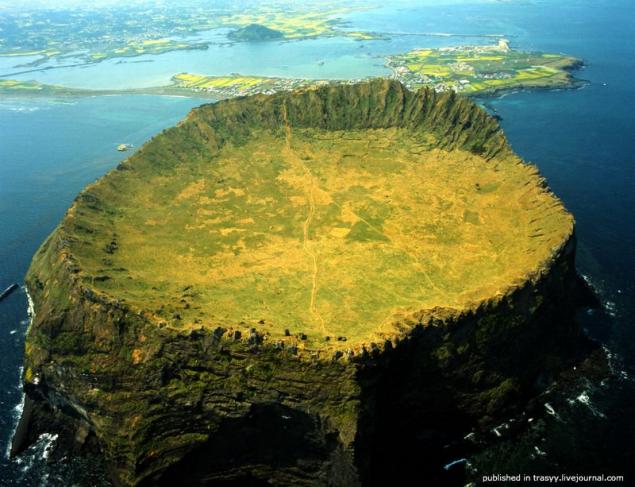
, also known as Sunrise Peak, is a sinkhole formed by hydrovolcanic eruptions that occurred on the seafloor about 4 thousand years ago.
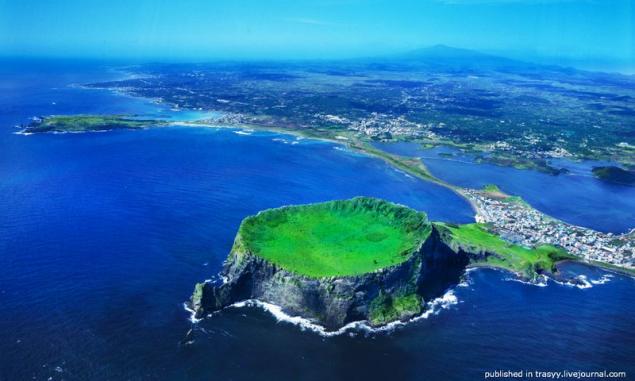
Its height is 182 meters, and inside there is a bowl-shaped crater. The crater of the volcano is rich in lush vegetation, among which six rare species of plants grow.
Kelimutu Kelimutu Crater
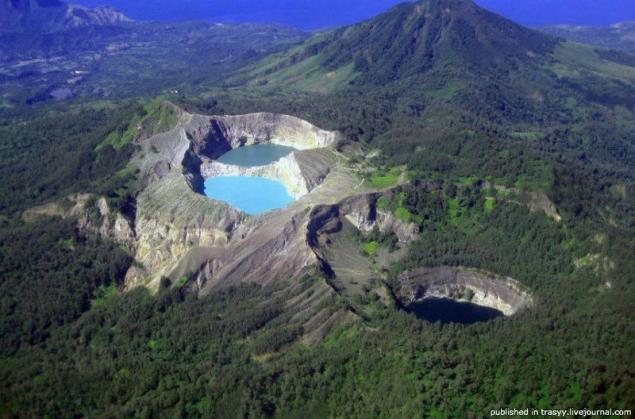
is a volcano on the Indonesian island of Flores with a height of 1639 m. Three lakes of Kelimutu, in which various minerals are dissolved, change their color from black to turquoise, red-brown or green over the course of several years.
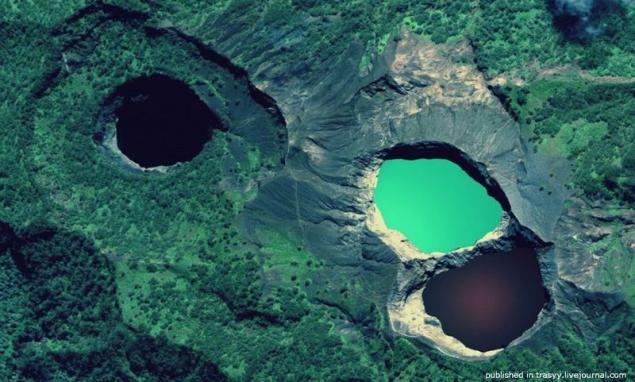
Each color is due to a specific set of mineral impurities in the soil, and although the lakes are only separated by a few meters, there are completely different soils underneath
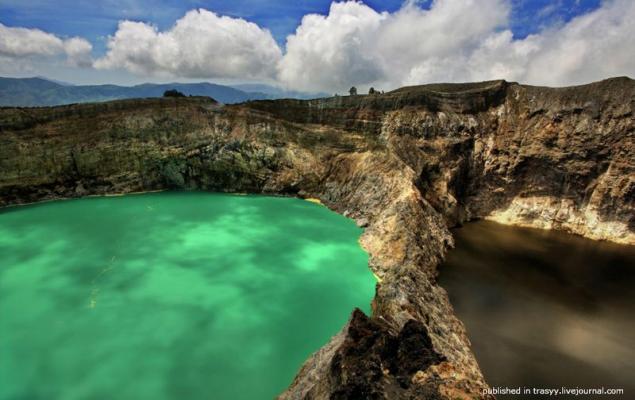
Sulfuric and hydrochloric acids give a deep green color, red is the result of the reaction of hydrogen sulfide with iron, although in recent years, the water of the red lake has darkened, and now it has become almost black.
Aogashima Aogashima Crater
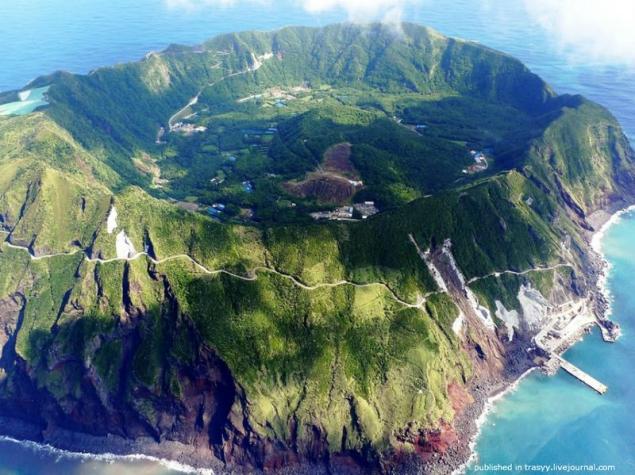
is a volcanic island located in the Philippine Sea. The land area is 3.5 km long and 2.5 km wide and is administered by Japan. The highest point of the island is Otonbu, its height is 423 meters. Despite the fact that there is an active volcano on the island, which periodically takes the lives of the islanders, people do not leave it.
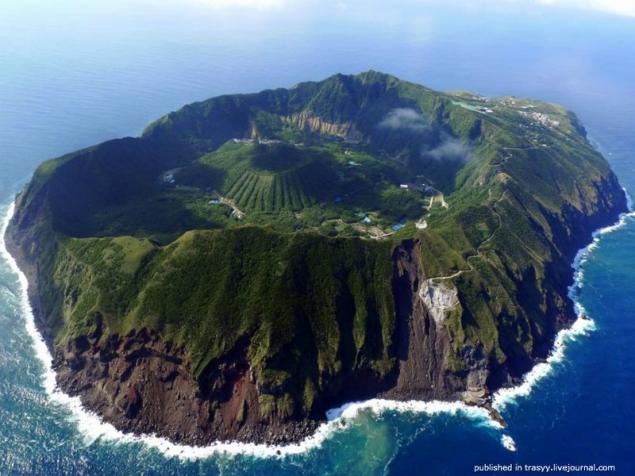
In 2009, the population of the island was 205 people.
Source: trasyy.livejournal.com