18129
Inexplicable mysteries of the planet (20 photos)
Scientists still find mysteries of history that they cannot give a logical explanation.
The first stone calendar.
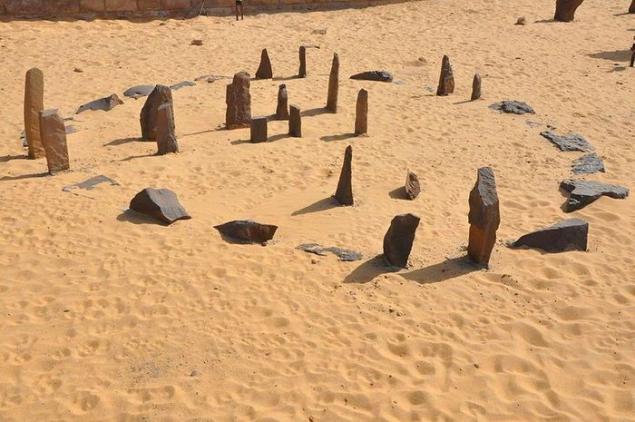
In Egypt's Sahara Desert lie the oldest known, astronomically aligned rock in the world: Nabta. A thousand years before the creation of Stonehenge, people built a stone circle and other structures on the shore of a lake that had long since dried up. More than 6,000 years ago, three-meter-high stone slabs dragged more than a kilometer to create this place. The depicted stones are only a part of the entire complex that has been preserved. Although the Western Egyptian Desert is completely dry nowadays, it was not so in the past. There is good evidence that there have been several wet cycles in the past (when up to 500 mm of precipitation fell per year). The most recent refers to the interglacial period and the time of the beginning of the last glaciation, which was about 130,000 to 70,000 years ago. During this period, the area was a savannah and supported the life of numerous animals, such as extinct bison and large giraffes, antelopes of various species and gazelles. Starting around the 10th millennium BC, this area of the Nubian desert began to receive more rainfall, filling the lakes. Early people may have been attracted to the region by sources of drinking water. Archaeological finds may indicate that human activity in the area is known at least from somewhere around the 10th and 8th millennium BCE.
Chinese mosaic of lines.
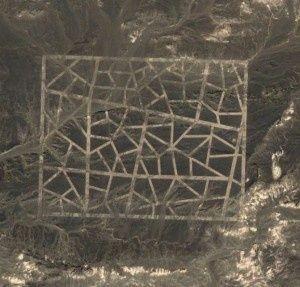
These strange lines are at a point with coordinates: 40°27'28.56"N.93°23'34.42"E. There is not much information available about this "oddity", but a beautiful mosaic of lines does exist, carved in the desert of Gansu Sheng Province in China. Some records indicate that the "lines" were created in 2004, but nothing officially confirming this assumption seems to have been found. It should be noted that these lines are located near the Mogao Cave, which is a World Heritage Site. The lines stretch over a very long distance, and at the same time maintain their proportions, despite the curvature of the rough terrain.
An inexplicable stone doll.
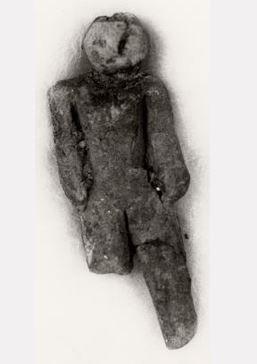
In July 1889, a small human figure was found in Boise, Idaho, during a borehole drilling operation. The find aroused intense scientific interest in the last century. Unmistakably made by human hands, the "doll" was discovered at a depth of 320 feet, which made it possible to date its age to a time far before the arrival of man in this part of the world. The find has never been disputed, but only said that such a thing is basically impossible.
An iron bolt, 300 million years old.
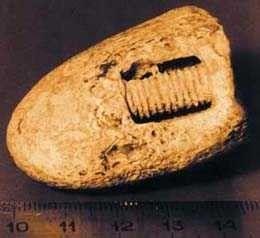
It was found almost by accident. The expedition of the MAI-Kosmopoisk Center was engaged in the search for fragments of a meteorite in the south of the Kaluga region, in Russia. Dmitry Kurkov decided to inspect a seemingly ordinary piece of stone. What he found can turn our ideas about earthly and cosmic history upside down. When the dirt was brushed off the stone, on its chip one could clearly see something that had somehow fallen inside... Baltic! About a centimeter long. How did he end up there? A bolt with a nut at the end (or - what this thing also looked like - a coil with a rod and two disks) sat tightly. This means that he got inside the stone back in the days when it was only a sedimentary rock, bottom clay.
An ancient rocket ship.
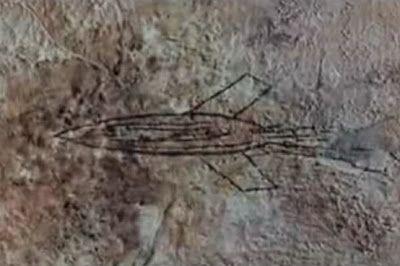
This ancient cave image from Japan dates back to more than 5000 BC...
Moving stones.
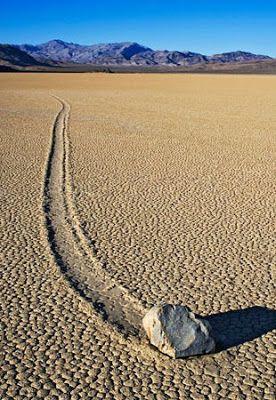
No one, not even NASA, has been able to explain this yet. The best thing to do is just watch and marvel at the moving rocks in this dried-up lake in Death Valley National Park. The bottom of Lake Reistrek Playa is almost flat, 2.5 km from north to south and 1.25 km from east to west, and is covered with cracked mud. The stones move slowly along the clay bottom of the lake, as evidenced by the long footprints left behind them. The stones move on their own without someone else's help, but no one has ever seen or recorded the movement on camera. Similar movements of stones have been recorded in some other places. However, in terms of the number and length of footprints, the dried-up lake of Reistrick Playa is unique.
Electricity in the pyramids.
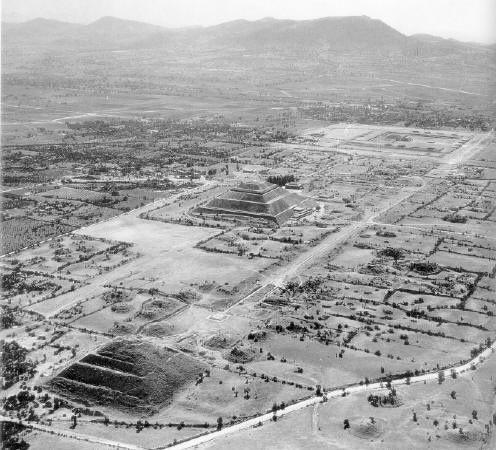
Teotihuacan, Mexico. Large sheets of mica have been found embedded in the walls of this ancient Mexican city. The nearest place is a quarry where mica is mined, located in Brazil, thousands of kilometers away. Mica is currently used in energy production technology. In this regard, the question arises as to why the builders used this mineral in the buildings of their city. Did these ancient architects know some long-forgotten energy sources to harness electricity in their cities?
Death of a Dog
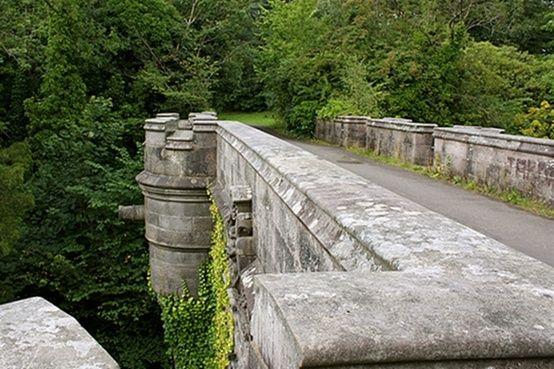
Dog suicide on a bridge in Overtown, near Milton, Dumbarton, Scotland. Built in 1859, the Overtown Bridge became famous for a number of unexplained cases where dogs apparently committed suicide by jumping from it. These incidents were first reported in the 1950s or 1960s, when dogs — typically long-nosed species, like collies — were seen jumping quickly and unexpectedly from a bridge and falling from a height of fifty feet, crashing to their deaths.
Fossil giants

The fossilized Irish giants were discovered in 1895 and stand over 12 feet (3.6 m) tall. The giants were discovered during mining operations in the town of Antrim, Ireland. This image is from the British magazine Strand, December 1895: "Height 12 feet 2 inches, chest girth, 6 feet 6 inches, arm length 4 feet 6 inches. There are six toes on the right foot." The six fingers and toes resemble some characters from the Bible, where six-toed giants are described.
The pyramids of Atlantis?

Scientists continue to study the ruins of megaliths in the so-called Yucatan Canal in the region of Cuba. They have been found miles along the coast. The American archaeologists who discovered the site immediately claimed that they had found Atlantis (not for the first time in the history of underwater archaeology). Now the place is sometimes visited by scuba divers to admire the majestic underwater structures. All other interested parties can only enjoy the filming and computer reconstruction of the millennia-old city buried under water.
Giants in Nevada

The legend of the Nevada Indians is about the 12-foot red giants who lived in the area when they arrived. According to the history of the American Indians, the giants were killed in the cave. During excavations in 1911, this human jawbone was discovered. This is what an artificial human jaw looks like next to it. In 1931, two skeletons were found in the bottom of the lake. One was 8 feet (2.4 m) tall, the other was just under 10 (3 m).
The Unexplained Wedge
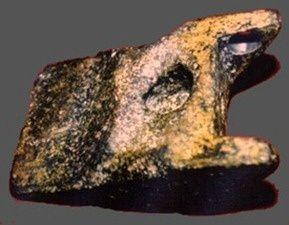
This aluminum wedge was found in Romania in 1974, on the banks of the Mures River, near the city of Ayud. It was found at a depth of 11 meters, next to the bones of the Mastodon, a giant, elephant-like, extinct animal. The find itself is very similar to the head of a huge hammer. At the archaeological institute of the city of Cluj-Napoca, where the artifact supposedly went, it was determined that the metal from which this wedge was made was an aluminum alloy coated with a thick layer of oxide. The alloy contained 12 different elements, and the find was classified as strange, since aluminum was discovered only in 1808, and the age of this artifact, given its presence in the layer along with the remains of an extinct animal, is determined at about 11 thousand years.
"Loladoff's plate"
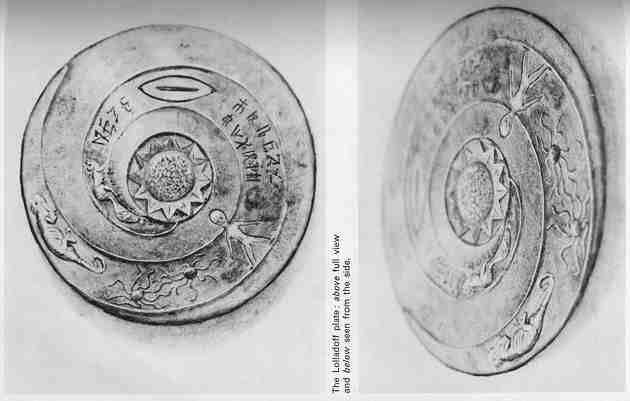
The "Loladoff plate" is a 12,000-year-old stone dish found in Nepal. It seems that Egypt is not the only place visited by aliens in ancient times. This is clearly demonstrated by a UFO in the shape of a disk. There is also a picture on the disk. The character bears a striking resemblance to the aliens known as the Greys.
Hammer made of the purest iron alloy
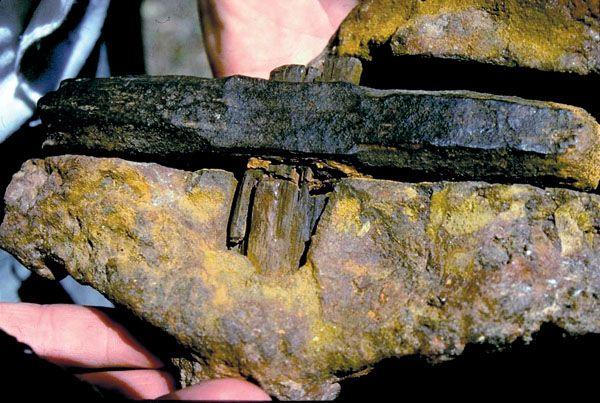
A puzzling riddle for science is... An ordinary-looking hammer. The metal part of the hammer is 15 centimeters long and about 3 centimeters in diameter. It literally grew into limestone about 140 million years old, and is stored together with a piece of rock. This miracle caught the eye of Mrs. Emma Hahn in June 1934 in the rocks near the American town of London, Texas. The experts who examined the find came to a unanimous conclusion: a hoax. However, further research conducted by various scientific institutions, including the famous Battelev Laboratory (USA), showed that everything is much more complicated. Firstly, the wooden handle, on which the hammer is impaled, has already petrified on the outside, and on the inside it has completely turned into coal. This means that its age is also estimated at millions of years. Secondly, specialists at the Metallurgical Institute in Columbus (Ohio) were amazed by the chemical composition of the hammer itself: 96.6% iron, 2.6% chlorine and 0.74% sulfur. No other impurities could be detected. Such pure iron has not been obtained in the entire history of terrestrial metallurgy. Not a single bubble was found in the metal The quality of iron, even by modern standards, is exceptionally high and raises many questions, since the content of metals used in the metallurgical industry in the production of various grades of steel (such as manganese, cobalt, nickel, tungsten, vanadium or molybdenum) is not detected. There are also no foreign impurities, and the percentage of chlorine is unusually high. It is also surprising that no traces of carbon have been found in iron, whereas iron ore from earthly deposits always contains carbon and other impurities. Generally speaking, from a modern point of view, it is not of high quality. But here's the detail: the iron of the "Texas hammer" does not rust! When in 1934 a piece of rock with an ingrown tool was broken off from the rock, the metal was severely scratched in one place. And over the past sixty-odd years, not the slightest sign of corrosion has appeared on the scratch... Dr. K.E. Buf, director of the Museum of Fossil Antiquities, which houses the hammer, estimates that the find comes from the early Cretaceous period, between 140 and 65 million years ago. According to the current state of scientific knowledge, mankind learned to make such tools only 10 thousand years ago. Dr. Hans-Joachim Zilmer from Germany, who studied the mysterious find in detail, concludes: "This hammer is made using a technology unknown to us."
Highest Stone Processing Technologies

The second group of finds that pose mysteries to scientists are artifacts created after the time of the appearance of man on Earth accepted today. But the technologies that were used in their creation became known to us relatively recently or are still unknown. The most famous find of this group is a crystal skull found in 1927 in Belize during excavations of the Mayan city of Lubaantum. The skull is carved from a piece of pure quartz and measures 12x18x12 centimeters. In 1970, the skull was analyzed in the Hewlett-Packard laboratory. The results were stunning. The skull was created without respecting the natural crystal axis, which is impossible in modern crystallography. When working on the skull, no metal tools were used. According to restorers, quartz was first cut with a diamond chisel, after which silicon crystalline sand was used for more thorough processing. About three hundred years were spent on the work on the skull, which can be perceived as an incredible example of patience or admit the use of high technologies unknown to us. One of the Hewlett-Packard experts said that creating a crystal skull is not a matter of skill, patience and time, but that it is simply impossible.
Fossil nail
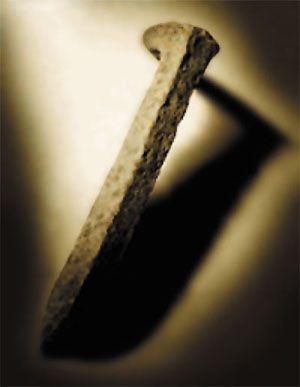
However, most often objects are found in the rock that look like nails and bolts. In the 16th century, the Viceroy of Peru kept a piece of rock in his office, in which an 18-centimeter steel nail found in a local mine was firmly held. In 1869, in Nevada, a metal screw 5 centimeters long was found in a piece of feldspar raised from a great depth. Skeptics believe that the appearance of these and many other objects can be explained by natural causes: a special kind of crystallization of mineral solutions and melts, the formation of pyrite rods in the voids between crystals. But pyrite is a sulfurous iron, and at the break it is yellow (which is why it is often confused with gold) and has a well-defined cubic structure. Eyewitnesses to the finds clearly speak of iron nails, sometimes covered with rust, and pyrite formations can be called golden, rather than iron. There is also an assumption that rod-shaped NIOs are fossilized skeletons of belemnites (invertebrate marine animals that lived at the same time as dinosaurs). But the remains of belemnites are found only in sedimentary rocks and never in bedrocks, such as feldspar. In addition, they have a pronounced skeletal shape, and it is impossible to confuse them with something else. It is sometimes claimed that nail-shaped NIOs are melted fragments of meteorites or fulgurites (thunderbolts) produced by lightning strikes on rocks. However, finding such a fragment or trace left millions of years ago is extremely problematic. If the origin of nail-like NIOs can still be argued, then some finds can only be shrugged around.
Ancient Battery
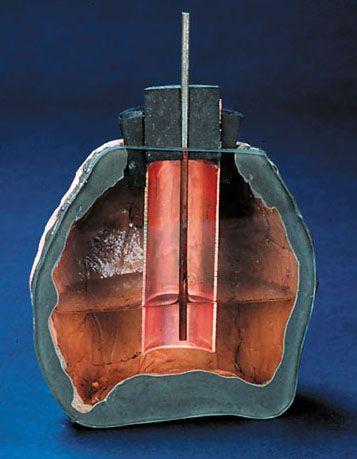
In 1936, a strange object was brought to the German scientist Wilhelm König, who worked at the Baghdad Archaeological Museum, which was found at the excavations of an ancient Parthian settlement near the Iraqi capital. It was a small clay vase about 15 centimeters high. Inside it was a cylinder made of sheet copper, its base was covered by a cap with a seal, on top the cylinder was covered by a layer of resin, which was also held by an iron rod directed to the center of the cylinder. From all this, Dr. Koenig concluded that he had in front of him an electric battery, created almost two thousand years before the discoveries of Galvani and Volta. Egyptologist Arne Eggebrecht made an exact copy of the find, poured wine vinegar into a vase and connected a measuring device that showed a voltage of 0.5 V. Presumably, the ancients used electricity to apply a thin layer of gilding to objects.
The largest stone carved by man
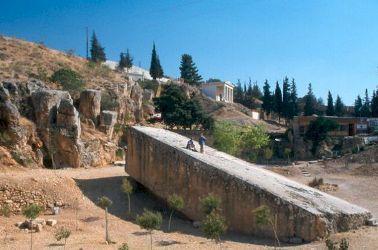
The largest of all stones carved by man is the Lībane Stone. Its weight is 2000 tons. It was intended for Baalbek, which is 2 hours by car from Beirut. The terrace of Baalbek is built of stone blocks that reach 20 meters in length, 4.5 meters in height and 4 meters in length. These stone blocks weigh up to 2000 tons. The terrace is much older than the temple of Jupiter located on it. I wonder how ancient people carved, and then transported and built from such stones? And today there are no technical means for the movement of such cargo.
Mechanism
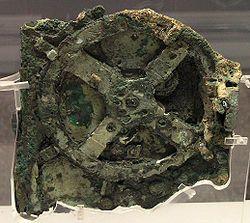
The Antikythera mechanism (also spelled: Antikythera, Antikythera, Antikythera, Greek: Μηχανισμός των Αντικυθήρων) is a mechanical device discovered in 1902 on a sunken ancient ship near the Greek island of Antikythera (Greek: Αντικύθηρα). It dates from about 100 BC (possibly before 150 BC). It is kept in the National Archaeological Museum in Athens. The mechanism contained 37 bronze gears in a wooden case, on which dials with hands were placed and, according to reconstruction, was used to calculate the movement of celestial bodies. It uses a differential gear, which was previously thought to have been invented no earlier than the 16th century, and the level of miniaturization and complexity is comparable to that of mechanical watches of the 18th century. Approximate dimensions of the movement assembly are 33×18×10 cm.
Astronaut figurines from Ecuador
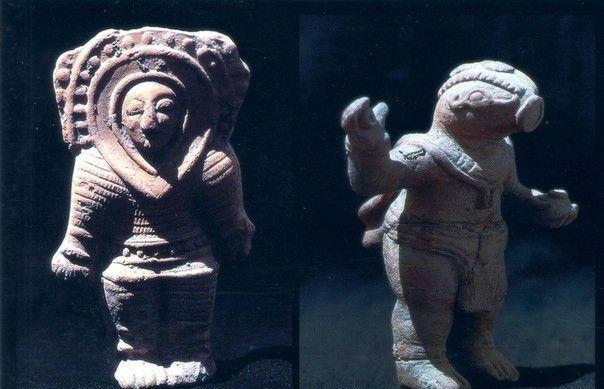
Figurines of ancient astronauts found in Ecuador. Age > 2000 years. In fact, there are plenty of such testimonies, if you like, read Erich von Denikin. He has many books, one of the most famous is "Chariots of the Gods", there are both physical proofs and decipherments of cuneiform inscriptions and so on, in general, quite interesting. True, it is contraindicated for ardent believers to read.
Source: maniag.livejournal.com