2395
Year review of Space Affairs
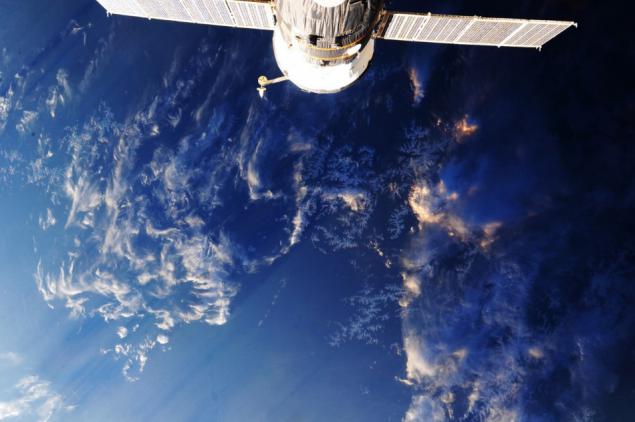
A year ago I wrote a post overview of what is happening in the world and national space program, and what are the different countries to achieve in this area. It so happened by chance that morning live epically fell "Proton" with three GLONASS satellites, so that post also went on well. Now, a year later, I thought - why not write a new review with a story about the affairs of the space for the second half of 2013 - the first half of 2014. Such reviews are usually written for the New Year, so it will be interesting look from July.
Introduction Post structurally divided into the same as the last time, the section - the manned space program, Applied unmanned space exploration, scientific unmanned space program, launch vehicle.
manned spaceflight 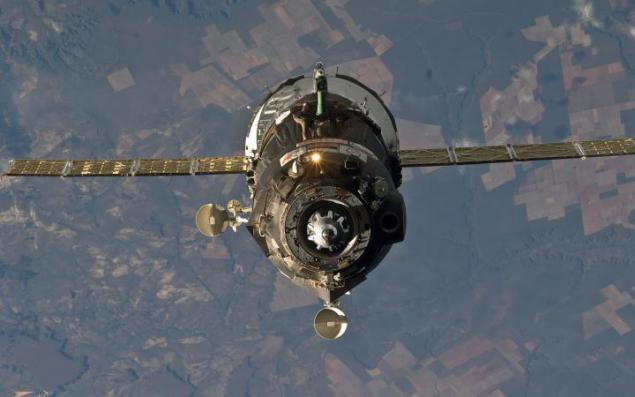
manned spacecraft 2014, for sure, will be the year in which the only manned spacecraft launch Russia. The fact that China, which is usually started by one "Shenzhou" in 2012 and 2013, this year no plans manned flights and ships of other countries still being tested.
Russian «Союзы TMA-M », parallel tested new equipment. For example, the new docking system "Kurs-NA", which will be installed on the "Soyuz TMA-MS", now driven around on the "progress". In parallel, a new ship PCA , aka PTK NP The first launch is expected in 2017-2018. The layout of the ship was shown at MAKS-2013. Who developed and tested individual components - windows, knob, etc. If you are interested in news design of this ship, I recommend to watch topic on the forum "News of Cosmonautics" and блогом test cosmonaut Mark Serov, which is involved in the development.
USA Dragon V2 , and its layout was featured May 29, 2014 year. In depth study of the layout yielded PTK NP - besides stylish racing seats and dashboard with large touch-screens was nothing, and layout glittered bare walls of the cabin. Mini-shuttle DreamChaser started throwing test - prototype was dropped from a helicopter October 26, 2013. Unfortunately, the tests ended in the accident, did not come out landing gear, and the prototype was damaged. The ship CST-100 tested the parachute system in 2012, and in August 2013 was carried out the test cab ergonomics and communications. Being actively developed ship Orion , conducted numerous tests of the parachute system, rescue system, expected to test unmanned suborbital flight in < a href = "http://en.wikipedia.org/wiki/Exploration_Flight_Test_1"> December 2014 .
Europe ACTS / CSTS closed. < br />
China «Шэньчжоу», the next flight, "Shenzhou-11", is expected in 2015-2016. The uncertainty stems from the fact that the flight is scheduled to Chinese new modular space station, which has not yet started.
India ISRO OV received funding and a high enough priority. In March were tested parachute system, and the first unmanned suborbital test flight expected no less, in the second half of 2014, recommend to follow the news.
Japan
Orbital stations the continuing exploitation of МКС. Due to some cooling of relations between Russia and the United States over the future of the station began to thicken clouds - not known whether it will continue operation after 2020. Russia - the only country which had planned to expand the ISS with new modules and module «Наука» was supposed to go in flight in the spring of 2013. But the module detects technical problems on the tests, and start its postponed. Originally called terms in 2014, but in the autumn of 2013 module is returned for revision, and can fly as much in the 2016-18's. Given the political problems of international cooperation and the aging of the ISS, there is some probability that the unit will be the basis for a new Russian or Russian-Chinese space station - "Science" is based on FGB, which was the first unit of the ISS.
China plans to move from a single-module station «Тяньгун-1» to a multi station in the style of "Peace" or ISS. Specific dates are not yet known, the start of the first module roughly 2015-2016 year.
Bigelow Company does not cancel its plans to launch private space station , and, according to the news, launch services acquired by one of the Falcon 9 rocket launch but the payload of the launch is still unknown.
Cargo ships supply Russian «Прогрессы», 2, 3 tons of payload, 4 starts per year.
USA Dragon - 3 of 3 tons into orbit, 2, 5 - back in 2013 year one starting in 2014 want to carry 4 starter, but hardly have time for more than two - timing starts gradually go "right", the second launch in 2014 has had to be in June. Ship Cygnus made first flight to the ISS in 2013, can deliver 2 tons of cargo.
Europe ATV ends, the ship "Georges Lemaitre," will be the last ship of the series. Starting July 26, 2014. Payload 7, 6 tons. After the closure of the project of development of technology will work in the service module of the ship Orion.
Japan HTV - 6 tons into orbit, one starting in the year. In 2014, the ship will fly the fifth series, the launch date has not been announced. Expected for at least another three ship series.
Applied unmanned space exploration 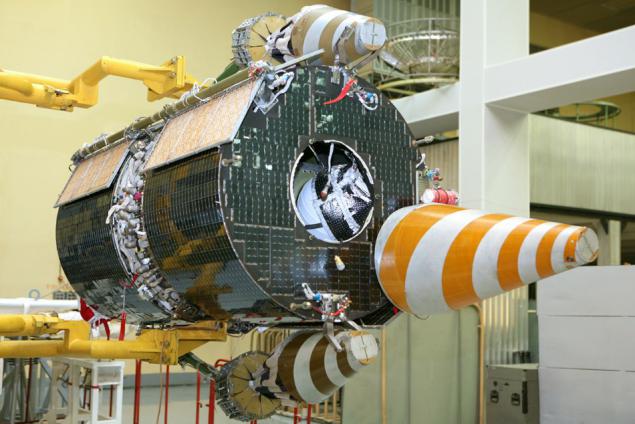
Applied unmanned spacecraft - is, in fact, the bread of astronautics. Commercial benefits of communication, meteorology, public benefit of navigation, government communications systems missile warning - all this means that most of the running machine will fall into this category.
Satellite navigation systems Global navigation systems still have only two countries - Russia and the United States. Several countries also have or develop regional navigation system.
Russian GLONASS , 24 satellites in operation, 1 on tests (GLONASS-K on the new platform leaky ) 2 on the study, 2 in reserve one step input to the system, a total of 30 satellites. The system is deployed consistently and with a reserve last year's loss of 3 satellites in the accident did not affect the pH of the availability of the signal. The latest satellite launched in June 2014.
USA GPS , 31 satellites in orbit, the last launch in May 2014.
Europe Galileo , 4 satellites in orbit, the last launch in 2012, system is being tested.
China " Beidou », launched as a regional in 2012, 14 satellites in orbit. It is planned to develop a global system by 2020.
India IRNSS , for the last year has already launched two satellites in 2014 planned the launch of two more. It is planned to launch seven satellites for the full deployment of the system.
Japan QZSS , which were scheduled to enter service in 2013, still listed as inactive. In orbit three satellites in 2013, it was announced that will launch another satellite.
Other Over the last year Russia launched the following applications satellites:
Date Name Purpose 12 September 2013 3 "Runner-M» LEO connected November 12, 2013 «Raduga-1M» Geostationary military connected 25 December 2013 «Kosmos-2488" / "Strela-3M» LEO military connected < / 26 December 2013 «Express-AM5» geostationary telecommunications 16 March 2014 2 "Express-AT» geostationary commercial telecommunications 24 March 2014 "Kosmos-2491" / "GLONASS-M» Navigation 28 April 2014 «Luch-5B" < / Geostationary connected May 6, 2014 «Kosmos-2495" / "Cobalt-M» LEO imagery intelligence 23 May 2014 3 "Strela-3M» LEO military connected 14 June 2014 «Kosmos-2500" / "GLONASS-M» Navigation July 3, 2014 3 "Runner-M» LEO connected
Losses from satellites this year the most conspicuous - "Electro-L №1», whose problems with the system orientation. Despite the dramatic story with flashing apparatus in orbit and return it into operation on May 25 problems were resumed, and the satellite is now at least partially inoperative. Also in April, to de-alert satellite missile warning "Kosmos 2479" / "Eye-1", the problem of missile warning now lie on the ground stations.
Science unmanned space exploration 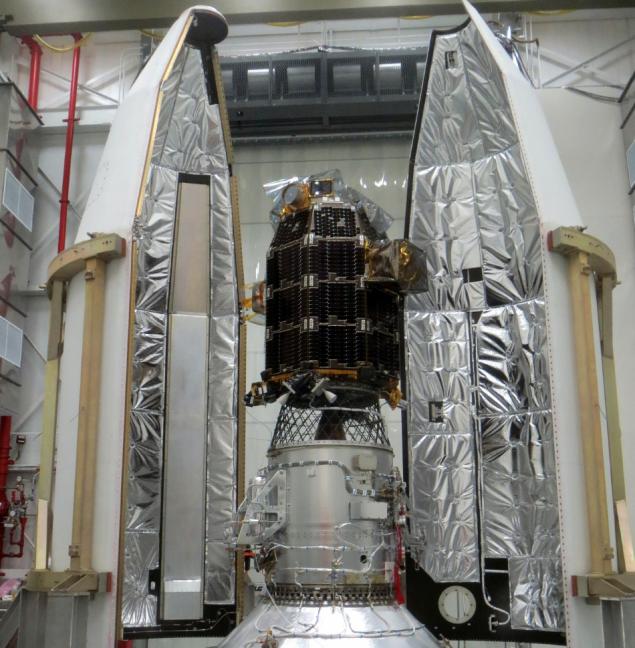
In Asia, are in full force "moon race" and "The Martian Race" - China rover landed on the moon, and India launched a probe to Mars.
automatic interplanetary station Russian «Luna-25» , launch is expected in 2016.
USA LADEE . In November, went to Mars probe MAVEN - study the Martian atmosphere.
Europe Rosetta, launched in 2004 to comet Churyumov-Gerasimenko, this year will reach its destination. In November, is expected to study the comet lander and landing.
China "Chang'e 3» won a stage of the Asian "moon race" is done for the first time after the USSR and the US moon landing and the first time since the Soviet Lunokhod landed on the moon.
India Mangalyaan , notwithstanding the Problems with the upper stage and dramatic multi-pulse acceleration, went to Mars. Approaching the Mars is expected on September 24.
Japan «Hayabusa 2» to an asteroid ( 162173) 1999 JU 3 , is expected to launch in late 2014.
scientific apparatus Russian «Спектр-Р», lightning in the atmosphere explores «Chibis -M », micrometeorites and space debris examined two Stork . Last year, successfully flew biosatellites " Bion-M №1 », preparing physical and biological satellite « Foton-M4 » - launch is scheduled for July 18.
USA OCO-2 to study carbon dioxide in the atmosphere. 27 June 2013 started a solar observatory IRIS were also launches micro and nano-satellites - technological, simple scientific, student. Of the expected start - climatological DISCOVR .
Europe Gaia , which should map the position and motion of stars in our galaxy, as well as search for extrasolar planets, asteroids and comets.
China
India Astrosat .
Japan Hisaki .
Tools excretion 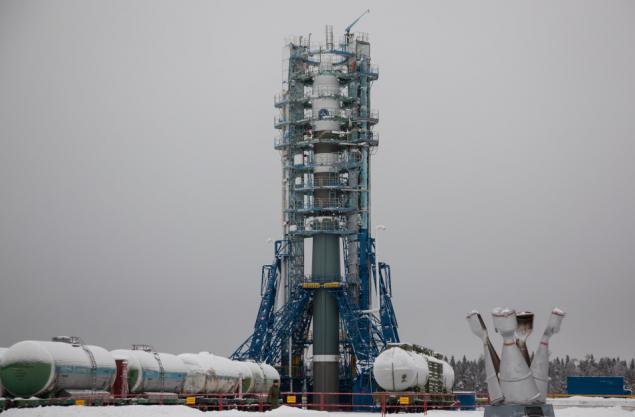
Russia is still "ahead of the rest" by the number of starts. During 2013, Russia 32 launch, the second place - the United States with 19 starts, the third - China 15.
Russian «Днепр», «Рокот», inherited from the Soviet Union, they are easy to replace modification "of the Union» - «Soyuz-2.1V» and easy «Ангара-1.2» (Launch rescheduled for July 9). In the segment of heavy missiles are expected to appear heavy "Angara-A5" - the first launch is expected in late 2014. In the segment of medium-range missiles from the pilot commercial operation should go "Soyuz-2.1b", yet this missile is launched only government satellites - accumulating statistics.
USA Falcon-9 v 1.1 . Also, the first flight made easy modification of the heaviest rocket Minotaur - Minotaur V . Dependence on Russian engines in terms of cooling relations superimposed on economic rivalry ULA and SpaceX, giving rise to a series of dramatic statements, scandals and lawsuits - on ULA sued, then forbade buying Russian engines, the newly permitted.
Europe Ariane-6 , first launch soon - in the years 2020-2021 .
China Kuaizhou.
India GSLV Mk III , the first test launch is scheduled for August 2014. < br />
Japan Epsilon .
Conclusion In last year's post, in my estimation, Russia was in the top three leading space powers. Since then, little has changed, we still occupy a good position in this high-tech industry. If we talk about where we are lagging behind - I would point out our problems with the element base, a lifetime of satellites and reliability issues. Last year's accident was tragicomic reason (bug collector, not captured quality control), since the "Proton" had again begin to fly and fell again, for another reason. If you talk about the areas where we are ahead - it's certainly great mass production launch vehicles, industrial use of manned spaceflight and large developments in medical support long flight, forward motion, such as the development of new orbital tugs with ядерной powerplant .
Source: habrahabr.ru/post/228803/

manned spacecraft 2014, for sure, will be the year in which the only manned spacecraft launch Russia. The fact that China, which is usually started by one "Shenzhou" in 2012 and 2013, this year no plans manned flights and ships of other countries still being tested.
Russian «Союзы TMA-M », parallel tested new equipment. For example, the new docking system "Kurs-NA", which will be installed on the "Soyuz TMA-MS", now driven around on the "progress". In parallel, a new ship PCA , aka PTK NP The first launch is expected in 2017-2018. The layout of the ship was shown at MAKS-2013. Who developed and tested individual components - windows, knob, etc. If you are interested in news design of this ship, I recommend to watch topic on the forum "News of Cosmonautics" and блогом test cosmonaut Mark Serov, which is involved in the development.
USA Dragon V2 , and its layout was featured May 29, 2014 year. In depth study of the layout yielded PTK NP - besides stylish racing seats and dashboard with large touch-screens was nothing, and layout glittered bare walls of the cabin. Mini-shuttle DreamChaser started throwing test - prototype was dropped from a helicopter October 26, 2013. Unfortunately, the tests ended in the accident, did not come out landing gear, and the prototype was damaged. The ship CST-100 tested the parachute system in 2012, and in August 2013 was carried out the test cab ergonomics and communications. Being actively developed ship Orion , conducted numerous tests of the parachute system, rescue system, expected to test unmanned suborbital flight in < a href = "http://en.wikipedia.org/wiki/Exploration_Flight_Test_1"> December 2014 .
Europe ACTS / CSTS closed. < br />
China «Шэньчжоу», the next flight, "Shenzhou-11", is expected in 2015-2016. The uncertainty stems from the fact that the flight is scheduled to Chinese new modular space station, which has not yet started.
India ISRO OV received funding and a high enough priority. In March were tested parachute system, and the first unmanned suborbital test flight expected no less, in the second half of 2014, recommend to follow the news.
Japan
Orbital stations the continuing exploitation of МКС. Due to some cooling of relations between Russia and the United States over the future of the station began to thicken clouds - not known whether it will continue operation after 2020. Russia - the only country which had planned to expand the ISS with new modules and module «Наука» was supposed to go in flight in the spring of 2013. But the module detects technical problems on the tests, and start its postponed. Originally called terms in 2014, but in the autumn of 2013 module is returned for revision, and can fly as much in the 2016-18's. Given the political problems of international cooperation and the aging of the ISS, there is some probability that the unit will be the basis for a new Russian or Russian-Chinese space station - "Science" is based on FGB, which was the first unit of the ISS.
China plans to move from a single-module station «Тяньгун-1» to a multi station in the style of "Peace" or ISS. Specific dates are not yet known, the start of the first module roughly 2015-2016 year.
Bigelow Company does not cancel its plans to launch private space station , and, according to the news, launch services acquired by one of the Falcon 9 rocket launch but the payload of the launch is still unknown.
Cargo ships supply Russian «Прогрессы», 2, 3 tons of payload, 4 starts per year.
USA Dragon - 3 of 3 tons into orbit, 2, 5 - back in 2013 year one starting in 2014 want to carry 4 starter, but hardly have time for more than two - timing starts gradually go "right", the second launch in 2014 has had to be in June. Ship Cygnus made first flight to the ISS in 2013, can deliver 2 tons of cargo.
Europe ATV ends, the ship "Georges Lemaitre," will be the last ship of the series. Starting July 26, 2014. Payload 7, 6 tons. After the closure of the project of development of technology will work in the service module of the ship Orion.
Japan HTV - 6 tons into orbit, one starting in the year. In 2014, the ship will fly the fifth series, the launch date has not been announced. Expected for at least another three ship series.
Applied unmanned space exploration
Applied unmanned spacecraft - is, in fact, the bread of astronautics. Commercial benefits of communication, meteorology, public benefit of navigation, government communications systems missile warning - all this means that most of the running machine will fall into this category.
Satellite navigation systems Global navigation systems still have only two countries - Russia and the United States. Several countries also have or develop regional navigation system.
Russian GLONASS , 24 satellites in operation, 1 on tests (GLONASS-K on the new platform leaky ) 2 on the study, 2 in reserve one step input to the system, a total of 30 satellites. The system is deployed consistently and with a reserve last year's loss of 3 satellites in the accident did not affect the pH of the availability of the signal. The latest satellite launched in June 2014.
USA GPS , 31 satellites in orbit, the last launch in May 2014.
Europe Galileo , 4 satellites in orbit, the last launch in 2012, system is being tested.
China " Beidou », launched as a regional in 2012, 14 satellites in orbit. It is planned to develop a global system by 2020.
India IRNSS , for the last year has already launched two satellites in 2014 planned the launch of two more. It is planned to launch seven satellites for the full deployment of the system.
Japan QZSS , which were scheduled to enter service in 2013, still listed as inactive. In orbit three satellites in 2013, it was announced that will launch another satellite.
Other Over the last year Russia launched the following applications satellites:
Date Name Purpose 12 September 2013 3 "Runner-M» LEO connected November 12, 2013 «Raduga-1M» Geostationary military connected 25 December 2013 «Kosmos-2488" / "Strela-3M» LEO military connected < / 26 December 2013 «Express-AM5» geostationary telecommunications 16 March 2014 2 "Express-AT» geostationary commercial telecommunications 24 March 2014 "Kosmos-2491" / "GLONASS-M» Navigation 28 April 2014 «Luch-5B" < / Geostationary connected May 6, 2014 «Kosmos-2495" / "Cobalt-M» LEO imagery intelligence 23 May 2014 3 "Strela-3M» LEO military connected 14 June 2014 «Kosmos-2500" / "GLONASS-M» Navigation July 3, 2014 3 "Runner-M» LEO connected
Losses from satellites this year the most conspicuous - "Electro-L №1», whose problems with the system orientation. Despite the dramatic story with flashing apparatus in orbit and return it into operation on May 25 problems were resumed, and the satellite is now at least partially inoperative. Also in April, to de-alert satellite missile warning "Kosmos 2479" / "Eye-1", the problem of missile warning now lie on the ground stations.
Science unmanned space exploration
In Asia, are in full force "moon race" and "The Martian Race" - China rover landed on the moon, and India launched a probe to Mars.
automatic interplanetary station Russian «Luna-25» , launch is expected in 2016.
USA LADEE . In November, went to Mars probe MAVEN - study the Martian atmosphere.
Europe Rosetta, launched in 2004 to comet Churyumov-Gerasimenko, this year will reach its destination. In November, is expected to study the comet lander and landing.
China "Chang'e 3» won a stage of the Asian "moon race" is done for the first time after the USSR and the US moon landing and the first time since the Soviet Lunokhod landed on the moon.
India Mangalyaan , notwithstanding the Problems with the upper stage and dramatic multi-pulse acceleration, went to Mars. Approaching the Mars is expected on September 24.
Japan «Hayabusa 2» to an asteroid ( 162173) 1999 JU 3 , is expected to launch in late 2014.
scientific apparatus Russian «Спектр-Р», lightning in the atmosphere explores «Chibis -M », micrometeorites and space debris examined two Stork . Last year, successfully flew biosatellites " Bion-M №1 », preparing physical and biological satellite « Foton-M4 » - launch is scheduled for July 18.
USA OCO-2 to study carbon dioxide in the atmosphere. 27 June 2013 started a solar observatory IRIS were also launches micro and nano-satellites - technological, simple scientific, student. Of the expected start - climatological DISCOVR .
Europe Gaia , which should map the position and motion of stars in our galaxy, as well as search for extrasolar planets, asteroids and comets.
China
India Astrosat .
Japan Hisaki .
Tools excretion
Russia is still "ahead of the rest" by the number of starts. During 2013, Russia 32 launch, the second place - the United States with 19 starts, the third - China 15.
Russian «Днепр», «Рокот», inherited from the Soviet Union, they are easy to replace modification "of the Union» - «Soyuz-2.1V» and easy «Ангара-1.2» (Launch rescheduled for July 9). In the segment of heavy missiles are expected to appear heavy "Angara-A5" - the first launch is expected in late 2014. In the segment of medium-range missiles from the pilot commercial operation should go "Soyuz-2.1b", yet this missile is launched only government satellites - accumulating statistics.
USA Falcon-9 v 1.1 . Also, the first flight made easy modification of the heaviest rocket Minotaur - Minotaur V . Dependence on Russian engines in terms of cooling relations superimposed on economic rivalry ULA and SpaceX, giving rise to a series of dramatic statements, scandals and lawsuits - on ULA sued, then forbade buying Russian engines, the newly permitted.
Europe Ariane-6 , first launch soon - in the years 2020-2021 .
China Kuaizhou.
India GSLV Mk III , the first test launch is scheduled for August 2014. < br />
Japan Epsilon .
Conclusion In last year's post, in my estimation, Russia was in the top three leading space powers. Since then, little has changed, we still occupy a good position in this high-tech industry. If we talk about where we are lagging behind - I would point out our problems with the element base, a lifetime of satellites and reliability issues. Last year's accident was tragicomic reason (bug collector, not captured quality control), since the "Proton" had again begin to fly and fell again, for another reason. If you talk about the areas where we are ahead - it's certainly great mass production launch vehicles, industrial use of manned spaceflight and large developments in medical support long flight, forward motion, such as the development of new orbital tugs with ядерной powerplant .
Source: habrahabr.ru/post/228803/
China plans to move from a single-module station «Тяньгун-1» to a multi station in the style of "Peace" or ISS. Specific dates are not yet known, the start of the first module roughly 2015-2016 year.
Bigelow Company does not cancel its plans to launch private space station , and, according to the news, launch services acquired by one of the Falcon 9 rocket launch but the payload of the launch is still unknown.
Cargo ships supply Russian «Прогрессы», 2, 3 tons of payload, 4 starts per year.
USA Dragon - 3 of 3 tons into orbit, 2, 5 - back in 2013 year one starting in 2014 want to carry 4 starter, but hardly have time for more than two - timing starts gradually go "right", the second launch in 2014 has had to be in June. Ship Cygnus made first flight to the ISS in 2013, can deliver 2 tons of cargo.
Europe ATV ends, the ship "Georges Lemaitre," will be the last ship of the series. Starting July 26, 2014. Payload 7, 6 tons. After the closure of the project of development of technology will work in the service module of the ship Orion.
Japan HTV - 6 tons into orbit, one starting in the year. In 2014, the ship will fly the fifth series, the launch date has not been announced. Expected for at least another three ship series.
Applied unmanned space exploration
Applied unmanned spacecraft - is, in fact, the bread of astronautics. Commercial benefits of communication, meteorology, public benefit of navigation, government communications systems missile warning - all this means that most of the running machine will fall into this category.
Satellite navigation systems Global navigation systems still have only two countries - Russia and the United States. Several countries also have or develop regional navigation system.
Russian GLONASS , 24 satellites in operation, 1 on tests (GLONASS-K on the new platform leaky ) 2 on the study, 2 in reserve one step input to the system, a total of 30 satellites. The system is deployed consistently and with a reserve last year's loss of 3 satellites in the accident did not affect the pH of the availability of the signal. The latest satellite launched in June 2014.
USA GPS , 31 satellites in orbit, the last launch in May 2014.
Europe Galileo , 4 satellites in orbit, the last launch in 2012, system is being tested.
China " Beidou », launched as a regional in 2012, 14 satellites in orbit. It is planned to develop a global system by 2020.
India IRNSS , for the last year has already launched two satellites in 2014 planned the launch of two more. It is planned to launch seven satellites for the full deployment of the system.
Japan QZSS , which were scheduled to enter service in 2013, still listed as inactive. In orbit three satellites in 2013, it was announced that will launch another satellite.
Other Over the last year Russia launched the following applications satellites:
Date Name Purpose 12 September 2013 3 "Runner-M» LEO connected November 12, 2013 «Raduga-1M» Geostationary military connected 25 December 2013 «Kosmos-2488" / "Strela-3M» LEO military connected < / 26 December 2013 «Express-AM5» geostationary telecommunications 16 March 2014 2 "Express-AT» geostationary commercial telecommunications 24 March 2014 "Kosmos-2491" / "GLONASS-M» Navigation 28 April 2014 «Luch-5B" < / Geostationary connected May 6, 2014 «Kosmos-2495" / "Cobalt-M» LEO imagery intelligence 23 May 2014 3 "Strela-3M» LEO military connected 14 June 2014 «Kosmos-2500" / "GLONASS-M» Navigation July 3, 2014 3 "Runner-M» LEO connected
Losses from satellites this year the most conspicuous - "Electro-L №1», whose problems with the system orientation. Despite the dramatic story with flashing apparatus in orbit and return it into operation on May 25 problems were resumed, and the satellite is now at least partially inoperative. Also in April, to de-alert satellite missile warning "Kosmos 2479" / "Eye-1", the problem of missile warning now lie on the ground stations.
Science unmanned space exploration
In Asia, are in full force "moon race" and "The Martian Race" - China rover landed on the moon, and India launched a probe to Mars.
automatic interplanetary station Russian «Luna-25» , launch is expected in 2016.
USA LADEE . In November, went to Mars probe MAVEN - study the Martian atmosphere.
Europe Rosetta, launched in 2004 to comet Churyumov-Gerasimenko, this year will reach its destination. In November, is expected to study the comet lander and landing.
China "Chang'e 3» won a stage of the Asian "moon race" is done for the first time after the USSR and the US moon landing and the first time since the Soviet Lunokhod landed on the moon.
India Mangalyaan , notwithstanding the Problems with the upper stage and dramatic multi-pulse acceleration, went to Mars. Approaching the Mars is expected on September 24.
Japan «Hayabusa 2» to an asteroid ( 162173) 1999 JU 3 , is expected to launch in late 2014.
scientific apparatus Russian «Спектр-Р», lightning in the atmosphere explores «Chibis -M », micrometeorites and space debris examined two Stork . Last year, successfully flew biosatellites " Bion-M №1 », preparing physical and biological satellite « Foton-M4 » - launch is scheduled for July 18.
USA OCO-2 to study carbon dioxide in the atmosphere. 27 June 2013 started a solar observatory IRIS were also launches micro and nano-satellites - technological, simple scientific, student. Of the expected start - climatological DISCOVR .
Europe Gaia , which should map the position and motion of stars in our galaxy, as well as search for extrasolar planets, asteroids and comets.
China
India Astrosat .
Japan Hisaki .
Tools excretion
Russia is still "ahead of the rest" by the number of starts. During 2013, Russia 32 launch, the second place - the United States with 19 starts, the third - China 15.
Russian «Днепр», «Рокот», inherited from the Soviet Union, they are easy to replace modification "of the Union» - «Soyuz-2.1V» and easy «Ангара-1.2» (Launch rescheduled for July 9). In the segment of heavy missiles are expected to appear heavy "Angara-A5" - the first launch is expected in late 2014. In the segment of medium-range missiles from the pilot commercial operation should go "Soyuz-2.1b", yet this missile is launched only government satellites - accumulating statistics.
USA Falcon-9 v 1.1 . Also, the first flight made easy modification of the heaviest rocket Minotaur - Minotaur V . Dependence on Russian engines in terms of cooling relations superimposed on economic rivalry ULA and SpaceX, giving rise to a series of dramatic statements, scandals and lawsuits - on ULA sued, then forbade buying Russian engines, the newly permitted.
Europe Ariane-6 , first launch soon - in the years 2020-2021 .
China Kuaizhou.
India GSLV Mk III , the first test launch is scheduled for August 2014. < br />
Japan Epsilon .
Conclusion In last year's post, in my estimation, Russia was in the top three leading space powers. Since then, little has changed, we still occupy a good position in this high-tech industry. If we talk about where we are lagging behind - I would point out our problems with the element base, a lifetime of satellites and reliability issues. Last year's accident was tragicomic reason (bug collector, not captured quality control), since the "Proton" had again begin to fly and fell again, for another reason. If you talk about the areas where we are ahead - it's certainly great mass production launch vehicles, industrial use of manned spaceflight and large developments in medical support long flight, forward motion, such as the development of new orbital tugs with ядерной powerplant .
Source: habrahabr.ru/post/228803/
Applied unmanned spacecraft - is, in fact, the bread of astronautics. Commercial benefits of communication, meteorology, public benefit of navigation, government communications systems missile warning - all this means that most of the running machine will fall into this category.
Satellite navigation systems Global navigation systems still have only two countries - Russia and the United States. Several countries also have or develop regional navigation system.
Russian GLONASS , 24 satellites in operation, 1 on tests (GLONASS-K on the new platform leaky ) 2 on the study, 2 in reserve one step input to the system, a total of 30 satellites. The system is deployed consistently and with a reserve last year's loss of 3 satellites in the accident did not affect the pH of the availability of the signal. The latest satellite launched in June 2014.
USA GPS , 31 satellites in orbit, the last launch in May 2014.
Europe Galileo , 4 satellites in orbit, the last launch in 2012, system is being tested.
China " Beidou », launched as a regional in 2012, 14 satellites in orbit. It is planned to develop a global system by 2020.
India IRNSS , for the last year has already launched two satellites in 2014 planned the launch of two more. It is planned to launch seven satellites for the full deployment of the system.
Japan QZSS , which were scheduled to enter service in 2013, still listed as inactive. In orbit three satellites in 2013, it was announced that will launch another satellite.
Other Over the last year Russia launched the following applications satellites:
Date Name Purpose 12 September 2013 3 "Runner-M» LEO connected November 12, 2013 «Raduga-1M» Geostationary military connected 25 December 2013 «Kosmos-2488" / "Strela-3M» LEO military connected < / 26 December 2013 «Express-AM5» geostationary telecommunications 16 March 2014 2 "Express-AT» geostationary commercial telecommunications 24 March 2014 "Kosmos-2491" / "GLONASS-M» Navigation 28 April 2014 «Luch-5B" < / Geostationary connected May 6, 2014 «Kosmos-2495" / "Cobalt-M» LEO imagery intelligence 23 May 2014 3 "Strela-3M» LEO military connected 14 June 2014 «Kosmos-2500" / "GLONASS-M» Navigation July 3, 2014 3 "Runner-M» LEO connected
Losses from satellites this year the most conspicuous - "Electro-L №1», whose problems with the system orientation. Despite the dramatic story with flashing apparatus in orbit and return it into operation on May 25 problems were resumed, and the satellite is now at least partially inoperative. Also in April, to de-alert satellite missile warning "Kosmos 2479" / "Eye-1", the problem of missile warning now lie on the ground stations.
Science unmanned space exploration
In Asia, are in full force "moon race" and "The Martian Race" - China rover landed on the moon, and India launched a probe to Mars.
automatic interplanetary station Russian «Luna-25» , launch is expected in 2016.
USA LADEE . In November, went to Mars probe MAVEN - study the Martian atmosphere.
Europe Rosetta, launched in 2004 to comet Churyumov-Gerasimenko, this year will reach its destination. In November, is expected to study the comet lander and landing.
China "Chang'e 3» won a stage of the Asian "moon race" is done for the first time after the USSR and the US moon landing and the first time since the Soviet Lunokhod landed on the moon.
India Mangalyaan , notwithstanding the Problems with the upper stage and dramatic multi-pulse acceleration, went to Mars. Approaching the Mars is expected on September 24.
Japan «Hayabusa 2» to an asteroid ( 162173) 1999 JU 3 , is expected to launch in late 2014.
scientific apparatus Russian «Спектр-Р», lightning in the atmosphere explores «Chibis -M », micrometeorites and space debris examined two Stork . Last year, successfully flew biosatellites " Bion-M №1 », preparing physical and biological satellite « Foton-M4 » - launch is scheduled for July 18.
USA OCO-2 to study carbon dioxide in the atmosphere. 27 June 2013 started a solar observatory IRIS were also launches micro and nano-satellites - technological, simple scientific, student. Of the expected start - climatological DISCOVR .
Europe Gaia , which should map the position and motion of stars in our galaxy, as well as search for extrasolar planets, asteroids and comets.
China
India Astrosat .
Japan Hisaki .
Tools excretion
Russia is still "ahead of the rest" by the number of starts. During 2013, Russia 32 launch, the second place - the United States with 19 starts, the third - China 15.
Russian «Днепр», «Рокот», inherited from the Soviet Union, they are easy to replace modification "of the Union» - «Soyuz-2.1V» and easy «Ангара-1.2» (Launch rescheduled for July 9). In the segment of heavy missiles are expected to appear heavy "Angara-A5" - the first launch is expected in late 2014. In the segment of medium-range missiles from the pilot commercial operation should go "Soyuz-2.1b", yet this missile is launched only government satellites - accumulating statistics.
USA Falcon-9 v 1.1 . Also, the first flight made easy modification of the heaviest rocket Minotaur - Minotaur V . Dependence on Russian engines in terms of cooling relations superimposed on economic rivalry ULA and SpaceX, giving rise to a series of dramatic statements, scandals and lawsuits - on ULA sued, then forbade buying Russian engines, the newly permitted.
Europe Ariane-6 , first launch soon - in the years 2020-2021 .
China Kuaizhou.
India GSLV Mk III , the first test launch is scheduled for August 2014. < br />
Japan Epsilon .
Conclusion In last year's post, in my estimation, Russia was in the top three leading space powers. Since then, little has changed, we still occupy a good position in this high-tech industry. If we talk about where we are lagging behind - I would point out our problems with the element base, a lifetime of satellites and reliability issues. Last year's accident was tragicomic reason (bug collector, not captured quality control), since the "Proton" had again begin to fly and fell again, for another reason. If you talk about the areas where we are ahead - it's certainly great mass production launch vehicles, industrial use of manned spaceflight and large developments in medical support long flight, forward motion, such as the development of new orbital tugs with ядерной powerplant .
Source: habrahabr.ru/post/228803/
Science unmanned space exploration
In Asia, are in full force "moon race" and "The Martian Race" - China rover landed on the moon, and India launched a probe to Mars.
automatic interplanetary station Russian «Luna-25» , launch is expected in 2016.
USA LADEE . In November, went to Mars probe MAVEN - study the Martian atmosphere.
Europe Rosetta, launched in 2004 to comet Churyumov-Gerasimenko, this year will reach its destination. In November, is expected to study the comet lander and landing.
China "Chang'e 3» won a stage of the Asian "moon race" is done for the first time after the USSR and the US moon landing and the first time since the Soviet Lunokhod landed on the moon.
India Mangalyaan , notwithstanding the Problems with the upper stage and dramatic multi-pulse acceleration, went to Mars. Approaching the Mars is expected on September 24.
Japan «Hayabusa 2» to an asteroid ( 162173) 1999 JU 3 , is expected to launch in late 2014.
scientific apparatus Russian «Спектр-Р», lightning in the atmosphere explores «Chibis -M », micrometeorites and space debris examined two Stork . Last year, successfully flew biosatellites " Bion-M №1 », preparing physical and biological satellite « Foton-M4 » - launch is scheduled for July 18.
USA OCO-2 to study carbon dioxide in the atmosphere. 27 June 2013 started a solar observatory IRIS were also launches micro and nano-satellites - technological, simple scientific, student. Of the expected start - climatological DISCOVR .
Europe Gaia , which should map the position and motion of stars in our galaxy, as well as search for extrasolar planets, asteroids and comets.
China
India Astrosat .
Japan Hisaki .
Tools excretion
Russia is still "ahead of the rest" by the number of starts. During 2013, Russia 32 launch, the second place - the United States with 19 starts, the third - China 15.
Russian «Днепр», «Рокот», inherited from the Soviet Union, they are easy to replace modification "of the Union» - «Soyuz-2.1V» and easy «Ангара-1.2» (Launch rescheduled for July 9). In the segment of heavy missiles are expected to appear heavy "Angara-A5" - the first launch is expected in late 2014. In the segment of medium-range missiles from the pilot commercial operation should go "Soyuz-2.1b", yet this missile is launched only government satellites - accumulating statistics.
USA Falcon-9 v 1.1 . Also, the first flight made easy modification of the heaviest rocket Minotaur - Minotaur V . Dependence on Russian engines in terms of cooling relations superimposed on economic rivalry ULA and SpaceX, giving rise to a series of dramatic statements, scandals and lawsuits - on ULA sued, then forbade buying Russian engines, the newly permitted.
Europe Ariane-6 , first launch soon - in the years 2020-2021 .
China Kuaizhou.
India GSLV Mk III , the first test launch is scheduled for August 2014. < br />
Japan Epsilon .
Conclusion In last year's post, in my estimation, Russia was in the top three leading space powers. Since then, little has changed, we still occupy a good position in this high-tech industry. If we talk about where we are lagging behind - I would point out our problems with the element base, a lifetime of satellites and reliability issues. Last year's accident was tragicomic reason (bug collector, not captured quality control), since the "Proton" had again begin to fly and fell again, for another reason. If you talk about the areas where we are ahead - it's certainly great mass production launch vehicles, industrial use of manned spaceflight and large developments in medical support long flight, forward motion, such as the development of new orbital tugs with ядерной powerplant .
Source: habrahabr.ru/post/228803/
USA LADEE . In November, went to Mars probe MAVEN - study the Martian atmosphere.
Europe Rosetta, launched in 2004 to comet Churyumov-Gerasimenko, this year will reach its destination. In November, is expected to study the comet lander and landing.
China "Chang'e 3» won a stage of the Asian "moon race" is done for the first time after the USSR and the US moon landing and the first time since the Soviet Lunokhod landed on the moon.
India Mangalyaan , notwithstanding the Problems with the upper stage and dramatic multi-pulse acceleration, went to Mars. Approaching the Mars is expected on September 24.
Japan «Hayabusa 2» to an asteroid ( 162173) 1999 JU 3 , is expected to launch in late 2014.
scientific apparatus Russian «Спектр-Р», lightning in the atmosphere explores «Chibis -M », micrometeorites and space debris examined two Stork . Last year, successfully flew biosatellites " Bion-M №1 », preparing physical and biological satellite « Foton-M4 » - launch is scheduled for July 18.
USA OCO-2 to study carbon dioxide in the atmosphere. 27 June 2013 started a solar observatory IRIS were also launches micro and nano-satellites - technological, simple scientific, student. Of the expected start - climatological DISCOVR .
Europe Gaia , which should map the position and motion of stars in our galaxy, as well as search for extrasolar planets, asteroids and comets.
China
India Astrosat .
Japan Hisaki .
Tools excretion
Russia is still "ahead of the rest" by the number of starts. During 2013, Russia 32 launch, the second place - the United States with 19 starts, the third - China 15.
Russian «Днепр», «Рокот», inherited from the Soviet Union, they are easy to replace modification "of the Union» - «Soyuz-2.1V» and easy «Ангара-1.2» (Launch rescheduled for July 9). In the segment of heavy missiles are expected to appear heavy "Angara-A5" - the first launch is expected in late 2014. In the segment of medium-range missiles from the pilot commercial operation should go "Soyuz-2.1b", yet this missile is launched only government satellites - accumulating statistics.
USA Falcon-9 v 1.1 . Also, the first flight made easy modification of the heaviest rocket Minotaur - Minotaur V . Dependence on Russian engines in terms of cooling relations superimposed on economic rivalry ULA and SpaceX, giving rise to a series of dramatic statements, scandals and lawsuits - on ULA sued, then forbade buying Russian engines, the newly permitted.
Europe Ariane-6 , first launch soon - in the years 2020-2021 .
China Kuaizhou.
India GSLV Mk III , the first test launch is scheduled for August 2014. < br />
Japan Epsilon .
Conclusion In last year's post, in my estimation, Russia was in the top three leading space powers. Since then, little has changed, we still occupy a good position in this high-tech industry. If we talk about where we are lagging behind - I would point out our problems with the element base, a lifetime of satellites and reliability issues. Last year's accident was tragicomic reason (bug collector, not captured quality control), since the "Proton" had again begin to fly and fell again, for another reason. If you talk about the areas where we are ahead - it's certainly great mass production launch vehicles, industrial use of manned spaceflight and large developments in medical support long flight, forward motion, such as the development of new orbital tugs with ядерной powerplant .
Source: habrahabr.ru/post/228803/
Russia is still "ahead of the rest" by the number of starts. During 2013, Russia 32 launch, the second place - the United States with 19 starts, the third - China 15.
Russian «Днепр», «Рокот», inherited from the Soviet Union, they are easy to replace modification "of the Union» - «Soyuz-2.1V» and easy «Ангара-1.2» (Launch rescheduled for July 9). In the segment of heavy missiles are expected to appear heavy "Angara-A5" - the first launch is expected in late 2014. In the segment of medium-range missiles from the pilot commercial operation should go "Soyuz-2.1b", yet this missile is launched only government satellites - accumulating statistics.
USA Falcon-9 v 1.1 . Also, the first flight made easy modification of the heaviest rocket Minotaur - Minotaur V . Dependence on Russian engines in terms of cooling relations superimposed on economic rivalry ULA and SpaceX, giving rise to a series of dramatic statements, scandals and lawsuits - on ULA sued, then forbade buying Russian engines, the newly permitted.
Europe Ariane-6 , first launch soon - in the years 2020-2021 .
China Kuaizhou.
India GSLV Mk III , the first test launch is scheduled for August 2014. < br /> Japan Epsilon .