1967
The basic idea of robotics and eight smaller ideas
Do not know what to do on the weekends? Ball robots extended until July 20!
The last post about the ball robots sounded quite a lot of criticism of the exhibition. Like, all the robots are pathetic, clumsy, and made "on the knee." Well, it depends. This is an exhibition of prototypes, each of which - a garage implementation of some ideas. For the pile of gears, and chips are not always seen for what made the robot, but that idea has become a major factor in the selection of robots at the exhibition. Why not write about it?
Read the post. And maybe you will go to the exhibition with the other eye.
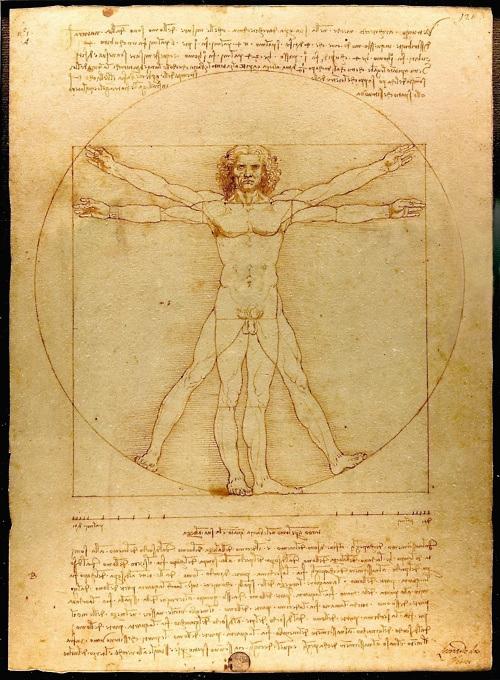
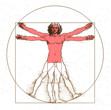
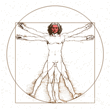
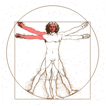
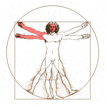
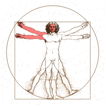
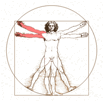
Витрувианский People - drawing created by Leonardo da Vinci around 1490 years as an illustration for a book dedicated to the works of Витрувия. His treatise «Десять books about architecture »is the only surviving ancient works of architecture and it is based on our whole civilization. For any robotics Vitruvius should be required reading.
The main idea of the book is known to everyone, she says that "Man - the measure of all things." The whole architecture of the planet based on human proportions. All engineering structures are made for people. Everything around us is created for human use and, of course, the robots will be completely copy it.
These anthropomorphic robots probably already been created and are in secret laboratories, underground factories, military bases and homes of mad scientists. And we have to be content with their imagination. The exhibition features 40 robots, each of which implements a few functions of the mechanical man. But all together - they are a full copy of a living person. The objective of the exhibition and is to connect these parts into a unified whole with the help of your imagination.
That is why, next to each robot is an indication of what part of the body "android" he represents himself if he thinks - or is controlled by the operator.
And as imagination works best in children, can be found next to the specified age, which designed the robot.
And the main thing - about each robot written a short story in which, inter alia, noted how he came to us.
1. Robot Tespian 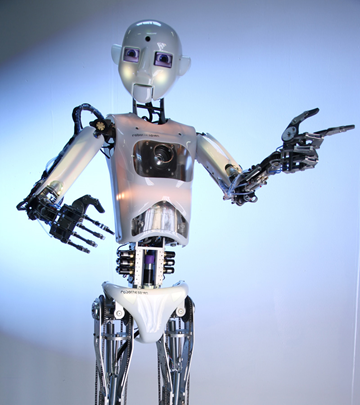
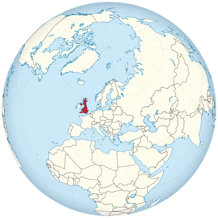
Robot "Tespian» ( RoboThespian ) - interactive robot android, loving and knows how to communicate with people. He was born in the futuristic place in England, under the dome of the "Project" Eden "in Cornwall.
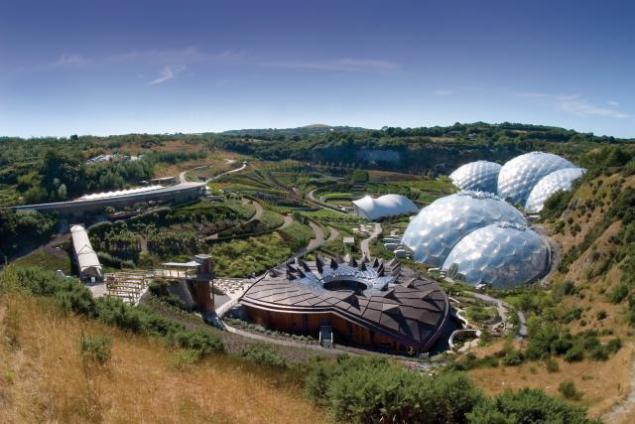
Here he collected in 2005 to participate in the experimental theater robots Tespiana made as interactive as possible, and he immediately fell in love with the public. After 10 years, the robot Tespian of Engineered Arts Ltd., together with Angela Merkel and David Cameron, opened the CeBit 2014 in Hannover in March this year.
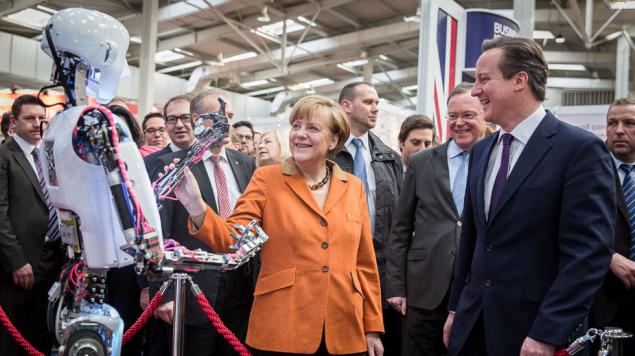
Tespian can change facial expressions and voice, greet guests, recognize people, to repeat their movements, determine the sex and mood interlocutor, tell stories, recite poems, show presentations and play like a real actor. "Tespian" can be programmed to any creative and educational activity.
The robot is controlled from the terminal: operator exercises direct control, including remotely. But the robot itself is able to interact with people: to speak in English, turning to the people and to parody them. Tespian can repeat after you phrase, answer a simple math question, to define the word, by request, to any position or even memorize the new phrase. And yet it work out great scenes from the movies.
But this is only a set of pre-recorded programs run by the operator. Tespian himself does not think that makes it an ideal actor or servant.
There is no doubt that the first generation of home robots will have similar intelligence - a set of programs. This is more than enough to get out of the apartment, go shopping or make for you lessons.
But things aside, like robots, soon may begin to pose a serious threat to the living actors - in contrast to the man who is only available a specific set of types, robots on stage are able to cover the entire spectrum of tasks defined role.
To imagine the future of the entertainment industry, it is enough to recall the fate of the silent film.
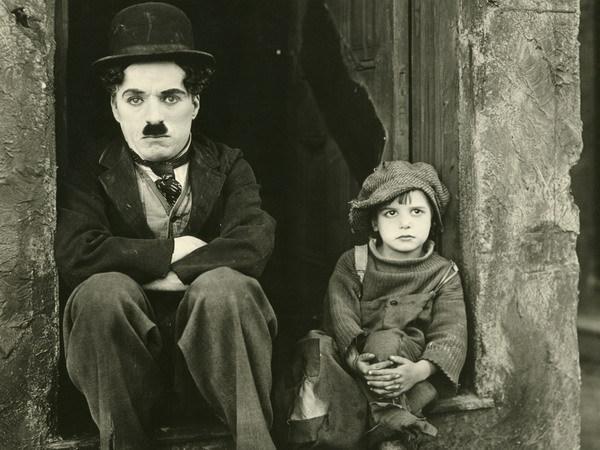
Then in France was dominated by Russian actors, who had fled from the revolution. They certainly were super-professionals, and the level of silent film acting is much superior to a modern, actors in those years just did incredible things - for example, the content of broadcast drama and mime scenes alone. It's like that play Eugene Onegin troupe of mimes 20.
With 20 tespianami it's even easier than with live actors, they have emotions and lights illuminate.
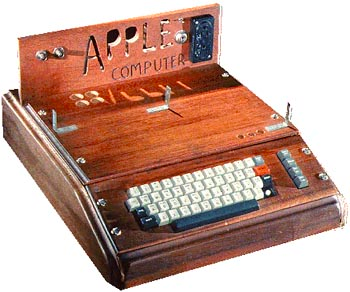
Of course right now it is a prototype of a robot with gears out, but that gives it a well-known charm inherent in all "garage prototypes." Suffice it to recall looked like the first personal computer - Steve Jobs and Wozniak collected it in his garage in a housing made of wood!
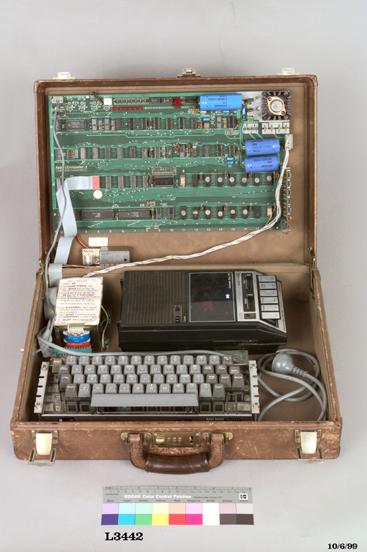
A first notebook generally housed in a shabby briefcase - then the audience with laughter greeted these new techniques, but now, the descendants of these nice "monsters" are in every home. So make your conclusions.


2. A2D2 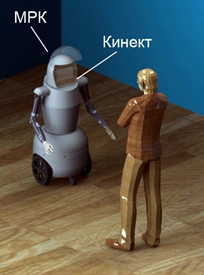
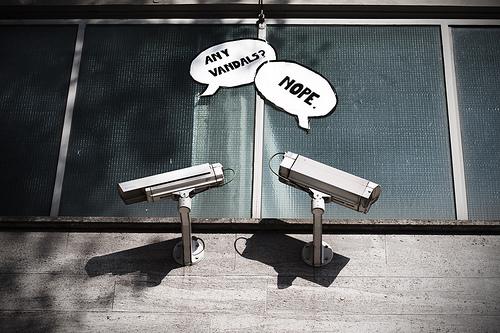
Annual progression shows that the installation of surveillance cameras hundreds of times lowers crime and hooliganism. No one keeps track live for a while in the field of view.
At best, there is only one operator on nine screens. The rest of the camera or lead record, or even worse - are dummies. However, this is enough - when a man knows he is in the frame, I always behave prudently.
However, the camera still, they are easy to get around, and they do not make you comments.
But what if you put the camera on the mobile platform, provide display and manipulators? Then you can "interact with the audience" manually sitting elsewhere for your Ipad.
At school, for example, the children of the robot and listen longer.
But what about the main advantage of cameras - autonomy?
Since the robot is even better! Nobody will know when they are controlled by the operator, and when he acts independently - enough to put the Kinect sensor and write Face Detection, emotions and gestures. Then you can quite successfully simulate the presence of the operator and even change his mood as necessary.
A2D2 security robot - a robot-guard school, operating on the principle of telepresence. That is, they will remotely control the people.
Its peculiarity is that it can produce self-monitoring facilities, the people managing them can be in any country in the world. Some of the "chips" program can read, that is, to determine the emotions of people.
A2D2 - is a mobile remote-controlled robot. His head is integrated display, which shows the image of the operator.
He also sees the interlocutor, the robot can turn his head in two planes, move the manipulators (they have five degrees of freedom) - for example, indicate somewhere to express their emotion gesture, or even hug a person with whom talks. The robot moves at a maximum speed of 5 km / h on a level floor and has a high maneuverability. Mobile platform based A2D2 equipped with eight sensors that help the robot does not collide with the surrounding objects. The robot is able to operate without control: to recognize and repeat the emotions with the help of the built-in Kinect, independently conduct a dialogue and to pass mazes. A2D2 can be connected to a power outlet, and built-in battery will provide 4-6 hours of battery life.

3. Alice 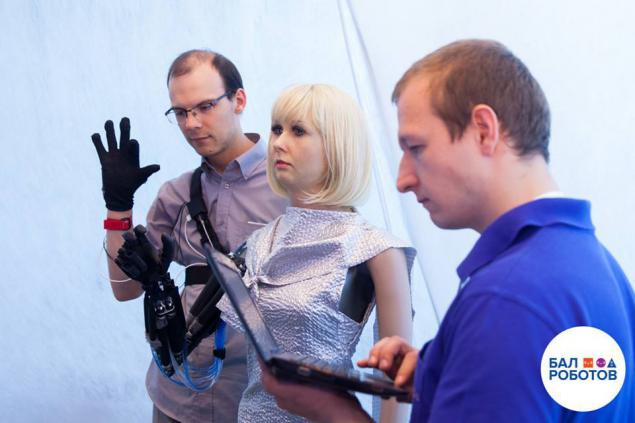
Man and apes sharply distinguished not only by an outstanding intellect, but also the structure of the hands. Human hand - this is the same crown of evolution, as well as his mind. This is a complex engineering device, perhaps unparalleled in the animal kingdom. Our hand can be paddled as a paddle, put it into a fist and beat like a stone, but you can thread a needle or read the touch alphabet Braelya. The hand is delightful, and is considered as a symbol of human physical perfection.
Fist - a primary and a strong character, like a skull. Actually, these two parts of man, and is, the rest - the standard "chassis" for all hominids.
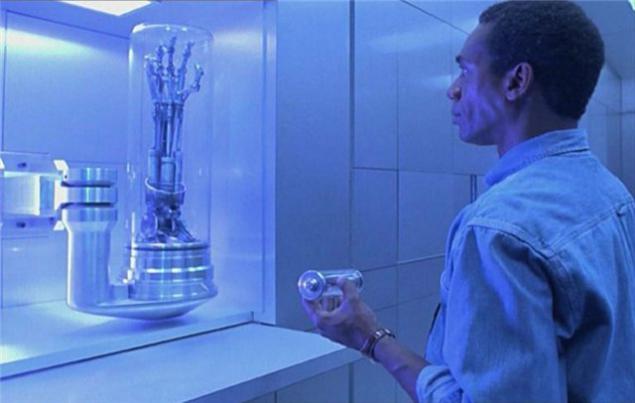
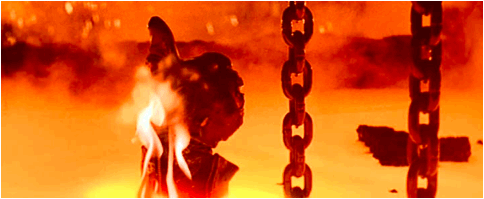
Think "Terminator 2" - in it the whole way of the killer robot is built on the mechanical hand (it only from him, and then left with a piece of the processor). The same hand he demonstrates fanatical scientist.
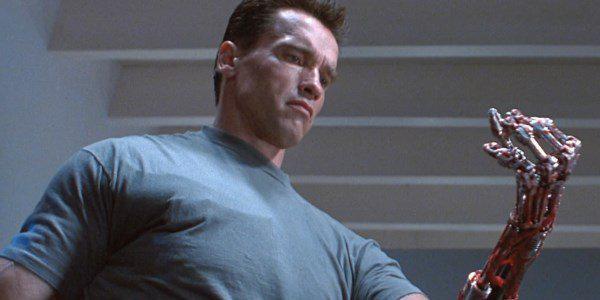
In 1991, it seemed the supreme proof of the excellence of future science - six-core processor and the hand, repeating the human fact, a major achievement for 1991. But, as you can see, today, these hands can collect in Zelenograd garage.
Hand Alice built on the soft parts of the pneumatic, on the creation of 3D-printer. The design follows the human and possesses all of its degrees of freedom. That is, whether it is made of steel, it would have to be lowered into the molten metal to prevent scientists to create Skynet!
In addition to arms, Alice is also the face with 13 facial muscles. Thanks to speech recognition and artificial intelligence, "Alice" can engage in dialogue with the person at the same time, it responds to his emotions and is able to repeat them. The same prototype, but allowing sufficient to reflect the palette of all the major human emotions and demonstrate the ability to create individual copies of real people.
Two of these technologies demonstrate the company's ability to create and fully chelovekapodobnogo robot. Two of the most complex component, they have already created with one 3D-printer and a dozen students from the Bauman.

4. Pushkin 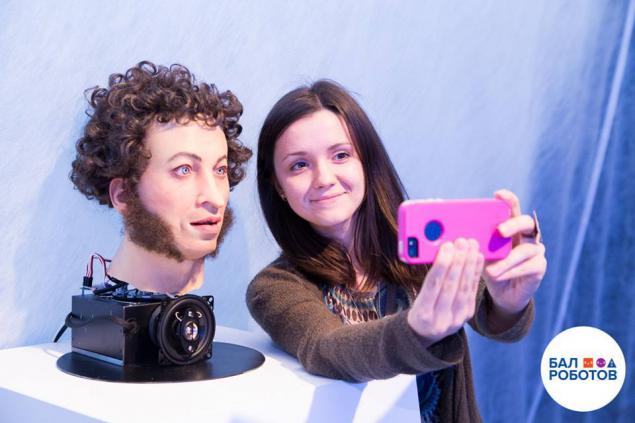
If we had been possible to resurrect the great men of the past, we would, of course, started with the best representatives of the arts. It was nice to hear the dialogues of Socrates in the original version or discuss Eynshteinom quantum physics. But who is the first to resurrect? Whose voice back from the dark ages?
If rodonochalnikom philosophy of Socrates, who is "started" the Russian language?
I mean the modern Russian literature created by the Government to the very end of the 18th century (before litertarunogo Russian language did not exist, remember to quote Petr1 and his contemporaries).
What is the difference from the Pushkin writers of an earlier era? Karamzin completed the formation of the Russian language, and Pushkin first spoke to him, with all the modulations and revolutions. This Pushkin - this is our speech. There still is arhizmy and Gallicisms, but the general flow is negligible. We all Pushkin, it's our culture. Speaking in Russian, even Derzhavin - a bit of a problem. I think most would like a dialogue with Serbia or self-taught, learned Russian.
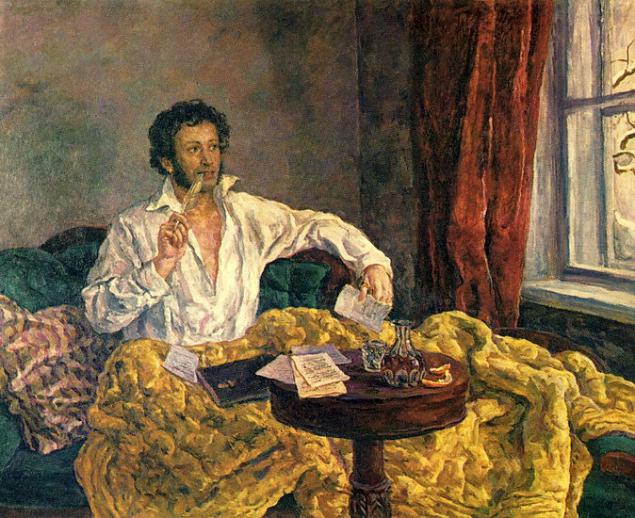
Pushkin was the first person to speak in literary Russian language, and his speech was like a thunder - was born the great Russian literature. That is why, Neyrobotiks chose Alexander Sergeyevich as a prototype for his first robot.
Imagine that the same can conduct physics lessons Einstein, Chemistry - Mendeleev, that Peter first tell how he had decided to build St. Petersburg or as clipped beards boyars. Such lessons will be remembered forever.
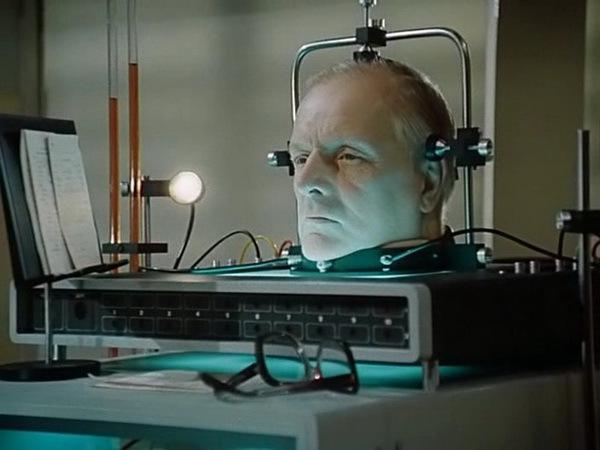
head anthropomorphic robot standard mount includes everything you need to see and hear, open your mouth and express emotions, watch for human eyes, sing and recite poetry, to maintain a dialogue with the interlocutor. However, for the modulation of speech, used a normal function of her recognizers search engine Google. The head of "Pushkin" can be interfaced with other modules: the torso, arms and a mobile platform, but can also be used separately. As the head of Professor Dowell.

5. R.BOT 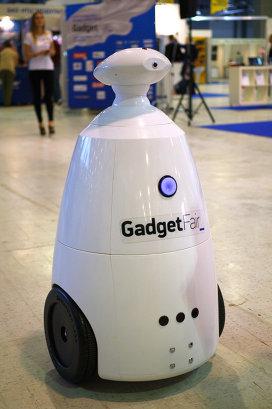
Emulators communication Addenda reality maps and guides - pretty promising genre of applications for tablets, as well as video calls. But they will always be missed "body" for full independence. It's one thing to carry in your hand auditogida and quite another - to follow in the gallery in the wake of the present conductor, capable of maintaining the dialogue with you.
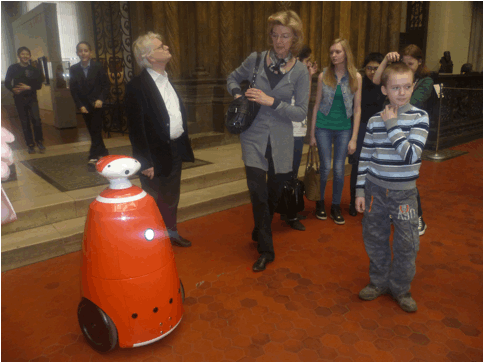
That is decided at the Museum of Fine Arts named after Pushkin and launched a "digital guide". The truth is not in offline mode - it controls the remote operator Anton. Anton is not able to move independently - he moves with the help of a wheelchair. About robot R.bot he learned through the organizers of the charitable project «Foto CHE» and volunteered to assist in the conduct virtual tours and workshops on photography.
This happens as follows: from your PC, from home, Anton is connected to the robot via the Internet and is completely transferred to the place where you installed R.bot. Robot dynamics are ears Anton camera - eyes and a microphone transmits or that said Anton, a text that it prints on the keyboard. The movement of the robot and turns his head are controlled by buttons on the keyboard. By the way, his "neck" mechanism has 4 degrees of freedom, allowing you to turn your head in 4 planes, that is, in all necessary directions for the full review. Thus, the robot is completely transferred to the museum of Anton, allowing him to feel its presence there, and communicate interactively.
Apart from the fact that Anton has the opportunity to visit the museum without leaving the house, he also helps other people connected to the robot, see the exhibits, visit the tour and chat with visitors.
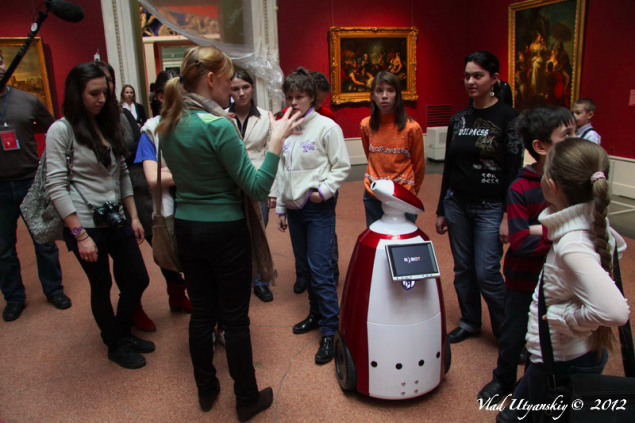
Model Synergy Swan a mobile chassis, which is attached to a smartphone running Android. The name "Swan" this robot was not just when it is expanded or stretched neck, he really begins to resemble a swan. Control the robot and see the image from the camera of the smartphone can be using client application for any operating system, including mobile.
R.BOT Synergy Mime - a series of very small robots. Functionally, they are similar to the Swan, but do not have wheels. But these robots are miniature and stand and charging for mobile phone. The operator of the robot can lift and lower phone Mime and twist around its axis, to see what is happening around.

6. Paul 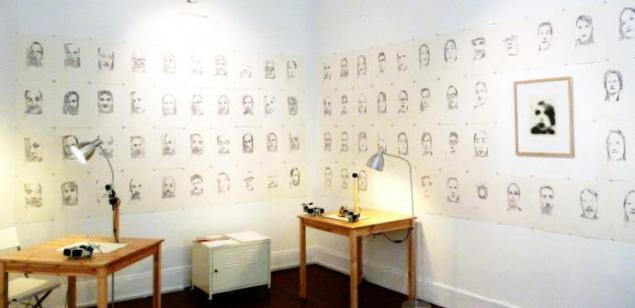
Thunderstorm Arbat all artists!
This robot will draw a portrait of a man in twenty minutes. To do this he will need to see the face through the camera, then apply to the image a unique algorithm that turn photo into a work of art robotic.
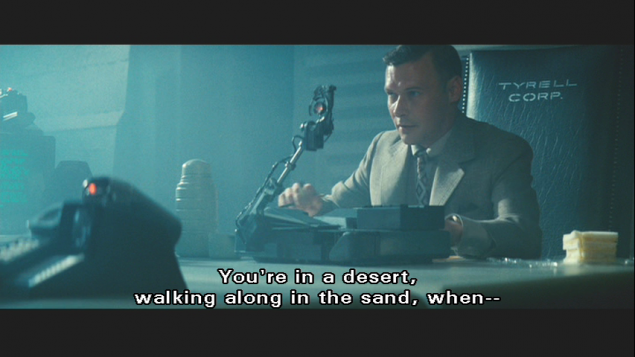
You probably remember a similar device from the movie Bladerunner. Only there is scan the emotional response and to identify soulless androids. Well, our unit better than the artistic value reveals the human face, turning it into a work of art - forty years, this portrait will cost as a robot. About how now is a portrait of a famous artist of the early twentieth century.
Draws "Paul," taking in hand an ordinary ballpoint pen. Do not miss the opportunity to get a portrait of the robot arms - still a unique thing, it does not say. And we can hope that someday, Paul will be able to aim a blow at the large format. It is labor-intensive and large-scale work - in Russia only one person draws in a similar style, and he does it is not fast. A robot would be able to "print" any web without any tension.
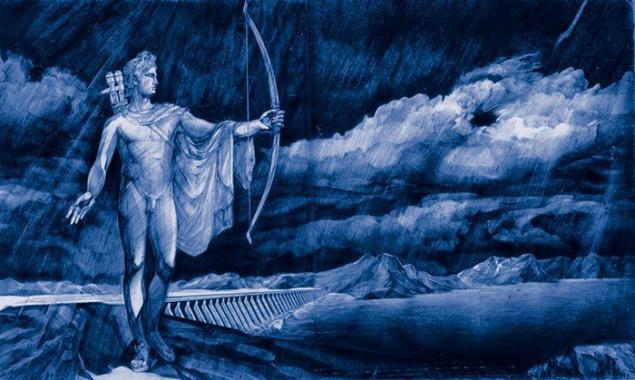
This picture "Novonovosibirsk" 4x2 meters is also drawn with a ballpoint pen, but a man - a Russian artist Alexei Gintovt
The creator of the robot - Patrick Tresse , French artist and programmer. His goal was to give the car the ability to not just mechanically reproduced image. "Paul" paints as if people worked on the painting. The algorithm embodied in the robot, based on the simulation of human perception and hand movements of the artist.


7. Pinokio 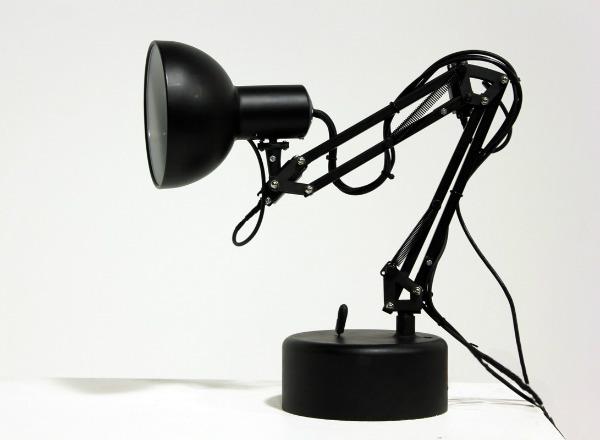
This lamp as a living , it recognizes faces, and behaves according to their expression - can flirt or, conversely, to turn away. And if you try to turn it off - it will switch the switch back, as if nothing had happened. Actually, the embodiment of the idea revived skazachno furniture - an art in itself at Disney.
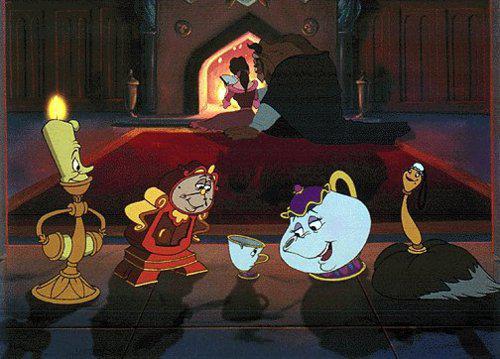
But Pinocchio lamp goes further and creates a "cross-cultural phenomenon" - in fact in relation to things Russian and European cultures vastly different.
Source: habrahabr.ru/company/balrobotov/blog/228635/

2. A2D2
Annual progression shows that the installation of surveillance cameras hundreds of times lowers crime and hooliganism. No one keeps track live for a while in the field of view.
At best, there is only one operator on nine screens. The rest of the camera or lead record, or even worse - are dummies. However, this is enough - when a man knows he is in the frame, I always behave prudently.
However, the camera still, they are easy to get around, and they do not make you comments.
But what if you put the camera on the mobile platform, provide display and manipulators? Then you can "interact with the audience" manually sitting elsewhere for your Ipad.
At school, for example, the children of the robot and listen longer.
But what about the main advantage of cameras - autonomy?
Since the robot is even better! Nobody will know when they are controlled by the operator, and when he acts independently - enough to put the Kinect sensor and write Face Detection, emotions and gestures. Then you can quite successfully simulate the presence of the operator and even change his mood as necessary.
A2D2 security robot - a robot-guard school, operating on the principle of telepresence. That is, they will remotely control the people.
Its peculiarity is that it can produce self-monitoring facilities, the people managing them can be in any country in the world. Some of the "chips" program can read, that is, to determine the emotions of people.
A2D2 - is a mobile remote-controlled robot. His head is integrated display, which shows the image of the operator.
He also sees the interlocutor, the robot can turn his head in two planes, move the manipulators (they have five degrees of freedom) - for example, indicate somewhere to express their emotion gesture, or even hug a person with whom talks. The robot moves at a maximum speed of 5 km / h on a level floor and has a high maneuverability. Mobile platform based A2D2 equipped with eight sensors that help the robot does not collide with the surrounding objects. The robot is able to operate without control: to recognize and repeat the emotions with the help of the built-in Kinect, independently conduct a dialogue and to pass mazes. A2D2 can be connected to a power outlet, and built-in battery will provide 4-6 hours of battery life.
     3. Alice  Man and apes sharply distinguished not only by an outstanding intellect, but also the structure of the hands. Human hand - this is the same crown of evolution, as well as his mind. This is a complex engineering device, perhaps unparalleled in the animal kingdom. Our hand can be paddled as a paddle, put it into a fist and beat like a stone, but you can thread a needle or read the touch alphabet Braelya. The hand is delightful, and is considered as a symbol of human physical perfection. Fist - a primary and a strong character, like a skull. Actually, these two parts of man, and is, the rest - the standard "chassis" for all hominids.  Think "Terminator 2" - in it the whole way of the killer robot is built on the mechanical hand (it only from him, and then left with a piece of the processor). The same hand he demonstrates fanatical scientist.  In 1991, it seemed the supreme proof of the excellence of future science - six-core processor and the hand, repeating the human fact, a major achievement for 1991. But, as you can see, today, these hands can collect in Zelenograd garage. Hand Alice built on the soft parts of the pneumatic, on the creation of 3D-printer. The design follows the human and possesses all of its degrees of freedom. That is, whether it is made of steel, it would have to be lowered into the molten metal to prevent scientists to create Skynet!  In addition to arms, Alice is also the face with 13 facial muscles. Thanks to speech recognition and artificial intelligence, "Alice" can engage in dialogue with the person at the same time, it responds to his emotions and is able to repeat them. The same prototype, but allowing sufficient to reflect the palette of all the major human emotions and demonstrate the ability to create individual copies of real people. Two of these technologies demonstrate the company's ability to create and fully chelovekapodobnogo robot. Two of the most complex component, they have already created with one 3D-printer and a dozen students from the Bauman.
|
