9126
Tank. Inside
We have all seen films about war and brave tankers. But, I bet not everyone has had a chance to visit these combat monsters.
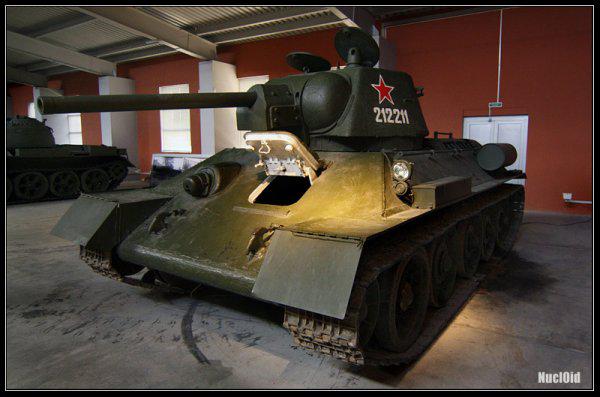
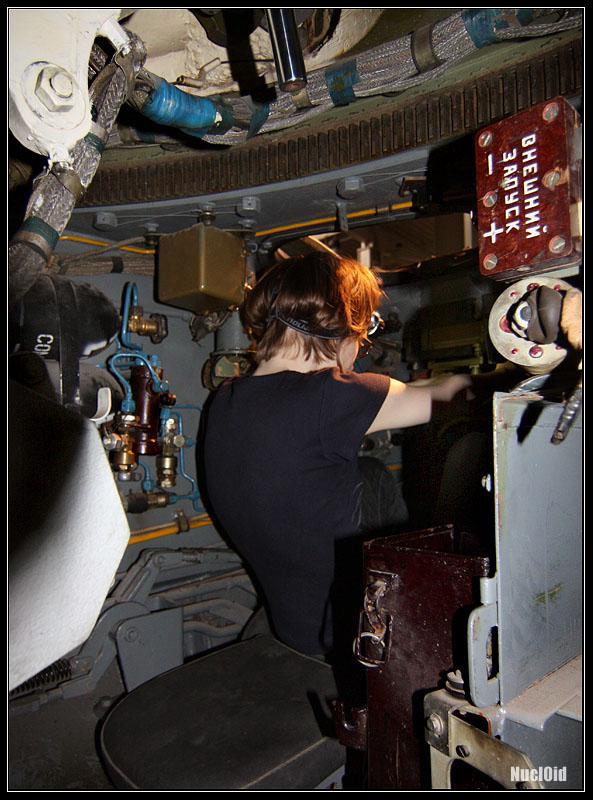
Above is a photo of the OT-34 tank (flamethrower T-34). Driver's seat. By the way, the car is on the move!

Behind the driver's back, turret space
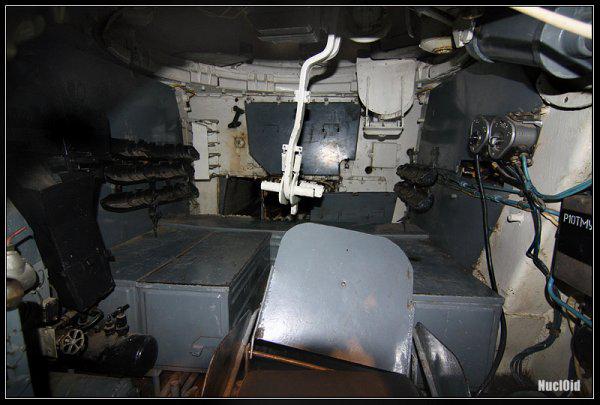
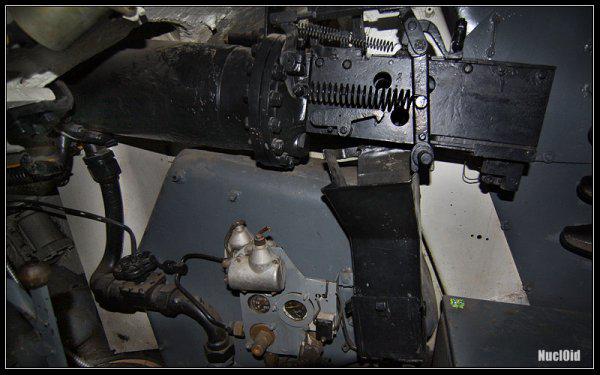
The main difference between the OT-34 and the regular T-34 is the presence of a flamethrower instead of a bow machine gun to the right of the driver. In the photo, it is he - the ATO-42 flamethrower.
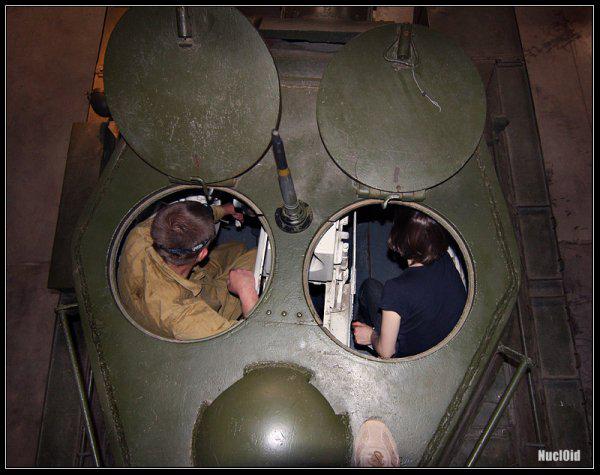
Tower. View from above. Cramped and nothing more. In such a confined space, it is very difficult to take pictures, even a submarine was much easier to photograph. But people in these boxes fought...
The same tower only from below
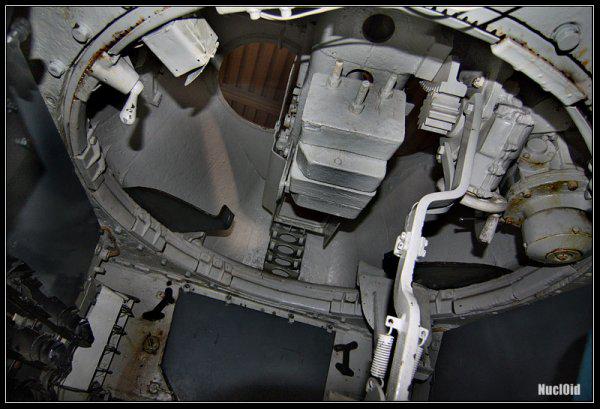
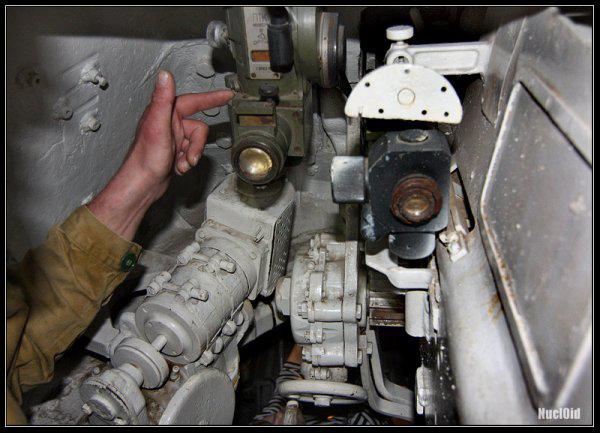
Commander's place. Miracle devices will seem even more archaic after looking at the T-62 device, but more on that later. The photo below also shows a driver in a striped vest...
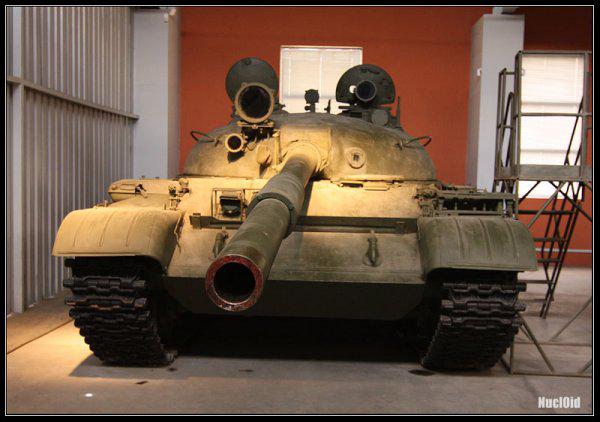
Now let's move on to the T-62, which was produced since 1961.
Now let's take a look at it from the inside. But first, for a more informative consideration of the insides, I will present a diagram of the T-62 control compartment:
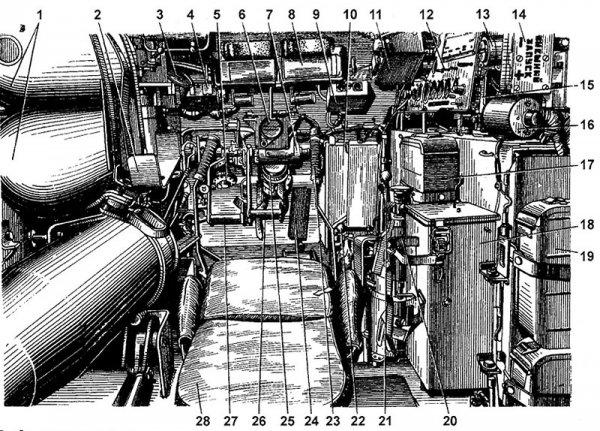
Control compartment: 1 – air cylinders; 2 – rack for attaching the magazine-box; 3 – speedometer; 4 – KRP-1 device; 5 – booster of the hydropneumatic drive of the main clutch control; 6 — course indicator; 7 – heading indicator power unit; 8 – driver's observation device; 9 – KUV-3 device; 10 – dry soldering box with a rack for the driver's spare prism; 11 – AS-2 assault rifle; 12 – instrumentation panel; 13 – engine hour meter; 14 – external start socket; 15 – bracket for mounting the DP-ZB measuring panel; 16 – battery switch; 17.19 – box shop; 18 – box for TVN-2; 20 – manual fire extinguisher; 21 – gear lever; 22 – fuel priming pump lever; 23 – PMP control lever, right; 24 – fuel supply pedal; 25 – drinking water tank; 26 – brake pedal; 27 – main clutch pedal; 28 – driver's seat
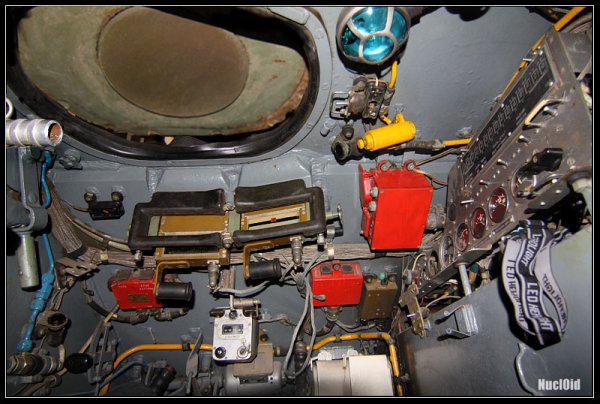
And this is how it looks in reality
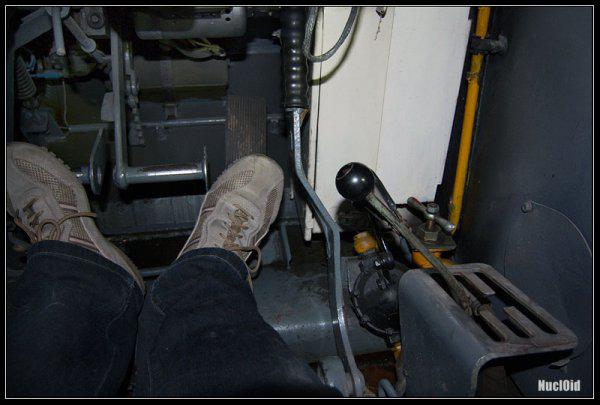
Gear lever
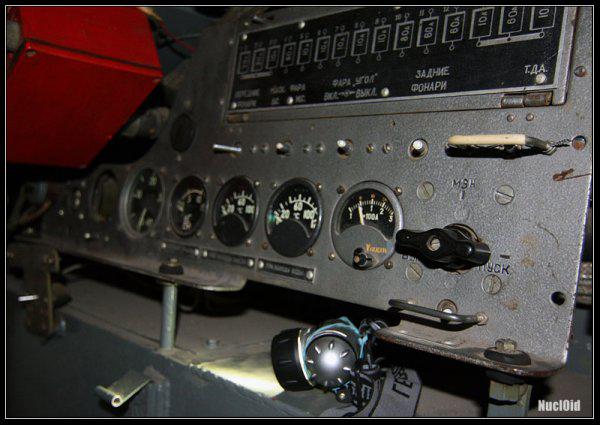
Dashboard or "instrument panel"
Driver-mechanic, view from the loader's side
Now let's consider the fighting compartment in the tank turret. It contains the places of the loader (to the right of the gun), the gunner (bottom left and front) and the commander (top left and rear). Well, in the middle is a gun, and not a simple one, but a smoothbore 115-mm U-5TS with stabilization in two planes (for the first time on a serial Soviet tank).
Fighting compartment diagram:
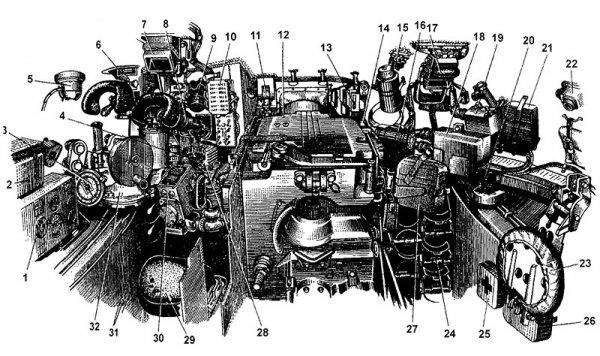
Fighting compartment: 1 - R-123 radio set; 2 – power supply unit of the radio station; 3 – azimuth indicator; 4.20 – fans; 5 – protective cap of the antenna input; 6 – TPN-1 night sight; 7—TNP-165 observation device; 8 – TSh2B-41 sight; 9 – radio interference filter; 10 – switchboard; 11 – power cylinder rod; 12 – gun; 13 – replenishment tank; 14 – coaxial machine gun; 15 – water tank; 16 – voltage converter; 17 – loader's observation device; 18 – stabilizer junction box; 19 – control box for the ejection mechanism of the cartridge cases; 21 – bag with spare parts of the gun; 22 – TPU apparatus No 4; 23 – loader's seat; 24 – ammunition rack in rack tanks; 25 – first-aid kit; 26,27 – box magazine; 28 – amplifier unit; 29 – gunner's seat; 30 – control panel; 31 – compressed air cylinders; 32 – turret traverse mechanism
Commander's place. Two sights, on the left night (with IR illumination), on the right day. In general, all those "black searchlights" outside the tank are IR illumination systems for IR observation devices of various crew members.

Bottom view of the commander's seat. The photo was taken from the gunner's seat.
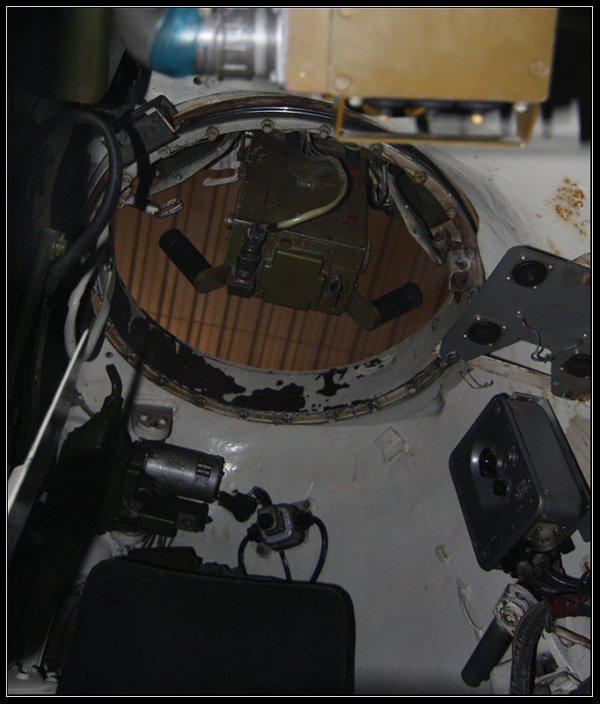
And now the gunner's seat itself (there is his seat in the center and the footrest is a little lower). View from behind the driver's back. The gunner generally sits in the very outback, at the bottom of the turret. And behind him, a little higher, sits the commander. They get out through one hatch, through the commander's seat. So claustrophobia is especially contraindicated for the gunner)
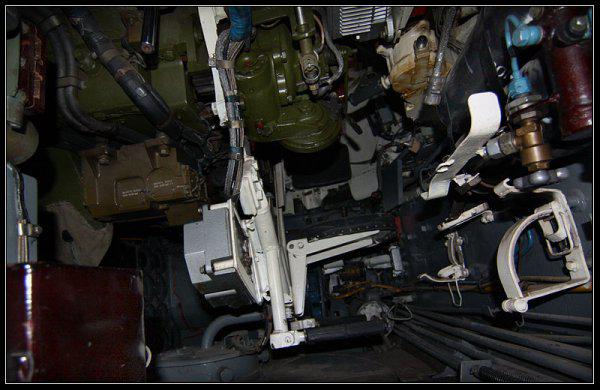
Well, the loader's place is to the right of the breech of the gun. Here, for obvious reasons, it is somewhat freer than in the rest of the crew seats. Even the seat folds. On the left in front is a machine gun (or rather, what is left). At the bottom was a tank-rack in which shells were lying and fuel was being pumped.
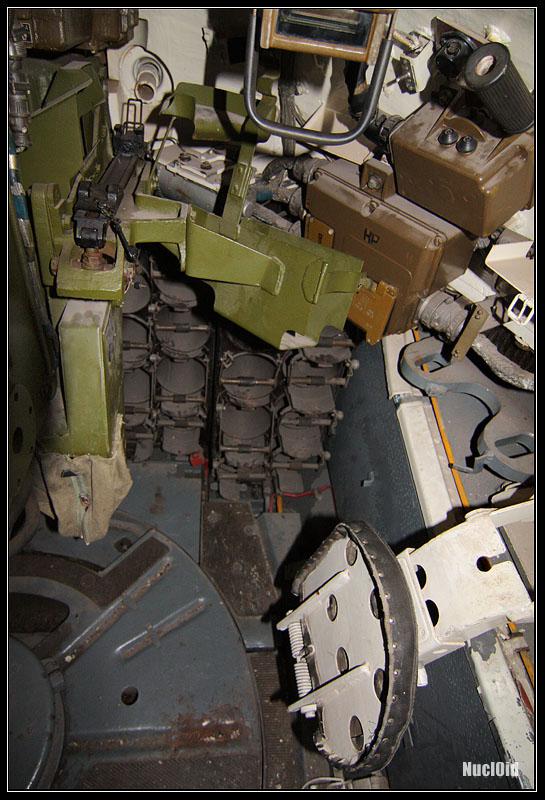
Loader's observation device. The brown box at the bottom right is the mechanism for controlling the ejection of cartridge cases. This is such a feature of the sixty-two compared to its predecessors - it throws out spent cartridges through the hatch in the rear of the turret.
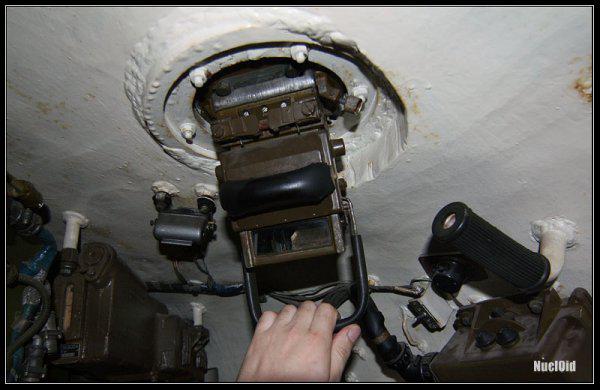
Here is this hatch for ejecting spent cartridges

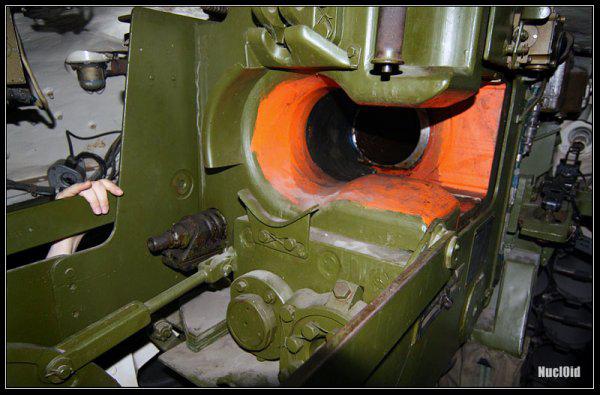
And, perhaps, the most important warhead inside the tank is the breech of the gun.
And finally, "Object 140". This is a prototype created in 1957 as a fundamentally new machine. However, it did not come to a series. The suspension was later used in the creation of the T-72. Externally, the suspension is different from the T-54/55 and T-62 (the main one is six wheels instead of five), as well as a large round turret.

Alas, inside it was preserved even worse than the T-34. Or rather, the T-34 is brought to a godly appearance, but this one is not. There is not even much to see. But the size of the turret is amazing, especially in comparison with the same thirty-four.
Top view of the loader's seat, below in the photo is the gun.

The same place for the loader. Unlike the T-62, there is almost nothing of equipment here. Only the gaping holes of the tank-rack...

The barrel of the cannon is in oiled paper.

Gunner's Station
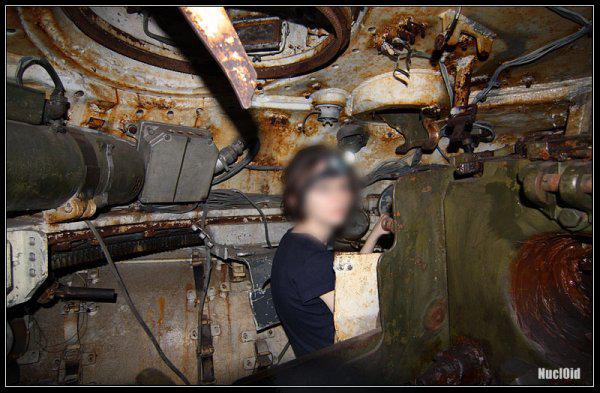
Aft Turret