11247
Tailless scorpions
Phrynes (Amblypygi) are tailless flagellated spiders belonging to a small order of tropical arachnids Amblypygi. The name of the squad means "dumb butt" in Greek. In English-speaking countries, phrynes are called tailless scorpions due to the lack of a tail (telson).
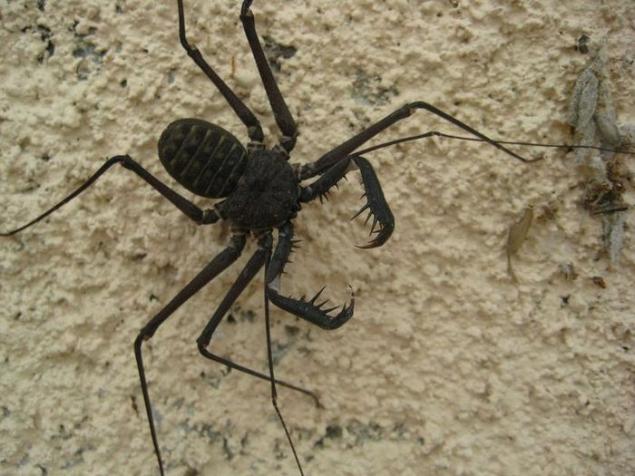
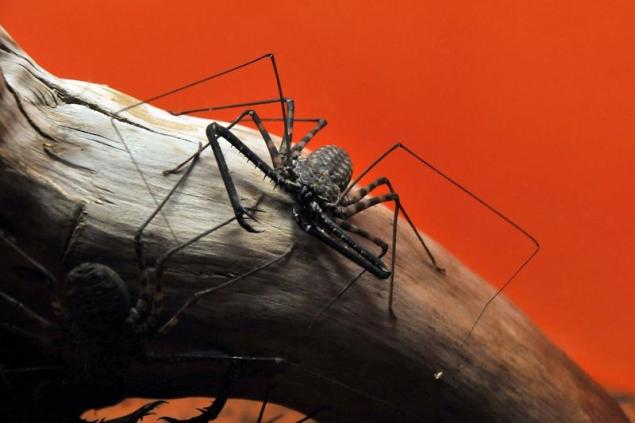
Phrynes are unique in that they have six walking legs, whereas other arachnids have eight. The reason for this is that flagellated spiders were the first arachnids to change walking legs into sensory organs. These long, sensitive tentacles can be twice as long as the body, and are used to explore the environment.
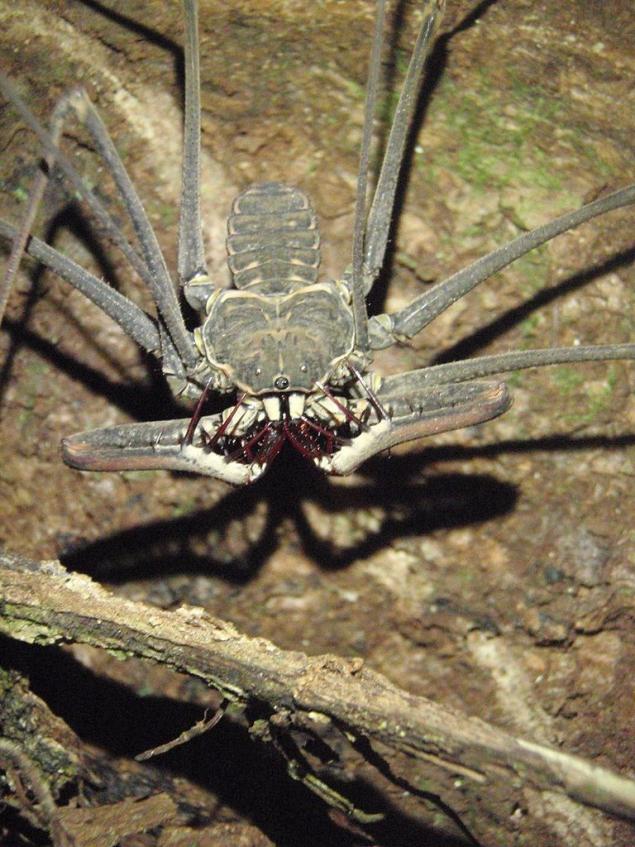
Since phrynes are active in conditions where very little sunlight penetrates, these modified legs are very important for them as a tool for learning about the world around them.
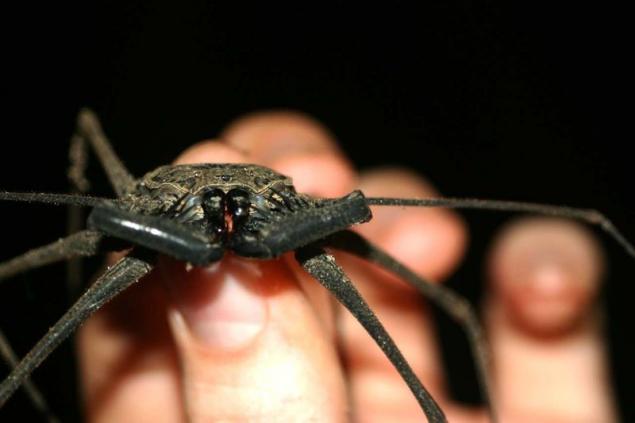
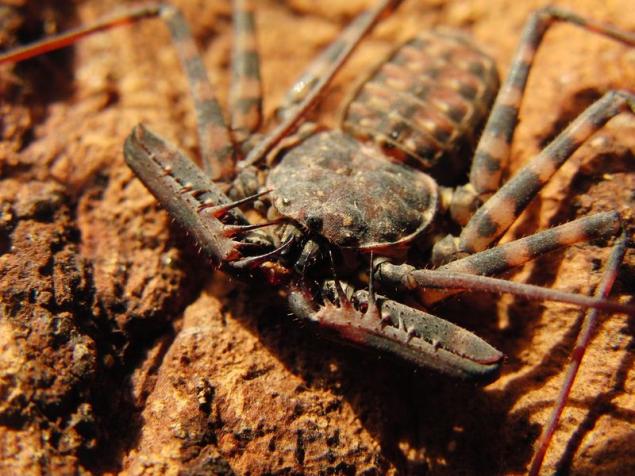
Another distinguishing feature is their pedipalps in the form of pincers. These structures act as the grasping limbs of a common mantis or mantis shrimp. Phrynes use them to catch prey, which they then shred with their mouth tentacles, the so-called chelicerae.
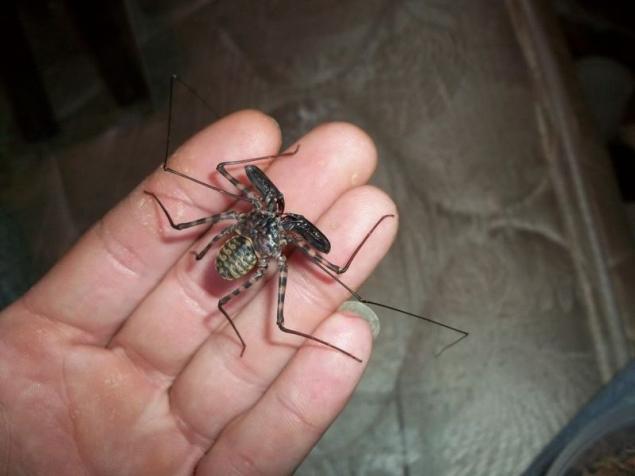
Currently, taxonomists distinguish 5 families, 17 genera and 136 species of phrynes, which live all over the world in tropical and subtropical countries. There are many rumors about them and many fables have been written by European and American writers. The reason for this was their extreme unusualness and complete absence in countries with a temperate climate.

Phrynes have always been incomprehensible and unpleasant to ordinary people, so there are many fables about them. In some places where flagellated spiders live, locals are afraid of them and consider them extremely dangerous. For example, during a stay in the Seychelles in 1872, a biologist was told by locals that after a phryne bite, swelling, convulsions and vomiting occurred, and that if the victim was not treated with ammonia, it would eventually lead to long-term illness or death.
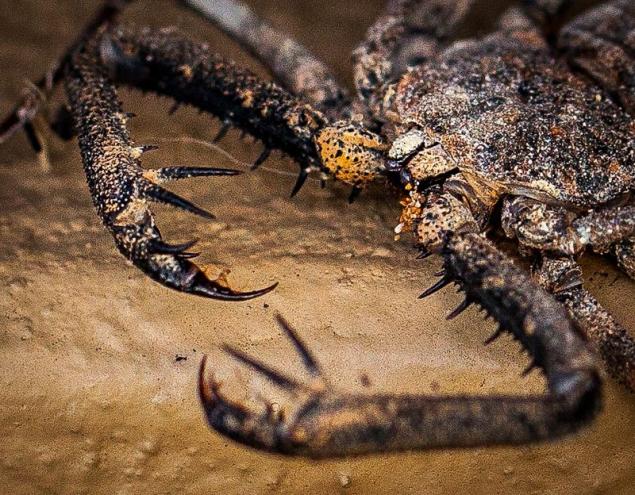
Some scientists were even afraid to examine the samples of these arachnids brought to Europe, so great was their prejudice. One of the first authors to describe phrynees said that they could inflict severe injuries on a person with the help of pedipalps, which could even lead to death after a bite.
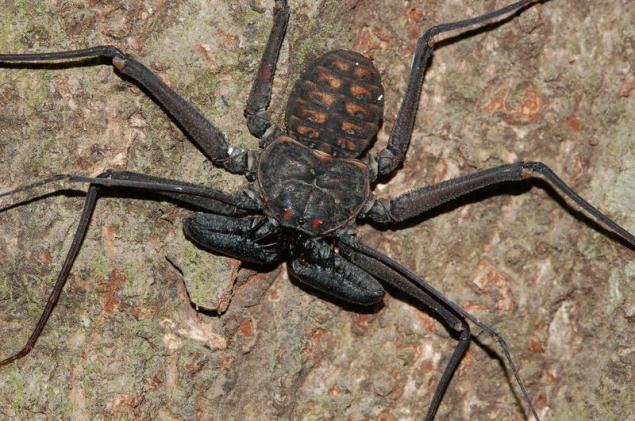
However, no matter what they write about these creatures, they are completely harmless. Phrynes are deprived of the ability to bite or harm humans in any way. Flagellated spiders are not venomous, and their formidable pedipalps are used exclusively to capture small prey, such as tiny bugs crawling on tree trunks.
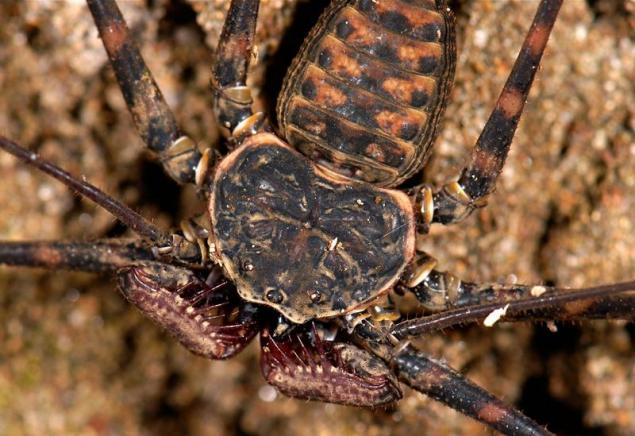
Even today, the media has not taken any action to debunk the myth that phrynes are dangerous to humans. For example, in the film version of Harry Potter and the Goblet of Fire, flagellated spiders are described as "deadly" animals cursed by the All-Seeing Eye. Phreynes are rare guests on television because of their unusual "shocking" appearance. In the show "Fear Factor," contestants were forced to eat these creatures, proving that humans are far more dangerous to flagellated spiders than they are to us.
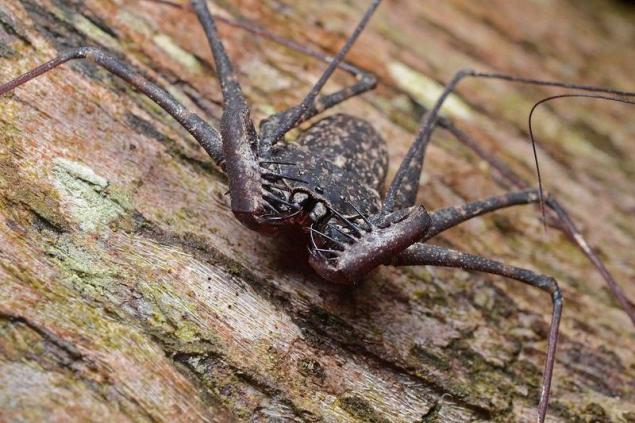
The vast majority of phrynees are nocturnal. They spend the light part of the day in the cracks of trees or under stones. Some flagellated spiders live exclusively in caves.
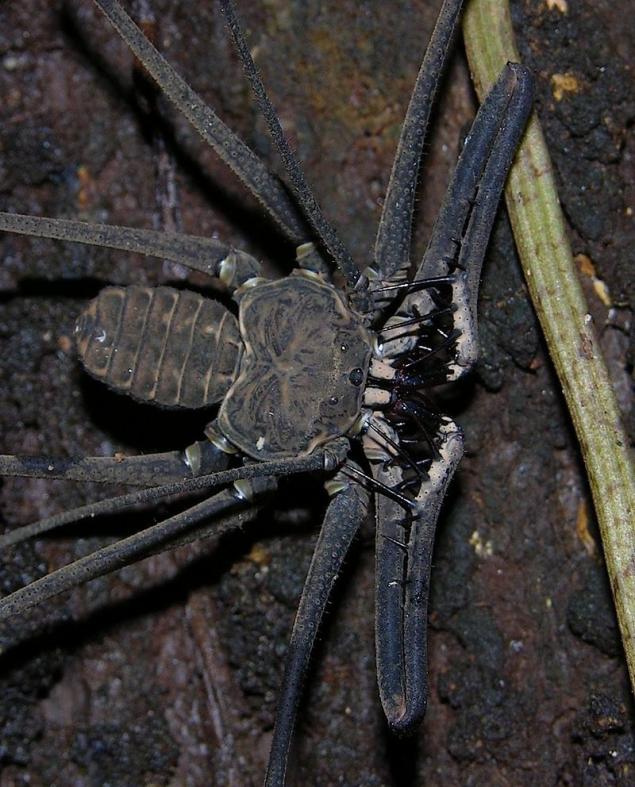
Sometimes these fights turn into real fights, and the males wrap their arms around each other and push. Fights end when one of the phrynes flees from the battlefield or allows his opponent to step over him. If the winner and loser are together after the fight, the loser will avoid the winner in every possible way and will show his submission with gestures to avoid another fight.
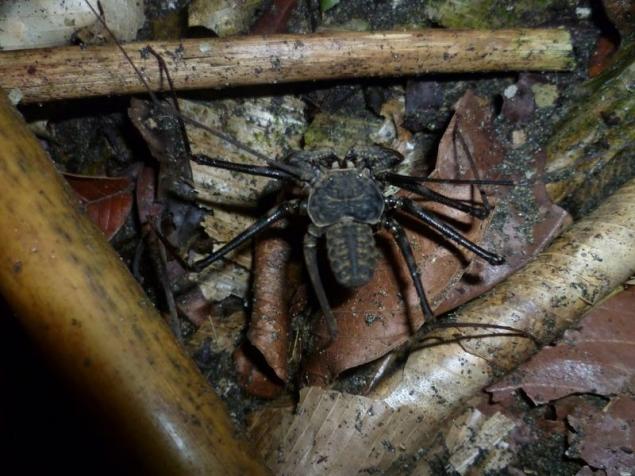
Phrynes are caring parents. And it is extremely interesting to watch them at this time. Newborn phryniates cling to the mother's abdomen for several days after birth. Then they molt and leave the care of their mother. The "cub" of the flagellated spider is usually white immediately after birth, and thus becomes immediately visible when the phryniha has given birth.
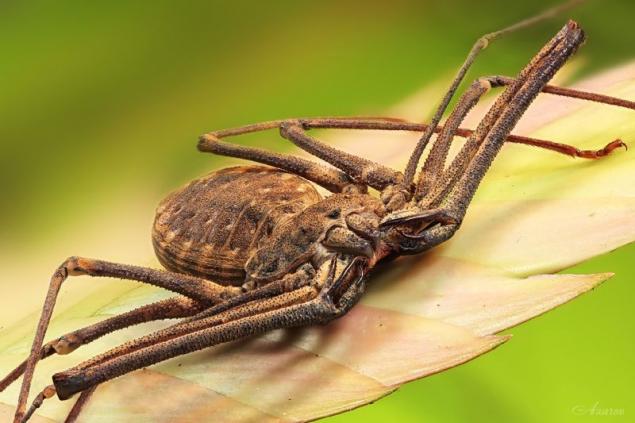
Very little is known about flagellated spiders. There are probably only about a dozen scientists around the world who are actively involved in studying their biology.
Recent studies in the lab, using a high-speed camera and high-precision sound-sensing equipment, have shown that phrynes use sound to communicate during male fights (Santer and Hebets, 2008). This is due to the vibration of the sensitive antennae. The opponent receives the signal through long sensitive hairs located on the kneecap of the walking legs.
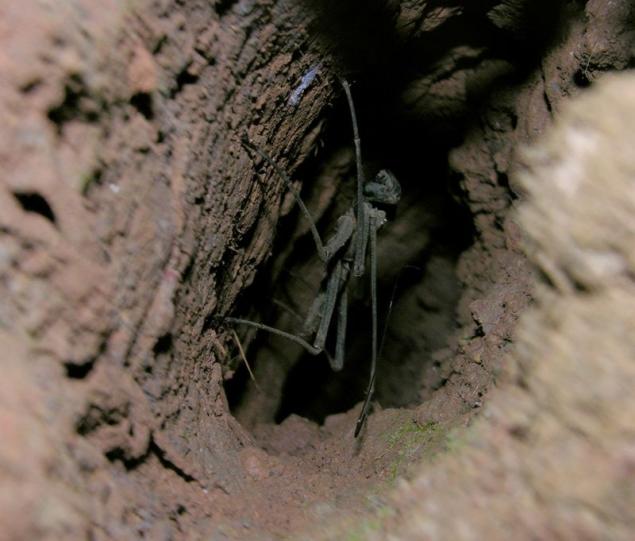
Phrynes have flat bodies adapted for crawling into cracks and other hard-to-reach places where they hide during daylight hours. Flagellated spiders hunt at night, when they can be seen on tree trunks.
The photo shows that the grasping limbs are spread apart. Perhaps in this position, the phryne is waiting for its victim in ambush. If it is disturbed, it presses its predatory legs closer to the body.
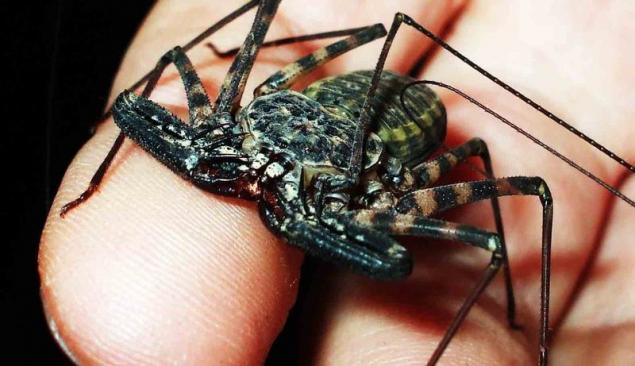
There are 136 species, 17 genera and 5 families of phrines. They are found in the tropics and subtropics. Phrynes are moisture-loving, so they almost never leave the forests, where during the day they hide under plant debris, loose bark and in cracks in stones. Some species are found in termite mounds. Cave dwellers (some species of Phrynichus) have reduced lateral eyes.
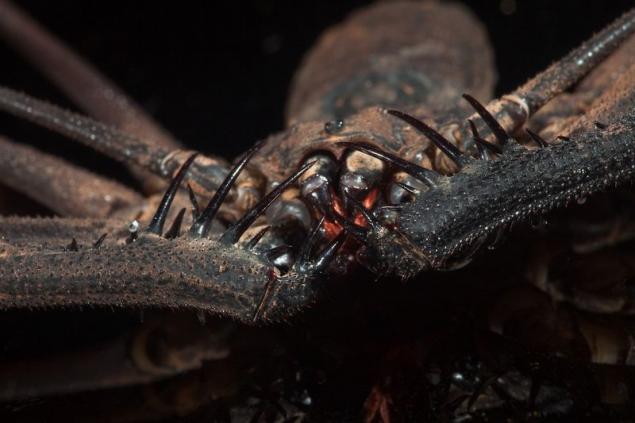
Phrynes usually move sideways, like crabs. At the same time, one of their "tendrils" is directed in the direction of movement, and the other is constantly feeling the surroundings.
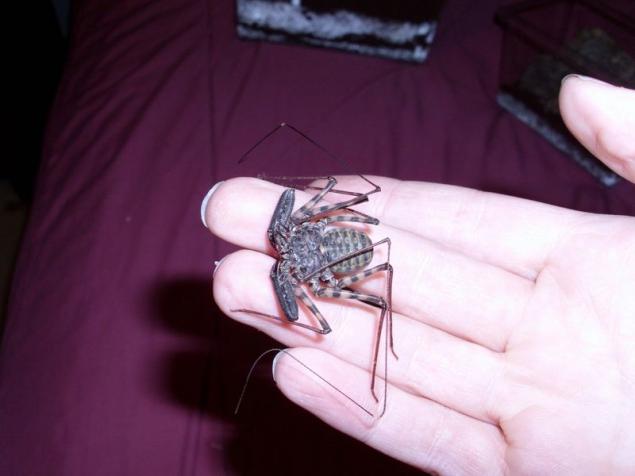
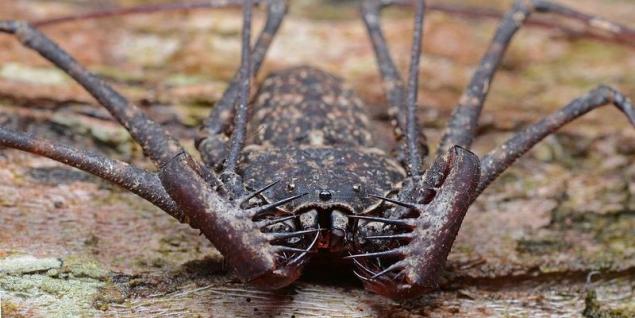
There are many rumors about them and many fables have been written by European and American writers. The reason for this was their extreme unusualness and complete absence in countries with a temperate climate.
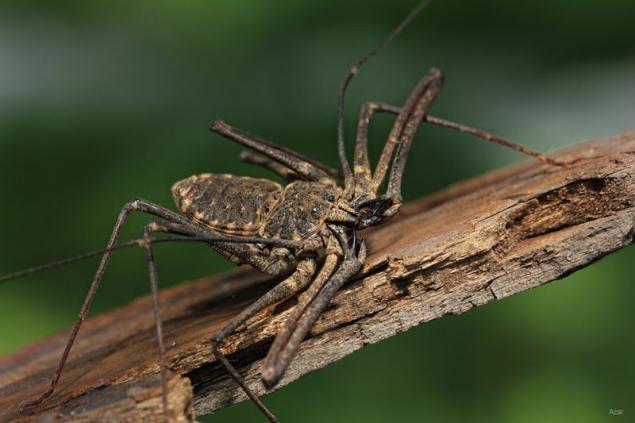
Phrynes have always been incomprehensible and unpleasant to ordinary people, so there are many fables about them. In some places where flagellated spiders live, locals are afraid of them and consider them extremely dangerous. For example, during a stay in the Seychelles in 1872, a biologist was told by locals that after a phryne bite, swelling, convulsions and vomiting occurred, and that if the victim was not treated with ammonia, it would eventually lead to long-term illness or death.
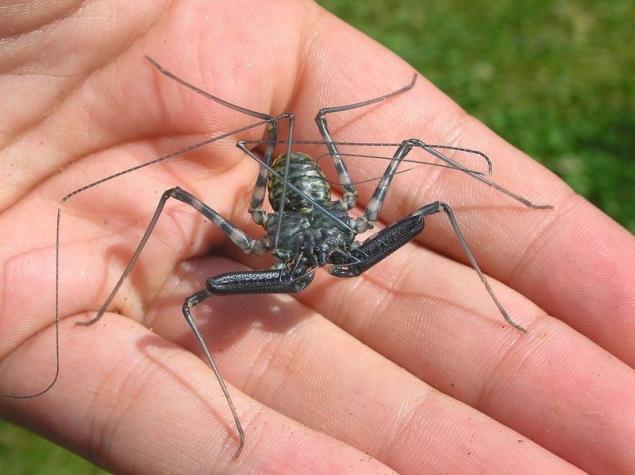
Males have very interesting ways of establishing who is in charge among them. When two males face each other, they participate in a kind of "fighting" tournaments. They usually collide with pedipalps, and try to push with their long front legs.
Scientific classification:
Kingdom: Animals
Phylum: Arthropods
Subphylum: Cheliceraceae
Class: Arachnids
Order: Phryne (Amblypygi)
Source: masterok.livejournal.com