1518
Interviews with teachers Coursera
Good afternoon. Many people know and enjoy the well-known platform for online education Coursera.org. I also belong to one of them. After a couple of courses, I became interested in the inner kitchen. I contacted several professors and asked them to give a written interview. About what happened, read on.
Questions are answered:
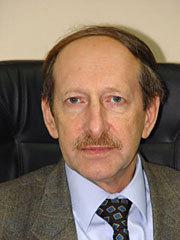
Berzon Nikolai I. «Financial markets and institutions» , Higher School of Economics.
Paolo Prandoni, «Digital Signal Processing» from the École Polytechnique Fédérale de Lausanne

Jim Fowler «Calculus One» from The Ohio State University. He also is the author of the course «Calculus Two»

Ready? Let's go!
Why did you decide to do an online course?
Berzon NI. Paolo Prandoni. Jim Fowler.
How closely in the process of the interaction with the staff of the Coursera?
Berzon NI. Paolo Prandoni. Jim Fowler.
Tell us, how was training course. How many people were involved? How long did it take to record lectures and training test?
Berzon NI. Paolo Prandoni. Jim Fowler. githab . He copes with editing for us.
What are the difficulties you have experienced in the design of the course? Is there some kind of "test students' which took up running in the course of its public opening?
Berzon NI. Yet it was hard to adapt to the format of a lecture recording. Usually my lecture is one and a half hours, and the recording is fragments of 10-15, sometimes 20 minutes. And it was necessary to lecture divided into several blocks, each must bear a complete thought. That was difficult. But, nevertheless, everything turned out well.
"Test students" were not. We were able to control the recording of their placement. So, after recording video, I sent it to me. I looked, if I do not like something, then we rewrote it.
Paolo Prandoni Jim Fowler. No, we do not have a test audience. As far as I know, there is no easy way to do stuff on Coursera-only test group of students.
On the contrary, I consider MOOC-students as a "test" for the things that I wanted to do at the University of Ohio. I can run a great "educational experiment" in a MOOC, which could do "in reality," and we get a lot of interesting data on training Calculus.
On most courses a team consisting of lecturers and TA. How many people were on your team, how they are distributed between the roles?
Berzon NI. Roles I certainly distributed, but then they are still mixed. Sergei, as he does slide well, I asked the lead presentations in a decent view. Also, Sergei accumulated questions posed on the forum. The questions, which he was able to give an answer, he replied, and the other sent me.
The task was to prepare Anna tests. I, of course, the tests were, I handed them to her, and she expanded them. For each week, we wrote 30 tests. She further elaborated them, then I looked through them again, something corrected and sent back. She accompanied them as automatic test sometimes faltered.
Paolo Prandoni. Jim Fowler. When we first placed a course I created a lot of content (such as the structure of the course, the scale and policy assessments), as well as wrote the backend is a modified code Khan Academy, integrated into our platform, built on algorithms, hidden Markov models and adaptive learning. Mathematical parser was written in JavaScript
Steve Gubkin developed exercises MOOCulus.
Bart Snapp led the writing of textbooks and record more video, when he led the course.
What are you guided by, making the structure of the course?
Berzon NI Paolo Prandoni. Jim Fowler.
The course lectures were published on a weekly. They are recorded as "on track" and everything was ready in advance?
Berzon NI About time. I have 9 lectures, about 1, 5 hours. Each lecture was recorded hours 4. Since some things had to be rewritten. Well, for example, when you lead a lecture and made a mistake somewhere, you can say, "oh, I'm sorry guys," to recover, and then drove off. Immediately you do not do
Paolo Prandoni. Jim Fowler
If the test tasks found a bug, there is an opportunity to correct it, perezachest test or remove it from the estimate does?
Berzon NI. Paolo Prandoni. Jim Fowler.
We know that participants receive certificates after some time. But the assessment of control are known in advance. Why is there a delay? Treatment is not automated? How is it going summarizing and formation of certificates?
Berzon NI Paolo Prandoni. Jim Fowler.
What are your personal impressions of this new format of teaching? What are the challenges and prospects MOOC do you see?
Berzon NI. From the point of view of me as a teacher. First, it is hard to teach a course in the void. I do not see the audience, I can not see the eyes of students, I do not understand their reactions: they understand me or not. The teacher who lectures akin to an artist who performs on stage, and the artist, it is important that there was a full house. I, too, is important. I have a university lecture turns into a conversation, a discussion, a kind of discussion. I can tell the children: "Next week we will discuss bonds, I recommend you read the chapter so-so." This allows us not to tell the basics of lectures and switch problems. And then from scratch - it's hard. But then I used.
Second, physically uncomfortable to stand in one place while recording. After all, when I lecture, I animate it through the work with the board (paint formulas, graphs). But here everything is very static, it was hard. I offered to make a record of the time usually lectures, but as I was told it would be three times harder than the studio recording. In addition, it would require more hardware (for example, three cameras instead of one). Although, perhaps, someday I'll try and this format.
In general, a MOOC. Not long ago I read an article on the Internet German professor who writes that in 10-15 years there will be only the strongest universities are on the path MOOC. This will make the formation of high-quality, accessible and cheap. Indeed, why should I finish the third-school, if I can get knowledge from leading professors in the world? That's his forecast, not mine. But some truth in this. On a personal note, that, after all, verbal communication is necessary and students and teachers. Therefore, online courses are still not completely displace traditional learning format.
Paolo Prandoni. Jim Fowler. As a potential problem, I was very concerned about the high dependency on video. My favorite analogy is: teaching one-on-one is an amateur theater, while MOOC it's more like a movie or a TV. But the analogy extends further: to create video productions or we will need an actor. I do not want people watched more than math, I want them to be more concerned with her. I hope that the variety of online community will solve this problem. MOOC brings together a lot of people who want more together to study mathematics, so I'm not too worried. This is a promising trend.
Is there, in your view, just at the shortcomings of the platform Coursera?
Berzon NI. Paolo Prandoni. Jim Fowler.
Do you have future plans connected with MOOC, if so, what?
Berzon NI Paolo Prandoni. Jim Fowler.
What statistics course?
Berzon NI Paolo Prandoni. Jim Fowler.
One of the instructors (Kevin Werbach, a course Gamification , University of Pennsylvania) has refused to give an interview, but at the end of the course laid out a detailed statistical Video , short squeeze for those who want more numbers, under the spoiler.
Gamification 169 countries (24% of students from the United States), that more than the last time (150 countries)
The sex composition: 62% of men (66% and 67% in the previous run)
77% already working. Of those studies, 83% have a bachelor's degree, 43% a master's degree.
The activity on the course. 51,341 (66%) have watched the entire course (usual rate of 50-60%). 10 593 topics on the forum was opened. Over 100,000 peer assessment of 6936 students was done.
On the results of the course. 61% complied with all p2p jobs, 75% written exam. Certificates (scored more than 70% points) got 4510 students is 5, 8% of the total (10, 1% in 2012, 8, 4% in 2013). These findings are consistent with other courses, and even look good. In general, successfully pass Coursera courses only 2-3% of the students.
I am constantly experimenting with the course, something to change depending on feedback. This launch was lengthened to 4 weeks (total duration of 10 weeks). With that I associate decrease in the percentage of successful passage.
The course will be edited and started again in the fall. I'm also working on Gamification Two.
P.S. Many thanks to my wife, for editing my rough translation.
Source: habrahabr.ru/post/223603/
NASA released the visualization of the merger of two neutron stars in a black hole
Real experience of the introduction of gamification in online marketing agency