19252
Football stars of the 90s
Zinedine Zidane (France)
The phenomenal Zizou ended his career in 2006 immediately after the World Cup in Germany. Given Zidane's incredible popularity, one could be sure that he would not disappear, but he wanted the legendary Frenchman not to forget about football. Zidane himself, immediately after hanging up his boots, admitted that he wanted to take a break from football. But two years later, he said that he was not averse to returning to football.
In 2009, Zinedine Zidane became an assistant to the president of Real Madrid, Florentino Perez, whom he actively supported in the elections. A year later, the Frenchman was appointed adviser to the president, while Zidane actively participated in the coaching process, helping Jose Mourinho. However, officially, the Frenchman was still out of coaching. In July 2011, Zidane became the sporting director of Real Madrid. At the same time, he studied at the University of Limoges, where he received a diploma in sports management. Zidane did not forget about charity, participating in various exhibition matches. Almost every year, the Frenchman took part in some kind of charity match.
And in the summer of 2013, Zidane finally began to engage in coaching, although not yet as a head coach. Zizou became an assistant to Carlo Ancelotti, while it is known that the Frenchman was offered to stay as sports director, but he insisted on his coaching activities. Who knows, maybe after Ancelotti, it is Zidane who will lead Real Madrid.
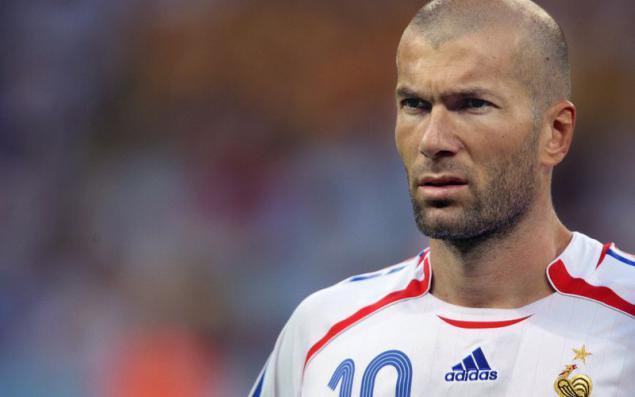
Ronaldo (Brazil)
Brazilian Ronaldo had a long and successful career, although it did not end very brightly. After Ronaldo decided to return to his homeland in 2008, he spent three seasons with Corinthians, during which he played a little more than fifty matches. The legendary striker faced two serious problems: excess weight and injuries. Moreover, it turned out to be much more difficult to fight Ronaldo's overeating than to recover from injuries.
In July 2010, Ronaldo broke his arm, as a result of which he required surgery. There is also unconfirmed information that at the same time the Brazilian underwent liposuction. But despite all his problems, Ronaldo was still effective in those matches when he did take to the field.
His career as a football player came to an end in 2011, and he announced this back in 2010. Before his farewell match in the Brazilian national team, the "critter" told what he would do next. Ronaldo opened his own agency firm, and his first client was the notorious Neymar. In addition, the Brazilian headed the organizing committee of the 2014 World Cup. So if the upcoming World Cup turns out to be unsuccessful, all questions are for Ronaldo.
Even as a player, Ronaldo was constantly at the center of scandals. And even after the end of his career, the Brazilian did not stop there. As a result, in December 2010, Ronaldo went to the extreme measure, agreeing to a sterilization operation, as he himself stated, "to shut down a factory for the production of children." At the moment, the "toothy" has four children.
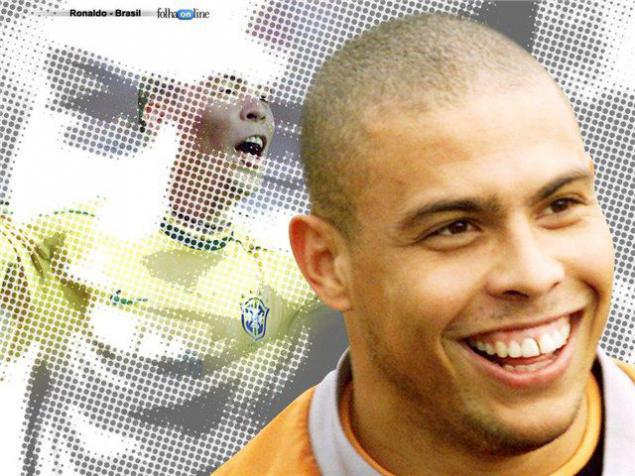
Luís Figo (Portugal)
Cristiano Ronaldo is called the heir to Luis Figo. And even though these players are of different roles, their role in world football is colossal. Figo spent glorious years at Barcelona, Real Madrid and Inter. In each of these teams, Figo was a leader and an example for the rest. In 2000, he was recognized as the best football player in Europe, and a year later - the best player in the world according to FIFA.
Figo hung up his boots in 2009, and after the end of his career, the Portuguese went into the shadows. Unlike Ronaldo and Zidane, he was not so active in public life. Luis became an ambassador for Inter, periodically participating in various charity and PR campaigns for the Milan club. Like Fabien Barthez, Figo is a big fan of motorsport, and even during his football career, he managed to sit behind the wheel of an A1 car. However, Figo did not become a professional racing driver.
One of Figo's sources of income is the high-end bar he opened in his homeland of Portugal. In addition, Luis founded the social network for athletes Network90 together with golfer Luke Donald. With the help of this service, former and current athletes can establish communication with each other, as well as find the necessary connections. Just like a football Zuckerberg.
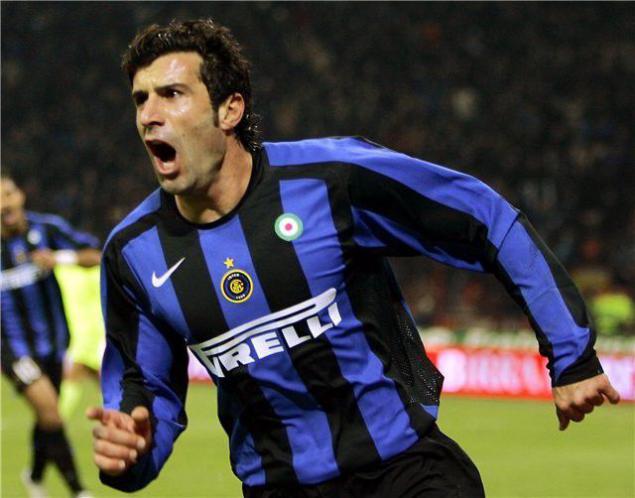
Roberto Baggio (Italy)
For more than twenty years, the "Divine Tail" delighted fans with his game, playing for Juventus, Milan, Inter and several other Italian clubs. He ended his football career in 2004 as a Brescia player. In Italy, there were active rumors that Baggio could immediately start coaching, but they did not come true. Back in 2002, Roberto became a Goodwill Ambassador to the Food and Agriculture Organization of the United Nations. Actually, work in the UN became the main one for the famous striker.
It was not until 2010 that Roberto Baggio agreed to return to football. It happened just after the World Cup. Baggio became the technical director of the Italian Football Federation, and his main task was to find young and talented Italian footballers. A year later, Baggio received a coaching license of the second category, which gives him the right to coach in Serie C, as well as to be an assistant head coach in the teams of their Serie A and B. And in 2012, Baggio successfully passed all the exams and received a Pro license, so it is possible that soon the "divine tail" will appear on someone's coaching bench.
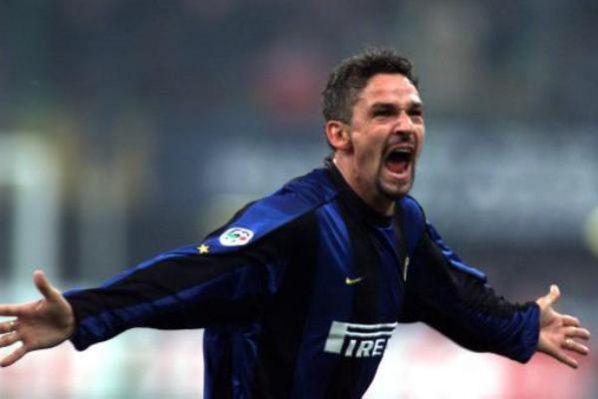
Gabriel Batistuta (Argentina)
One of the best strikers in the history of Argentine football, nicknamed Batigol, hung up his boots in 2005 when he was a footballer of Qatar's Al-Arabi. But everyone knows him exclusively as a forward of Fiorentina, for which he played in the nineties, scoring more than one hundred and fifty goals in more than two hundred and fifty matches. Add to this fifty-six goals for the Argentine national team in seventy-eight matches and you get him - Gabriel Batistuta.
Immediately after the end of his career, Batistuta made the unusual decision to move to the Australian city of Perth, where he lived for two years. As Batigol himself admitted, he did nothing but swim and play golf. A good time, isn't it? In 2007, Batistuta moved to his homeland in Argentina, where he successfully qualified as a coach. At the same time, Gabriel began to engage in business, in particular, he owns a construction company.
In 2011, Batistuta ended up in the administration of the Colon club, where he worked for two years, after which he said that he wanted to start coaching in Europe. We're all for it, Gabriel!
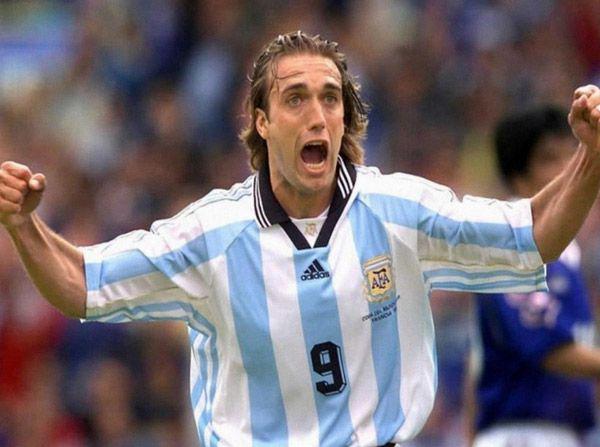
Patrick Kluivert (Holland)
He is also known as Kleivert or Kleivert, whichever is more convenient. Until 2013, the ex-striker of Ajax, Milan, Barcelona and four other teams was the best striker in the history of the Dutch national team, scoring forty goals for the "orange". However, more recently, his achievement was rewritten by Robin van Persie.
Kluivert ended his career not so long ago - in 2008, playing for the French Lille. But for most, his career ended in 2004 when he left Barcelona and moved to England. Over the past four years, Patrick has been haunted by injuries, and it has become increasingly difficult for him to justify his star name. Nevertheless, the fans of Kluivert's talent did not decrease from this.
Immediately after the end of his career, Patrick began to study coaching in Holland. According to the Dutch methodology, all applicants must practice in professional teams. And in the 2008/09 season, Kluivert actively cooperated with the coaching staff of AZ. The work turned out to be productive, and in 2009 Patrik was appointed coach of forwards in the team from Alkmaar. In 2010, Kluivert moved to NEC, and in the 2011/12 season he coached the youth team of FC Twente.
At the upcoming World Cup in Brazil, we will see Patrick Kluivert as an assistant to Louis van Gaal. Who knows, maybe soon a talented forward will turn into an equally talented coach?
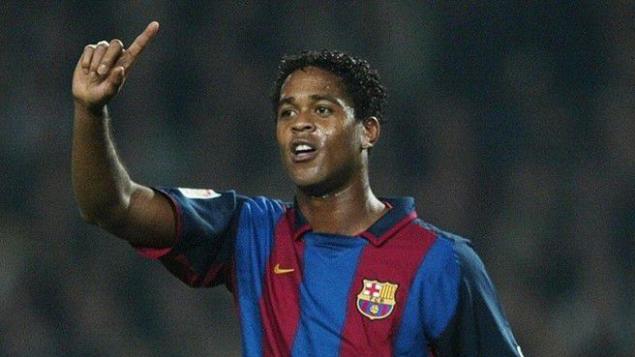
Davor Šuker (Croatia)
Shukerman was the idol of millions of boys not only in the Balkans, but throughout Europe. He showed himself brilliantly at Sevilla, but the peak of his career came at the end of the nineties, when the Croatian played for Real Madrid. Together with the "royal club", Šuker won the Primera and the Champions League. At the same time, Davor, together with the amazing Croatian national team, managed to become the bronze medalist of the World Cup.
Šuker ended his playing career in 2003, being a player of the German Munich 1860. Shuker spent several years away from football, taking a break from it and spending time with his family. But such players cannot stay in the shadows for long, and Shuker was no exception. Davor decided to open his own football academy in Zagreb. In terms of the level of training of young talents, the Shuker Academy became one of the leading in the country and quickly enough it had branches in other cities. Seeing how good Šuker was off the football field, the Croatian Football Federation offered him the position of president of the Croatian Football Association. Such an offer Shuker could not refuse.
Naturally, a number of legendary football players were not included in this list. If you are interested in such materials, leave your comments, and we will continue to find out what the heroes of our childhood are doing now.
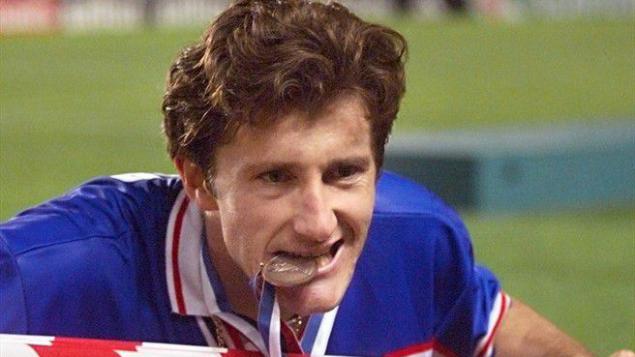
Gianluca Pagliuca (Italy)
I am sure that many Russian fans remember such a legendary goalkeeper of the Italian national team. His cunning smile, stern look and memorable surname are impossible to forget. Gianluca Pagliuca is one of the Serie A record holders for the number of matches played. He has 592 games in the Italian top division. He played for Sampdoria, Inter, Bologna and Ascoli, with whom he ended his playing career in 2007 at the age of forty-one.
A year after the end of his career, Pagliuca could return to big football. In Italy, there were active rumors that the veteran could sign a temporary contract with Juventus in order to replace the injured Gianluigi Buffon. However, this never happened, although Pagliuca did not hide his desire to join the Bianconerri. In general, Gianluca is not one of those players who dreamed of hanging up his boots as soon as possible. After the official end of his career, he trained for several more years, hoping that one of his teams would need his services.
Pagliuca's sonorous voice proved to be in demand, and after his retirement, he was invited to comment on matches on Sky TV. After a while, he became a permanent presenter on one of the radio stations of his native Bologna. Moreover, Pagliuci has his own personal show, in which he actively discusses his favorite Italian football.
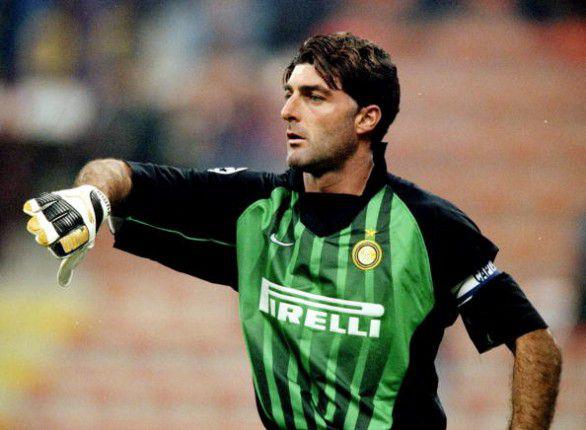
Gaizca Mendieta (Spain)
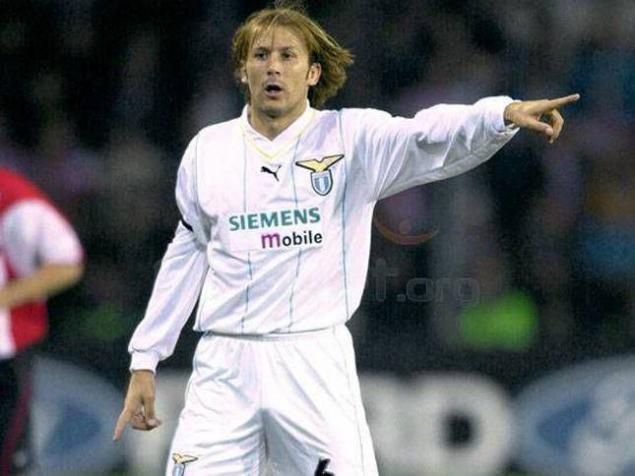
In the nineties, Gaizka Mendieta played for Valencia and, without exaggeration, was considered one of the best midfielders in Europe. His parents died when he was a child, and he spent most of his childhood in a Catholic orphanage. Who knows, maybe this influenced Mendieta's incredible composure on the field. Gaizka is one of the best penalty takers in the history of football. At the professional level, Mendieta's blunders from the spot can be counted on the fingers of one hand.
In the 1999/2000 and 2000/01 seasons, Mendieta was recognized as the best midfielder in Europe according to UEFA. In these years, Valencia reached the Champions League final, but lost twice. First, the Bats lost to Real Madrid, and then lost to Bayern Munich in a penalty shootout. After Valencia, Gaizka managed to play for Lazio, Barcelona and Middlesbrough, but nowhere did he shine as brightly as he played at Valencia. The reason for this was numerous injuries, and at the age of thirty-three he ended his football career.
In 2009, Mendieta said in an interview that he did not mind starting a coaching career, but so far he has not returned to big football. Gaizka periodically plays for Valencia veterans, sometimes he is invited to Spanish and English TV shows. And in 2013, Mendieta unexpectedly decided to master the profession of a DJ. In February last year, Gaizka successfully performed in one of the English clubs. It seems that Ruslan Nigmatullin has a serious competitor.
Fernando Morientes (Spain)
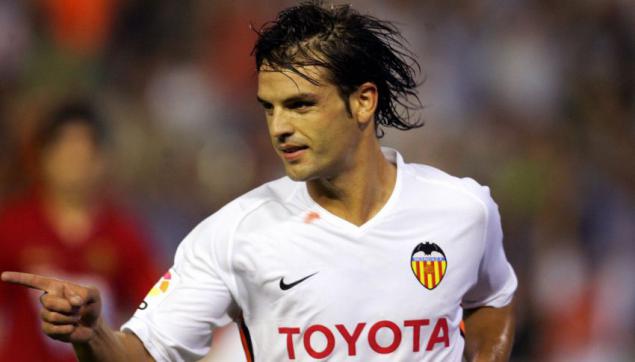
Another legendary Spanish footballer who ended his career too early. At the age of thirty-four, Fernando Morientes hung up his boots, but in seventeen years in professional football, he managed to win a huge number of titles. Morientes won the Champions League three times, the Spanish championship twice, became the champion of France, as well as the winner of the Cups of England, Spain, and the French league. In the 2003/04 season, being loaned to Monaco, he became the top scorer of the Champions League and almost won it for the fourth time. Morientes is currently the fifth scorer in the history of the Spanish national team.
As it often happens, injuries were the reason for such an early end to his career. But this was far from the only reason. Morientes is a winner by nature, and he could not become a "veteran on the bench". When he moved to Marseille, Fernando hoped that he would play one of the key roles in Didier Deschamps' formations, but instead he was essentially only the fourth of five Marseille strikers. As a result, Morientes was proud and he decided that it was time to end his career, especially since his health began to remind him of past sores more and more often.
For two years, Morientes was out of big football, limiting himself to interviews for the Spanish media, but in 2012 he accepted the offer of the modest Huracán team to become the coach of the youth team. Upon learning that Morientes had decided to share his experience with younger players, Real Madrid immediately invited their legend to join them. And at the moment, Fernando coaches the youth team of the "royal" club.
Oliver Bierhoff (Germany)
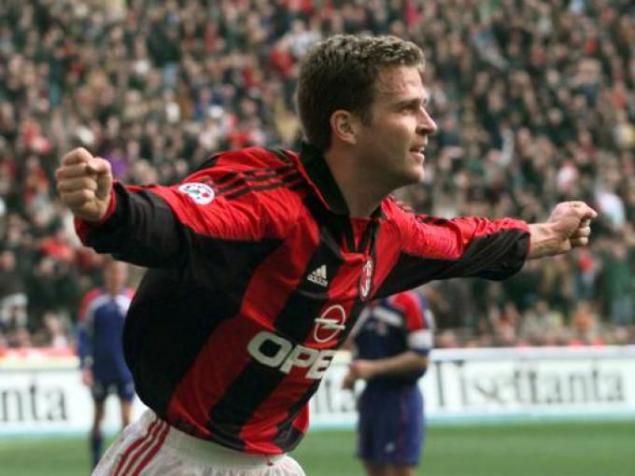
It was this striker who brought the German national team victory at the 1996 European Championship, scoring the "golden goal" against the Czech national team. Oliver Bierhoff is an outstanding striker who has spent most of his career in Italy. In the early nineties, he played for Ascoli, scoring in almost every second match. Then he was acquired by Udinese, and the peak of his career was playing for Milan in the period from 1998 to 2001. Bierhoff was the top scorer of the Italian championship in the 1997/98 season, and in 1998 he was recognized as the German footballer of the year.
In 2003, Oliver ended his playing career as a football player for Chievo. If many players do not know what to do after the end of their careers, then Bierhoff quickly got his dream job. In July 2004, Jürgen Klinsmann became the head coach of the German national team, and one of his conditions was the creation of a special position of sports manager of the national team. It was Oliver Bierhoff, who occupies it to this day. What does the sports manager of the national team do? The question is complicated. He is mainly responsible for working with the press, and also assists the head coach of the national team. I do not rule out that Bierhoff's work is difficult and tiring, but there is a suspicion that he was given such a position largely for his services to the national team.
In addition to his managerial activities, Bierhoff occasionally commentates on matches for German TV.
Marc Overmars (Holland)
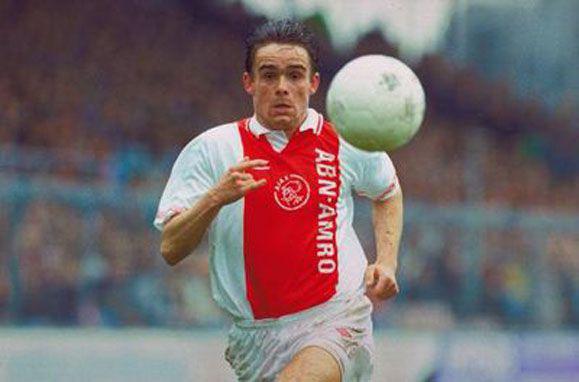
This Dutch midfielder is considered a legend by two teams at once: Ajax and Arsenal. He played for the Amserdam team from 1992 to 1997, managing to become the champion of the country three times, win the Dutch Cup and Super Cup, as well as the Champions League along with the UEFA Super Cup and the Intercontinental Cup. Overmars was one of the key players in that legendary Ajax of the nineties.
In 1997, he moved to Arsenal. The Londoners paid only £5.5 million for him, proving that sometimes it is possible to acquire an outstanding player for relatively little money. Overmars spent three seasons at Arsenal, and in each of them he looked just great. He has a number of decisive goals to his credit. It was Overmars who scored in the FA Cup final in 1998, allowing the Gunners to score a golden double.
In 2000, Barcelona offered Marc a huge 40.6 million euros by those standards. This made him the most expensive Dutch footballer in the history of football. In Spain, Overmars found it more difficult than in Holland and England, but he still showed a bright game, despite serious competition. Mark was forced to end his career very early at the age of 31, but he did it not of his own free will, but on the advice of doctors, to whom he began to get more and more often.
In July 2008, Marc Overmars took part in Jaap Stam's farewell match, and showed such a game that he was asked to return to professional football. The offer came from the Go Ahead Eagles team, in which Mark began his career as a football player. He spent the 2008/09 season at a high level, and few believed that this player had not played professional football for four years. Unfortunately, at the end of the season, Mark still decided to quit completely, as injuries began to remind of themselves again.
After the end of his career, Overmars became a technical director at Go Ahead Eagles, and a few months later he was invited to a similar position at Ajax Amsterdam.
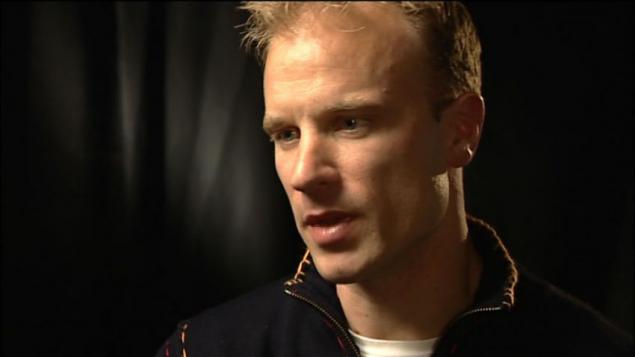
Dennis Bergkamp (Holland)
Another outstanding player of the Dutch national team in the nineties. Bergkamp is a product of the phenomenal academy of Ajax Amsterdam, from which more than a dozen first-class players have graduated. He played more than two hundred matches for Ajax, scoring 122 years during this time. His unique scoring flair, set shot and incredible technique attracted the attention of the strongest clubs of the Old World. Bergamp was actively claimed by Real Madrid, Juventus and Inter, and it was the latter who managed to get Dennis into their ranks. However, his career in Italy was not very bright, although he still continued to score goals.
In 1995, Bergkamp moved to Arsenal, and it was this team that brought him world fame. For the Gunners, the Dutchman played more than four hundred matches, scoring 120 goals. Yes, against the backdrop of excellent statistics at Ajax, his stats at Arsenal may seem modest, but only for those who have never seen Dennis play live. Bergkamp was a player you could always rely on. His attacking partner Thierry Henry called Dennis a "dream striker". And you can understand the Frenchman. Bergamp has always sacrificed his interests to the command. Making a pass to an open teammate, and not shooting himself, was a common thing for Dennis.
Everyone remembers Bergkamp's nickname "the Flying Dutchman". The fact is that he is terrified of flying on planes, and sometimes he even missed trips to matches against teams that are far from being reached by ground transport. In 2001, Arsène Wenger said that his travel by train and car had a negative impact on his game, so Arsenal soon agreed to keep Bergkamp in London during away European matches.
While playing for Ajax, Bergkamp studied mechanical engineering at the university and managed to obtain a bachelor's degree. Dennis often stated that he was not going to become a coach, and wanted to devote himself to something else. Moreover, Bergkamp even rejected Arsenal's offer to become the team's scout. But, as it turned out, Dennis still could not do without football. And in 2008, he began his training at the football academy, getting the role of coach of the Ajax boys. In December 2010, after the appointment of Frank de Boer as head coach of the Amsterdam team, Bergkamp became an assistant head coach of the youth team, and a year later - an assistant to de Boer himself, which he is to this day.
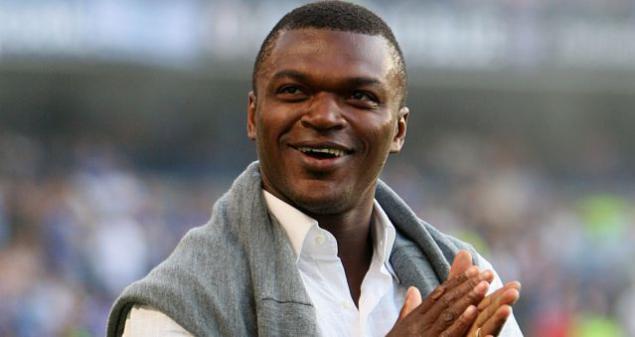
Marcel Desailly (France)
Born in Ghana, Desailly moved to France in early childhood with his parents. His career has been on the rise for twelve years. Having started it at Nantes, Desailly continued it at Marseille, Milan and Chelsea. In 2004, Desailly realized that it was time to think about the future, and went to play in Qatar, where he received a well-deserved high salary. Marcel Desailly was called one of the best defenders in Europe in the 90s, and there is hardly anyone who will dare to dispute this. At club level, Desailly won the Champions League twice with Marseille and AC Milan, and also won a number of domestic trophies, including victories in Serie A and the FA Cup. Marseille was the record holder of the French national team for the number of matches played. In 116 games, he was surpassed by another defender Lilian Thuram.
Desailly is not one of those people who try to forget his African roots. After retiring, he moved to Ghana, where he lives to this day. Marcel is active in the community, being a member of several charities, one of which is UNICEF. In 2011, Desailly opened a magnificent sports complex for young footballers. Its level can only be judged by the fact that many African teams prepare for tournaments in it.
In addition, Marcel Desailly is often invited to the role of commentator for various football competitions on BBC Sport, Canal Plus and ITV Sport. It should not be ruled out that Marseille will help cover the upcoming World Cup in Brazil.
If you have information about how the career of your favorite football players continued, write to us, it will be interesting to read...
--img15--
Source: www.euro-football.ru