3048
Bonobo Apes
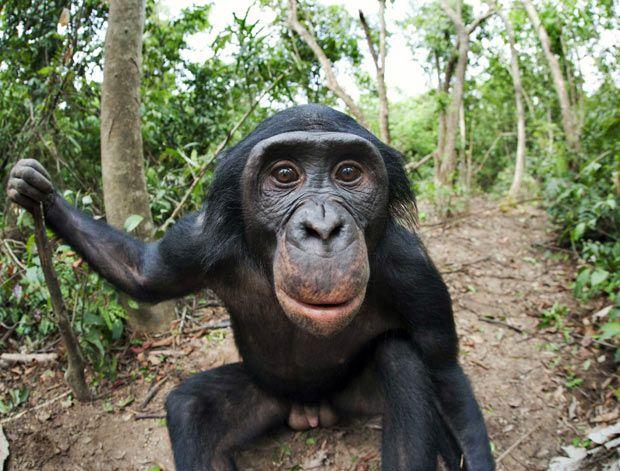
Bonobo- endangered apes. According to various estimates, in the wild Bonobos it is somewhere around 10,000, and they are all in the Congo. Bonobos and chimpanzees - our closest living relatives, like the chimpanzee, bonobo DNA coincides with our 98, 7%.
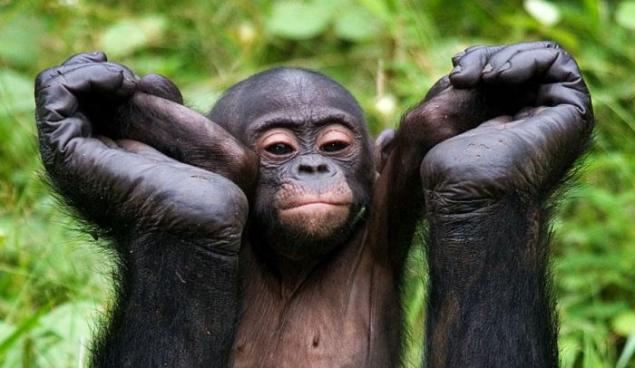
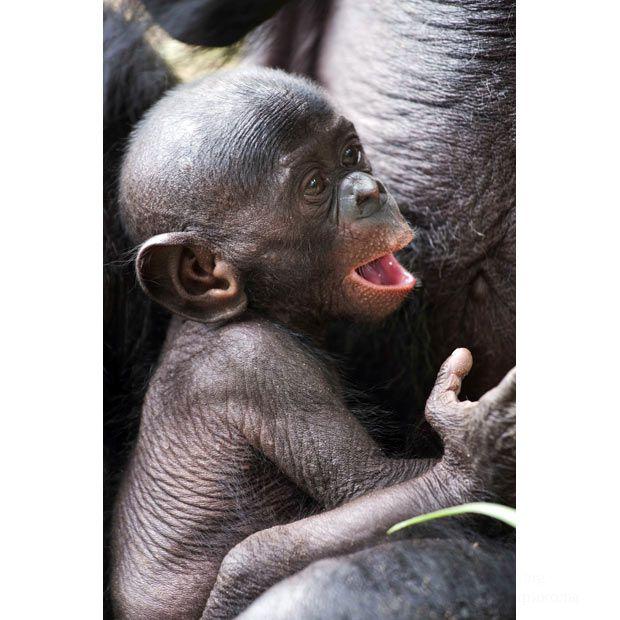
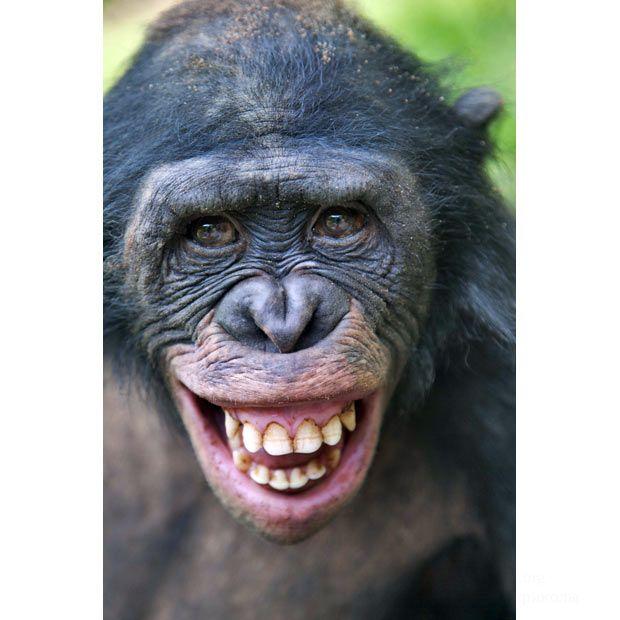
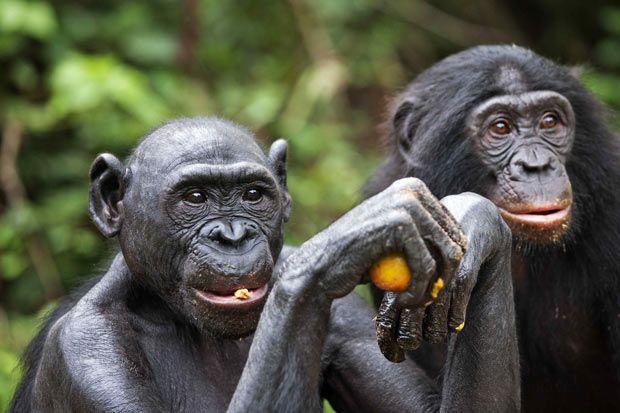
Chimpanzees and bonobos are very similar, but bonobos slightly smaller in size, with pink lips, black faces and long black hair, neatly arranged in the parting.
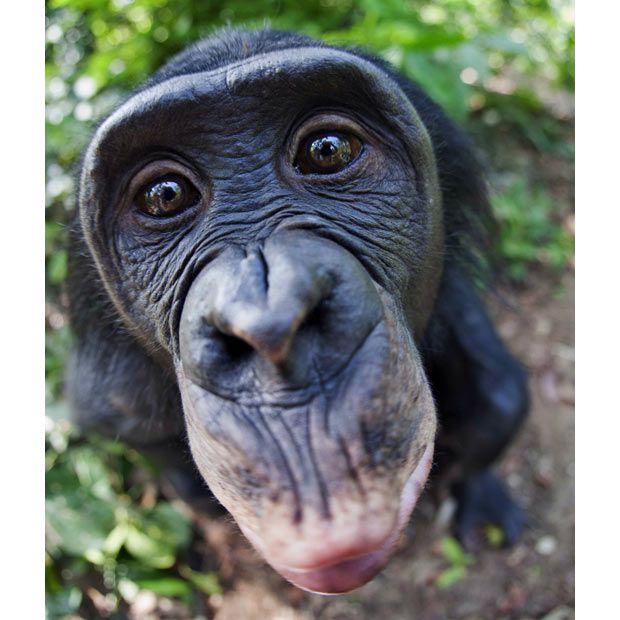
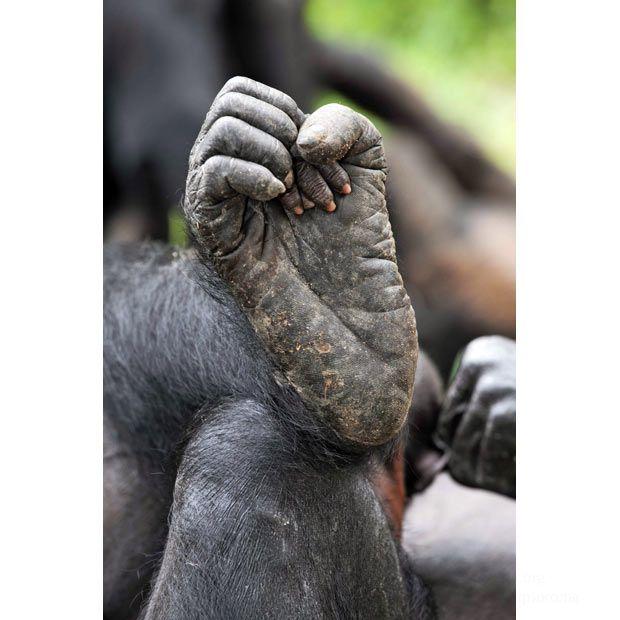
Between the first two fingers bonobos are small membrane. Chimpanzees low, loud voice, and bonobos have a very high pitched voice.
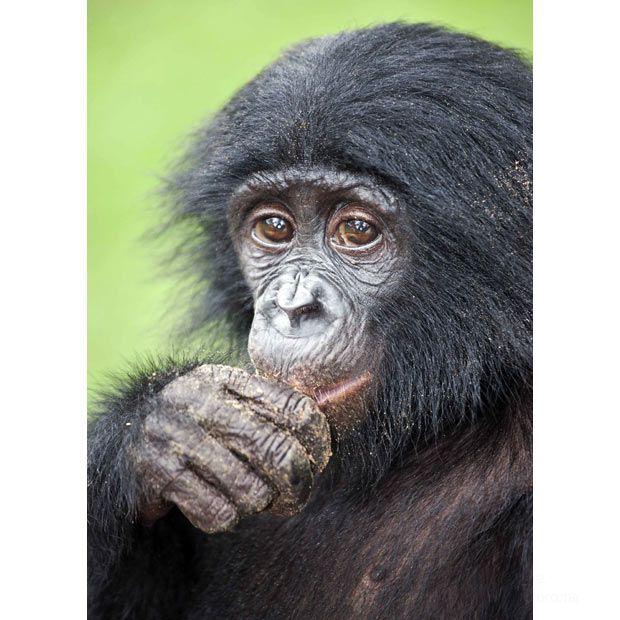
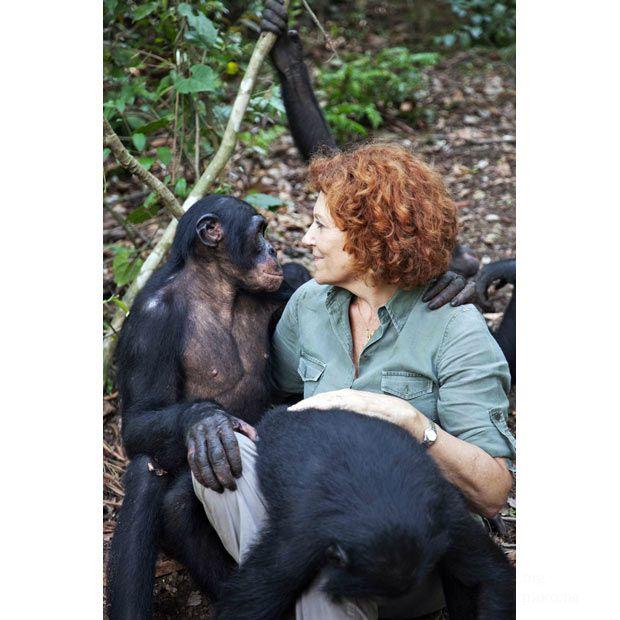
Founded by Claudine Andre in 1994, Lola ya Bonobo is a haven for orphaned bonobos. Since 2002 it has been located in Les Petites Chutes de la Lukaya, near Kinshasa in the Democratic Republic of the Congo. Lola ya Bonobo means "paradise for bonobos" in the language of Lingala, the main language of the area. At Lola ya Bonobo live about 60 bonobos, in an area of 30 hectares of primary forest.
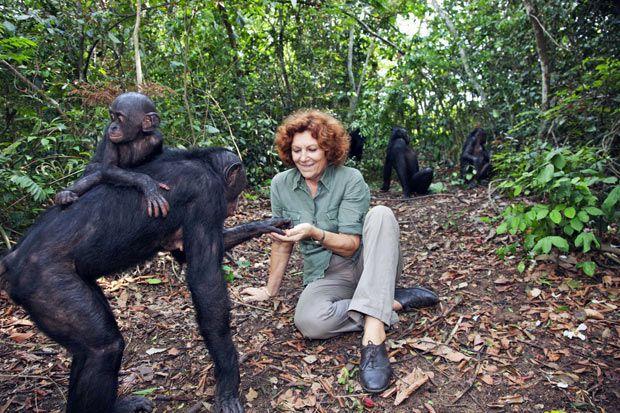
Typically, babies fall Reserve. Merchants bushmeat in the Congo every year kill hundreds of babies and bonobos sold as pets. When the infant bonobos confiscated, they are taken to Lola ya Bonobo.
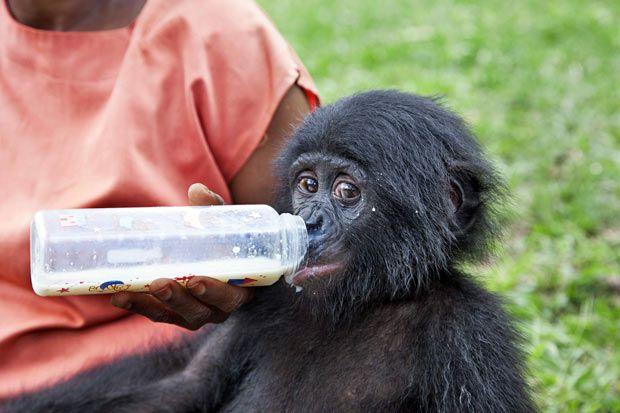
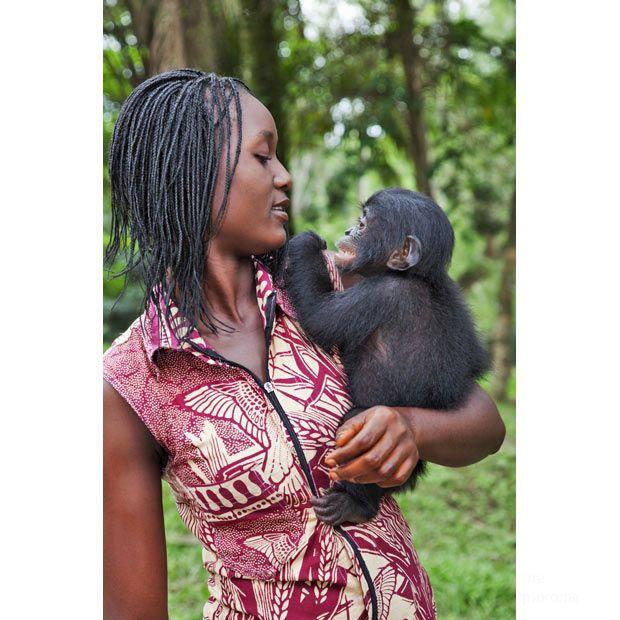
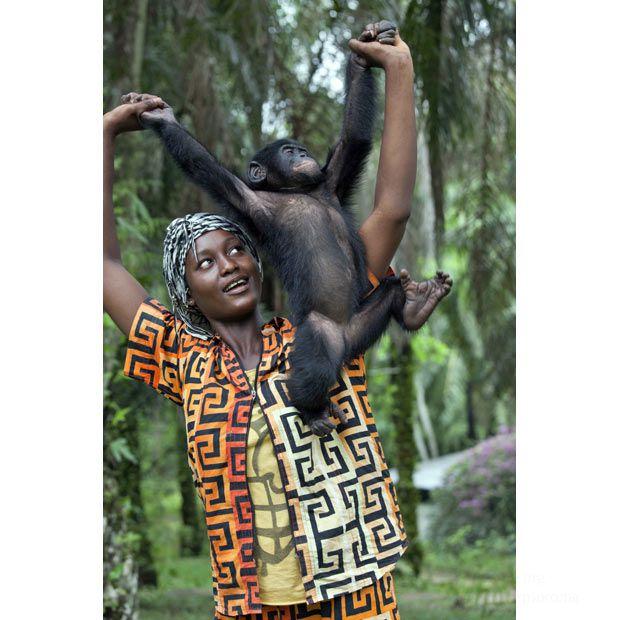
They begin life in the reserve, and on top of them takes care of mom-man, but, as a rule, they are quickly integrated in the peer group, and soon one of the major social groups of different ages.
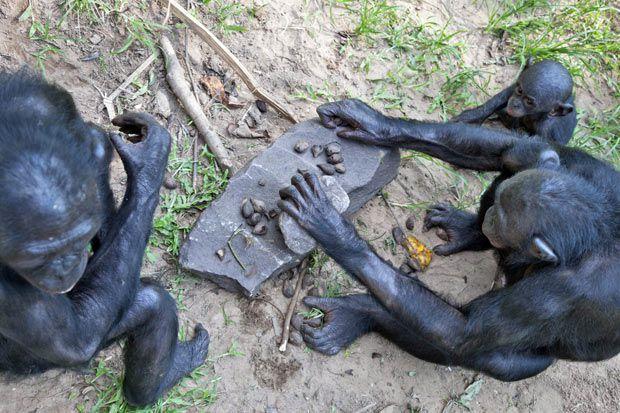
Although bonobos in captivity, they live in an environment similar to their natural habitat. They can eat a dozen of edible plants and fruit trees, to compete for mating opportunities, and learn, in order to avoid dangers such as stepping on a poisonous snake as well as in the wild. As a result, the bonobos in the reserve Lola ya Bonobo, living in their natural habitat, are showing all the natural behaviors that are observed in wild bonobos (in fact, they exhibit certain behaviors - such as the use of tools - which were not observed in the wild).
Because of the conditions of life that are available, reserve can play a very important role, demonstrating the level of communication and humane care, which deserve a monkey in captivity. The reserve protects wild bonobos, as it introduces the domestic and international laws aimed at preventing trade in live bonobo. The reserve also serves as a training mission for the Conservation of Nature in the Congo, teaching thousands of visitors each year, showing the importance of the natural history of the Congo, in particular, the bonobo - the unique heritage of the Congo.
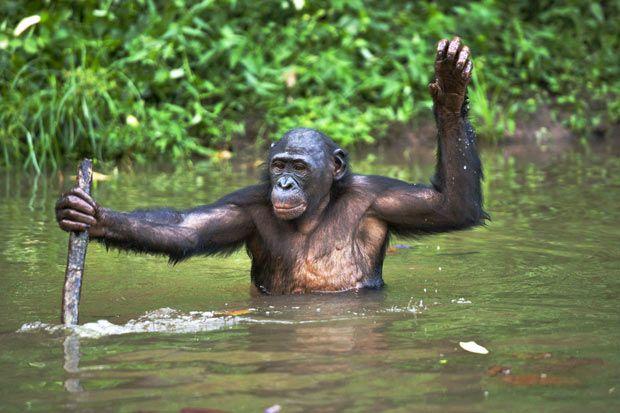
Adult bonobos dipped in water to cool off in the heat. Bonobos are not afraid of water and is easy to enter the water to search for food. They do not know how to swim, so that their way, using a stick for balance.
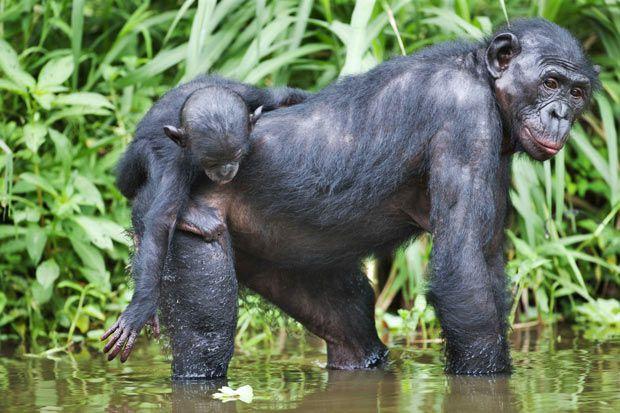
Mother Bonobo with baby on her back is dipped into the water.
Young bonobo smiling at the camera, but the fear is visible when bonobos with low social status is approaching a higher animal.
Mainly eat fruit, but sometimes small animals, eggs, worms, etc.
Bonobo cub plays with a stick.

Leg mother holding a child's hand.
Claudine Andre, the founder of the reserve Lola ya Bonobo, communicate with some animals.
Woman takes care of orphaned bonobos in the reserve.
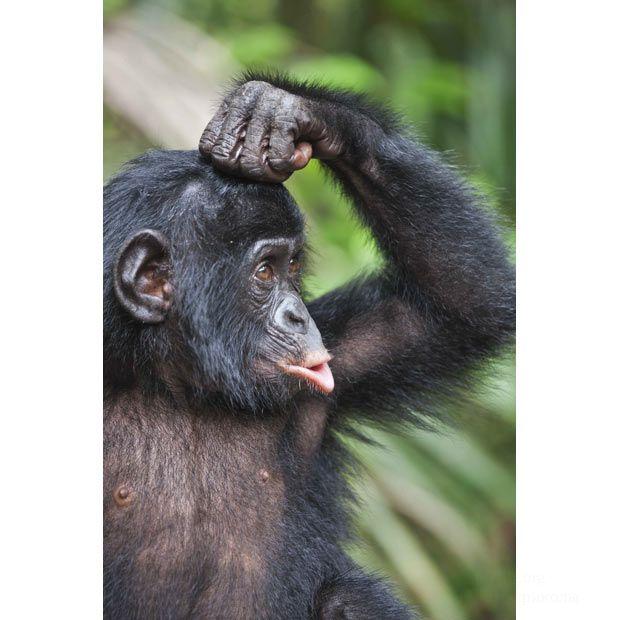
Young bonobo dissatisfied pouts in the reserve.
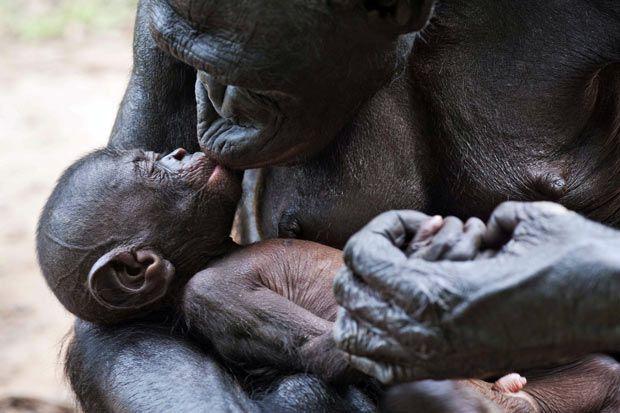
Adult bonobos kiss the baby.
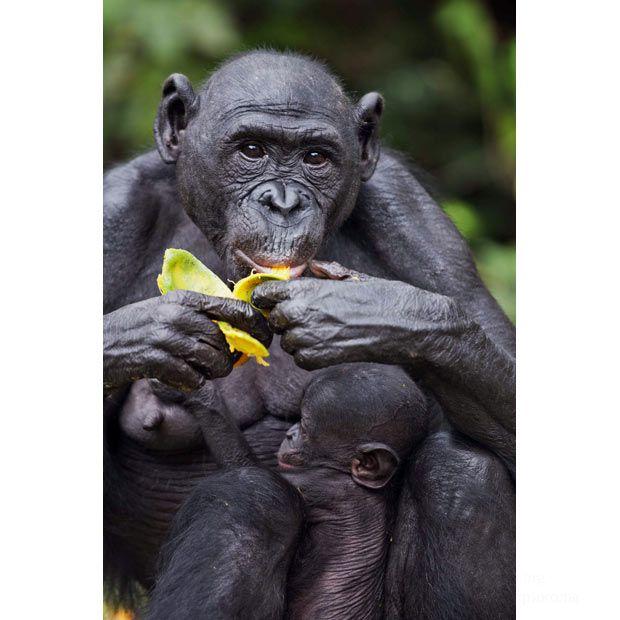
Bonobo with a child eating a mango.
Adult bonobos rest in reserve.