Windows 11 26H1: Not All Computers Will Get the Spring Update
Spring always brings renewal. We are used to waiting for technologies to blossom for everyone simultaneously, like primroses in the forest. But this year, Microsoft's digital garden is changing its rhythms. The upcoming Windows 11 26H1 update will not just be another version, but a closed club, the keys to which will be received only by selected architectures. This is a story about the separation of streams, about the new "chemistry" of code, and about learning patience in a world of instant speeds.
The Split of the Vernal Equinox
In the world of technology, there is an unspoken agreement: progress must be democratic. When a new version of Windows is released, we expect it to knock on every door, on every screen, whether it's a powerful workstation or a modest office laptop. However, the spring of 2026 breaks this tradition, bringing with it a wind of exclusivity.
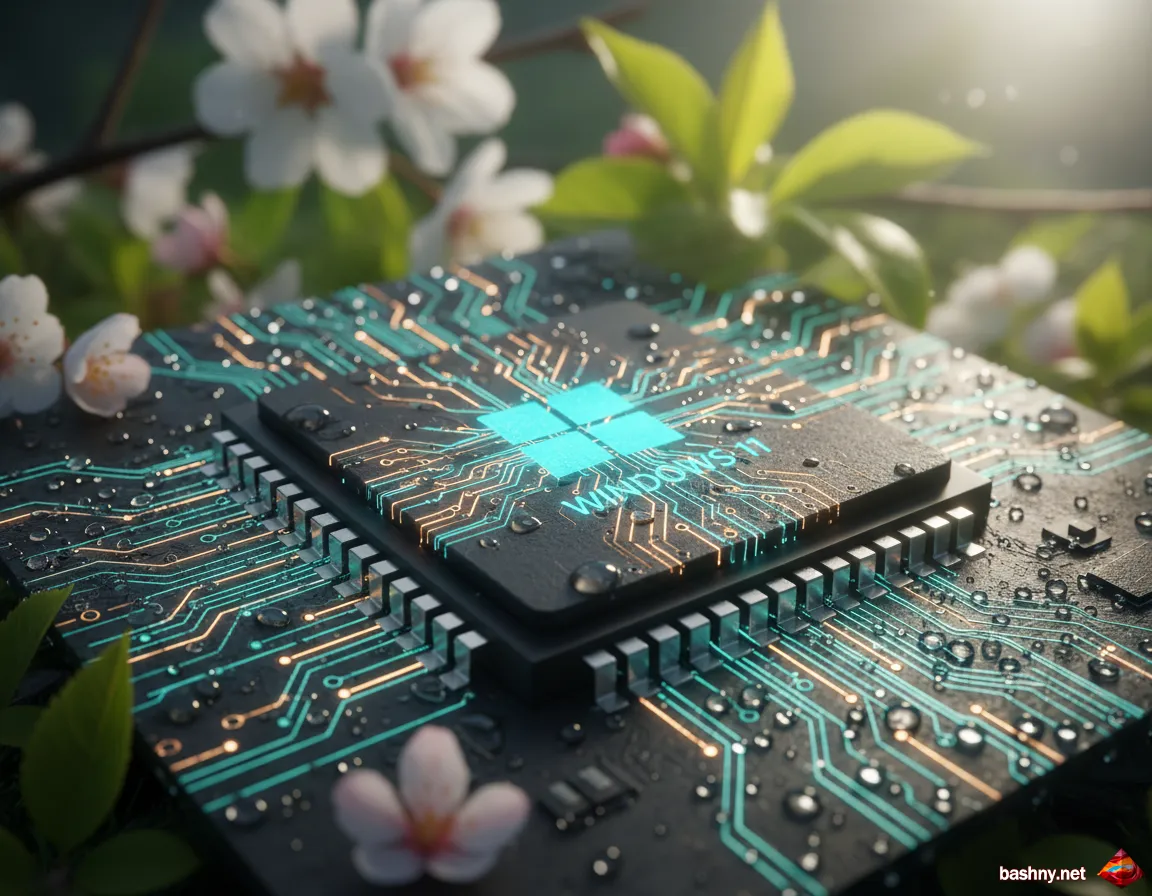
The first computers marked with the Windows 11 26H1 system will appear on store shelves very soon, when the snow melts. But only owners of devices based on processors of the Qualcomm Snapdragon X2 family will be able to touch this novelty. This is an unprecedented step for the Redmond giant: for the first time, a large-scale software platform is released exclusively for one hardware architecture, leaving the usual x86 systems (Intel and AMD) in the waiting room.
Imagine two parallel streams of time. In one, swift and new, laptops like the upcoming Asus ZenBook A14 and A16 already live. They will receive the latest firmware "out of the box". In another stream, more measured and traditional, there are exactly the same models, but with hearts from Intel and AMD. Their lot for now is the time-tested version 25H2. This is not unfairness, it is a new physics of the market, where "hardware" and "software" dance a complex tango, and sometimes one partner must take a step forward a little earlier than the other.
Alchemy of Code: Element Bromine
Why is this separation so important? It's not just about marketing badges. Under the hood of 26H1 lies something more than a cosmetic interface repair. If version 25H2 was built on the foundation laid back in 24H2, then the novelty is based on a completely new code base under the code name Bromine.
In chemistry, bromine is a heavy, corrosive reddish-brown liquid, the only non-metal that is liquid at room temperature. In the world of Microsoft code, "Bromine" promises to become synonymous with fluidity and stability. The transition to this base promises an increase in performance that we have been waiting for for so long. This is an attempt to rewrite the DNA of the system so that it becomes lighter, more responsive, and "livelier". It is expected that Bromine will correct long-standing optimization diseases, especially in the context of energy efficiency, which is critical for mobile ARM platforms.
We see here the archetype of the Explorer. Microsoft is taking a risk by introducing a new foundation first on a narrow segment of devices. This is like a field test of new fuel. Snapdragon X2 users will be pioneers, those who will be the first to taste "Bromine" - hopefully not corrosive, but cleansing.
Synchronization and the Art of Pause
The reason for this unusual schedule lies in the prose of life - in the calendars. The release schedules of Qualcomm chips and Microsoft operating systems this year diverged like ships in the fog. In order for the new, powerful Snapdragon X2 "stones" to reveal their potential, they needed this system right now, in the spring. Microsoft had to perform a feat of flexibility: release an update outside of its usual autumn cycle, specifically adapting to a partner.
This teaches us an important lesson: even giants are forced to adapt to circumstances. There is no perfect plan. There is only adaptation. Since version 25H2 was released only a few months ago, bombarding the whole world with another update would be too tiring for the global ecosystem. The market has not yet exhaled after the previous update. Therefore, 26H1 is a targeted injection of innovation, not a carpet bombing.
Silence of Waiting for the Majority
What about those who are faithful to classic processors? Those who work on Intel and AMD? The answer is simple and healing: exhale. In the foreseeable future, the functionality of versions 26H1 and 25H2 will be identical. All the new features that insiders will test will appear in both. You are not losing opportunities, you are gaining stability.
The development of new tools will continue on the basis of 25H2. This means that your experience will not get worse. You are simply skipping the "early access" stage to the new core architecture, which may be associated with childhood diseases and incompatibility. In the fall, when the foliage changes color, Microsoft will most likely release Windows 11 26H2 for everyone. And then the two streams will merge again into one full-flowing river.
There is a special beauty in not running ahead of the locomotive. Let the owners of new ARM laptops be testers. Let them meet the first bugs of "Bromine". And you stay in the cozy space of proven solutions. Your spring will be devoted to creativity and work, not to driver settings.
Conclusion: Technology as a River
We are often afraid of missing something. The FOMO (Fear Of Missing Out) syndrome haunts us even in operating system updates. But the story with Windows 11 26H1 reminds us of the wisdom of natural selection and gradual growth.
Technologies develop in leaps and bounds, but the human soul requires smoothness. If your computer does not receive the coveted "26H1" this spring, this is not a sign of backwardness. This is an invitation to enjoy what already works perfectly. Let "Bromine" boil in laboratories and on the latest chips. In your digital home, peace and order reign for now.
Close your eyes for a second. Listen to the silence or the noise of the cooler of your faithful PC. It works. It helps you create. And that is the most important thing. Updates will come and go, and your state of clarity and peace is the operating system that you configure yourself, every day.