1231
Travel to the "Dry Valley" (38 photos)
Antarctica
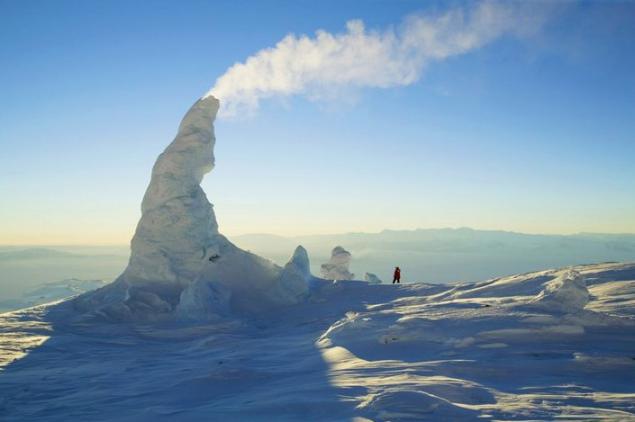
"Ice chimney" above the "cave-sauna" on Mount Erebus. The height of 3550 meters above sea level. Shooting time - midnight local time. Polar day. Photographs by - George Steinmetz
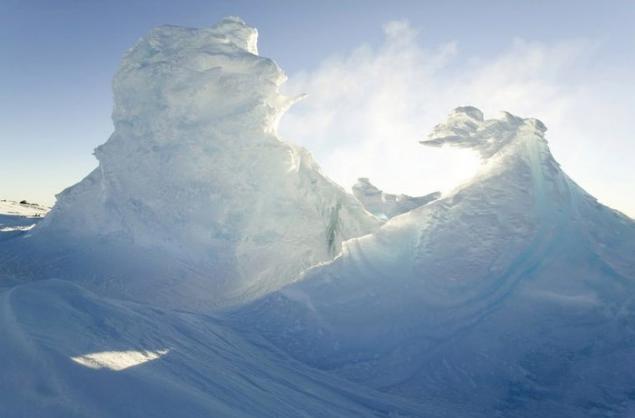
Mount Erebus. Another "chimney" through which warm moist air from the interior cavities beneath the ice goes out. Condensing, steam is constantly increasing wall "chimney", which reaches up to 60 feet high.
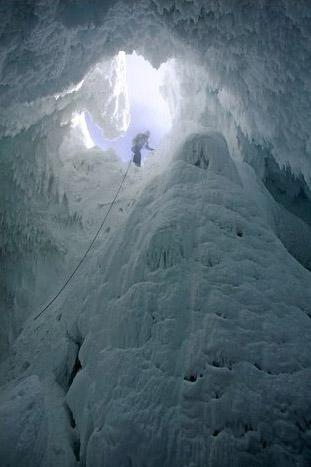
The air inside the ice caves significantly warmer than the temperature outside.
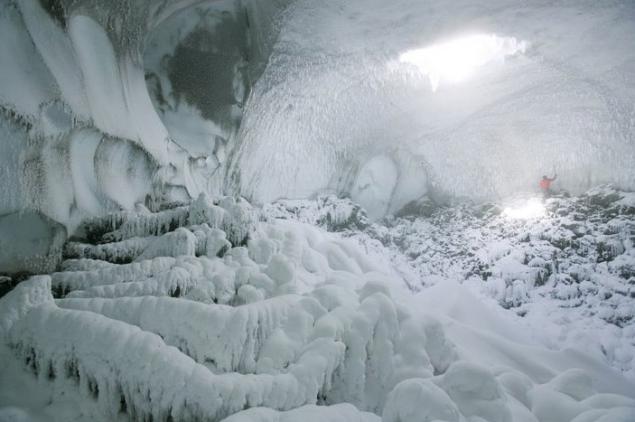
Ice cave on the north side of Mount Erebus in 3450 on meters above sea level, in the opinion of the author's image is similar to the "vzorvany wedding cake».

Ice caves on the slopes of Erebus formed areas of soil inside the heated volcanic activity. Ice melts over such areas, forming a cave. Here the smooth surfaces of lava flows from the outer saved erosion.
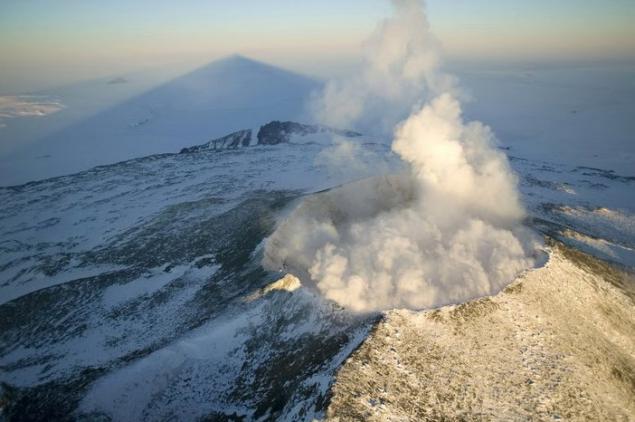
Ideal correct shadow of the volcanic cone of Mount Erebus on Ross Sea ice.
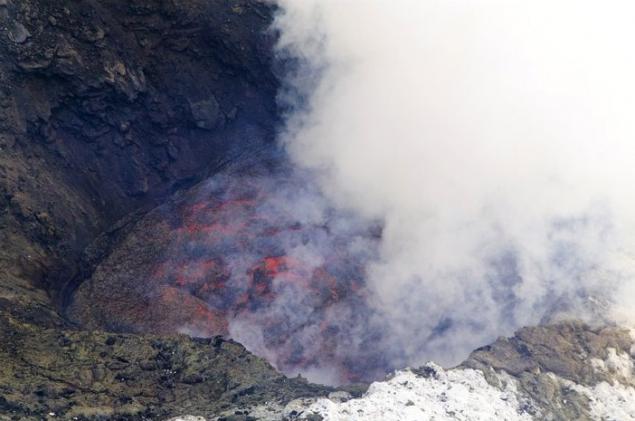
Erebus Crater is one of the few permanent lava lake in the world.
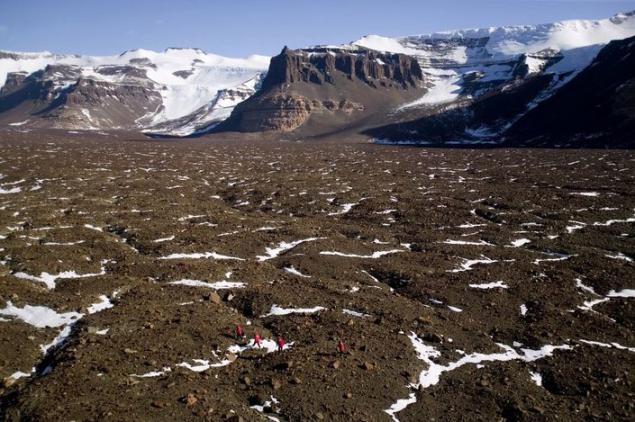
The team of geologists led by Adam Lewis crosses the Beacon Valley's. Lewis found that the glacier here contains the oldest ice in the world, which was dated eight million years.
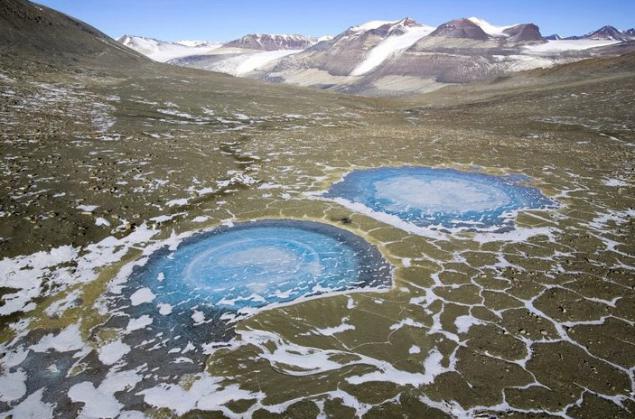
Two frozen lake in "Dry Valley" in Bull Pass.
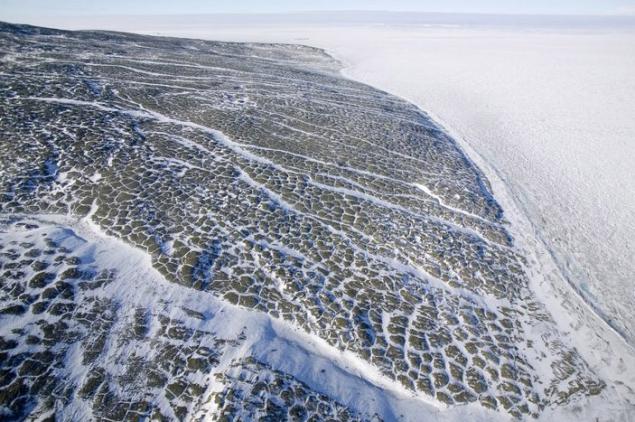
Beach "Dry Valley". Antarctic summer (November to March) sea water washes its edge.
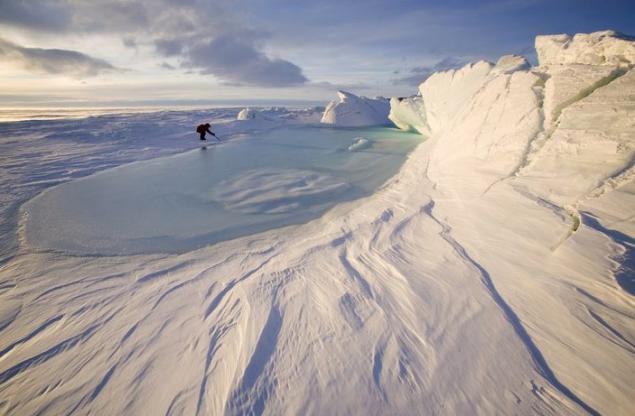
Scientist examines the thickness of sea ice on the edge of the Ice Tongue Erebus.
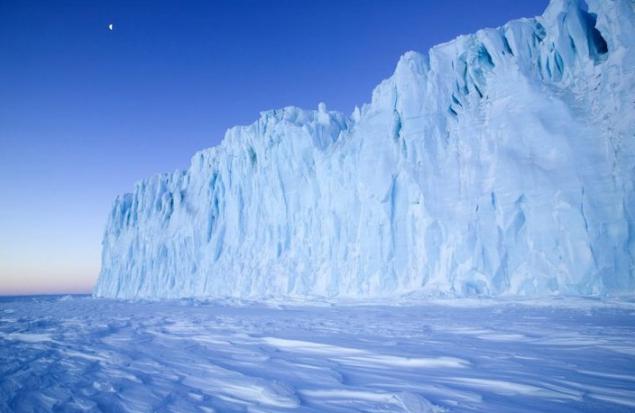
Barne Glacier tongue and sea ice in the foreground.
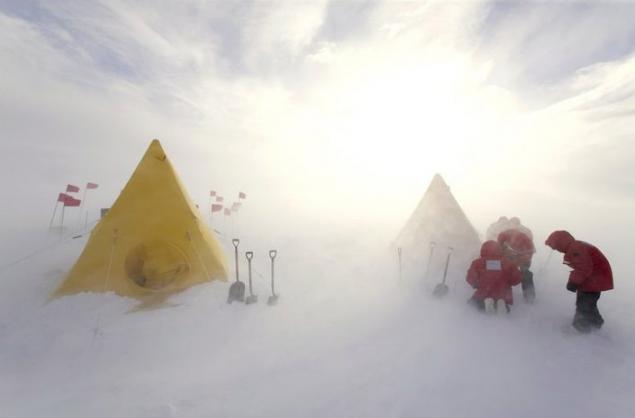
"Rates of survival" for beginners at McMurdo Station. Tents.
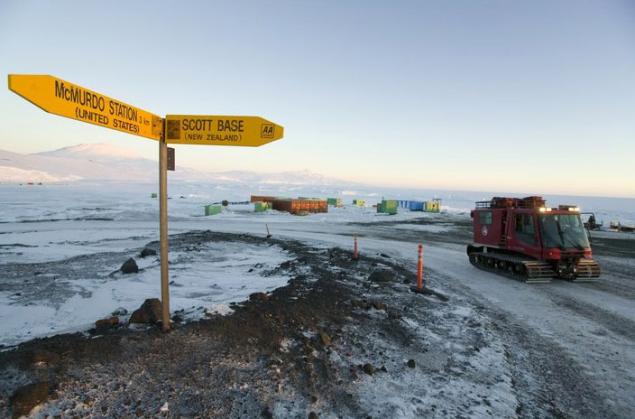
"Dune" to the Glacier Barne.
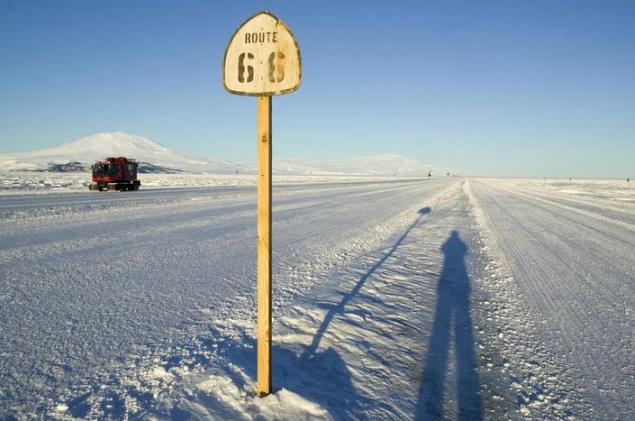
Road sign on the route through the sea ice thrown from the ice airfield at Station McMurdo. All photos - George Steinmetz
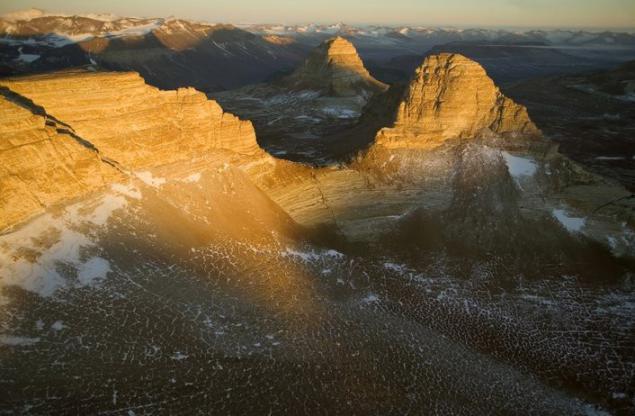
Mount Electra, Mount Circe and Mount Dido. "Paralyzed landscape" remained unchanged for millions of years.
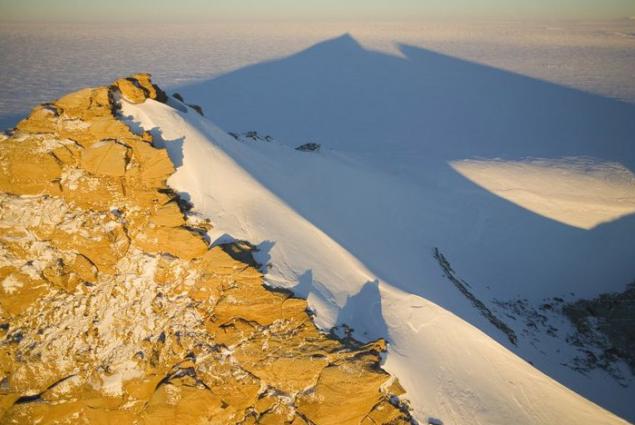
Edge Dry Valley casts a long shadow over the East Antarctic ice field, with a thickness of about 2.5 kilometers, it contains 70 percent of the world fresh water.
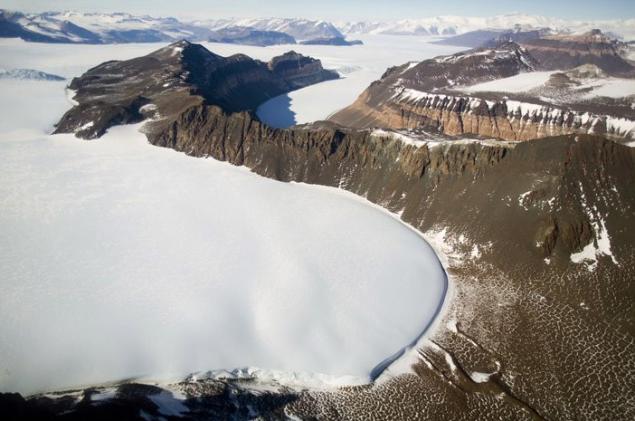
Taylor glacier tongue.
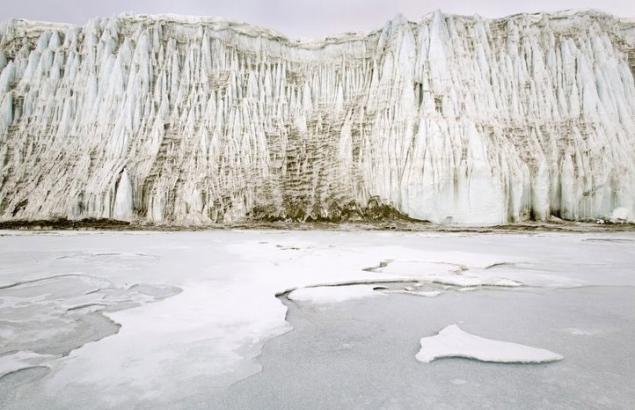
Edge "of the Canadian Glacier»
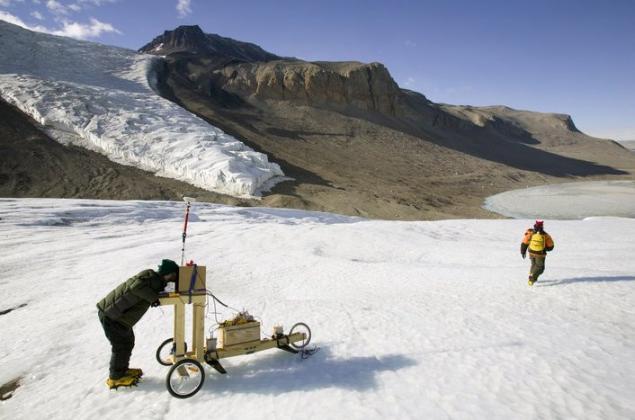
Scientists Erin Pettit and Matthew Hoffman measure the thickness of the glacier Taylor penetrating through the ice radar system and antenna GP, set to a makeshift "ice wagon.»
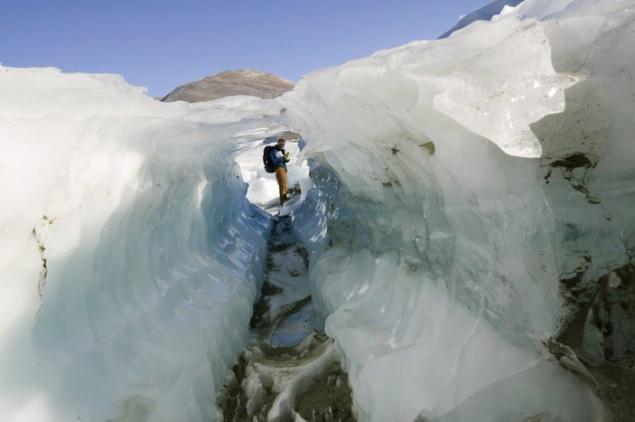
Ice tube through which flows over the surface of the summer glacier melt water.
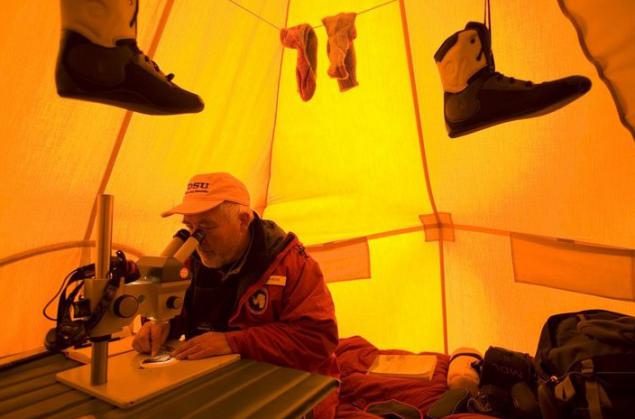
Allan Ashworth in his tent Scott (named after the early polar explorer Robert Falcon Scott) investigates an instance of moss, which he suspects more than 13 million years. He is looking for examples of animals and microbes that can provide information about ancient climates.
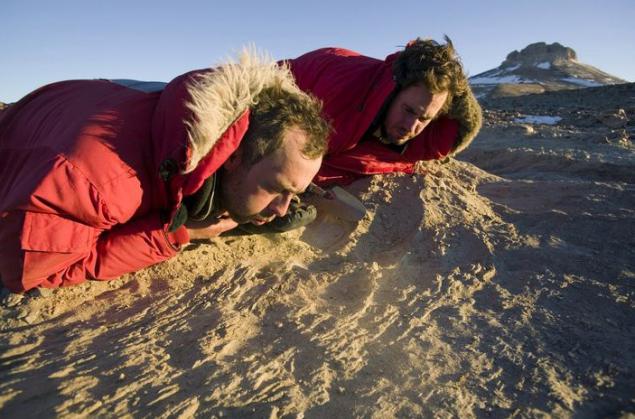
Scientist Adam Lewis and Doug Kouolyuskomu lucky to see the ancient layer of moss, which is believed - to 13 million years. This is not a fossil, and freeze-dried specimen of ancient life, from a time when Antarctica was warmer. They try to understand the processes that cause climate change.
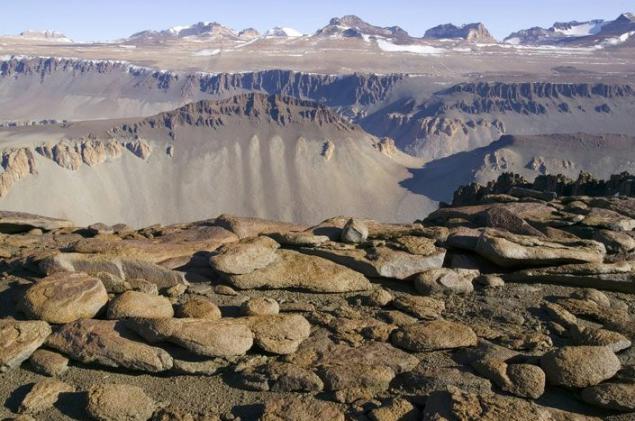
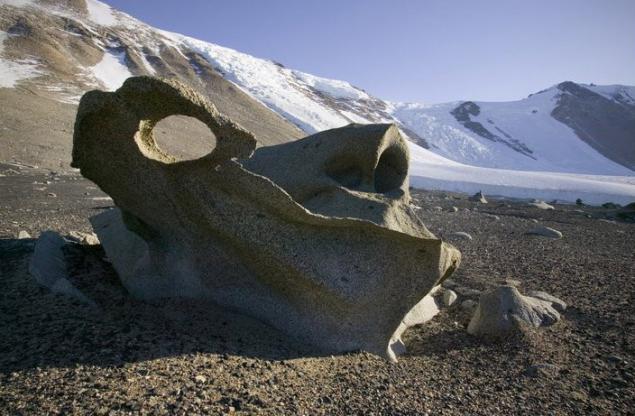
Erosion of rocks in the Dry Valley.
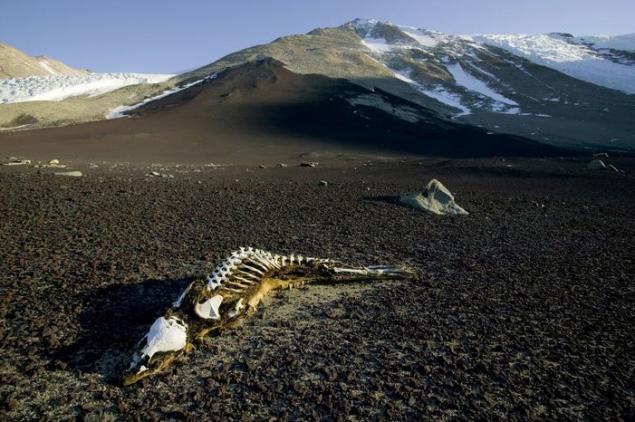
Seal skeleton found near Glacier Valley Sollas Taylor, about 30 kilometers from the coast. Scientists believe that seals caught in Dry Valley, do so because of mental illness, as there is no food, and a way for them to survive. Dry climate preserves their housings for thousands of years.
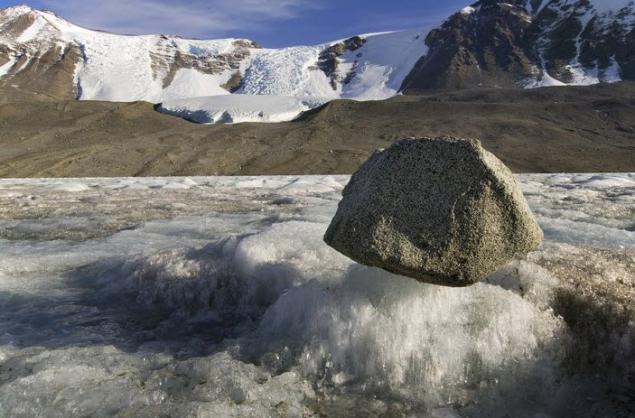
Boulder weighing hundreds of kilograms is perched on top of old ice in the center of Lake Bonney, a hundred meters from the shore. It is unclear how this rock got here, but one scientist speculated that she may have rolled off the cliff at the edge of the lake and drifted on an ice raft, which never completely melts.
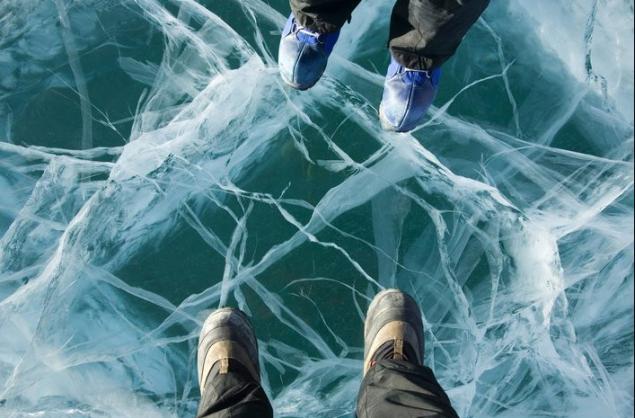
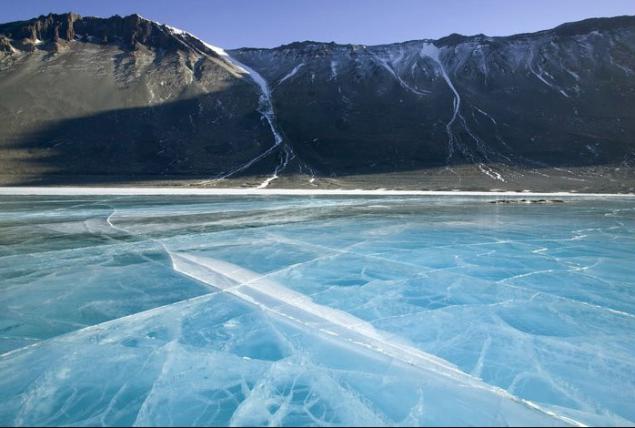
Lake Vanda, as they say, is the clearest ice in the world. The water at the bottom of the lake is 10 times more than solena sea water, keeps the temperature 25 degrees Celsius all year round. Warm water maintained a lot of bacteria which can survive from incoming sunlight. Above the edge of the lake - the shorelines with the time when the lake level was higher.
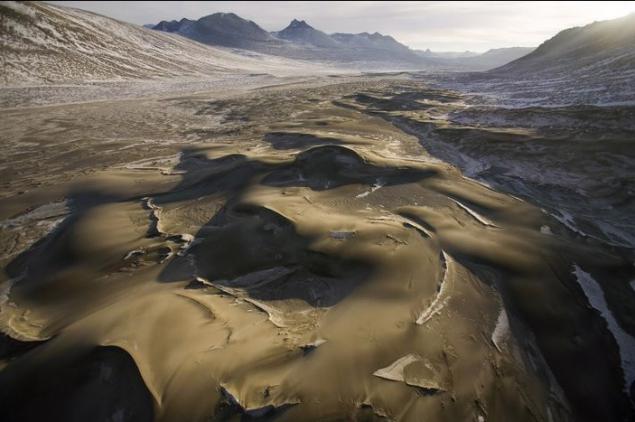
Frozen dunes in the Valley of Victoria, east of Lake Vida. This - the largest area of dunes in Antarctica.

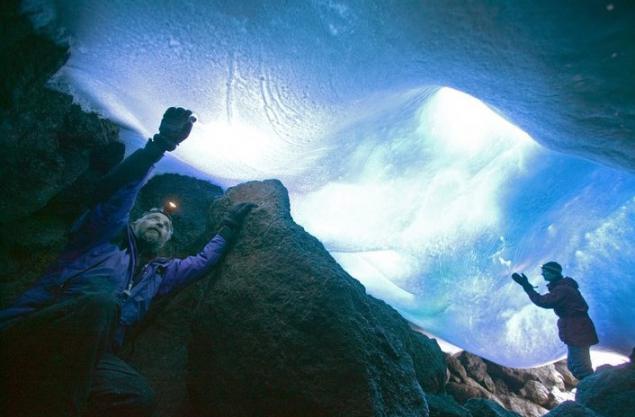
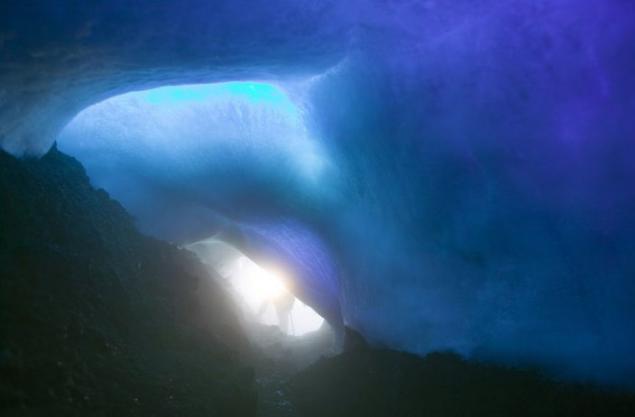
Color ceiling of the cave depends on the thickness of the ice.
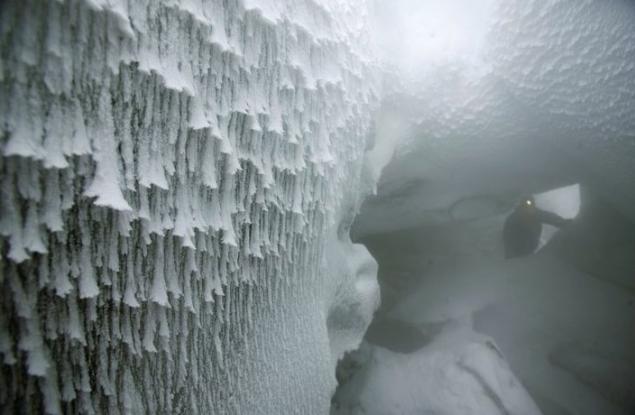
The cave - zero degrees Celsius with 100 percent humidity. This leads to large ice crystals growing from the vapor. Dripping water forms ice stalagmites, stalactites, curtains, and other forms, the more familiar limestone caves.
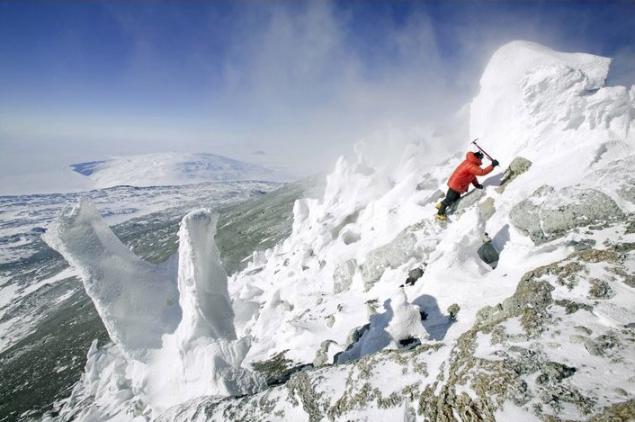
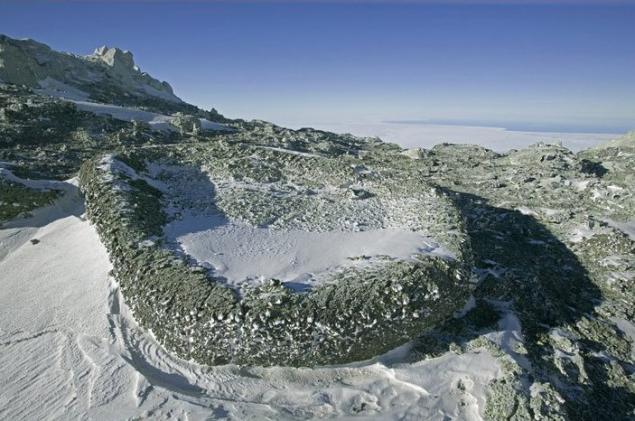
"Lava Bomb" with a diameter of 6 meters on the slopes of Erebus.
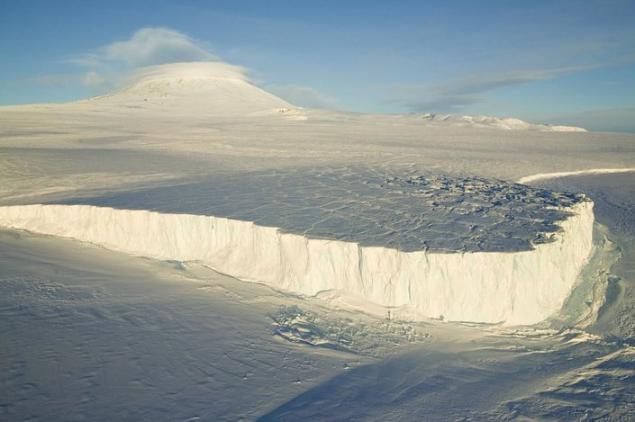
Erebus in the background with a double ring of clouds around the top of it.
-