1052
This danger at sea few know
Many people thrive in water, do not understand how it is possible to sink near the sea or ocean shore. The majority believes that in such cases the blame drunkenness, but sometimes it is quite a different phenomenon - rip current.
In this article Website

Rip current, or as it is called by foreigners, rip current (rip) - one of the most dangerous phenomena. Here are some of these trends and how ordinary people are drowning, and first-class swimmers, because they simply do not know how to behave.
Are you trying to resist the stream to swim, but nothing happens. A couple of moments, and the panic begins ...
The most dangerous for people rip current shallow seas with a flat, low-lying coast, which is framed by sand bars, shoals and islets (the Gulf of Mexico, the Sea of Azov, and others.). In this case, when the tide is the mass of water can not gradually get back into the open sea because of the restraining their spit. The water pressure in the narrow strait that connects the estuary with the sea, increases sharply. At this point rapids formed by which water rushes back into the sea at high speed (up to 2, 5-3, 0 m / s), forming as it were a river in the midst of the sea.
This is how it looks schematically

These corridors occur in any places Beach
It looks like a river:


In this picture is not so pronounced swirling streams of water, but it can be clearly seen for itself and, unfortunately, people who have got into it:

Typically, a narrow corridor rip: 2-3 meters at a speed of 4-5 km / h. This is not dangerous. However, there may be rip current width of 50 meters and a length of 200-400 meters, at speeds up to 15 km / h! Rips a length of infrequent, but still there.

How do we determine it is for that not to get into it? Pay attention to the following markings
- Visible channel boiling water perpendicular to the shore. The coastal area of discolored water (say, all around the blue or green, but some portion of the white). Plot foam, some marine vegetation, bubbles, which is steadily moving from the coast to the open sea. The gap in the overall structure of tidal waves (continuous-wave band, and in the middle of 5-10 meter gap). < /
If you see something out of the described, consider yourself lucky and just do not go to swim in this place. And what if you do not see any signs of 4? So you're out of luck, because 80% of spontaneously occurring dangerous rips did not manifest itself visually
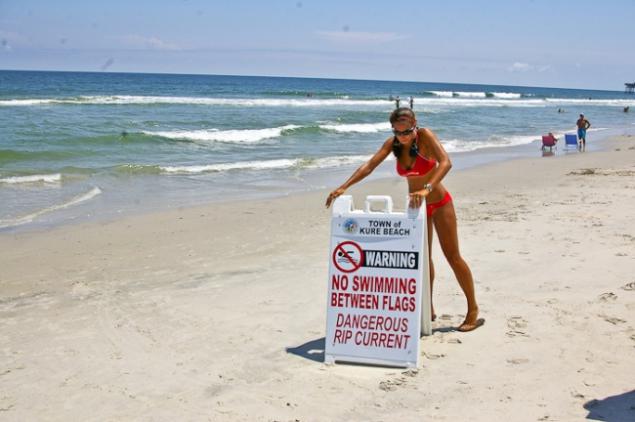
rip current near the shore there. Therefore, do not swim alone and, of course, do not ignore the red flags and signs on the beach.
Rules of conduct in the rip current: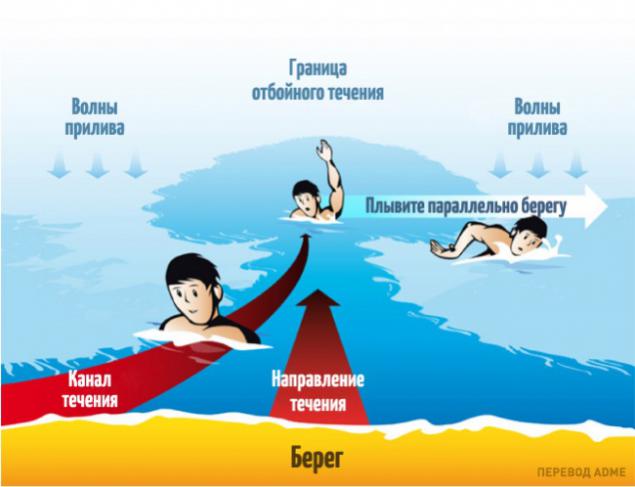
Do not panic!
Save power!
If rip wide (20 meters and more), what to do?
It is important to consider the following: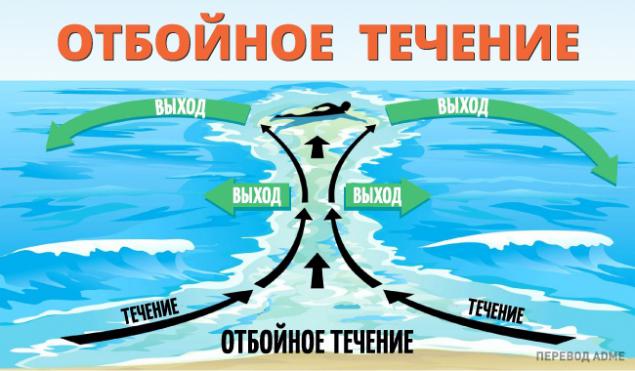
Rip never carry off you at the bottom.
Rip it is not too wide.
The length of the rip is limited.
Please tell your friends about this phenomenon.
Author: Anna Romanova
via annaromanova.ru/
I saw the ravens ate in the park, and was stunned by what she did then
"You can not be her first ..."