827
Seven facts about us, over which we have not thought
The website offers you a selection of every item which can be attributed to anyone on the planet.
Our stomach is smarter than we think Our gastrointestinal tract has more neurons than many animals have in their brain! Their number and significance suggests that in the stomach we have a second brain.
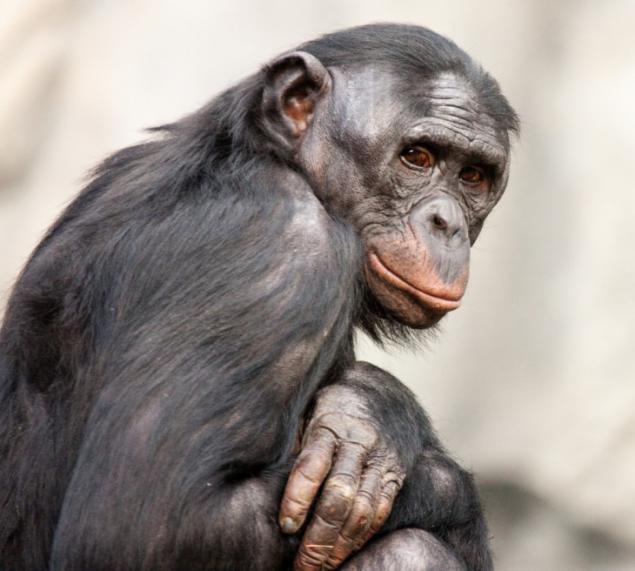
We are covered with hair just like chimpanzees In the human body the scalp has the same structure as in most other primates. We are different from chimpanzees only the thickness and length of hair, but not their number and location.
Our body is strip Just like the coat have, for example, cats, our skin has a very clear lines and spots, but we do not see them. They are called Lines Blashko. It is believed that their presence is associated with the migration of skin cells in the embryo they are templates, which can be seen as developing skin. The lines do not match the pattern of muscle and lymphatic system, their shape is genetically determined.
For diseases in which the lines become visible Blashko include varieties nevus, lichen and chimerism.
We partially blind Unfortunately, the structure of the human eye has one fault: the blind spot. In each of your eyes is a place devoid of the ability to perceive light, is large enough to cause problems in people who have lost one eye. A full set of eyes blind spots go unnoticed.
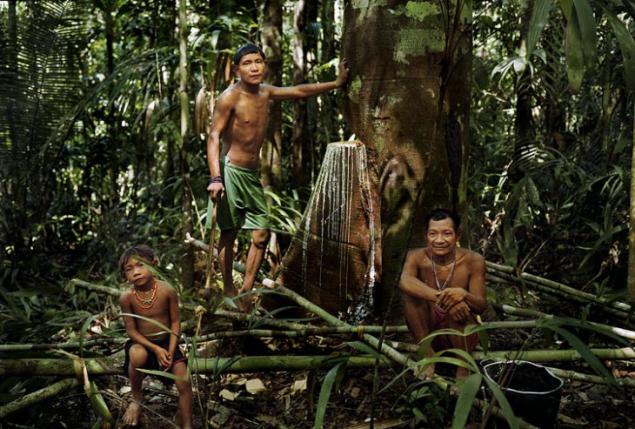
We can consider excluding We have an intuitive understanding of the amount, if the objects are not more than 4. Optionally, to be able to believe in order to understand "two" or "three" of the object you see before you. Even representatives of tribal feasts, in a language which, as we know, there is no concept account also intuitively understand the amount.
Our DNA has in its composition viruses One of the biggest surprises us prepodnesёnnyh disclosure of the human genome, was the fact that our DNA is part of the virus. Viruses can not reproduce on their own - so some of them have found a clever way to "build" their DNA into the host cell to be copied later.
If the virus inserts its DNA into sperm or egg cell, resulting offspring can carry the DNA of the virus in each of its cells. Throughout human evolution, it happened so often that it is now at least 9% of our genome - a virus genes.
Our body is much younger than we are You change all the time. You breathe in, breathe, eat, get rid of secretions, and so on. N. The state of your body never repeats itself in the previous moment.
And you constantly updated: every second of the cell dies and is replaced by new ones. The farther you move away from the age of puberty, the less you remain in the cells that belong to you since childhood. This leads to frequent philosophical debate: can you call yourself is, if all of the cells that were with you at birth, long ago replaced by new ones?
via factroom.ru
Our body is strip Just like the coat have, for example, cats, our skin has a very clear lines and spots, but we do not see them. They are called Lines Blashko. It is believed that their presence is associated with the migration of skin cells in the embryo they are templates, which can be seen as developing skin. The lines do not match the pattern of muscle and lymphatic system, their shape is genetically determined.
For diseases in which the lines become visible Blashko include varieties nevus, lichen and chimerism.
We partially blind Unfortunately, the structure of the human eye has one fault: the blind spot. In each of your eyes is a place devoid of the ability to perceive light, is large enough to cause problems in people who have lost one eye. A full set of eyes blind spots go unnoticed.
We can consider excluding We have an intuitive understanding of the amount, if the objects are not more than 4. Optionally, to be able to believe in order to understand "two" or "three" of the object you see before you. Even representatives of tribal feasts, in a language which, as we know, there is no concept account also intuitively understand the amount.
Our DNA has in its composition viruses One of the biggest surprises us prepodnesёnnyh disclosure of the human genome, was the fact that our DNA is part of the virus. Viruses can not reproduce on their own - so some of them have found a clever way to "build" their DNA into the host cell to be copied later.
If the virus inserts its DNA into sperm or egg cell, resulting offspring can carry the DNA of the virus in each of its cells. Throughout human evolution, it happened so often that it is now at least 9% of our genome - a virus genes.
Our body is much younger than we are You change all the time. You breathe in, breathe, eat, get rid of secretions, and so on. N. The state of your body never repeats itself in the previous moment.
And you constantly updated: every second of the cell dies and is replaced by new ones. The farther you move away from the age of puberty, the less you remain in the cells that belong to you since childhood. This leads to frequent philosophical debate: can you call yourself is, if all of the cells that were with you at birth, long ago replaced by new ones?
via factroom.ru
We can consider excluding We have an intuitive understanding of the amount, if the objects are not more than 4. Optionally, to be able to believe in order to understand "two" or "three" of the object you see before you. Even representatives of tribal feasts, in a language which, as we know, there is no concept account also intuitively understand the amount.
Our DNA has in its composition viruses One of the biggest surprises us prepodnesёnnyh disclosure of the human genome, was the fact that our DNA is part of the virus. Viruses can not reproduce on their own - so some of them have found a clever way to "build" their DNA into the host cell to be copied later.
If the virus inserts its DNA into sperm or egg cell, resulting offspring can carry the DNA of the virus in each of its cells. Throughout human evolution, it happened so often that it is now at least 9% of our genome - a virus genes.
Our body is much younger than we are You change all the time. You breathe in, breathe, eat, get rid of secretions, and so on. N. The state of your body never repeats itself in the previous moment.
And you constantly updated: every second of the cell dies and is replaced by new ones. The farther you move away from the age of puberty, the less you remain in the cells that belong to you since childhood. This leads to frequent philosophical debate: can you call yourself is, if all of the cells that were with you at birth, long ago replaced by new ones?
via factroom.ru
If the virus inserts its DNA into sperm or egg cell, resulting offspring can carry the DNA of the virus in each of its cells. Throughout human evolution, it happened so often that it is now at least 9% of our genome - a virus genes.