4102
Optical Illusions
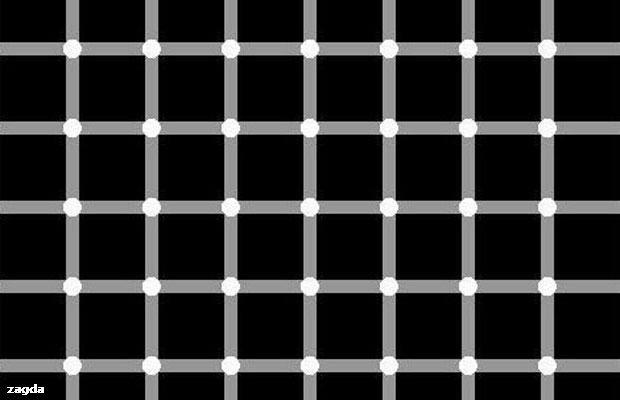
See black dots at the intersection of gray lines? Especially when you look at the dark squares. But they are not. This illusion is known as the Shining Net, and was discovered by E. Lingelbach in 1994.
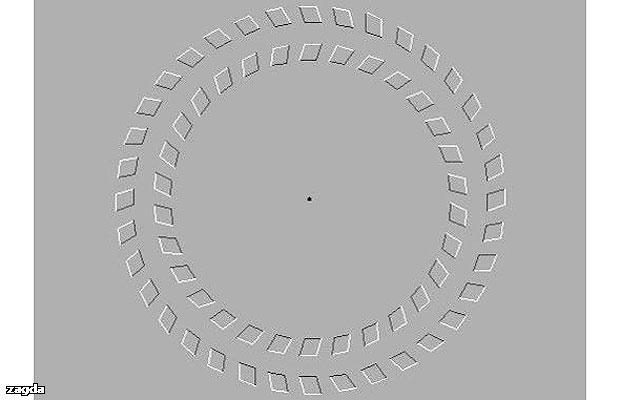
2. Focus your eyes in the center of the circle and then move your head back and forth. The outer wheels circle should start to rotate in opposite directions.
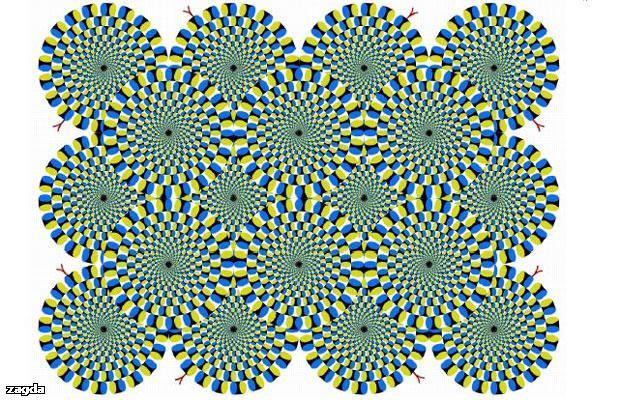
3. Spinning wheels.
If you focus on the picture, all the wheels begin to rotate (in both directions). However, if you focus on a single wheel, it stops, while others continue to turn.
4. Hide Details
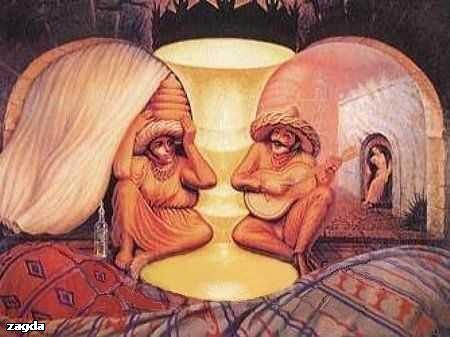
Mature couple embracing, but that's not all ...
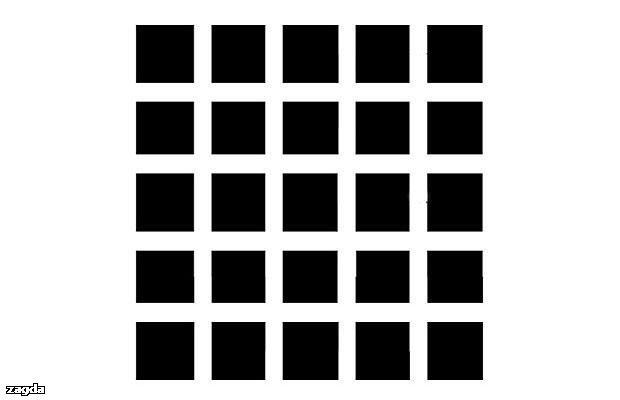
5. The white lines or gray spots
Look closely at the black squares. You will begin to see that gray spots appear at the intersections of the white lines among black squares. This illusion was discovered Ludimar Hermann in the 1870s.
6
Optical illusions are widely used in advertising ...
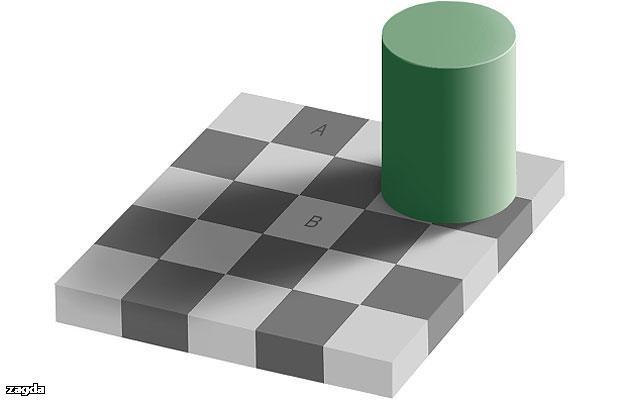
7. At first glance it seems that Eto'o - black and white chess board with a green cylinder with a shadow on a diagonal. However, black and white squares - just different shades of gray. 'White' in the shadow squares (including the 'B') are actually exactly the same shade of gray as the 'black' squares outside.
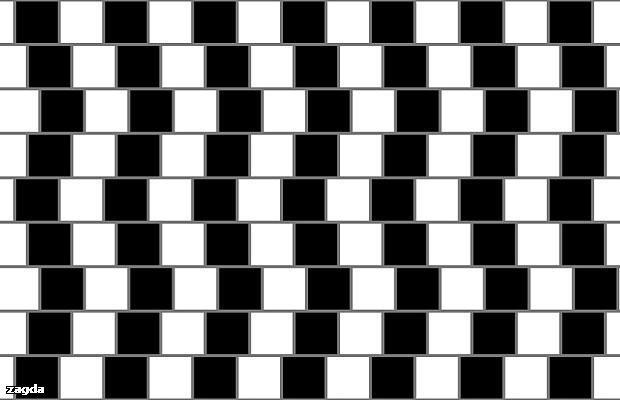
8. The horizontal lines appear to be bent, although they are parallel.
9
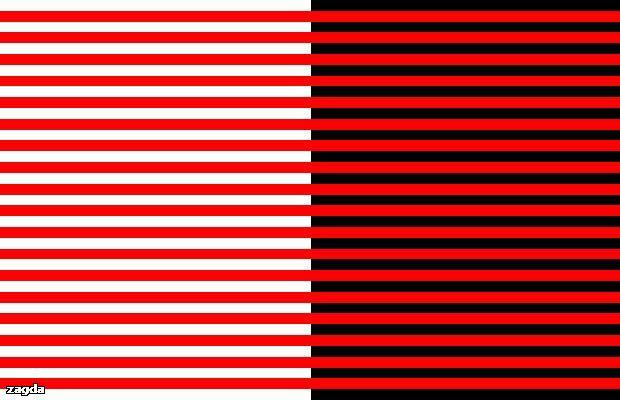
color may appear different depending on its relation to adjacent colors. Red seems lighter when side by side with the white and darker when it is next to the black.
10
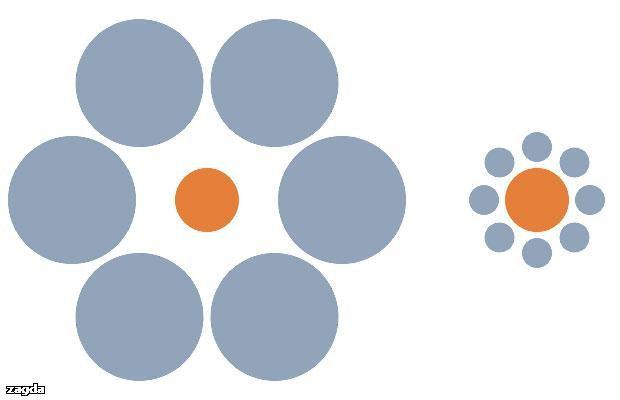
The illusion that plays on our perception of relative size. The first central circle appears smaller than the circle on the right. In fact, they are the same.
11
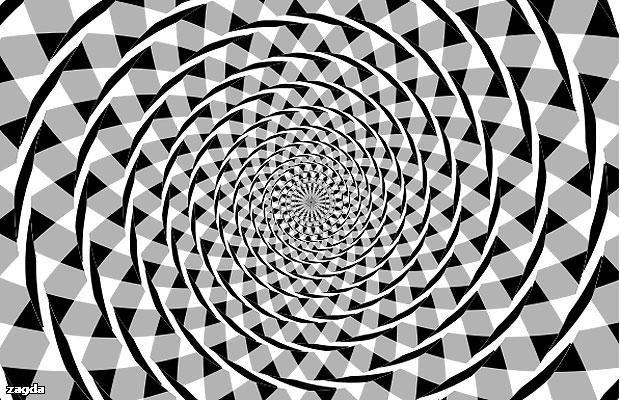
Known as Illusion Spiral Fraser. Overlapping black arc seems to form a spiral; but the arc - just a series of concentric circles.
12
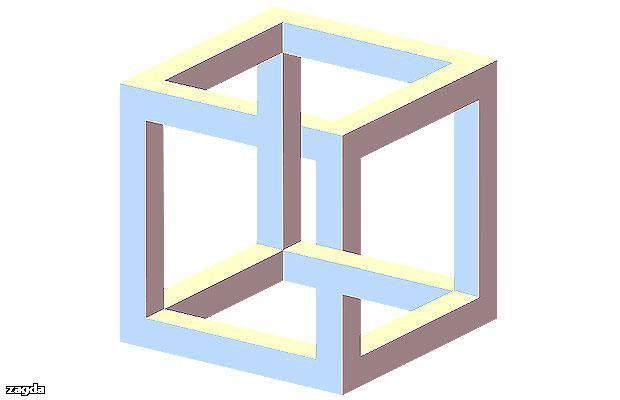
Illusion that creates our natural desire to see the whole and not the individual elements of drawing or painting. But each part of the figure contradicts another.
13
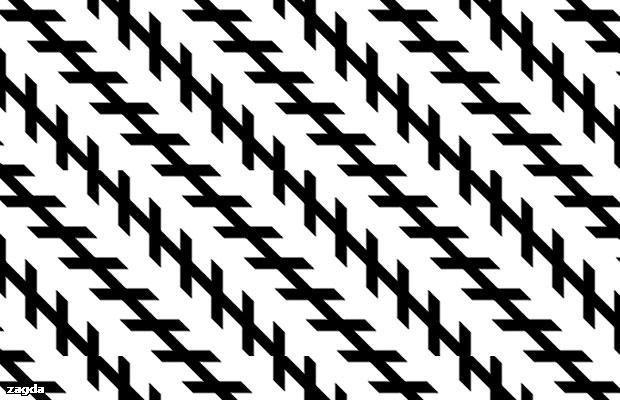
Jagged lines appear parallel to each other. But it is - an illusion. It was created by shorter lines, which are at an angle to the longer lines, and this gives the impression that one end of the longer lines closer to us.
14
Two forms of the same size. In fact.
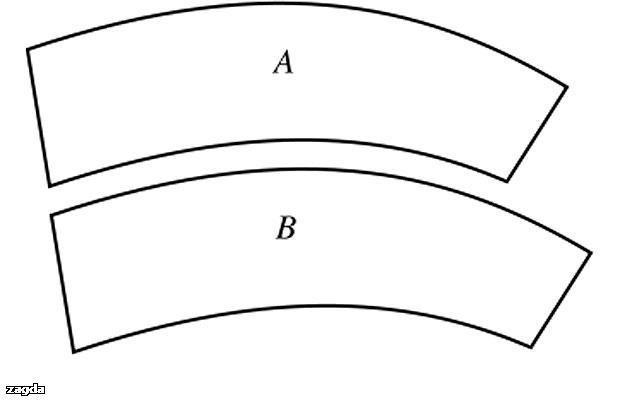
15
Everyone sees inverted white equilateral triangle in front of three black discs. However, there is a triangle, although it looks brighter than the background.
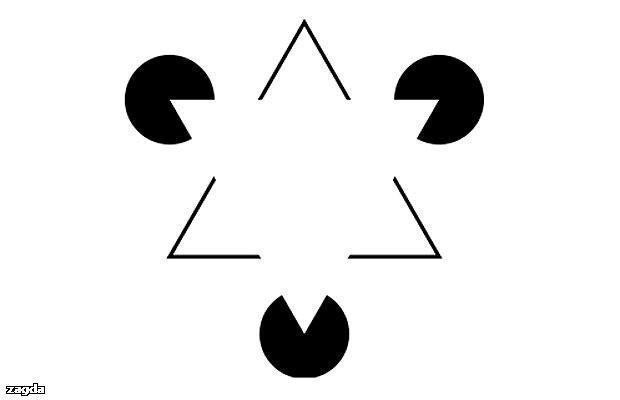
16
This illusion illustrates how the brain can be tricked interaction diagonal and horizontal lines. At first glance it seems that the blue line - continuation of the black (left figure). However, on closer inspection it turns out that a continuation of the red line (Fig. Right).
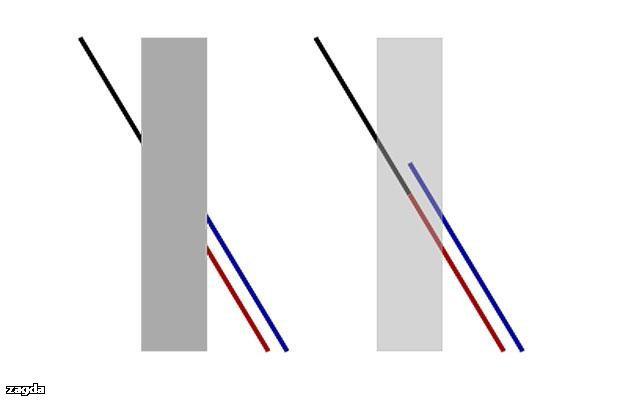
17
Another example of an impossible object. Three round teeth at one end are two rectangular teeth in the other. This figure is known as the effect Blivet.
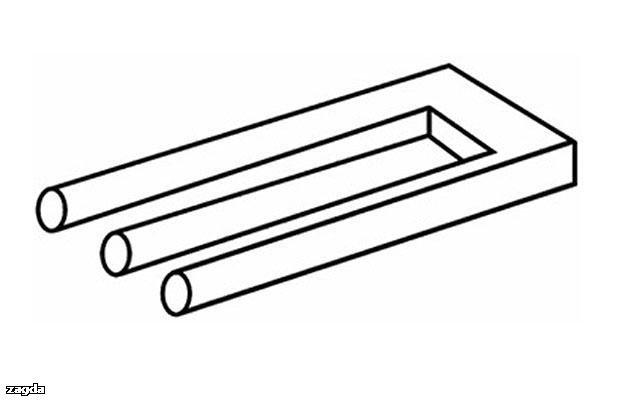
18
When the gray rectangle surrounded by black, it seems lighter, although there all the same shade of gray rectangles.
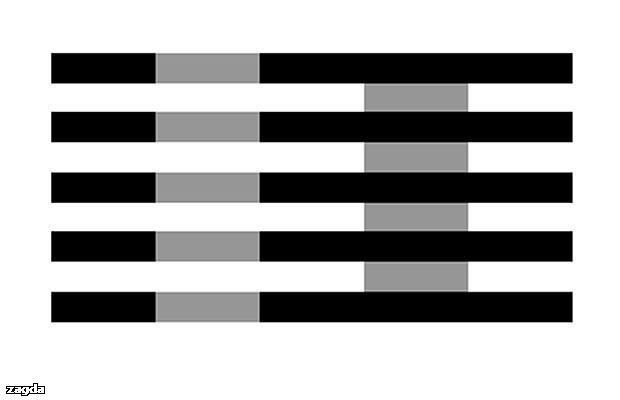
19
The illusion of movement. The reaction of the brain to the color contrasts and the position of forms is that it seems to be moving a static image.
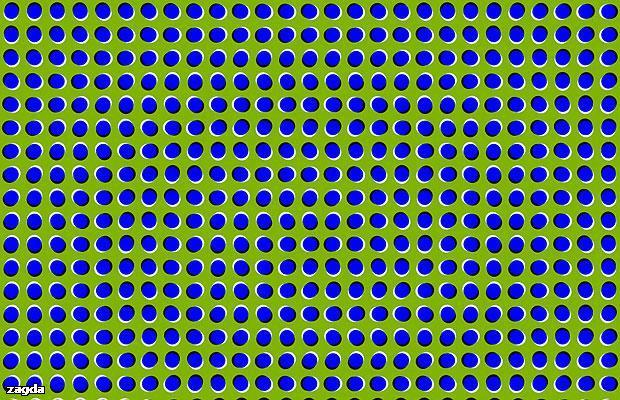
20
Drawing of a woman walking towards the bridge. If you look closer, there is a person.
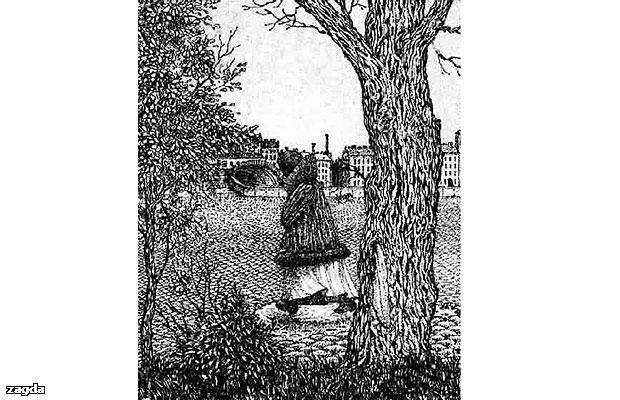
zagda