977
Germany, Rёbel: train museum. (34 photos)
periskop.livejournal.com
the author writes
Two capitals in my journal two weeks "rest", as promised, and we are with you, let's fast forward a hundred kilometers north of the Berlin ring road, in a small sleepy town Rёbel.
It is a little off the E55 motorway at Rostock on the shores of Lake Müritz. Yes, this is the Müritz, which is located on the banks of the famous Rechlin (who knows the history of the Luftwaffe, he will understand that this place is meant for the history of aviation). So, rehlinsky Luftwaffe test site was located about 8-9 km from the Rёbelya if considered directly, and the noise from the engines tested, and taking off of aircraft there was certainly heard. After the war there was based Soviet 125th Air Division GSVG.
Rёbel same in the years of the Third Reich was a station (as I understand it - a dead-end, the same as the neighboring Mirow), part of a network of Deutsche Reyhsbann. And then he was a settler, where the war and after the Germans were brought interesting pieces of art. Somewhere in the moment before the unification of Germany (or immediately after) Rёbel station has ceased to be, the way it had been dismantled and turned into a train "island", now transformed into a museum under the open sky. However, quiet and little known.
When we rally St. Petersburg - Finland - Germany (RFD) planned return journey from Berlin to Rostock, I was surprised to see the icon of the museum train on the atlas - though quite a number have been no w / d lines. Nearest the line was at least 20 kilometers (Waren, Worlds Wittstock). It is quite intriguing, and we decided to call in on the way - and no mistake. Yes, Rёbel prepodnёs us a lot of puzzles, most of the answers to which I still did not know. I was particularly shocked disguised "Joseph Stalin" with the German stamp, as well as huge rail wagon for the giant instrument, net weight without implements 955 (!) Tonnes.
However, it is interesting to see these historical mysteries and, if possible, to clarify them - so please join me in a cat. I print a lot, almost 35, and a lot of text.
So, September 27, 2006, Rёbel town north of Berlin. We turn from the highway E55 and 6 km get to the destination. People almost anyone ringing silence, and no parking sign, and therefore how we park anyhow, near the historic train station. In Russian
Path to the locomotives already seen - we probably there. We go into the room station: everything about the way would look like in semi-abandoned recreation center in some Russian regional center - quiet, heaped furniture, beautiful chaos in a building on two drink tea. We present, stands a lean woman writes us the tickets (I think 2 or 3 euros - now have forgotten). Unfortunately, it may belmesa either in Russian or in English and German, we do not belmesa, so communication is only using keywords
Then obiletivshis, go to the territory.
There, apart from us, only one visitor - and he is on the train. What we do for ourselves a logical conclusion that can climb anywhere open.
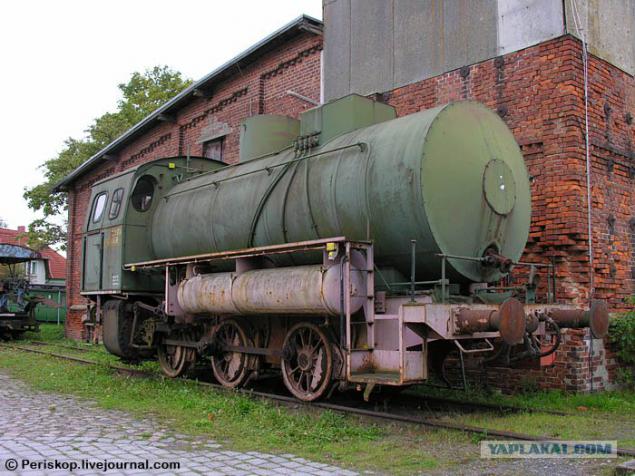
Tank locomotive 0-3-0 with the formula - apparently, a German analogue of our "Cuckoo".
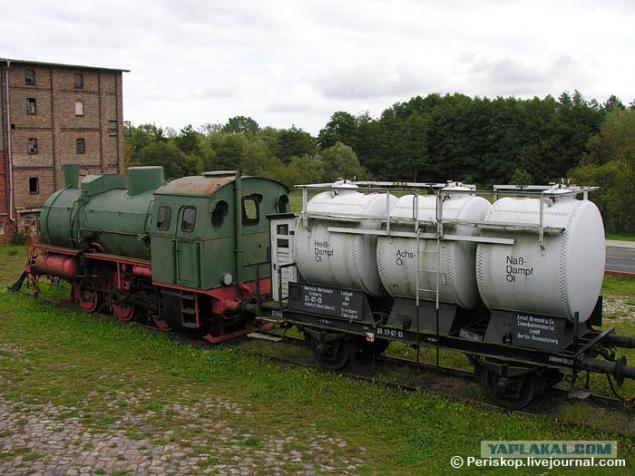
And this is another German "Cuckoo", different from the first different parts. To her hitched 2-axle tank with inscriptions Deutsche Reyhsbann.
We go on to the locomotives.
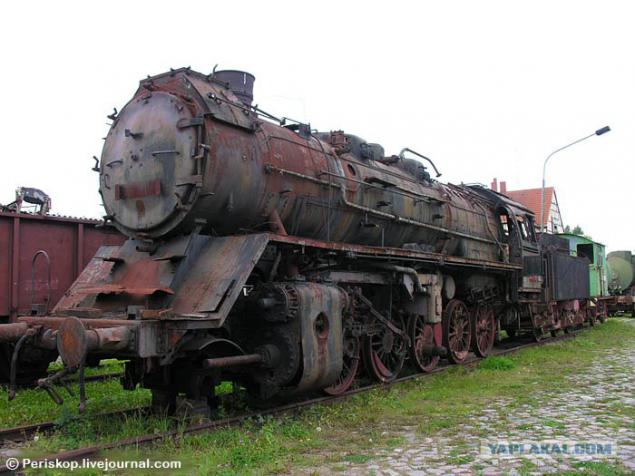
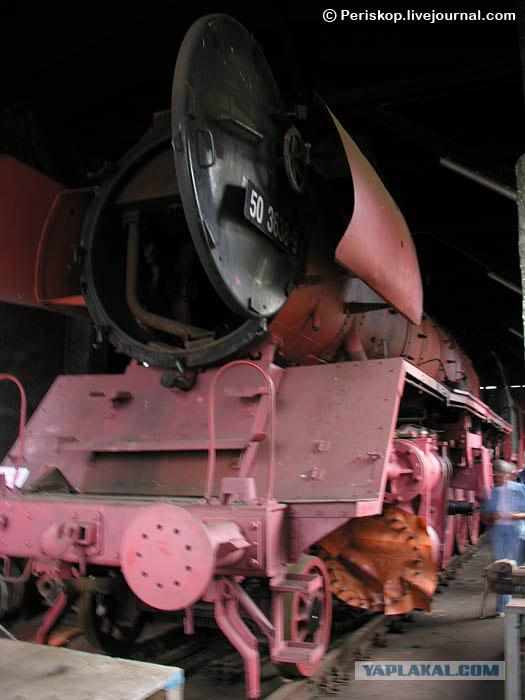
That is the German "fifty dollars" wartime production in 1941 (type 50), the formula 1-5-0. This may well have led to supply trains and the relocation of the Wehrmacht on the plan "Barbarossa" in Poland, and then on pereshito tracks in Belarus.
The front axle and dismantled under a pot in its place planted a massive churbachki.
Leading wheel pairs.
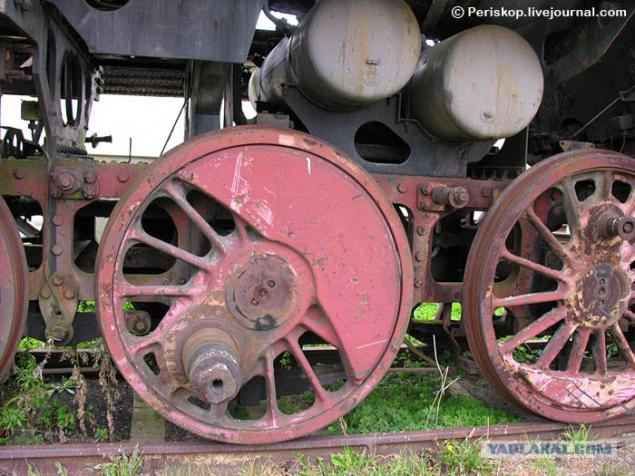
Of course, I could not resist and climbed into the "fifty dollars", climbed the cab and tender.
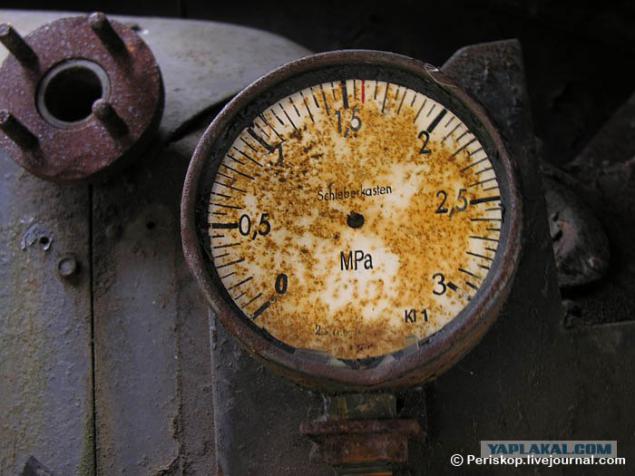
This locomotive even crippled, and it is difficult to determine the type. I captured these do not remember. The formula like 1-3-1.
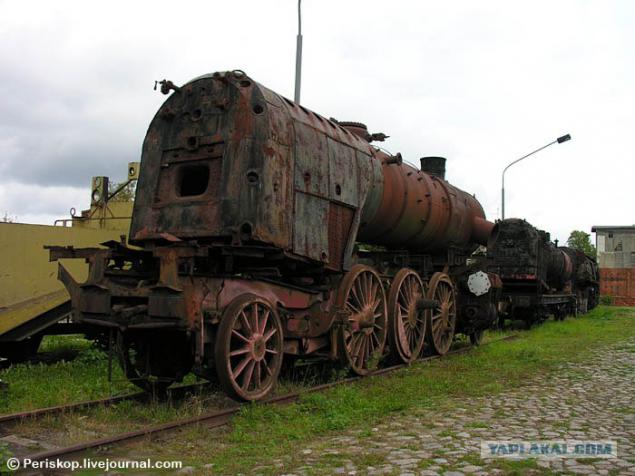
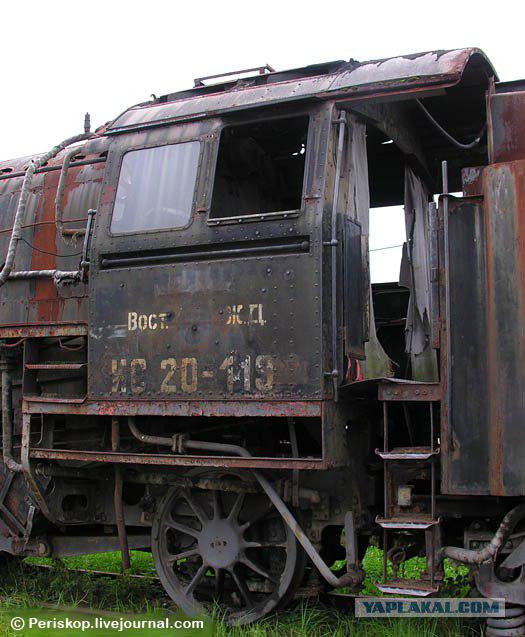
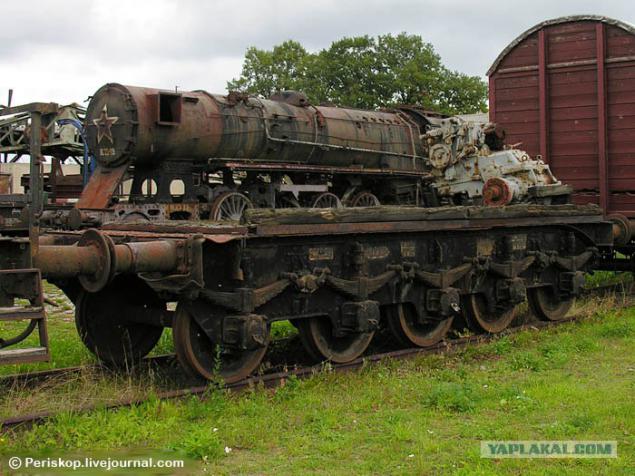
Next locomotive I just shook - his inscription "IP" long boiler and Russian inscriptions wherever possible
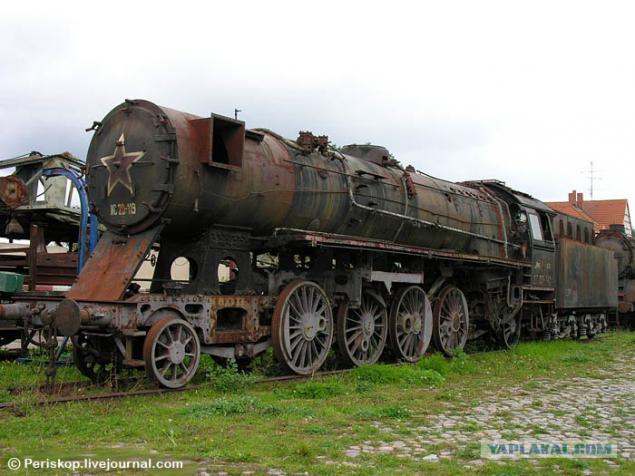
At first I was in this euphoria. Is "Joseph Stalin" ??? If so, it is rare good fortune, because the real IP is now preserved only in Kiev, and in the Krasnoyarsk Territory - only fragments!
However, much embarrassed, and, above all clearly visible "military" quality of the original assembly. After pre flagship USSR railways collected carefully and accurately. For example, the handsome EC on the Moscow-Donbass railway / end of 40th
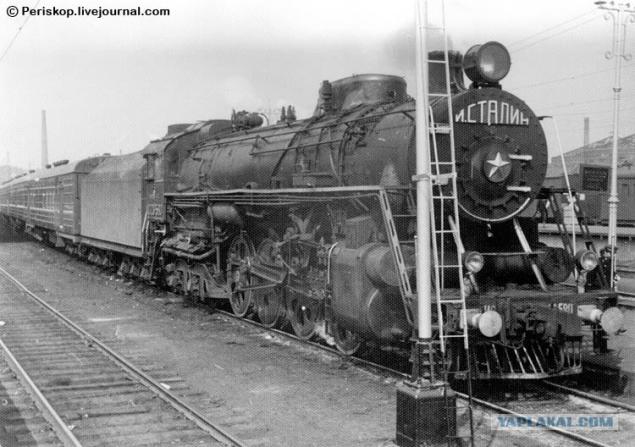
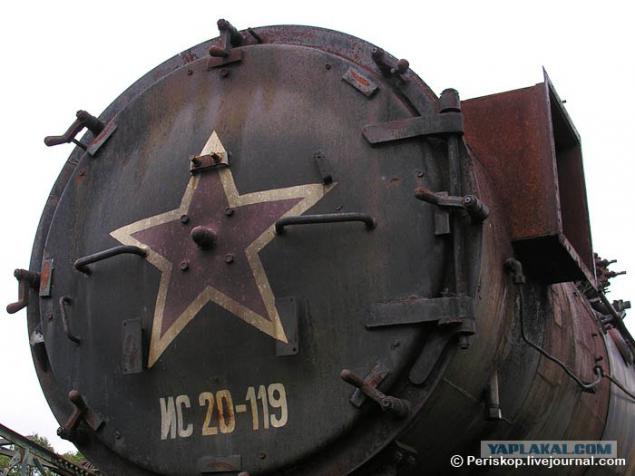
Also, I did not remember to remember wheel formula IC as well, and could not in place to determine the final diagnosis. But namalёvana front was a big star and the inscription IS 20-119. Front ladders also to be seen, but this could be attributed to the current state.
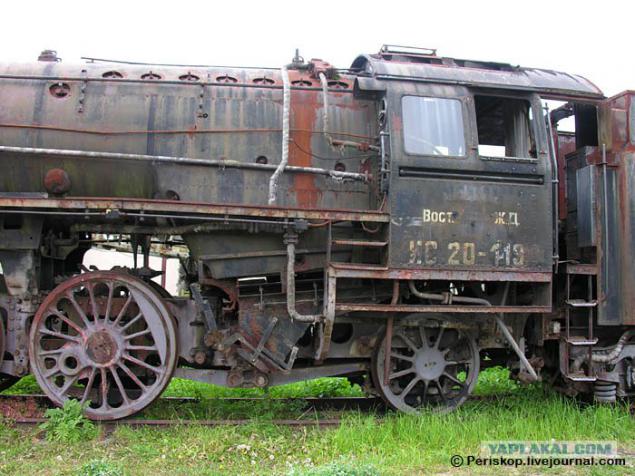
That cab of the locomotive. I guess the words "Vost.-Sib.zh.d.", which also seems to be true - because most of the "EC" s gone with the war based on Krasnoyarsk and the East Siberian railway, inland.
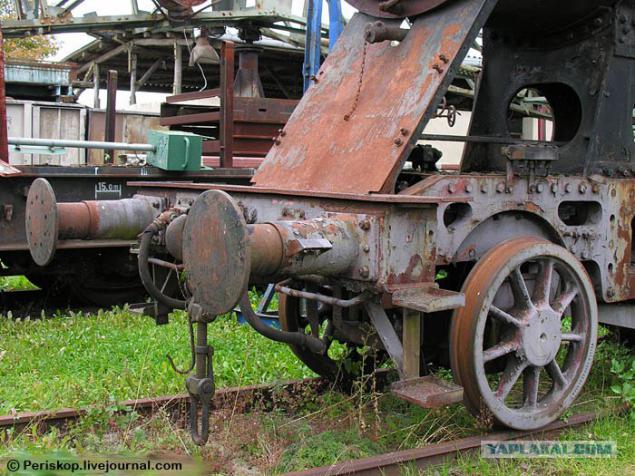
Highly embarrassing absence of any traces of the coupler (IC s were equipped with it), but instead was in the presence of the European helical gear and buffers. In general, it was necessary to find a brand engine.
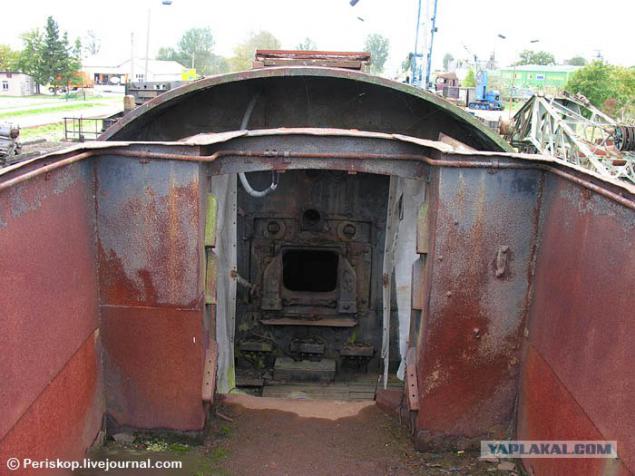
I clambered cab, climbed into the tender looked in the area of wheelsets ...
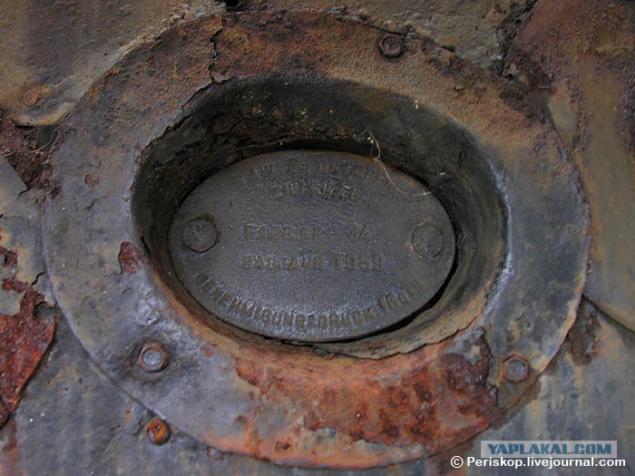
... And found. Yes, the stamp was uniquely German. And there was also in 1959 (!!!). That, in 1959, the Germans did more locomotives? But then why is there always namalёvannye inscriptions in Russian? And why is it "made-up" just under the EC? For what purpose? Maybe the movie filmed? If so, why then not erased - in fact it is a museum. And what is exactly the type of, and remains unclear - because the IC and the formula 1-4-2, and it has - 1-4-1. Ie We picked the closest.
In a parallel way attracted the attention of the other device, an enormous length, two-piece for turning in curves.
On the one hand it was docked to the 5-axle platform with a booth.
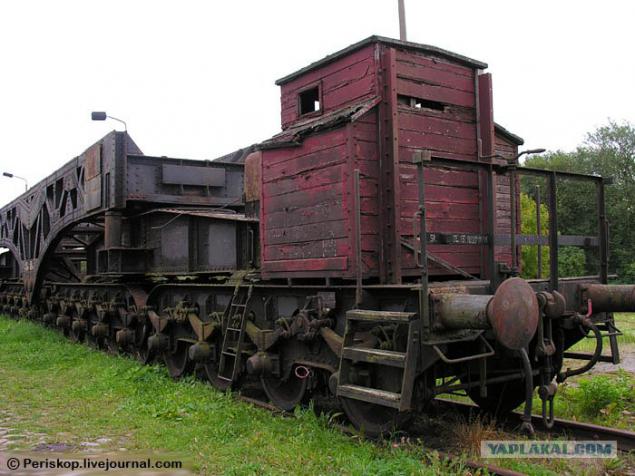
Then - the main body of the w / e-platform conveyor. It is an amazing amount of axes - 24 axes (!!!), and I tried to randomly determine the weight ("Thousand tons, for sure!"). In addition, and there were only Russian inscriptions.

I got to the middle, and read.
Yes, I was not mistaken - 955 tons, and it is only the weight of the conveyor. And if a weapon plus? How much weighed all this assembly ???

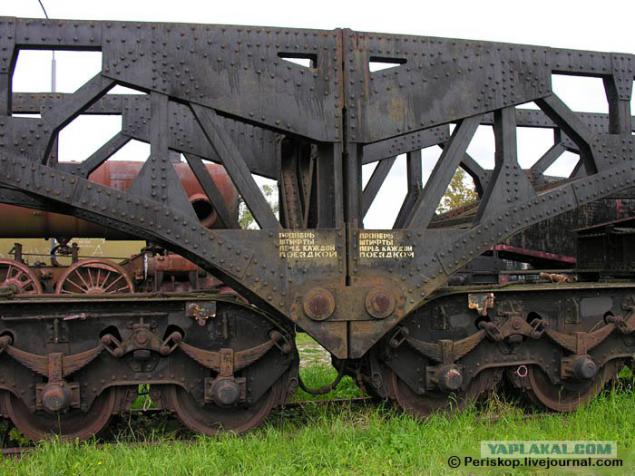
The middle joint of the conveyor. "Check the pins before each ride ...»
Rounding out the conveyor other 5-axis platform, devoid of any buildings. In the middle of a large steel beam, I suggested that this platform, most likely, is used to transfer part of the load of all this enormous complex on it.
However, many questions remain:
1) What exactly is this carried on itself w / d conveyor?
2) How exactly and when he got here?
3) Russian stencils - for them (it is not clear what, according to the EC-type fake a) Pontus or a German trophy, captured by the Wehrmacht during the war in the Soviet Union and distilled here?
4) Was made remaking Standard axes of 1435 mm, or it is still the German transporter?
No explanations and tablets was not there. Stamp I quickly did not find it was necessary to look beyond the rest.
I climbed up on the complex and took off the top standing near Soup.
For example, the most mysterious pseudo "Joseph Stalin."
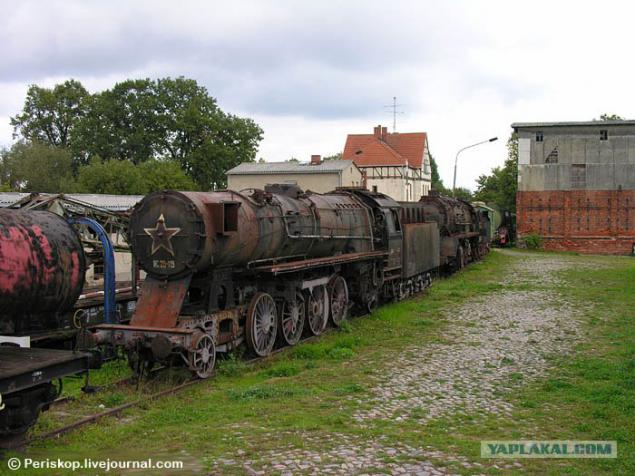
But the formula remains the locomotive 1-3-1.
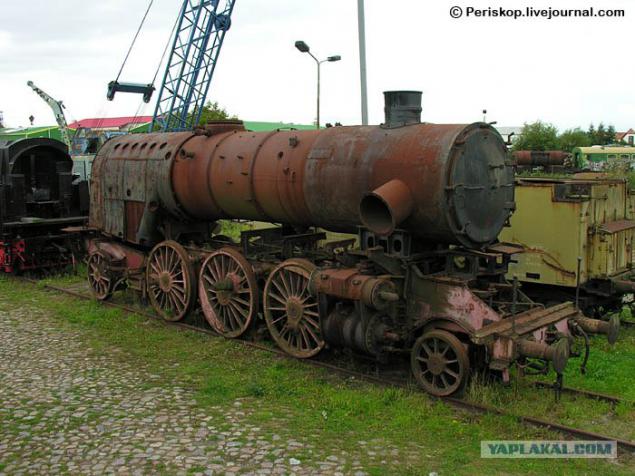
Okay, go ahead.
Tank (presumably) of the Third Reich with a wooden booth. It is not clear that it carried. Maybe some Artful fluid rehlinskogo landfill?
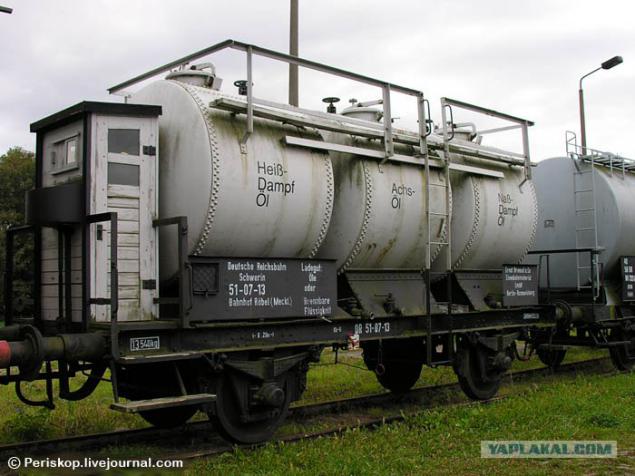
However, trolley on it were still the Kaiser, 1913. It turns out that it is even older?
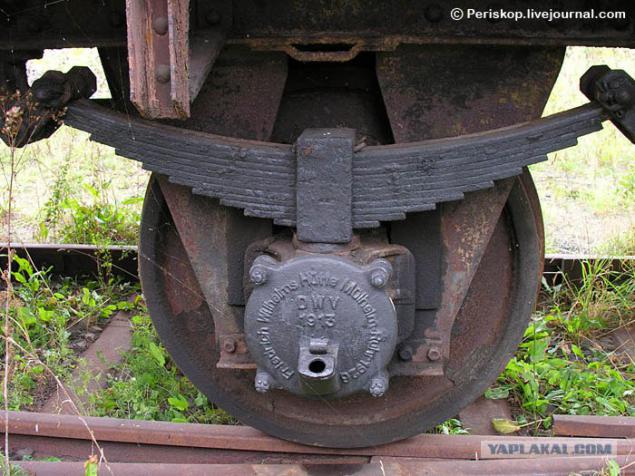
And this 2-axle tank - again with Soviet stamps and an inscription in Russian. Release 30s.

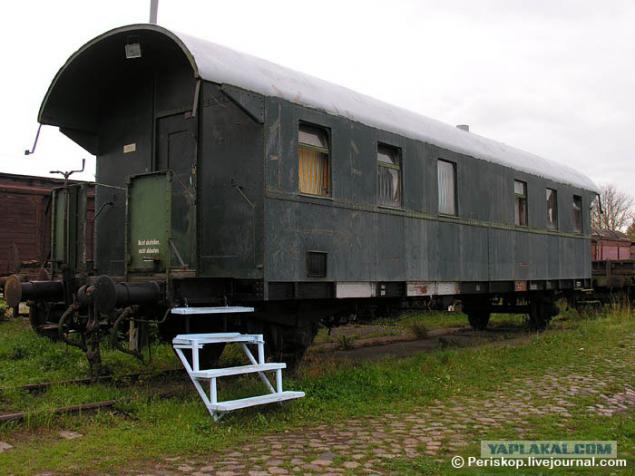
Passenger car era of the Second Reich (the beginning of XX century).
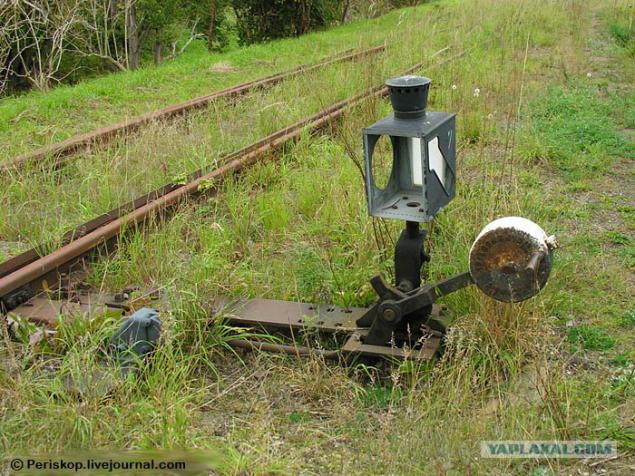
Turnouts with corporate style Reyhsbanna (illuminated from the inside arrow)
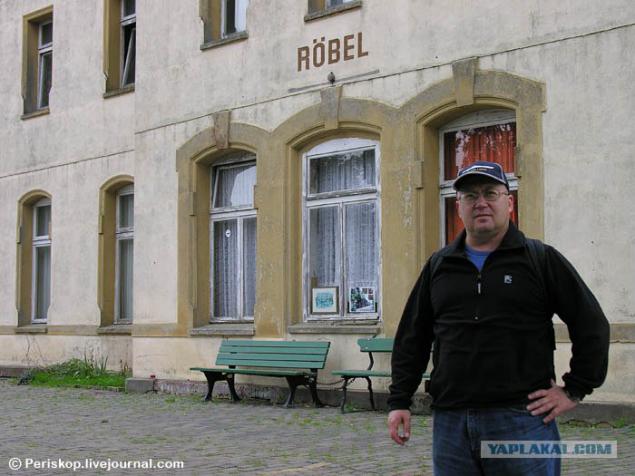
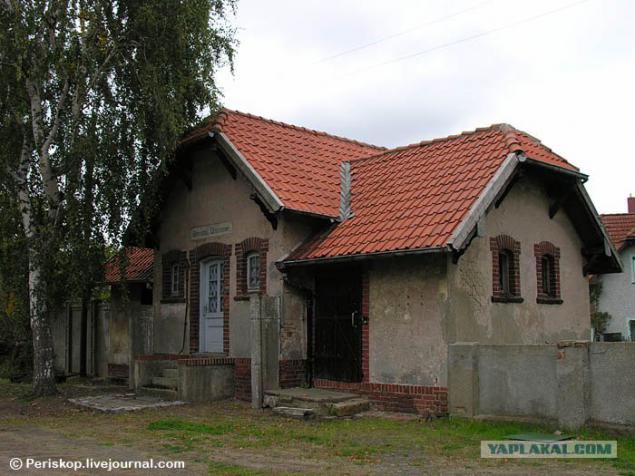
Rёbel Station (building bannhofa - Station). Solid Prussian style.

Snapshot memory)
The building of commercial office (or as they called it, by analogy).
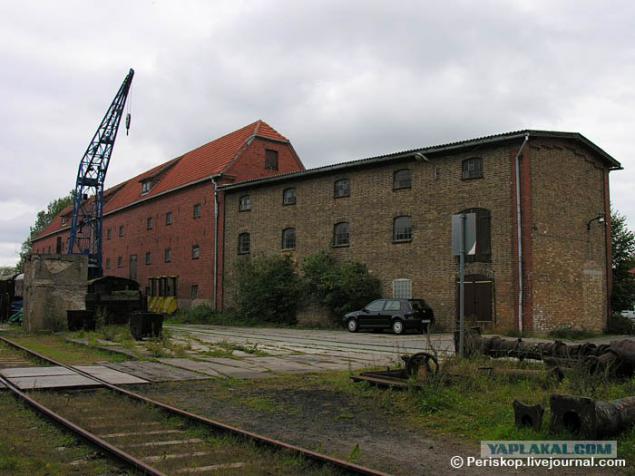
Production department stores. Everything is completely authentic - time here as if frozen in the year that way in 1940. The car only to remove
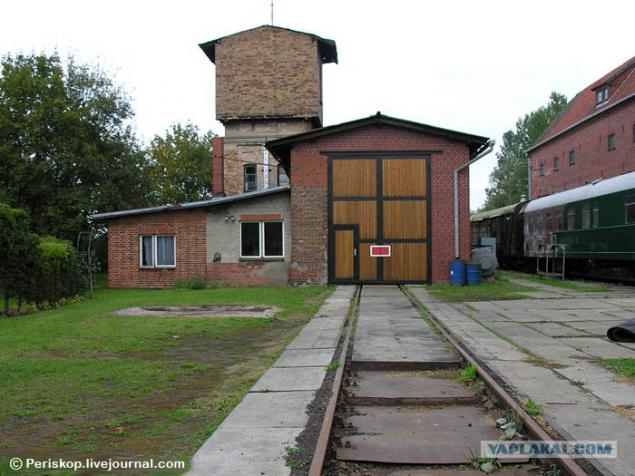
Hangar for motris and vodonaporka.
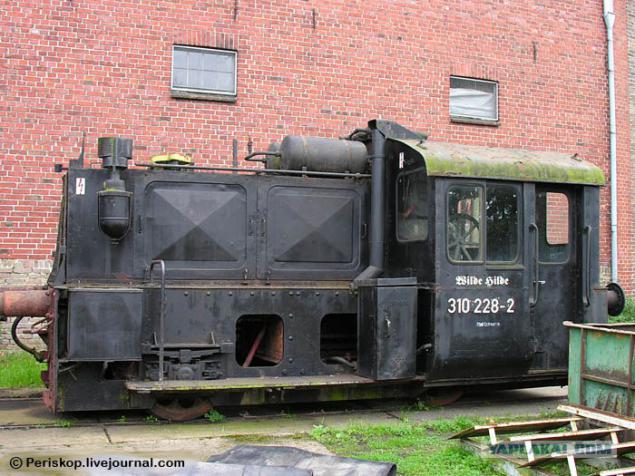
Also some tricky German tank locomotive, without understanding what year.
View from the train station to the south. It can be seen that the track now goes nowhere.
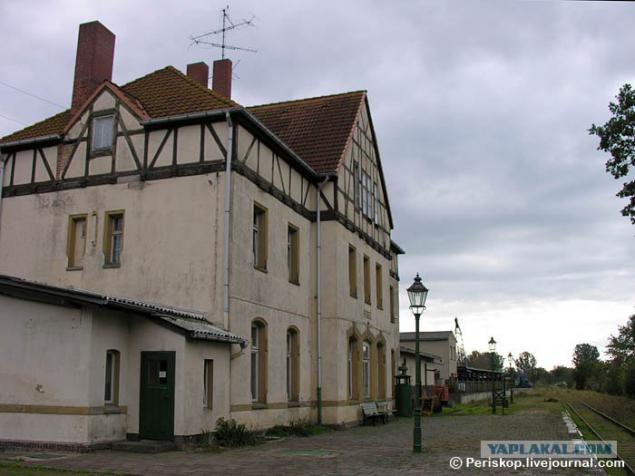
Then we came back to the woman-muzeyschitse. Issues was the sea, but the fatal ignorance of the German stop really find out what's what, and materials and booklets from the museum was not - he did have a strange status. However, the woman decided to show us something else, and took him into custody.
There was a military svezheotrestavrirovanny "fifty dollars." But that's where it will go, if their paths Rёbelya now there? Apparently, just for the museum?
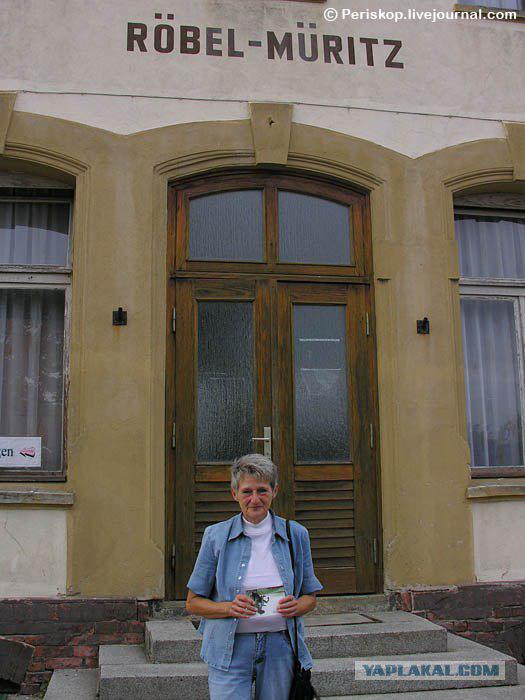
But we were told that they had come from St. Petersburg than the very animated conversation. She began in German to remember that once a young man was in the Soviet Union and, in particular, in Leningrad. In this regard, I quickly ran to the car and raked out bordachka recurring postcard from Peter and handed her.
"Oh-oh-oh ... Danke ..." - she said in amazement, turning the cards in their hands. It was very nice that we have taken such a genuine joy to man, and in Rёbele was quite interesting.
That's just we do not understand of the mysteries, and then went on, in Rostock.
Source: ">