19098
Falcon Hospital
Today we will visit the largest and most famous of all falconry hospitals in the world, I will talk about how doctors examine birds, how they restore their feather cover and balance, as well as interesting moments from the life of birds.
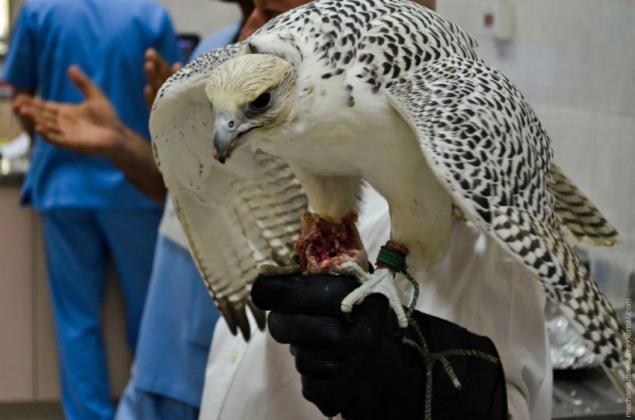
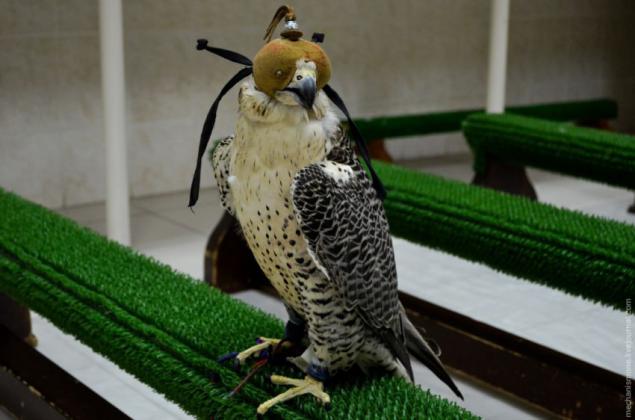
1. The Falcon Hospital in Abu Dhabi was established in 1999 by the UAE Environmental Protection Society and was the first public bird hospital in the Emirates.
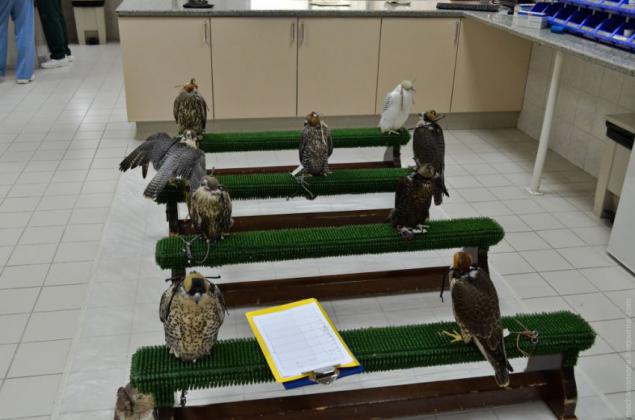
2. On average, the hospital receives about 7,000 birds per year for examination, treatment, operations, and temporary accommodation (the hospital has a hotel for birds).
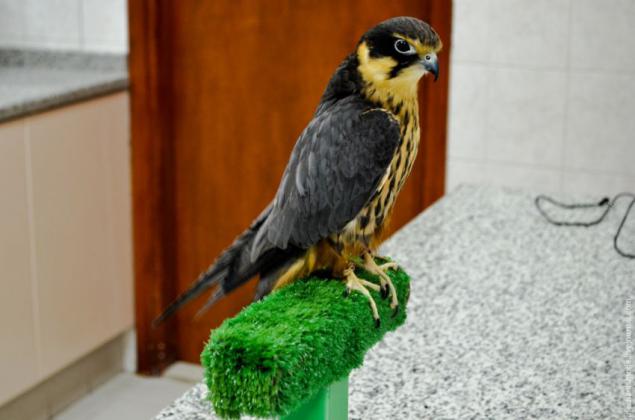
3. Most birds are dressed in helmets and have caps on their heads, which are called klobuchok. It is worn for several reasons, firstly, so that the bird does not rush at potential prey, in the hospital, in addition to birds, there are cats, and other small pets.
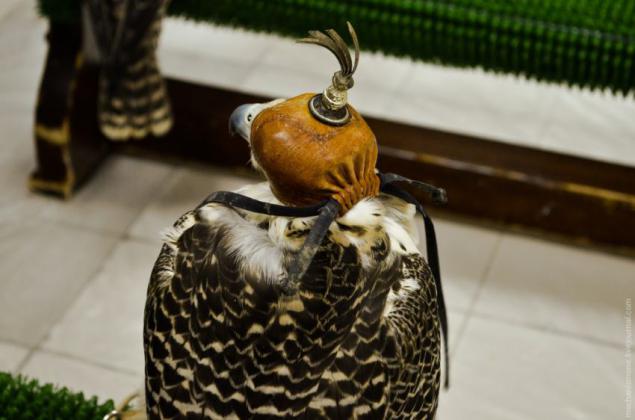
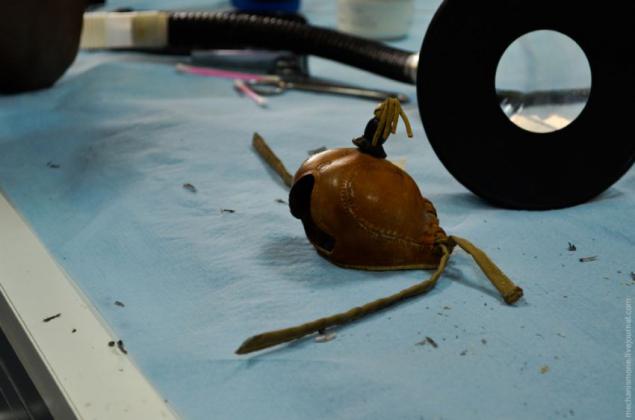
4. Secondly, so that the birds do not see each other and do not fight. The crest at the top of the crest is not for beauty, but for the convenience of putting on and taking off, and it is tightened with a strap at the back, and with another strap it unravels. This accessory does not bring any harm to the bird, the bird can perfectly hear everything around it, and feels comfortable.
5. Once in the hospital, veterinarians examine the bird and carry out a standard set of general procedures.
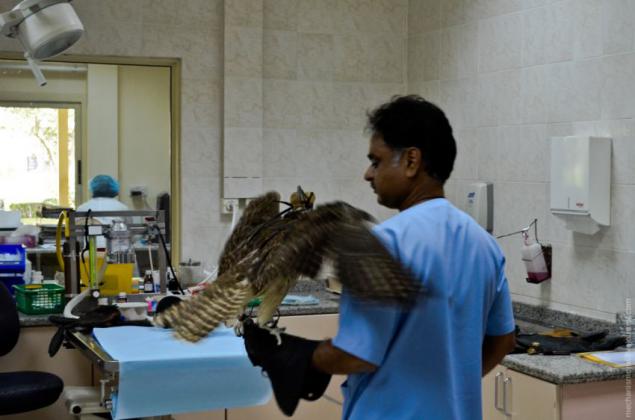
6. First of all, the bird is euthanized so that you can safely work with it. To do this, such a spacesuit is put on the head. By the way, I was slightly surprised by the calmness of the bird to the actions of a person, they are absolutely malleable and do not resist.
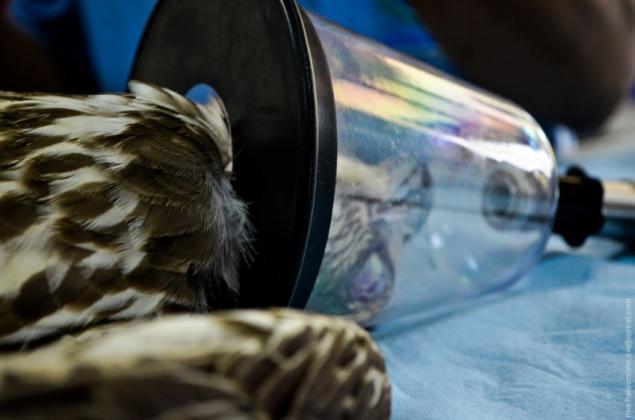
7. After the bird has fallen asleep, the veterinarian examines the paws and claws, the fact is that most birds do not live in natural conditions, and as a result, their claws do not grind down naturally as they live, and at some point they become too long, and the bird begins to injure itself.
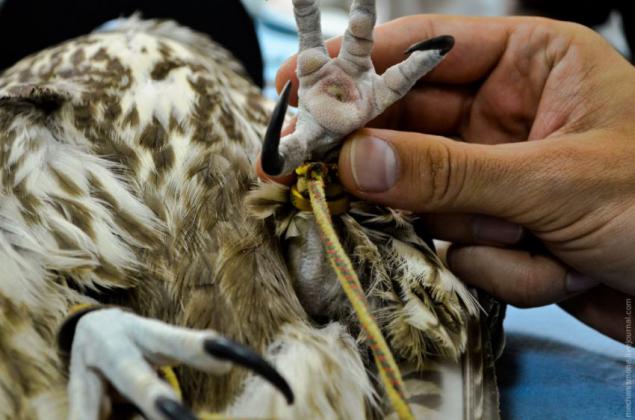
8. Therefore, from time to time, the claws should be slightly trimmed. This is done with the most ordinary sharp knife. The bird has blood vessels in its claws, so you cannot cut them too much, only the tips are cut.
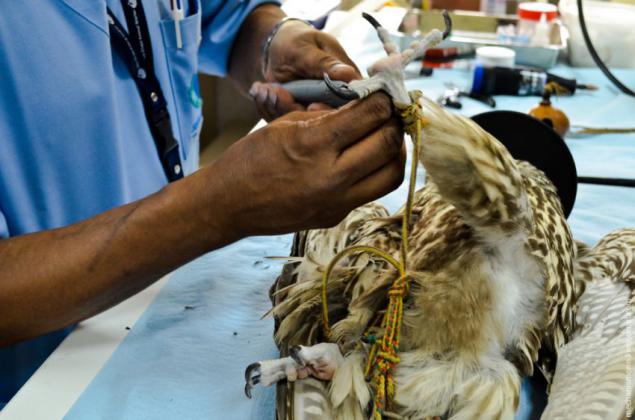
9. After that, the tips are sharpened with special scissors so that they remain a sharp weapon.
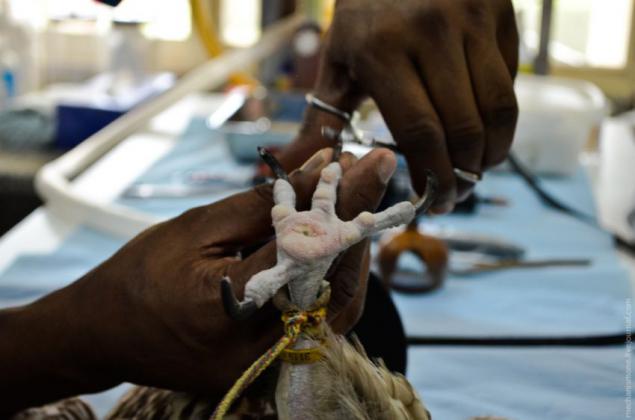
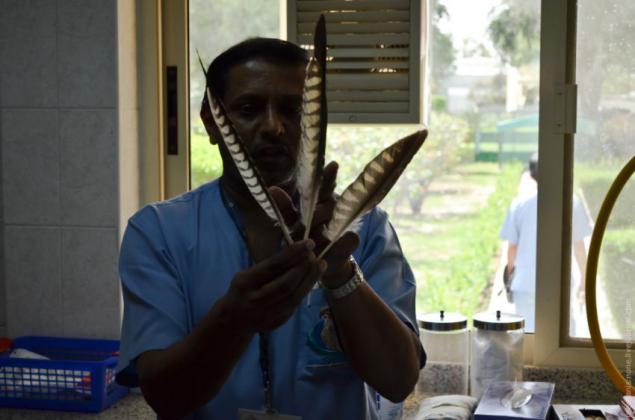
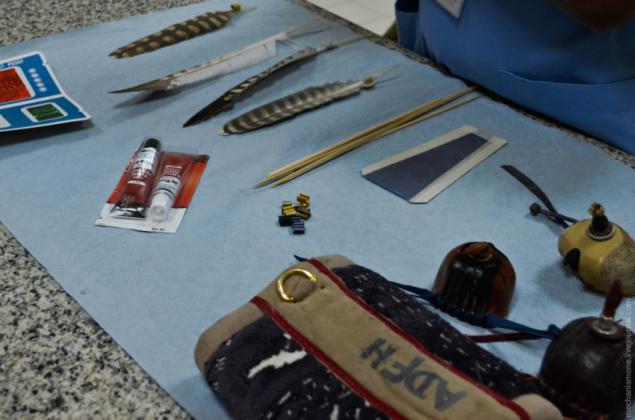
10. Then the feather cover of the bird is examined for the presence of lost or damaged feathers. If such feathers are found, they need to be replaced.
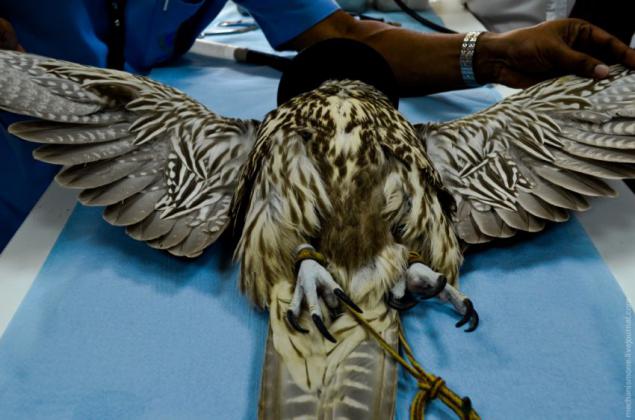
11. The feather cover of the bird's wings has 11 unique feathers, differing in length, angle and size. The hospital has a huge number of feathers, from which the veterinarian selects the right color and number location on the bird's body, after which it is replaced.
12. Replacement is done with glue and bamboo sticks. The feather has a shaft, hollow inside, there is a fan on the shaft. The feather selected for replacement is cut off so that the tip of the feather on the bird's body coincides with the cut part of the new feather, after which a bamboo stick lubricated with glue is inserted into the rod, and the new feather is connected to the part of the feather on the bird's body. If the tip of the pen is broken, a needle is used instead of a relatively thick bamboo stick in a place where the diameter of the shaft is very small.
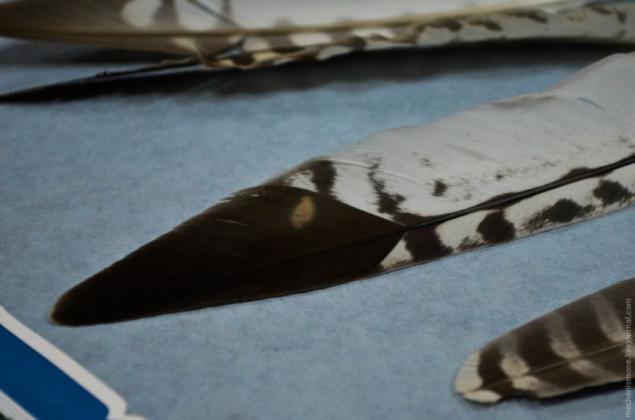
13. This photograph illustrates a restored nib, the black tip of the pen restored to the main nib. It is impossible to distinguish such a pen from a natural one for an unknowing person. A bamboo stick has no weight in fact, just like a needle, so such a feather does not affect the movements of the bird in the air. Gradually, the falcon will grow a new feather and the artificial one will be discarded. By the way, this is why many falconers collect fallen feathers, then they are taken to the hospital.
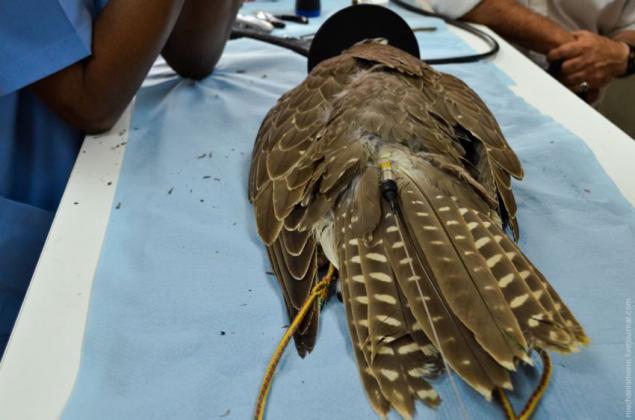
14. Then the bird's beacon is examined. The beacon is located on the tail, and is a bracket fixed on the edge of the feather made of ultra-light metal. The fact is that the tail unit is used only for balance, and the additional weight is not felt by the bird and does not interfere with it in any way.
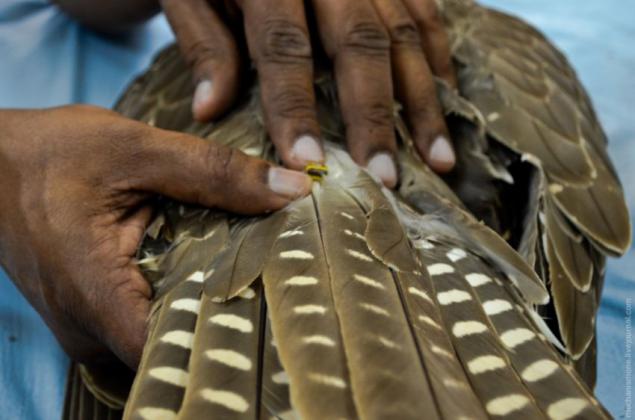
15. During the hunt, a beacon with an antenna will be inserted into the bracket, the whole structure will look like this. The beacon can be tracked by the owner from a laptop or phone, thus, having lost sight of the bird, the owner can know where it is and move in the right direction.
16. Well, the medical examination ends with cleaning the beak, it is trimmed in the same way as the claws, for the same reasons, after which the bird's eyes and ears are cleaned from the coating of dust, which is in excess in the desert.
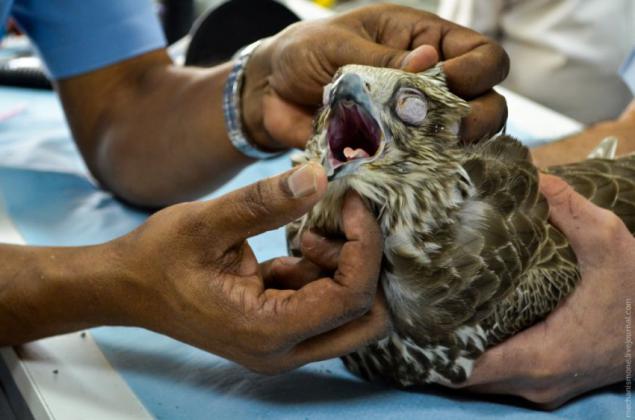
17. Then the anesthesia is removed and the bird comes back to life in a few minutes. After anesthesia, the bird is slightly inadequate, so it needs to be with a person for some time.
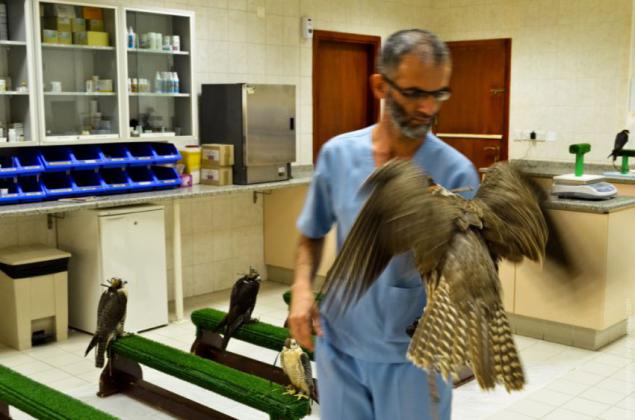
18. If a bird is placed immediately in the reception rooms, it behaves very noisily and is rowdy.
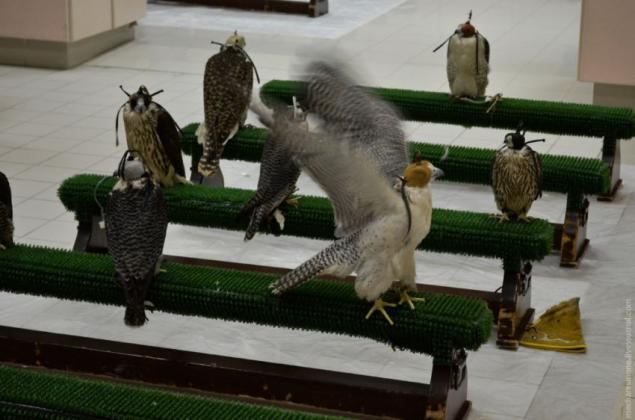
19. To avoid these troubles, usually after the inspection, the bird is fed immediately, thus doing two things at once.
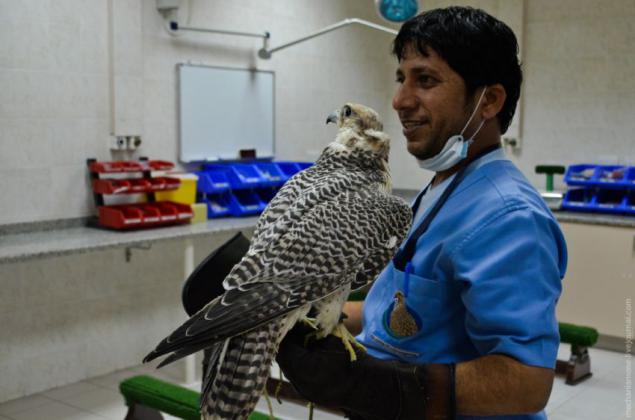
20. By the way, many people mistakenly think that falcons feed on carrion, this is not true, a falcon will never eat meat that is not fresh. Therefore, fresh thawed chicken legs are used for feeding, the falcon eats about one leg a day, of course, he can eat more, but they do not give more, it is harmful to the bird. When eating, the falcon covers the prey with its wings so that no one can see it.
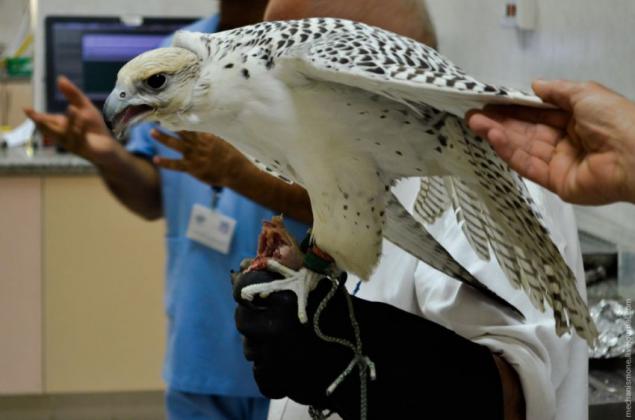
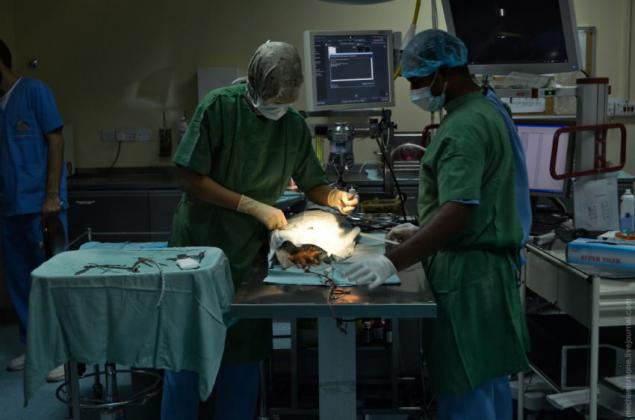
21. Operating room with a patient. Bird owners are very attentive to their pets, because the price of a good bird starts from a quarter of a million dollars.
22. Falcons hunt either flying low and forcing potential prey to start running away, or in flight they shoot down prey by diving from above. By the way, very often falcons hunt in pairs, the female and hobby attack the prey together. Prey can easily weigh twice the weight of the bird itself, thanks to its wide wing, the falcon can carry a weight of several kilograms.
23. And another interesting point, a falcon will never attack a bird on the ground, even if it is sitting defenselessly, due to potential self-preservation, when diving, a falcon understands that it can miss and crash, so falcons hunt birds exclusively in the air.

Source: mechanismone.livejournal.com