2816
Best cosmic pictures 2006
Stunning pictures!
I like a man who loves astronomy faithfully with all your heart, nonreligious, dwell in the uttermost delight.
TOP-20 rating space.com
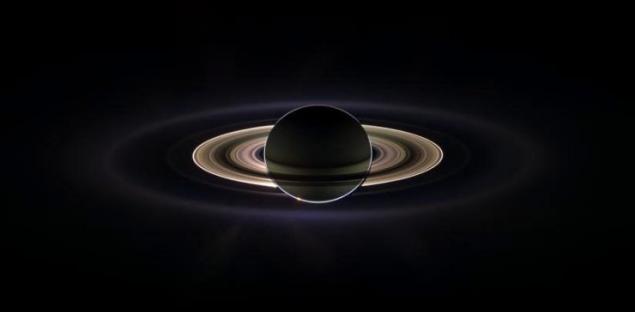
1. Amazing panoramic view of Saturn was shot camera angles probe Cassini September 15, 2006. Together with the giant Saturn hanging in the blackness and protects from the blinding brilliance Cassini Sun, considered the ring probe as clearly as never before, revealing previously unknown faint rings, as well as the atmosphere and the surface of the planet.
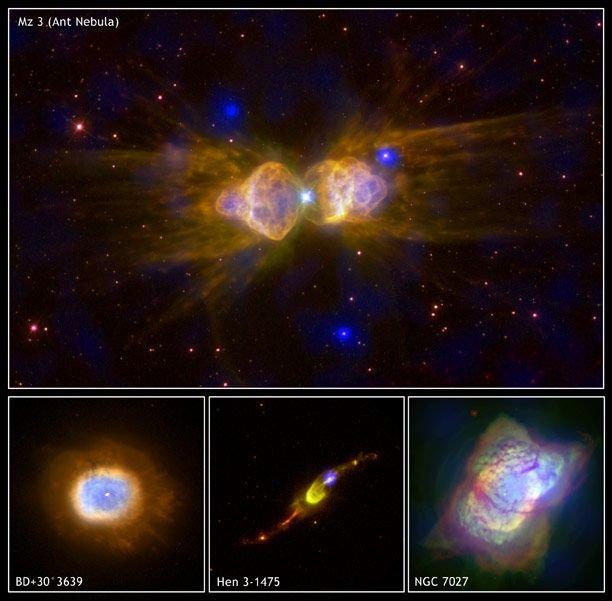
2. Planetary Nebula, located at a distance of about 3,000 light years from Earth. This group of pictures shows the unfolding drama that takes place on the last stage of sun-like stars. Elongated clouds envelop bubbles of gas heated to multimillion-degree temperatures that have occurred as a result of high-speed gas winds from dying stars. This photo was taken May 10, 2006.
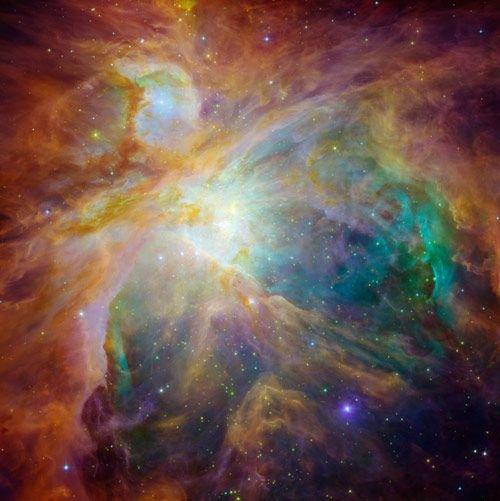
3. Joint Photo Spitzer Space Telescope and Hubble shows us the chaos occurring as a result of the formation of new young stars that formed at a distance of 1,500 light-years away in a cosmic cloud called "Orion Nebula".
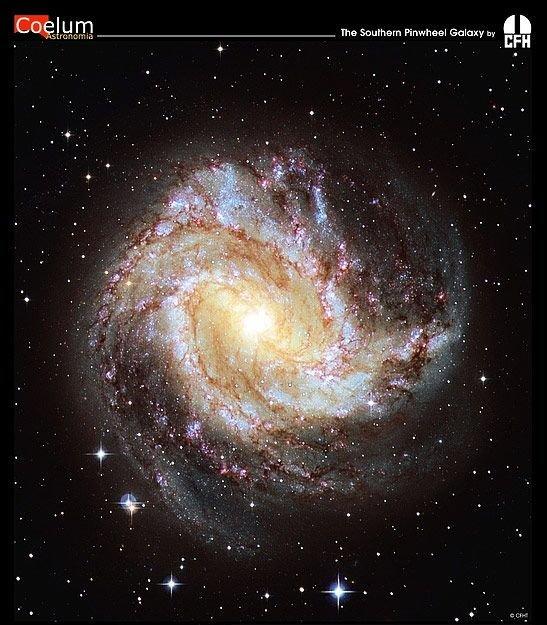
4. Messier 83 - neighboring galaxy, located outside the boundaries of our local group of galaxies. The central bulge has a characteristic yellow color of old stars, while its spiral environment shown scattered blue light and red nodes to form new stars, has a much younger age.
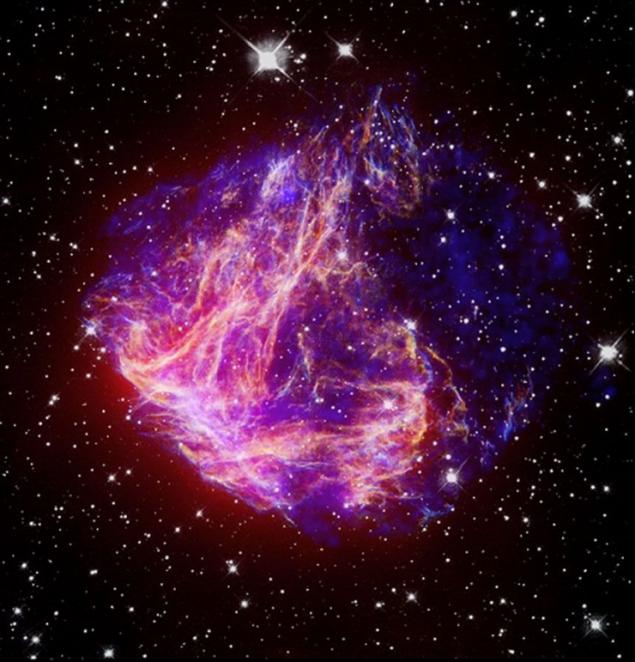
5. This is a composite image of the Chandra and Spitzer shows us the brightest supernova remnant in the "Large Magellanic Cloud." Image X-ray telescope Chandra X-ray (blue) shows hot gas in the millions of degrees in the center and in the outer parts shown cooler gas in the infrared (red) obtained with the telescope Spitzer.
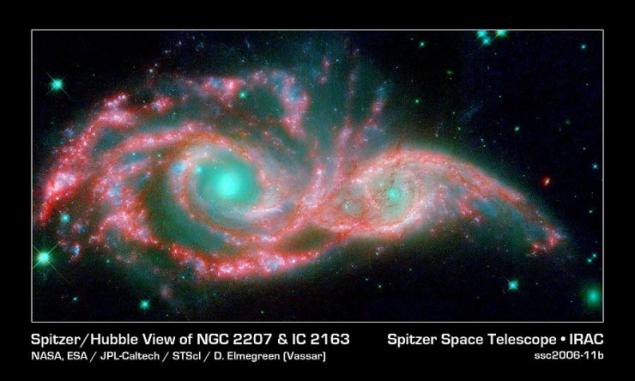
6. These intensely moving galaxy took the form of a giant mask. Icy blue eyes - is the core of two merging galaxies, NGC 2207 with the names and IC 2163, and the mask itself - their spiral peripherals. False-color image consists of infrared data of X-ray telescope Spitzer (red) and visible to our eyes Data Space Telescope Hubble (blue and green).
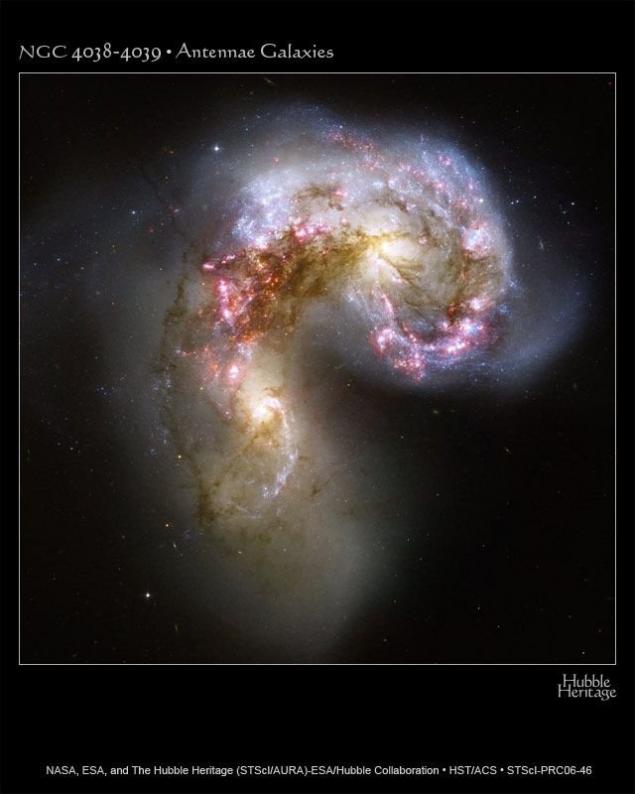
7. One of the most recent images taken by the Space Telescope Hubble, shows us the galaxy Antennae, is more powerful and harsh in this pair of merging galaxies. As a result of the collapse will be formed billions of new stars. The brightest and most compact of these areas of the birth of new stars are called "super-star clusters» (super star clusters). This image allows astronomers to better distinguish between the stars and super star clusters created in the collision of two spiral galaxies.
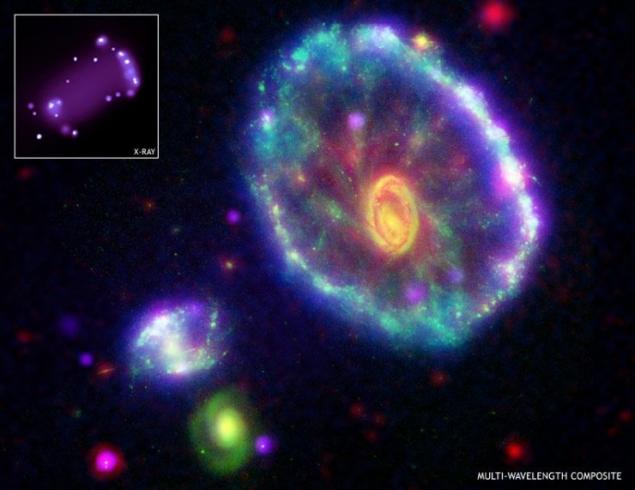
8. The unusual shape of the galaxy with a funny name for a Russian ear "Cartwheel» (Cartwheel galaxy) turned out, probably as a result of a collision with another, smaller galaxy a few hundred million years ago.
Top left you can see what it looks like "Cartwheel" for Spitzer's infrared.
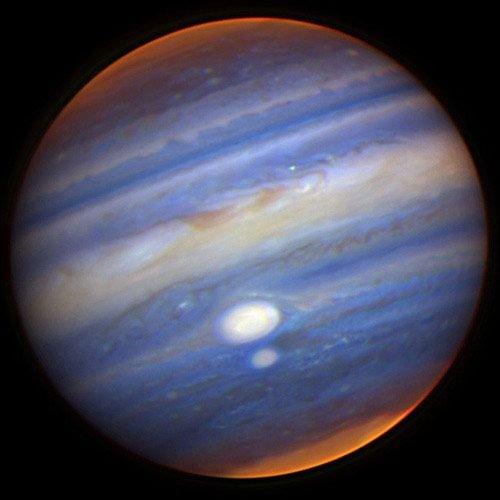
9. Two massive storm on the largest gas giant solar system - Jupiter, taken by telescopes from Earth. Two oval storm (so-called "red spots") appear white in this image because it shows us in the infrared range, and not in the traditional wavelengths perceived by the human eye (I would call it 'human-eye wavelenght').
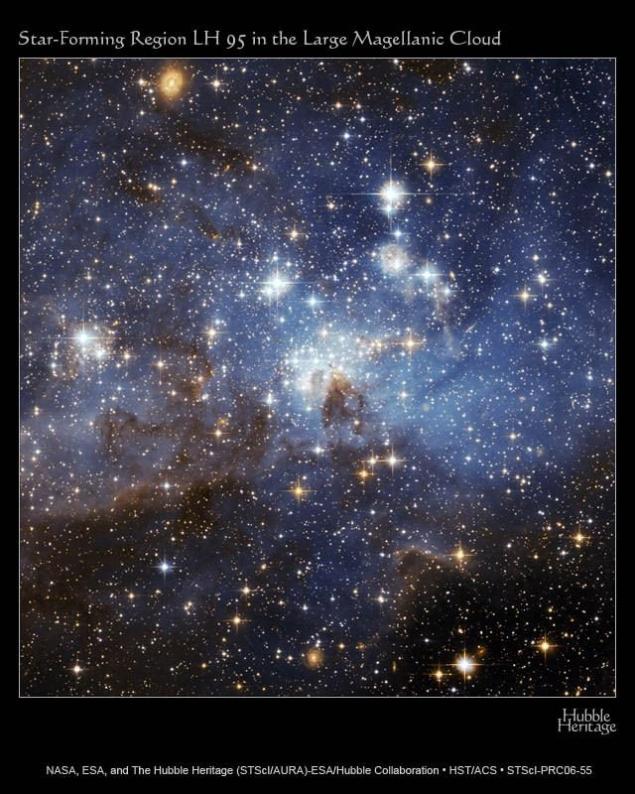
10. Swirls of gas and dust in the formation of a new star, shot space telescope Hubble. This krasotischa called LH 95 is located in the "Large Magellanic Cloud", it shows us the area of "low mass" - infant stars, as well as some of their more massive neighbors. The image was taken in March 2006 with the camera «Hubble Advanced Camera» telescope Hubble.
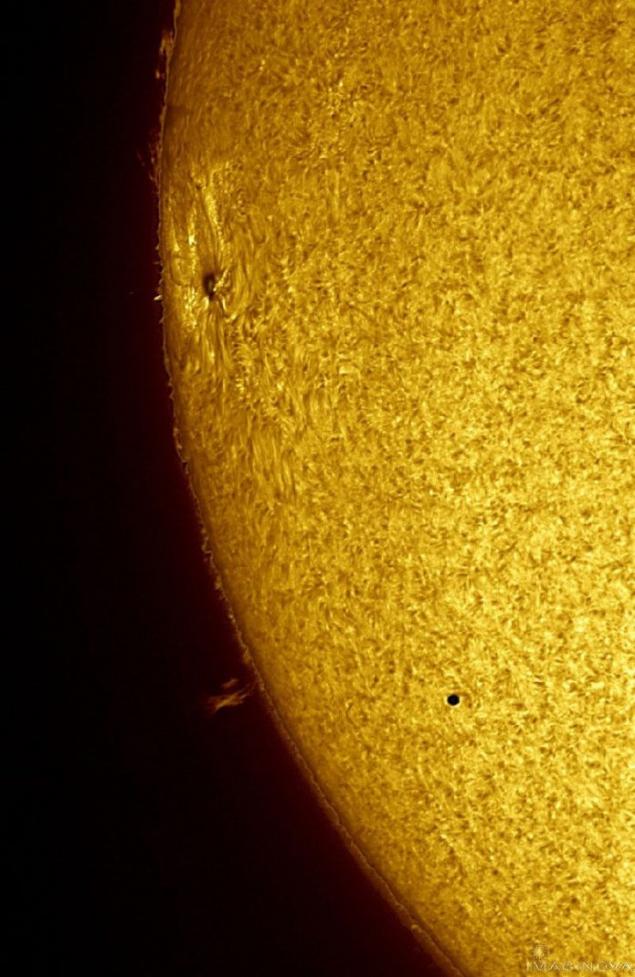
11. Philip Jones (Phillip Jones) caught a rare and exciting moment - Mercury attempt to outshine the sun. The photo was taken Nov. 15, 2006.
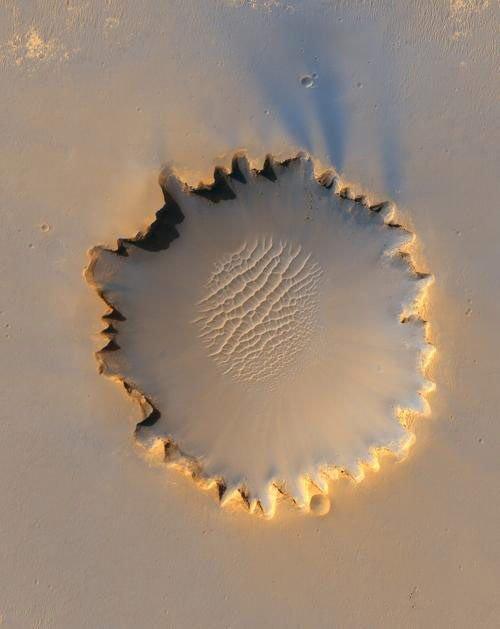
12. This image obtained from the unit «Mars Reconnaissance Orbiter», shows us the crater "Victoria", located near the equator of Mars. The diameter of the crater about 800 meters. It has a serrated shape caused by soil erosion and the movement of the material from which consist crater wall. The surface area of the crater takes amazing dunes.
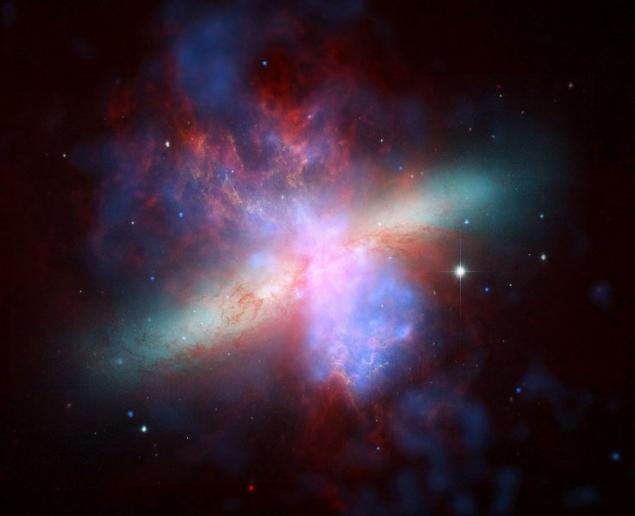
13. Spitzer, Hubble, and Chandra Observatory have teamed up to create this multivolnovoe, false-color image of the galaxy M82. The photo was taken in the sixteenth day of the telescope Hubble, April 24, 2006.
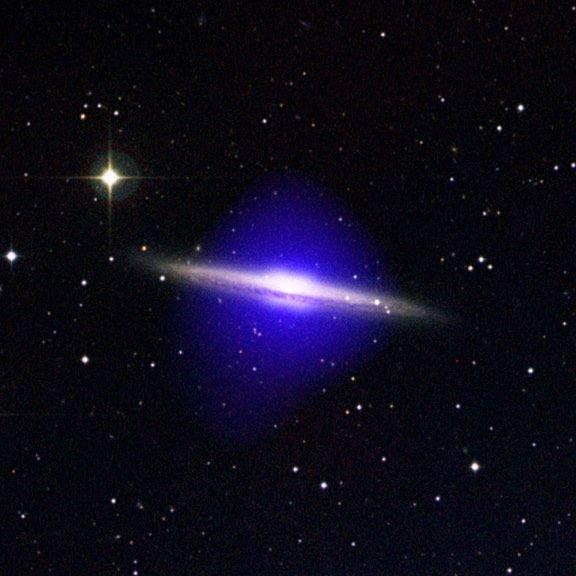
14. Chandra Observatory image of a massive spiral galaxy NGC 5746 shows us a huge halo of hot gas (blue) surrounded by the optical disk of the galaxy (white). Halo extends to more than 60 000 light years in all directions of the galaxy.
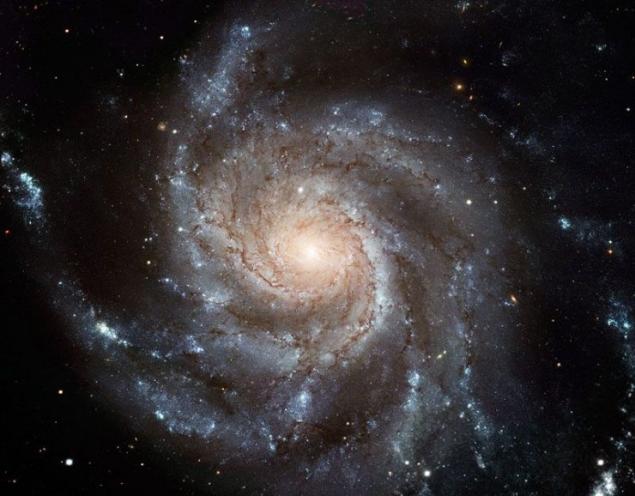
15. Giant telescope Hubble galaxy collect the whole day. In the picture presented facing the "face to us" spiral galaxy Messier 101 (M101) and is the most detailed photo of a spiral galaxy ever made telescope Hubble.
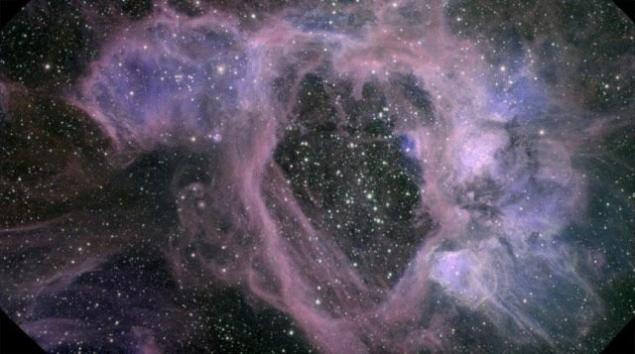
16. This large, like a bubble mass of interstellar dust clouds called N44 superbubble complex. It has a length of 325 light-years away in the apogee (the point of maximum expansion), and the hole in the center was formed due to strong solar winds from massive stars that literally "blew" the middle of the bubble.
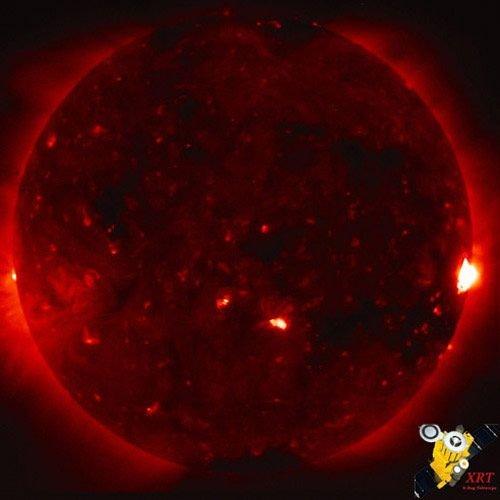
17. The image of the sun, made in Japan observatory Hinode. This image obtained by X-ray telescope Hinode, which is one of the three watched the sun instruments satellite Hinode, launched into orbit in September 2006. Before telescope called Solar-B, and was renamed after went into orbit. At the moment, Hinode is the X-ray telescopes with the highest resolution ever launched into space.
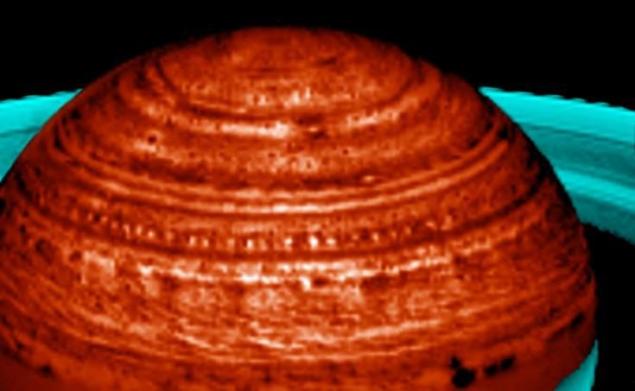
18. This image shows Saturn's lovely weather, similar to the "string of pearls", covering more than 60,000 kilometers. Image made with the help of visual and infrared mapping spectrometer, located on the probe Cassini. Pearls are clearing deep in Saturn's cloud system.
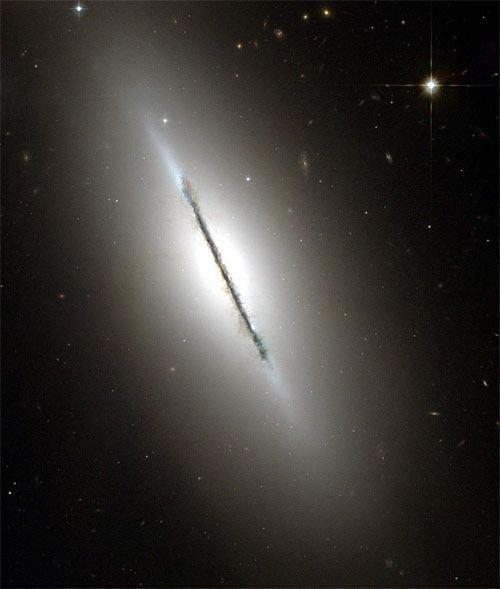
19. This is a unique image of the disk of the galaxy NGC 5866. Acute vision telescope Hubble shows us a fresh bunch of dust, dividing the galaxy into two halves.
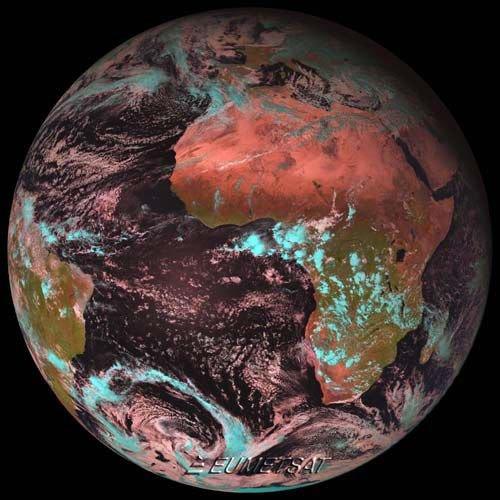
20. Earth, presented in a reddish tinge - the result of a debut European satellite MSG-2 (Meteosat Second Generation 2). A recorded January 25, 2006, this image of our home planet - the first image made satellite launched in December 2005.
Note: All comments to images I have translated from English into a completely free style, often adding their lines, if that - not much kick.
And another thing. Watching BBC film about space and astronomy maturing great success in other countries, as well as seeing how poorly taught and developed the greatest science of astronomy in my long-suffering country - I was crying. We have long since ceased to be the favorites in space exploration, even though all the prerequisites have been. Now, I see almost full power in the US - NASA, as well as the rapid development in this respect in Europe (ESA), Japan (JAXA) and China (CNSA). What is this, the government does not pay enough attention and funding the development of science in the direction of space exploration, or simply not interested in this topic Russians? I do not believe. But what about the other worlds? In the end, people will remember Galileo, Copernicus, Newton! Or are we better than we believe in God? And teach this nonsense in schools?
via rykun