1363
7 useful facts about LED lamps: how they work, how they work and how to choose them
Website
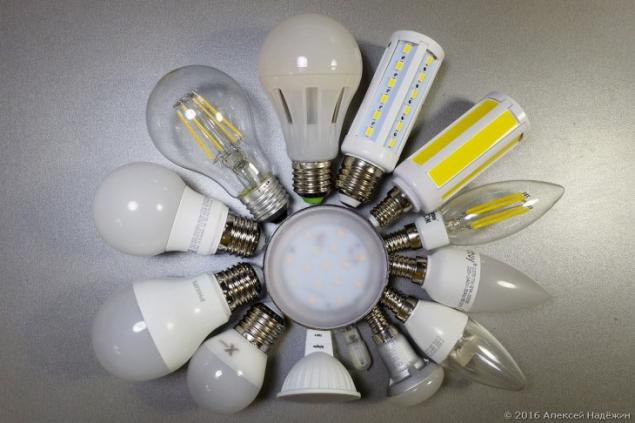
1. Why to buy LED lights? Conventional light bulbs excellent light, but very energoneeffektivny - 95% of the energy they have transformed into heat.
Modern LED lamps consume 8-10 times less energy than incandescent bulbs
I made a calculation of the cost of one-bedroom apartment conventional lighting and LED lamps.
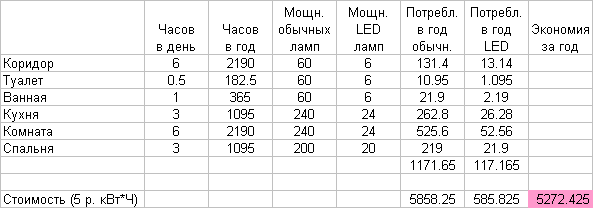
Of course, the calculation is very approximate. Still 3-5 thousand rubles a year - is quite real savings for an average apartment.
LED lamps do not have to be changed every six months.
LED lamp kit for this averaged apartments will cost 4380 rubles (7 lamps E27 6W 280 rubles, 11 candles 4W 220 rubles) and they will be repaid less than a year.
Good LED bulbs give the same comfortable light as incandescent bulbs and you can not distinguish them from the light of light bulbs.
60-watt incandescent bulb with a decrease in voltage to 207 begins to shine as a 40-watt, and if the voltage drops to 180 volts (which is often the case in rural areas), 60-watt bulb, "transformed" in the 25-watt. LED light bulb shines in all voltages with the same brightness
Unlike incandescent bulbs, LED lamps have a small heat. Lamps do not heat the room, and when it is so hot. The child will not burn a light bulb in a table lamp.
A LED light bulb gives more freedom and comfort. No more need to worry about saving electricity when the bulb consumes 6 watts, not 60, it can be just does not turn off.
And one final argument in favor of buying LED lamps. Do not treat them as expendable. you buy them for a long time.
2. LED and energy-saving lamps are one and the same? And if not, what is better? Of course, the LED lamps can be considered energy-efficient, however, in the Russian language the word "saving" fixed for compact fluorescent lamps (CFLs) and CFL and LED lamps - not the same thing.
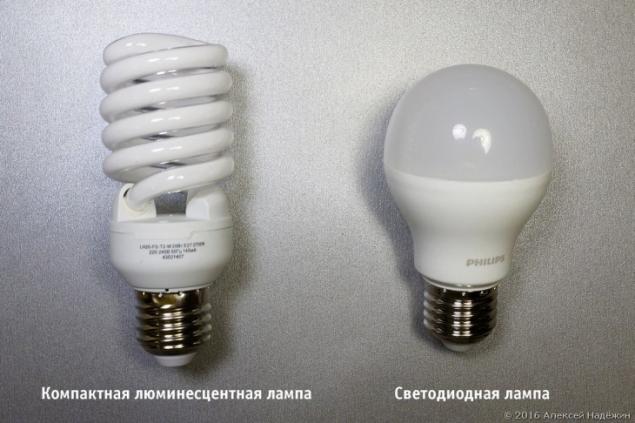
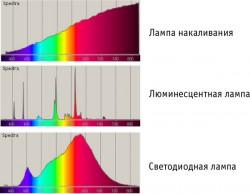
LED lamps much better than CFLs
- type LED bulb contains no hazardous substances, and the flask every CFL contains mercury; type LED lamp consumes less energy for the same light output; type LED lamp instantly ignited at full brightness, and the brightness of the CFL gradually gaining 20% to 100% per minute at room temperature and more slowly at low temperatures; Do CFL bad spectrum consisting of the peaks of several colors. The spectrum of the LED lamp is much closer to natural light and incandescent light. 3. What is it lit? In 1923, the Soviet physicist Oleg Losev discovered electroluminescence semiconductor junction. The first LED using this principle and called - «Losev Light» (Losev light). First came the red LED, and then in the early '70s there were yellow and green LEDs. Blue LED was created in 1971 by Jacob Panchechnikovym, but it was extremely expensive. In 1990, the Japanese Sugi Nakamura created a cheap and bright blue LED.

20 years ago it was believed that the white LED can not be created, however, after the appearance of a blue LED has become possible to make white light sources with three crystals (RGB).
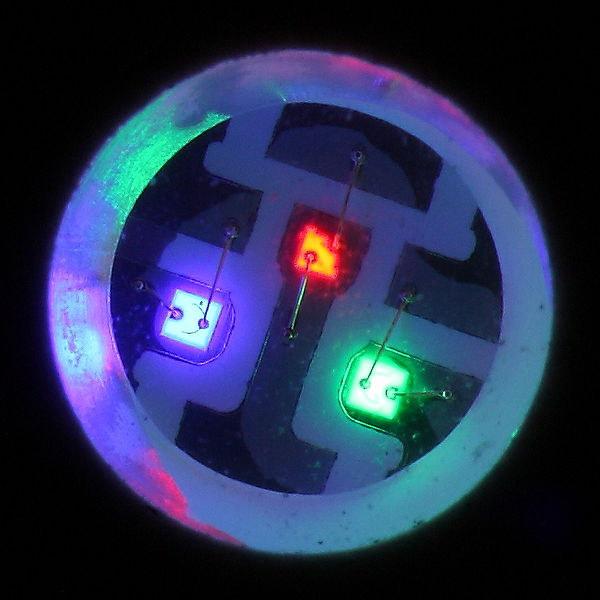
In 1996 came the first white phosphor LEDs. They ultraviolet light or a blue LED is converted into white by using phosphor.
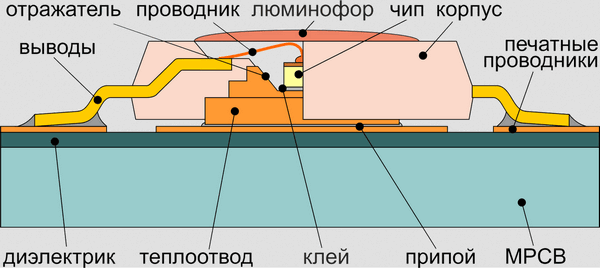
By 2005, the luminous efficiency of LEDs has reached a value of 100 lm / W and more. This allowed to start using phosphor LED lighting, because LED is one of the most efficient light sources.
4. What are the LED bulbs? LED lamps are available in different packages with different types of caps. This conventional "pear", "candle" and "balls" with E27 base and E14, and "mirror" lamp R39, R50, R63 and spotlights with GU10 base and GU5.3, capsule lamps with G4 socket and G9, lamps ceilings with cap GX53.
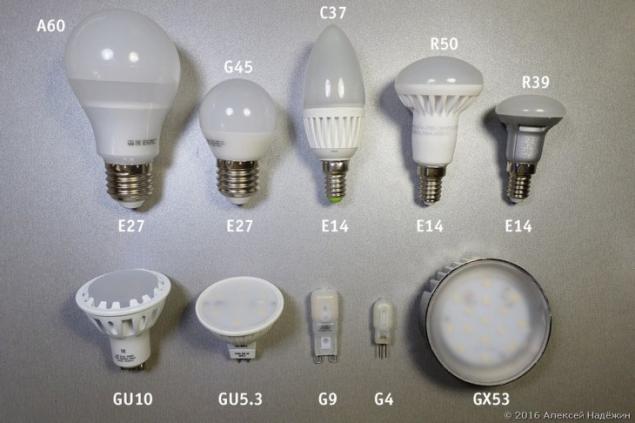
The LED lamps use different types of LEDs. The first LED lamps used in conventional LEDs in plastic housing.
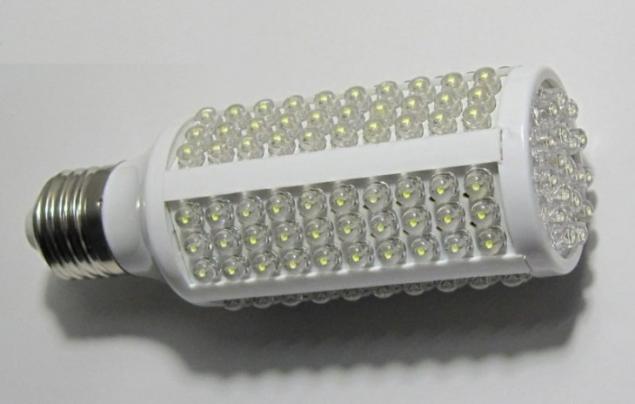
Now the high-power LEDs in buildings used only in some lamps.
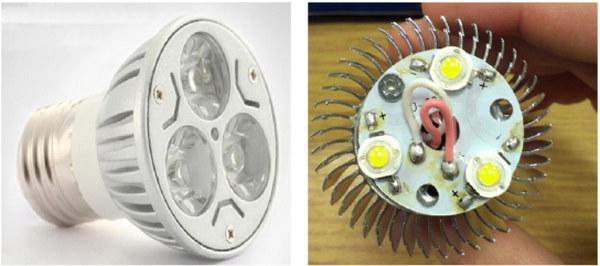
Most modern lamps used unpackaged LEDs and LED assemblies.
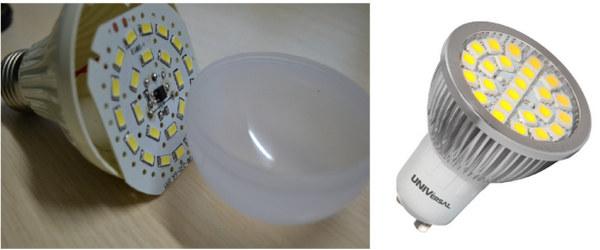
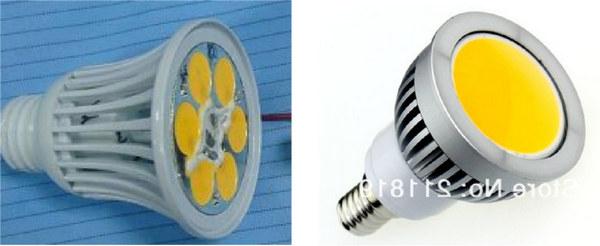
In recent years, increasingly used LED emitters COB (chip on board). The plurality of LEDs are covered by a single phosphor.
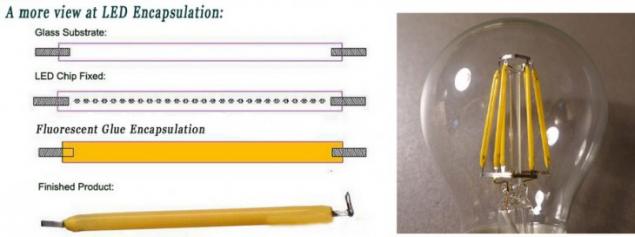
Variety COB - LED strand (led filament). The plurality of LEDs are placed on the glass strip, coated with phosphor.
In the latest generation of lamps Crystal Ceramic MCOB radiators located on the circular plate of transparent ceramics.
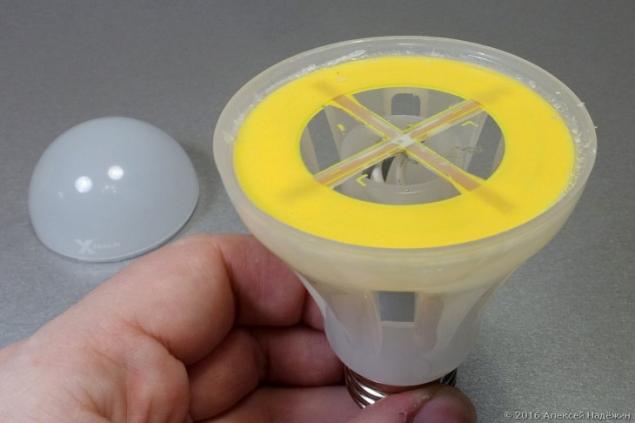
LED lamps are available with different color temperature of light: 2700K - yellow light as incandescent lamps, 3000K - slightly Bole comfortable white light, 4000K - white light, 6500K - cold white light. In my opinion the house more suitable lamp with a color temperature of 2700-3000K.
5. Do I always have LED lamp can be simply screwed instead of the usual? No, not always.
- Work with a switch having LED. A large number of LED lamps can not work with switches that have indicator. They are poorly lit or flashes when the switch is turned off. This is due to the fact that the weak current is constantly flowing through the lamp. Out of this situation are two: either use the lamp works correctly with these switches on or off the LED inside the switch. Dimming. Most LED lamps can not work with dimmer (dimmer), but there are special dimmable LED lamps (usually they are much more expensive than usual). Unlike incandescent bulbs, with a decrease in the brightness of the LED lamp does not change the color of light (a normal lamp it turns yellow). Many dimmable LED lamps dimmed not up to scratch, but only up to 15-20% of full brightness. 6. Do all LED lamps are good and if not, what good are distinguished from the bad? In conventional incandescent lamps simply everything: the bulb and tungsten filament. LED lamp is arranged much more complicated and its quality depends on the quality of LEDs, the phosphor and electronics.
There are three important parameters affecting the quality of light that gives light:
- Ripple light. check availability ripple of light The color rendering index (CRI). CRI below 80 < Lighting angle. And three more issues that can often be encountered at the LED lamps:
- Non-compliance of the luminous flux and the equivalent of the declared values. The discrepancy color temperature stated . premature lamp failure. 7. How to choose a high-quality LED lamp? In the Russian market the lamp several dozen brands. Most of them - Russian brands that manufacture lamps in China upon request. Many people think that once the Chinese lamp, better and cheaper to buy them in the Chinese online stores, but it's a big mistake.
I know of only four brands that do not overstate the luminous flux and the equivalent on the packaging. This is Ikea, Osram, Philips and Diall,
If you're buying is possible to light the lamp, make sure it does not flicker
If the flicker found at home, safely return the lamp
Pay attention to the terms of the guarantee (guarantee on the lamp is from one to five years), and save receipts. Lamps should share in the field of acquisition.
Author Alex Nadёzhin source Geektimes
via factroom.ru
LED lamps much better than CFLs
- type LED bulb contains no hazardous substances, and the flask every CFL contains mercury; type LED lamp consumes less energy for the same light output; type LED lamp instantly ignited at full brightness, and the brightness of the CFL gradually gaining 20% to 100% per minute at room temperature and more slowly at low temperatures; Do CFL bad spectrum consisting of the peaks of several colors. The spectrum of the LED lamp is much closer to natural light and incandescent light. 3. What is it lit? In 1923, the Soviet physicist Oleg Losev discovered electroluminescence semiconductor junction. The first LED using this principle and called - «Losev Light» (Losev light). First came the red LED, and then in the early '70s there were yellow and green LEDs. Blue LED was created in 1971 by Jacob Panchechnikovym, but it was extremely expensive. In 1990, the Japanese Sugi Nakamura created a cheap and bright blue LED.
20 years ago it was believed that the white LED can not be created, however, after the appearance of a blue LED has become possible to make white light sources with three crystals (RGB).
In 1996 came the first white phosphor LEDs. They ultraviolet light or a blue LED is converted into white by using phosphor.
By 2005, the luminous efficiency of LEDs has reached a value of 100 lm / W and more. This allowed to start using phosphor LED lighting, because LED is one of the most efficient light sources.
4. What are the LED bulbs? LED lamps are available in different packages with different types of caps. This conventional "pear", "candle" and "balls" with E27 base and E14, and "mirror" lamp R39, R50, R63 and spotlights with GU10 base and GU5.3, capsule lamps with G4 socket and G9, lamps ceilings with cap GX53.
The LED lamps use different types of LEDs. The first LED lamps used in conventional LEDs in plastic housing.
Now the high-power LEDs in buildings used only in some lamps.
Most modern lamps used unpackaged LEDs and LED assemblies.
In recent years, increasingly used LED emitters COB (chip on board). The plurality of LEDs are covered by a single phosphor.
Variety COB - LED strand (led filament). The plurality of LEDs are placed on the glass strip, coated with phosphor.
In the latest generation of lamps Crystal Ceramic MCOB radiators located on the circular plate of transparent ceramics.
LED lamps are available with different color temperature of light: 2700K - yellow light as incandescent lamps, 3000K - slightly Bole comfortable white light, 4000K - white light, 6500K - cold white light. In my opinion the house more suitable lamp with a color temperature of 2700-3000K.
5. Do I always have LED lamp can be simply screwed instead of the usual? No, not always.
- Work with a switch having LED. A large number of LED lamps can not work with switches that have indicator. They are poorly lit or flashes when the switch is turned off. This is due to the fact that the weak current is constantly flowing through the lamp. Out of this situation are two: either use the lamp works correctly with these switches on or off the LED inside the switch. Dimming. Most LED lamps can not work with dimmer (dimmer), but there are special dimmable LED lamps (usually they are much more expensive than usual). Unlike incandescent bulbs, with a decrease in the brightness of the LED lamp does not change the color of light (a normal lamp it turns yellow). Many dimmable LED lamps dimmed not up to scratch, but only up to 15-20% of full brightness. 6. Do all LED lamps are good and if not, what good are distinguished from the bad? In conventional incandescent lamps simply everything: the bulb and tungsten filament. LED lamp is arranged much more complicated and its quality depends on the quality of LEDs, the phosphor and electronics.
There are three important parameters affecting the quality of light that gives light:
- Ripple light. check availability ripple of light The color rendering index (CRI). CRI below 80 < Lighting angle. And three more issues that can often be encountered at the LED lamps:
- Non-compliance of the luminous flux and the equivalent of the declared values. The discrepancy color temperature stated . premature lamp failure. 7. How to choose a high-quality LED lamp? In the Russian market the lamp several dozen brands. Most of them - Russian brands that manufacture lamps in China upon request. Many people think that once the Chinese lamp, better and cheaper to buy them in the Chinese online stores, but it's a big mistake.
I know of only four brands that do not overstate the luminous flux and the equivalent on the packaging. This is Ikea, Osram, Philips and Diall,
If you're buying is possible to light the lamp, make sure it does not flicker
If the flicker found at home, safely return the lamp
Pay attention to the terms of the guarantee (guarantee on the lamp is from one to five years), and save receipts. Lamps should share in the field of acquisition.
Author Alex Nadёzhin source Geektimes
via factroom.ru
- Non-compliance of the luminous flux and the equivalent of the declared values. The discrepancy color temperature stated . premature lamp failure. 7. How to choose a high-quality LED lamp? In the Russian market the lamp several dozen brands. Most of them - Russian brands that manufacture lamps in China upon request. Many people think that once the Chinese lamp, better and cheaper to buy them in the Chinese online stores, but it's a big mistake.
- Ripple light. check availability ripple of light The color rendering index (CRI). CRI below 80 < Lighting angle. And three more issues that can often be encountered at the LED lamps:
- Work with a switch having LED. A large number of LED lamps can not work with switches that have indicator. They are poorly lit or flashes when the switch is turned off. This is due to the fact that the weak current is constantly flowing through the lamp. Out of this situation are two: either use the lamp works correctly with these switches on or off the LED inside the switch. Dimming. Most LED lamps can not work with dimmer (dimmer), but there are special dimmable LED lamps (usually they are much more expensive than usual). Unlike incandescent bulbs, with a decrease in the brightness of the LED lamp does not change the color of light (a normal lamp it turns yellow). Many dimmable LED lamps dimmed not up to scratch, but only up to 15-20% of full brightness. 6. Do all LED lamps are good and if not, what good are distinguished from the bad? In conventional incandescent lamps simply everything: the bulb and tungsten filament. LED lamp is arranged much more complicated and its quality depends on the quality of LEDs, the phosphor and electronics.
Meet the "Alyonka": the history of a girl with chocolate wrappers
How to look beautiful Tsarist Russia: Calendar 1904