11511
6 Concepts That Should Finally Make Me Work
I promised the editor to hand over this text last spring. But, in the best traditions, I postponed writing it day after day. During this time, I managed to read more than 300,000 news in an RSS reader, view and send about a thousand tweets, like a couple of thousand photos, watch several dozen movies, finish off three TV series and curse the 9th episode of the third season of Game of Thrones (yes, yes, it was a long time ago). In general, I was very, very busy.
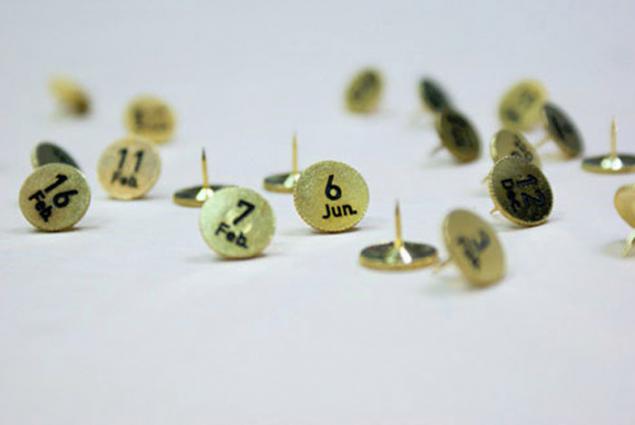
To describe such a state in psychology, there is a term "procrastination", familiar to any Habragist. We are well aware that it would be nice to finally get some work done, but we immediately fall into some unnecessary trifle — for example, to alphabetically arrange bags of paper napkins accumulated in the bottom drawer of the table.
Every week, articles on how to overcome procrastination appear on some reputable IT resource. It is called the scourge of the 21st century, and the authors of the texts talk long and beautifully about the topic of intrinsic motivation. I'll tell you right away, these are great articles. Many people like them and are well commented on. I myself wrote about ten comments under them, just not to write this text. So, all these psychological things do not work on me personally. Therefore, I picked up a few concepts that could motivate you well.
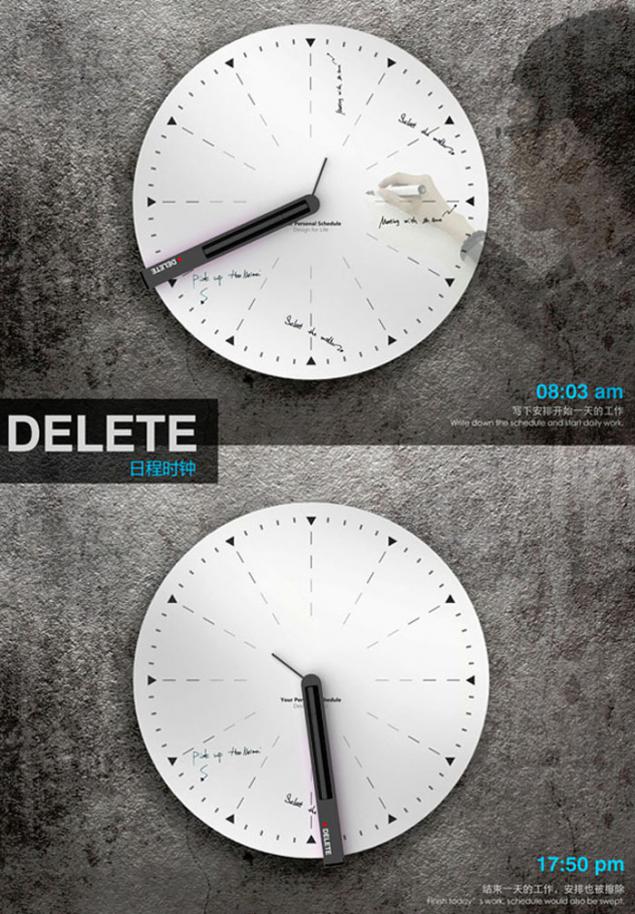
1. A clock that erases a to-do list with an arrow
A group of Chinese designers with unpronounceable surnames came up with the concept of the Delete Clock. The dial of the clock acts as a whiteboard, where the owner writes down a to-do list in front of each hour. As time passes, the watch's large sponge hand moves and erases the records. Fearing that the case will be erased before completion and not being able to postpone or postpone some tasks, the employee acts more quickly. At least he tries.
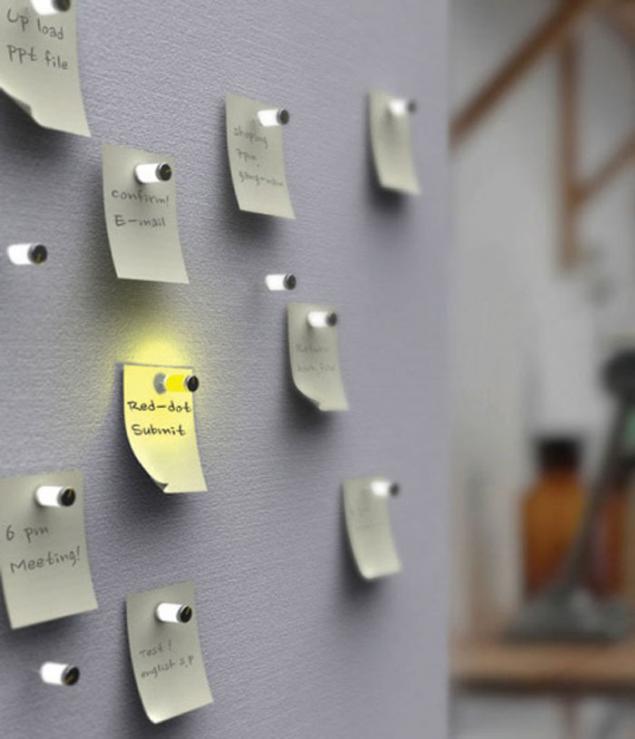
2. Wall-mounted buttons with timer
Korean designer Kim Sung Min's It's Time To Read Me won the Red Dot Design Award in the Best Concept section. The idea is to use backlit stickers that light up on a timer. The unusual buttons have tiny LEDs and a timer with primitive winding - when it's time for a reminder, a light bulb lights up above the corresponding sticker. The advantage of this method is clarity and simplicity, unlike, for example, electronic reminders of a smartphone. It is assumed that a bright illuminated sticker will not get lost among a bunch of pop-up messages, letters, and the like, that is, everything that constantly distracts us from the phone and computer.
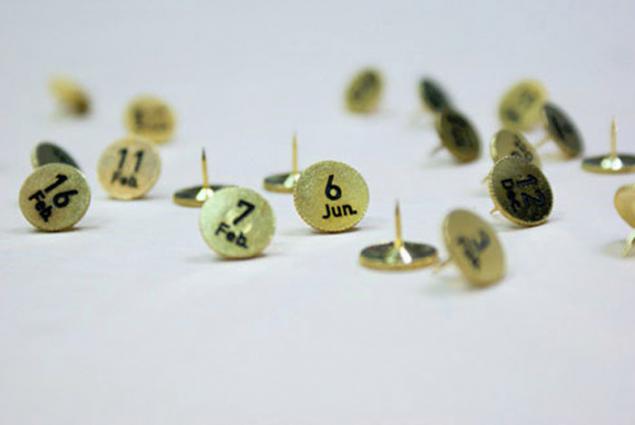
3. Button calendar (the same one from KDPV)
In continuation of the calendar theme, Japanese designer Ryohe Yushiyuki came up with the Pushpin Calendar, consisting of dated pushpins. The designer suggests not to write important events or memorable dates into ready-made calendars, but to create your own calendar on the wall. Yes, with such a calendar, you won't know how many Saturdays fall in the next month, or that Bastille Day falls on a Friday. But you will always know on what date your son brought a drawing from kindergarten. You can also assign tasks that are dated to a certain date on the board and remove them as they are completed.
4. Calendar in the form of matches
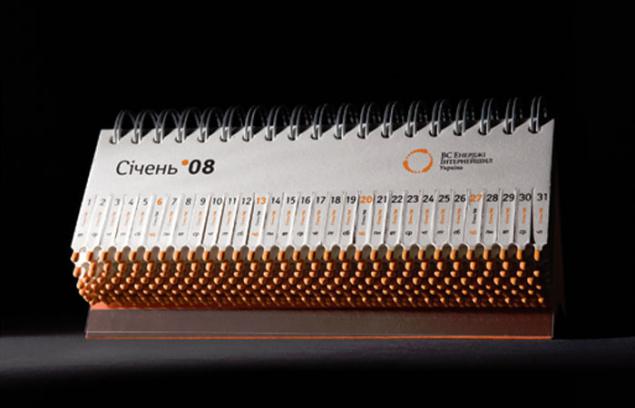
Ukrainian Designer Yurko Hutsulyak has created another Energy calendar, where every day is made in the form of a match. After living for a day, the user tears off a match and burns it – at this moment, according to the author's idea, he comes to the realization of the irreversibility of time, and therefore the desire to use it, time, more effectively. Given what is happening now in Kyiv, the days with matches are beginning to take on a completely different meaning.
5. Calendar in the form of garbage bags
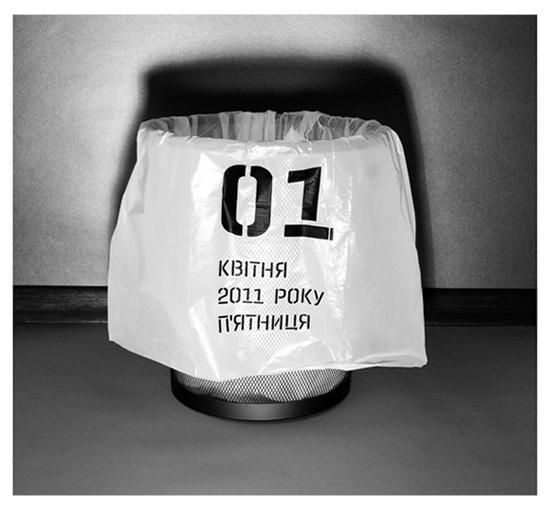
The same author has another similar idea - to produce calendars in the form of garbage bags. The motivation is the same - throwing another day in the trash, you involuntarily begin to value time.
6. DIA Puzzle Calendar
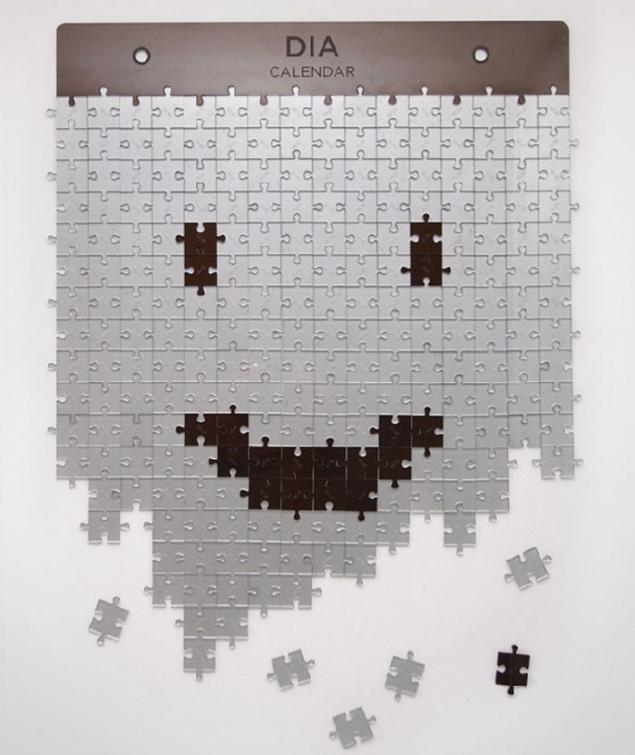
Portuguese designer Gonzalo Campos proposed the concept of a wall calendar in the form of a puzzle, which is assembled by the user throughout the year from pieces of dark (if the day is unlucky) and light (if the day is successful) colors. As the days pass, an infographic of weeks and months emerges, which helps a person to approach time more consciously.
The same idea is at the heart of the T-shirt calendar proposed by Pepper Hanberger, a student at the Stockholm College of Design.
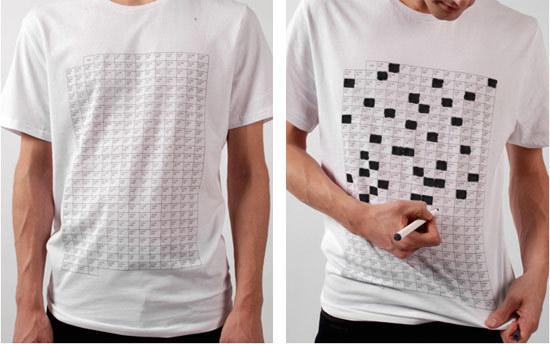
Only in this case, the calendar is hung not on the wall, but on yourself. However, in this case, the problem of washing arises very strongly. Since an unpleasant smell can make any day black.
Source: habrahabr.ru/post/211725/
Cornflowers - a symbol of respect, tenderness, simplicity
Wozniak: Apple to do on your Android smartphone