5 Silent Self-Improvement Methods: How to Grow Without Stress and Fighting Yourself
We often think that real changes should sound loud, like an orchestral gong. We wait for Monday to turn our lives around, burn bridges, and become a new version of ourselves — perfect, productive, invulnerable. But nature does not tolerate sudden jumps. The deepest transformations happen in silence, unnoticed, like grass breaking through asphalt. This is a story about how to stop fighting yourself for the sake of grand strategies and start growing through soft, almost silent practice.

The Quiet Power of Micro-Steps
In a world obsessed with "successful success," the idea of slow growth seems almost rebellious. We are used to thinking that if the result is not immediately visible, then the efforts are in vain. However, big strategies — deleting social networks, strict diets, a radical career change — often break under their own weight, leaving us with feelings of guilt and burnout.
Real power is hidden in "quiet methods." They do not require a burst of willpower. They work at the subconscious level, gently reprogramming our neural connections and habits. This is the art of small touches that eventually change the trajectory of an entire life. Let's look at five such methods that work deeper and more reliably than any loud promises.
1. Practice Radical Self-Kindness
We often postpone self-love for later. "Once I lose weight, earn a million, finish the project — then I'll praise myself." But this approach creates an internal desert. Personal growth cannot take root in the dry, lifeless soil of self-criticism.
Try changing your inner monologue right now. When you make a mistake or just feel tired, instead of the usual "get yourself together," say to yourself what you would say to your best friend who came to you in tears.
"Soft Mirror" Technique:
- Keep a gratitude journal directed inward. What can you thank yourself for today? For drinking water? For holding back and not responding rudely to rudeness?
- Catch moments of self-flagellation and stop them with the question: "Does this thought make me stronger right now?".
When you lower the degree of internal tension, a colossal amount of energy is released. Energy that used to be spent on serving fear and shame, and now can be directed to creativity and life.
2. Ritual of Honest Completion (Analysis of Results)
Our brain is designed to quickly close a task and forget about it in order to save resources. We run from project to project, not having time to appropriate the experience gained. But growth occurs not at the moment of action, but at the moment of reflection.
Turn dry analysis into a beautiful ritual. After completing any stage — whether it's a work project or just a difficult week — set aside 15 minutes of silence.
Ask yourself three questions:
- What came easy to me and brought joy? (These are your areas of strength).
- Where did I stumble and why? (These are areas of growth, not a reason for shame).
- What surprised me in this process?
Use modern tools as assistants, not overseers. AI can help structure your notes or find patterns in mistakes, but only your heart knows what price the result cost. This method teaches us not just to run faster, but to choose the right road.
3. The "Use and Explore" Principle (80/20)
Life often turns into a rut: the same route, the same coffee, the same reactions. This gives a sense of security, but steals from us the feeling of novelty. The "Use and Explore" method is a balance between stability and adventure.

Leave 80% of life familiar and predictable — this is your foundation. And give the remaining 20% to experimentation.
How it looks in practice:
- Go to work another way. Your eyes will see new colors, your brain will build new connections.
- Instead of the usual scrolling through the feed in the evening, turn on music you've never listened to, or just sit in silence for five minutes.
- Rearrange the furniture in the room or the order of morning actions.
Even if the experiment turns out to be unsuccessful, you will win. You will know your limits. You will feel the taste of life. And if it succeeds — you will find a treasure that was hidden behind the veil of habit.
4. Freedom from the Tyranny of the Word "Should"
We carry on our shoulders an invisible backpack filled with stones labeled "I should." I should be a perfect mother, a successful worker, eternally young, always positive. Most of these stones are not even ours — they were put on us by society, parents, advertising.
Try to audit your backpack. Take out each "should" and examine it in the light.
"I should get up at 5 a.m." Really? Or does your body need recovery, and are you more productive at 9?
Replace "I should" with "I choose" or "it is important to me." If the phrase "I choose to suffer in the gym to exhaustion" sounds absurd, then this is not your path. Look for alternatives. Movement should bring joy, not be a punishment for eating dessert. Life becomes incredibly easy when we drop someone else's burden.
5. Pause Between Stimulus and Reaction
Viktor Frankl said that there is a gap between stimulus and our reaction. In this gap lies our freedom. Self-improvement is not so much about achieving goals as it is about the ability to expand this gap of tranquility.
Imagine: a disturbing notification comes from the bank, or someone cuts you off on the road. The first reaction of the body is a release of adrenaline, constriction, anger. This is automatism. The quiet method is to take one deep breath before acting.
How to train this "sacred gap":
- Start small. A pen fell — don't swear, just pick it up. The computer froze — exhale, look out the window.
- Imagine yourself as water flowing around a stone. The problem is the stone. You are water. You do not beat against it, you gently bend around it.
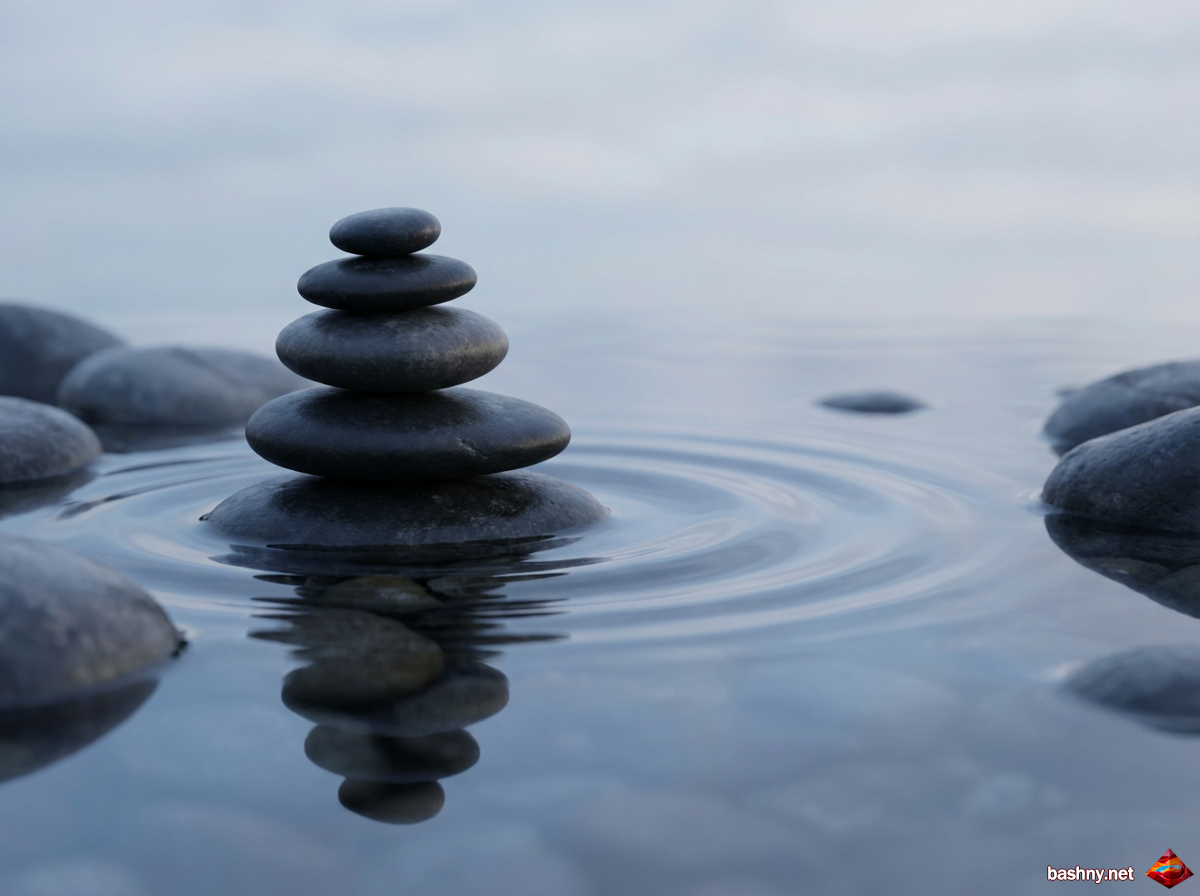
This practice gradually forms inside you a core that cannot be broken by external circumstances. You become not the one to whom life happens, but the one who lives it consciously.
A Quiet Harbor Inside You
These five methods do not promise you instant transformation and magazine covers. They offer something more — a return to yourself. They work quietly, like the roots of a tree, strengthening you from within. And one day you will notice that the storms that used to knock you down now only slightly shake your crown. Be kind to yourself. Your growth is the most important journey, and it does not require haste.