1085
25 of these values of well-known expressions
In Russian, famous for imagery, full of idioms, is used by all. We understand the modern meaning of such phrases as "the" buffoon "or" places not so remote, "but where they came from and that mean in reality? < Website
1. Where did the expression "a stitch»? When a person is very poor, it can be said about: «a stitch»
2. What is the wish of good ways to become synonymous with the phrase "Get out»? initially in Russia, especially in off-road conditions, the expression «Good riddance!»
3. Where did the expression "buffoon»? More since Roman times belonging Pagliacci was a rattle of bovine bladder, which poured peas. In the medieval theater clowns beat a rattle of other actors, and even the audience. When the tradition reached Russia, our clowns began to adorn themselves with further pea straw, hence in language and expression stuck «clown»
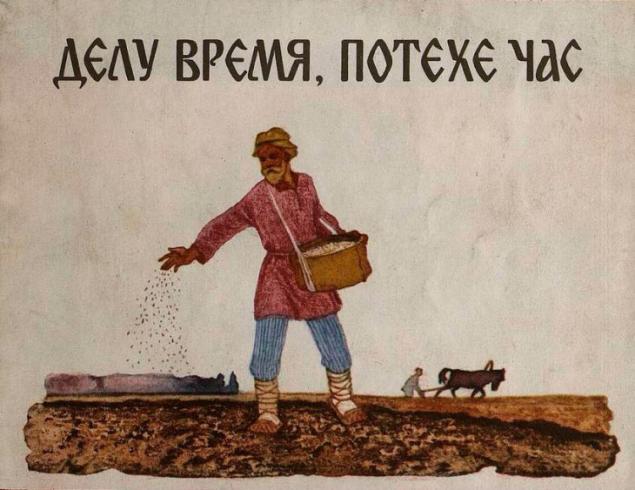
4. That meant Alexis when he wrote: 'Cause time fun hour »? The expression « Cause time fun hour »
In our time, this proverb is often interpreted literally work should devote much more time than entertainment.
5. Where did the expression "as plywood over Paris»? The expression «as plywood over Paris»
6. Where did the term "sucking in the stomach»? Before cavity under the ribs on the sternum xiphoid process called "spoon." In itself, this word has been preserved in the language, but is used in expressions «sucks in his stomach» «aches in the stomach»
7. Where did the phrase "pull the gimp»? Gold or silver thread, which in the old embroidered decoration on clothing, called gold thread. To get it, it was necessary to pull ticks long metal wire. Hence the expression «pull the gimp» «dawdle»
8. Where did the term "alive smoking room»? In the old days in Russia, among other things, children playing in the "smoking room". Circling passed burning splinter, and the one who hands it goes off, are lost. During the game, it was necessary to sing: "Alive, alive and sympathy Boxing, alive, alive, not dead." From here there was an expression «alive smoking room»
9. Where did the expression "places not so distant»? In the pre-revolutionary Russian law there were two categories of reference "in the remote places of Siberia" and "in the not so distant places of Siberia." The second sentence of the official term turned into allegorical turn. Now, speaking of the prison, we often use the expression «places not so distant»
10. What is the original meaning of the expression "exception proves the rule?» The expression «The exception proves the rule»
11. Why Indians at one time heavily diluted with cobras, and then abruptly stopped? Once the British during the colonial occupation in India, decided to reduce the number of bred cobras, which announced a reward for their heads. Local people rushed to destroy the snakes, thus reducing their number, but then, on the contrary, moved to their breeding for easy earnings. After the abolition of the remaining awards cobras Indians let go free, help to ensure that the population of snakes only increased compared with baseline.
Since then, the expression «cobra effect»
12. Where did the expression "topsy-turvy»? In the time of Ivan the Terrible in Russia, one of the signs of the dignity of the nobles was embroidered collar, which was called "collar." If any exposed lord the king's anger and disgrace, his usual seated on a skinny nag backwards, after removing the clothes inside out. Since then stuck expression «topsy-turvy»
13. Why about the lucky man say that he was born under a lucky star? When a person is lucky, they say that he was born under a lucky star. The word "shirt" in this expression appeared not so long ago, but before it is pronounced as «born in the shirt»
14. Where did the expression "last Chinese warning»? The 1950-1960 American planes often violated the airspace of China for exploration. Chinese authorities recorded each violation and each time sent out through diplomatic channels, "warning" the United States, but no real action for them should not have, and the expense of such warnings was conducted hundreds. This policy has led to the emergence of expression «Last warning»
15. Why newspapers with sensational news is called yellow press? The term "yellow press" originated in the United States in the late 19th century. By this time, it has become very popular two newspapers - New York World and New York Journal, which did not bet on the usual news coverage, and the giving readers the emotional sensations and material supply. In 1895 New York World began publishing comic Richard Autkalta full of satire and scathing comments about the policy, whose main character was a boy in the yellow shirt. A year Autkalta lured to New York Journal, and now both newspapers began publishing comics related.
That is why journalists are more serious publications like newspapers called yellow
16. Where did the greeting "High five!»? The word "pastern" used to be called a brush or hand. There was also a welcome expression "Give pastern!", Which was later reduced to one letter and transformed into «Give me five!»
17. Why photographers say, "say cheese!»? Before photographers to all children in the group photo looked into the camera and said: "Look here! say cheese!
In those days, the cells were far from perfect, and to get a good picture people had to stand still in one position for a few seconds. To attract the attention of restless children, assistant photographer at the right time raise the brilliant "bird", which is already knew how to warble.
18. Where did the expression "hang all the dogs»? When a person is accused of anything else, you can hear the expression: «hang on him all the dogs»
19. Where did the phrase "not in that steppe»? The operetta "Wedding in Malinovka" one of the heroes playfully distorted the name of the dance two-step, calling it "in the steppe." Hence, the people spread the expression «not in that steppe»
20. Where did the expression "crimson bells»? The expression «crimson bells»
21. Why does the expression "to return to the native land" should be pronounced differently? The popular expression "to return to the native land", meaning a return to his home, to home, to properly pronounce differently: «to return to their hearth »
22. What is an idiom in many European languages, of the Russian phrase "white crow»? The analogue Russian expression «black sheep» «black sheep» «black sheep»
23. Where did the expression "on the sly»? sape word in French means "hoe". In the 16-19 centuries the term "sapa" refers to the way we digging a trench, ditch or tunnel to approach the fortifications. The saps the walls of the locks are sometimes placed bombs of gunpowder, and specialists trained to do it, were called sappers. But by digging covert undermining expression was «sly»
24. What is the expression of the futility of actually literally performed medieval monks? The expression «tread water»
25. Where did the expression "business burned»? Previously, if a lawsuit disappeared, the man could not show a legitimate charge. Cases are often burned, either by the fire in the wooden buildings of the courts, or by arson for a bribe. In such cases, the accused said: «The thing burned»
via muzey-factov.ru/tag/idioms
3. Where did the expression "buffoon»? More since Roman times belonging Pagliacci was a rattle of bovine bladder, which poured peas. In the medieval theater clowns beat a rattle of other actors, and even the audience. When the tradition reached Russia, our clowns began to adorn themselves with further pea straw, hence in language and expression stuck «clown»
4. That meant Alexis when he wrote: 'Cause time fun hour »? The expression « Cause time fun hour »
In our time, this proverb is often interpreted literally work should devote much more time than entertainment.
5. Where did the expression "as plywood over Paris»? The expression «as plywood over Paris»
6. Where did the term "sucking in the stomach»? Before cavity under the ribs on the sternum xiphoid process called "spoon." In itself, this word has been preserved in the language, but is used in expressions «sucks in his stomach» «aches in the stomach»
7. Where did the phrase "pull the gimp»? Gold or silver thread, which in the old embroidered decoration on clothing, called gold thread. To get it, it was necessary to pull ticks long metal wire. Hence the expression «pull the gimp» «dawdle»
8. Where did the term "alive smoking room»? In the old days in Russia, among other things, children playing in the "smoking room". Circling passed burning splinter, and the one who hands it goes off, are lost. During the game, it was necessary to sing: "Alive, alive and sympathy Boxing, alive, alive, not dead." From here there was an expression «alive smoking room»
9. Where did the expression "places not so distant»? In the pre-revolutionary Russian law there were two categories of reference "in the remote places of Siberia" and "in the not so distant places of Siberia." The second sentence of the official term turned into allegorical turn. Now, speaking of the prison, we often use the expression «places not so distant»
10. What is the original meaning of the expression "exception proves the rule?» The expression «The exception proves the rule»
11. Why Indians at one time heavily diluted with cobras, and then abruptly stopped? Once the British during the colonial occupation in India, decided to reduce the number of bred cobras, which announced a reward for their heads. Local people rushed to destroy the snakes, thus reducing their number, but then, on the contrary, moved to their breeding for easy earnings. After the abolition of the remaining awards cobras Indians let go free, help to ensure that the population of snakes only increased compared with baseline.
Since then, the expression «cobra effect»
12. Where did the expression "topsy-turvy»? In the time of Ivan the Terrible in Russia, one of the signs of the dignity of the nobles was embroidered collar, which was called "collar." If any exposed lord the king's anger and disgrace, his usual seated on a skinny nag backwards, after removing the clothes inside out. Since then stuck expression «topsy-turvy»
13. Why about the lucky man say that he was born under a lucky star? When a person is lucky, they say that he was born under a lucky star. The word "shirt" in this expression appeared not so long ago, but before it is pronounced as «born in the shirt»
14. Where did the expression "last Chinese warning»? The 1950-1960 American planes often violated the airspace of China for exploration. Chinese authorities recorded each violation and each time sent out through diplomatic channels, "warning" the United States, but no real action for them should not have, and the expense of such warnings was conducted hundreds. This policy has led to the emergence of expression «Last warning»
15. Why newspapers with sensational news is called yellow press? The term "yellow press" originated in the United States in the late 19th century. By this time, it has become very popular two newspapers - New York World and New York Journal, which did not bet on the usual news coverage, and the giving readers the emotional sensations and material supply. In 1895 New York World began publishing comic Richard Autkalta full of satire and scathing comments about the policy, whose main character was a boy in the yellow shirt. A year Autkalta lured to New York Journal, and now both newspapers began publishing comics related.
That is why journalists are more serious publications like newspapers called yellow
16. Where did the greeting "High five!»? The word "pastern" used to be called a brush or hand. There was also a welcome expression "Give pastern!", Which was later reduced to one letter and transformed into «Give me five!»
17. Why photographers say, "say cheese!»? Before photographers to all children in the group photo looked into the camera and said: "Look here! say cheese!
In those days, the cells were far from perfect, and to get a good picture people had to stand still in one position for a few seconds. To attract the attention of restless children, assistant photographer at the right time raise the brilliant "bird", which is already knew how to warble.
18. Where did the expression "hang all the dogs»? When a person is accused of anything else, you can hear the expression: «hang on him all the dogs»
19. Where did the phrase "not in that steppe»? The operetta "Wedding in Malinovka" one of the heroes playfully distorted the name of the dance two-step, calling it "in the steppe." Hence, the people spread the expression «not in that steppe»
20. Where did the expression "crimson bells»? The expression «crimson bells»
21. Why does the expression "to return to the native land" should be pronounced differently? The popular expression "to return to the native land", meaning a return to his home, to home, to properly pronounce differently: «to return to their hearth »
22. What is an idiom in many European languages, of the Russian phrase "white crow»? The analogue Russian expression «black sheep» «black sheep» «black sheep»
23. Where did the expression "on the sly»? sape word in French means "hoe". In the 16-19 centuries the term "sapa" refers to the way we digging a trench, ditch or tunnel to approach the fortifications. The saps the walls of the locks are sometimes placed bombs of gunpowder, and specialists trained to do it, were called sappers. But by digging covert undermining expression was «sly»
24. What is the expression of the futility of actually literally performed medieval monks? The expression «tread water»
25. Where did the expression "business burned»? Previously, if a lawsuit disappeared, the man could not show a legitimate charge. Cases are often burned, either by the fire in the wooden buildings of the courts, or by arson for a bribe. In such cases, the accused said: «The thing burned»
via muzey-factov.ru/tag/idioms
In our time, this proverb is often interpreted literally work should devote much more time than entertainment.