1210
10 mysteries of archeology that we may never reveal
Archaeologists - strange people. They are ready to go for months in the godforsaken corners of our planet, to thoroughly dig into the ground ...
I must say, among the debris of modern scientists sometimes find really interesting objects, but often these findings give rise to more questions than answers. To understand an abiding passion for archeology endless race for the last of humanity, it is necessary to go to the excavations and the long hours of work with a shovel in the hope to make an archaeological sensation ...
Or read this collection Website
1. "Candelabrum Paracas» Many of you have probably heard about the Nazca Lines - huge cave paintings located in southern Peru, but few know that in the same desert of Nazca, about 200 km from the geoglyphs, there is another mysterious object over which the destination for many years, archaeologists scratching their heads.
«candelabrum Paracas" (or "Paracas Candelabra»)
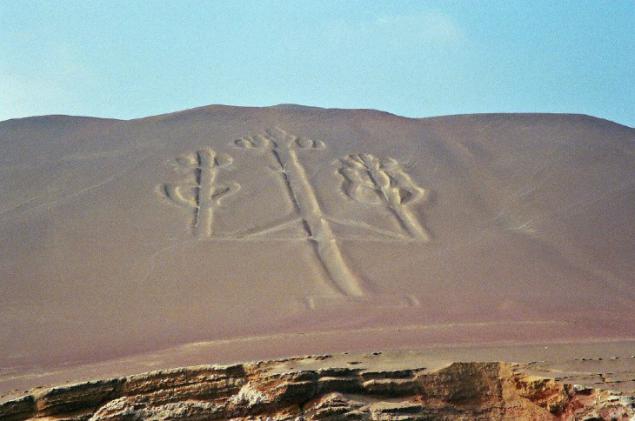
Scientists more or less clear, when there was a "Paracas Candelabra" and who created it, but the purpose of the ancient painters is unclear. Some archaeologists believe that the object is a shrine of the creator god Viracocha, worshiped by the local tribes, others have suggested that the image served as a landmark for ancient seafarers - the huge size "chandelier" carved into the hillside, so it is perfectly visible from the ocean, with a distance of about 20 km.
2. "Uffington White Horse» Stonehenge - not the only archaeological site in good old England, though, when it comes to the antiquities of Albion, in the first place is always remember about him.
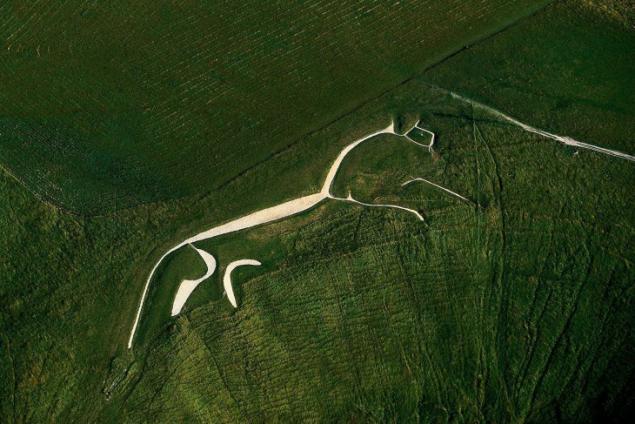
above the giant stylized figure of a horse, located near the village of Uffington,
Figure is similar to images of horses, found on the coins of the Bronze Age, beside him, archaeologists discovered the burial, presumably appeared in the Neolithic period. Scientists are not yet able to reach consensus on the establishment of the "White Horse" - many of them claim that the object of the Bronze Age geoglyphs too well kept, but others point to the fact that the locals since ancient times carefully monitor the state of "Horses" and every few years "update" drawing - this explains its almost original form.
3. "The Book of the Zagreb mummy» «Zagreb linen book" is known as the longest text in Etruscan language
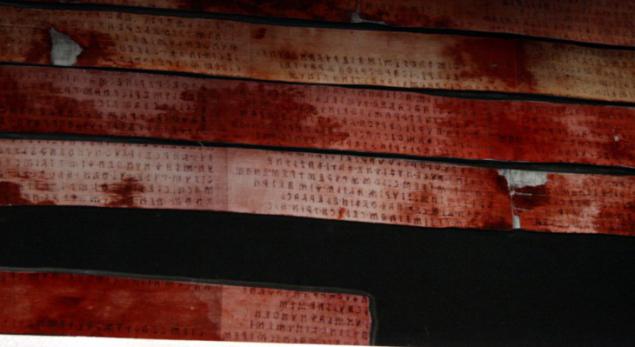
The book is dated III-th century BC, so the very fact of its existence is unique - the manuscript, made of fabric, ruthless time, usually destroys much earlier. One of the reasons why the monument of Etruscan culture is now available for the study, considered that the book material was used to wrap an Egyptian mummies
4. "Rock the White Shaman» Archaeologists and historians for many decades studying the artifacts of the peoples of North and South America, but until now the culture pre-Columbian American history in many ways remains a mystery to experts.
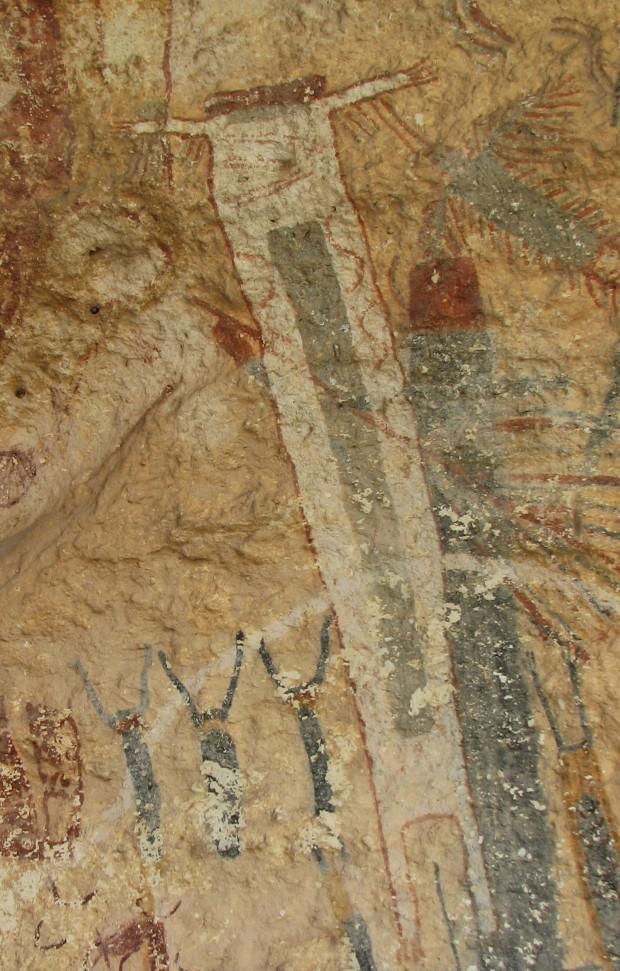
«White Rock Shaman»,
5. Geoglyphs Mountains Sayama Rock carvings found in Bolivia, one of the slopes of Sayama, technique of creating remind Nazca Lines and the "Paracas Candelabra" - they, too, are carved into solid rock, with the Bolivian figures much more Peruvian - Image occupied an area of about 7, 5 thousand m² (15 times more than the Nazca Lines), the length of some of the lines that make up the objects Sayama, has about 18 km.
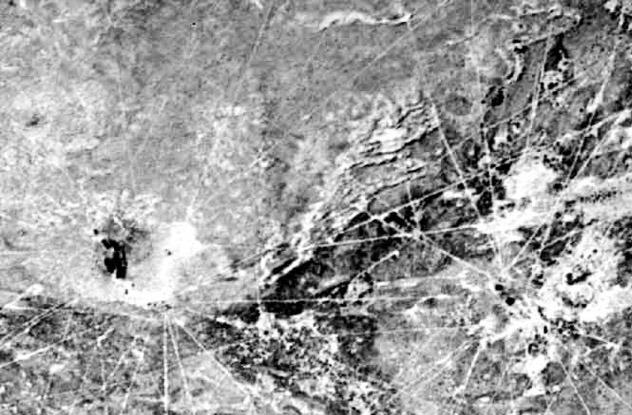
With such outstanding amounts, geoglyphs Mountains Sayama still little studied
6. Artifacts Terterii Three stone tablets that have been found by scientists in the vicinity of the Romanian village Terteriya, contains characters that are now the oldest written language in the world.
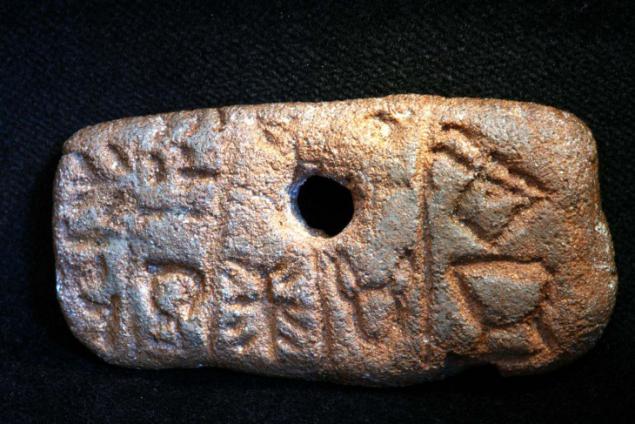
Originally, scientists assumed that the signs are dated Terterii the third millennium BC, but more thorough radiocarbon analysis revealed that much older artifacts. Now, most archaeologists agree that the plates are created about 7, 5 thousand years ago, long before the Sumerian writing, which was previously considered the oldest in the world. Rather, the findings of Romanian archaeologists belong to the pre-Indo culture of Vinca, which was extended to the territory of modern South-Eastern Europe in the Neolithic period, as symbols on the labels are very similar to the icon depicted on the found in 1875 near the Serbian town of Vinca remains of ancient ceramics.
7. Blythe Intaglios This archaeological site, located in the southern California desert in Colorado, near the town of Blythe, a giant geometric shapes, and images of animals and people
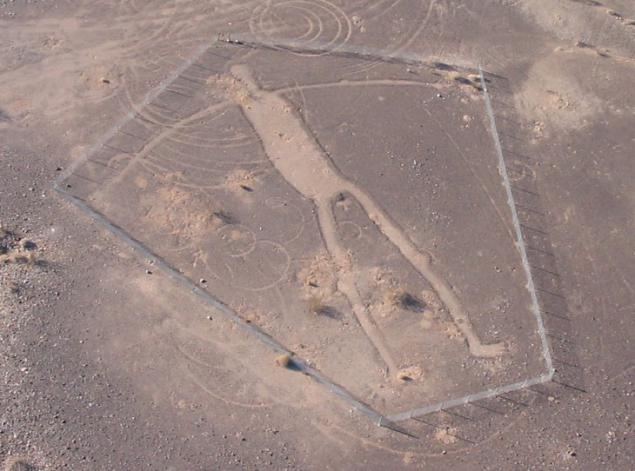
Archaeologists can not agree on the age of geoglyphs - called the numbers from 450 to 2 thousand years old, it is also unclear what exactly is depicted in the drawings. According to one of the most common versions huge figures created ancestors of Indian tribes and the Mojave kvechan, currently living in the lower reaches of the Colorado River. According to the legends of indigenous people of this region, in the form of human figures depicted various artists Mastambo incarnation of God, the Creator of all things, and they painted animals - not that other, as zverochelovek Hatakulya directly involved in the creation of the world.
8. The death of Alexander the Great Alexander the Great - one of the most famous historical characters, the life of the great commander devoted thousands of scientific and artistic books, hundreds of movies, but the reason for his death is now almost nothing is known.
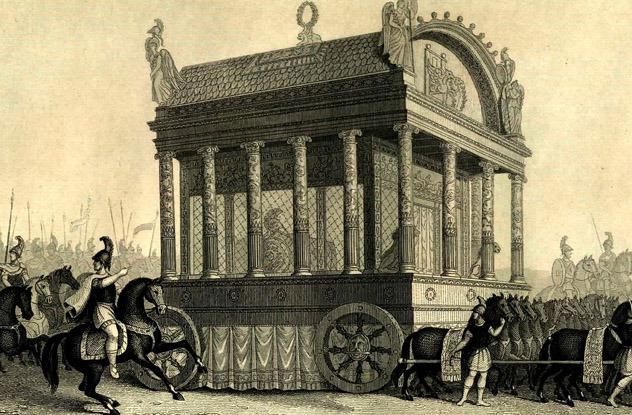
Most historians agree adopted in orthodox scientific community point of view on the time and place of Alexander's death - 10 June 323rd BC, the palace of Nebuchadnezzar II-nd in Babylon, but what killed most ambitious conqueror in history - a convincing answer to this question there is still no.
For a long time it was thought that Alexander was poisoned, and in the suspects visited almost all the members of his entourage - from generals to lovers of exceptional historical figure. Version poisoning is based on the testimony of his contemporaries, who claim that the invincible Alexander suddenly struck an unknown disease, about two weeks he spent, suffering severe abdominal pain, and then died. This information should not be considered conclusive evidence of poisoning commander, as these symptoms may indicate pancreatitis, hepatitis, endocarditis, or any infectious disease, such as typhoid fever or malaria. When the then level of development of medicine, any of these illnesses could be fatal for Alexander.
Surprisingly, the death of Alexander was predicted Chaldeans
9. Minaret of Jam Minaret of Jam is located in north-western Afghanistan, was built at the turn of XII-th and XIII-th century, but its perfect design, stunning decor and the skill of medieval Afghan builders still surprised all who had the opportunity to witness This architectural masterpiece of fired brick.
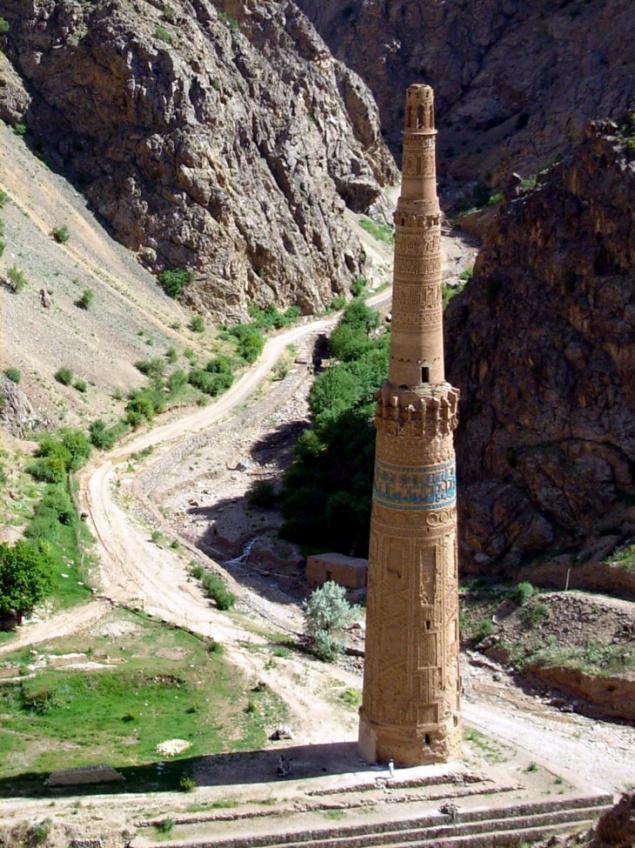
The height of the minaret - about 60 meters, according to one of the inscriptions on its walls, the structure was built in 1194, the year after winning the Sultan Giyaz al-Din's army ruler of Ghaznavid dynasty, but many experts are questioning the information. According to one version, the minaret - all that remains of the city Firuzkuh (which means "turquoise hill"), which in its heyday was the capital of the dynasty Gourde empire covering the territory of modern Iran, Pakistan, Afghanistan and India.
In the beginning of XIII-century Mongol Empire's armed forces under the command of the notorious Genghis Khan wiped the city to the ground, but they somehow overlooked the tall minaret
10. "The Emerald Tablet» Unlike other archaeological phenomena compilation, "The Emerald Tablet" has not survived to our time, so that the scientists do not know who was the author of the original of the document for which it was intended and what fate befell the monument of medieval Eastern Art.
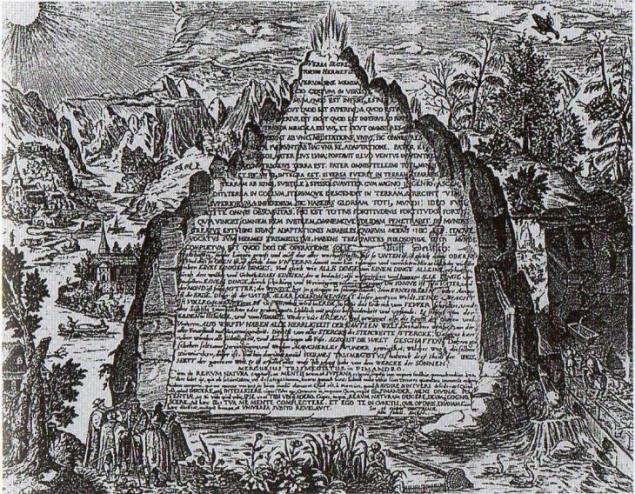
The only thing about the Emerald Tablet is for sure - what about it was first mentioned in the Arabic book, dated VI-th or VIII-th century AD. Some early copies of the "Tablet", made by Arab translators, there is evidence that the original was written in Syriac language, but evidence of this from the experts yet. The earliest Latin translations tablets dated XII-th centuries later created several versions of the text, the authorship of one of them belongs to the famous scientist, Sir Isaac Newton.
According to some scholars, in the "Emerald Tablet" describes the technology of conversion of various metals into gold with the help of a mythical substance, known as the Philosopher's Stone, but so far nobody has been able to conduct this alchemical experience
via www.publy.ru/post/12158
above the giant stylized figure of a horse, located near the village of Uffington,
Figure is similar to images of horses, found on the coins of the Bronze Age, beside him, archaeologists discovered the burial, presumably appeared in the Neolithic period. Scientists are not yet able to reach consensus on the establishment of the "White Horse" - many of them claim that the object of the Bronze Age geoglyphs too well kept, but others point to the fact that the locals since ancient times carefully monitor the state of "Horses" and every few years "update" drawing - this explains its almost original form.
3. "The Book of the Zagreb mummy» «Zagreb linen book" is known as the longest text in Etruscan language
The book is dated III-th century BC, so the very fact of its existence is unique - the manuscript, made of fabric, ruthless time, usually destroys much earlier. One of the reasons why the monument of Etruscan culture is now available for the study, considered that the book material was used to wrap an Egyptian mummies
4. "Rock the White Shaman» Archaeologists and historians for many decades studying the artifacts of the peoples of North and South America, but until now the culture pre-Columbian American history in many ways remains a mystery to experts.
«White Rock Shaman»,
5. Geoglyphs Mountains Sayama Rock carvings found in Bolivia, one of the slopes of Sayama, technique of creating remind Nazca Lines and the "Paracas Candelabra" - they, too, are carved into solid rock, with the Bolivian figures much more Peruvian - Image occupied an area of about 7, 5 thousand m² (15 times more than the Nazca Lines), the length of some of the lines that make up the objects Sayama, has about 18 km.
With such outstanding amounts, geoglyphs Mountains Sayama still little studied
6. Artifacts Terterii Three stone tablets that have been found by scientists in the vicinity of the Romanian village Terteriya, contains characters that are now the oldest written language in the world.
Originally, scientists assumed that the signs are dated Terterii the third millennium BC, but more thorough radiocarbon analysis revealed that much older artifacts. Now, most archaeologists agree that the plates are created about 7, 5 thousand years ago, long before the Sumerian writing, which was previously considered the oldest in the world. Rather, the findings of Romanian archaeologists belong to the pre-Indo culture of Vinca, which was extended to the territory of modern South-Eastern Europe in the Neolithic period, as symbols on the labels are very similar to the icon depicted on the found in 1875 near the Serbian town of Vinca remains of ancient ceramics.
7. Blythe Intaglios This archaeological site, located in the southern California desert in Colorado, near the town of Blythe, a giant geometric shapes, and images of animals and people
Archaeologists can not agree on the age of geoglyphs - called the numbers from 450 to 2 thousand years old, it is also unclear what exactly is depicted in the drawings. According to one of the most common versions huge figures created ancestors of Indian tribes and the Mojave kvechan, currently living in the lower reaches of the Colorado River. According to the legends of indigenous people of this region, in the form of human figures depicted various artists Mastambo incarnation of God, the Creator of all things, and they painted animals - not that other, as zverochelovek Hatakulya directly involved in the creation of the world.
8. The death of Alexander the Great Alexander the Great - one of the most famous historical characters, the life of the great commander devoted thousands of scientific and artistic books, hundreds of movies, but the reason for his death is now almost nothing is known.
Most historians agree adopted in orthodox scientific community point of view on the time and place of Alexander's death - 10 June 323rd BC, the palace of Nebuchadnezzar II-nd in Babylon, but what killed most ambitious conqueror in history - a convincing answer to this question there is still no.
For a long time it was thought that Alexander was poisoned, and in the suspects visited almost all the members of his entourage - from generals to lovers of exceptional historical figure. Version poisoning is based on the testimony of his contemporaries, who claim that the invincible Alexander suddenly struck an unknown disease, about two weeks he spent, suffering severe abdominal pain, and then died. This information should not be considered conclusive evidence of poisoning commander, as these symptoms may indicate pancreatitis, hepatitis, endocarditis, or any infectious disease, such as typhoid fever or malaria. When the then level of development of medicine, any of these illnesses could be fatal for Alexander.
Surprisingly, the death of Alexander was predicted Chaldeans
9. Minaret of Jam Minaret of Jam is located in north-western Afghanistan, was built at the turn of XII-th and XIII-th century, but its perfect design, stunning decor and the skill of medieval Afghan builders still surprised all who had the opportunity to witness This architectural masterpiece of fired brick.
The height of the minaret - about 60 meters, according to one of the inscriptions on its walls, the structure was built in 1194, the year after winning the Sultan Giyaz al-Din's army ruler of Ghaznavid dynasty, but many experts are questioning the information. According to one version, the minaret - all that remains of the city Firuzkuh (which means "turquoise hill"), which in its heyday was the capital of the dynasty Gourde empire covering the territory of modern Iran, Pakistan, Afghanistan and India.
In the beginning of XIII-century Mongol Empire's armed forces under the command of the notorious Genghis Khan wiped the city to the ground, but they somehow overlooked the tall minaret
10. "The Emerald Tablet» Unlike other archaeological phenomena compilation, "The Emerald Tablet" has not survived to our time, so that the scientists do not know who was the author of the original of the document for which it was intended and what fate befell the monument of medieval Eastern Art.
The only thing about the Emerald Tablet is for sure - what about it was first mentioned in the Arabic book, dated VI-th or VIII-th century AD. Some early copies of the "Tablet", made by Arab translators, there is evidence that the original was written in Syriac language, but evidence of this from the experts yet. The earliest Latin translations tablets dated XII-th centuries later created several versions of the text, the authorship of one of them belongs to the famous scientist, Sir Isaac Newton.
According to some scholars, in the "Emerald Tablet" describes the technology of conversion of various metals into gold with the help of a mythical substance, known as the Philosopher's Stone, but so far nobody has been able to conduct this alchemical experience
via www.publy.ru/post/12158
«White Rock Shaman»,
5. Geoglyphs Mountains Sayama Rock carvings found in Bolivia, one of the slopes of Sayama, technique of creating remind Nazca Lines and the "Paracas Candelabra" - they, too, are carved into solid rock, with the Bolivian figures much more Peruvian - Image occupied an area of about 7, 5 thousand m² (15 times more than the Nazca Lines), the length of some of the lines that make up the objects Sayama, has about 18 km.
With such outstanding amounts, geoglyphs Mountains Sayama still little studied
6. Artifacts Terterii Three stone tablets that have been found by scientists in the vicinity of the Romanian village Terteriya, contains characters that are now the oldest written language in the world.
Originally, scientists assumed that the signs are dated Terterii the third millennium BC, but more thorough radiocarbon analysis revealed that much older artifacts. Now, most archaeologists agree that the plates are created about 7, 5 thousand years ago, long before the Sumerian writing, which was previously considered the oldest in the world. Rather, the findings of Romanian archaeologists belong to the pre-Indo culture of Vinca, which was extended to the territory of modern South-Eastern Europe in the Neolithic period, as symbols on the labels are very similar to the icon depicted on the found in 1875 near the Serbian town of Vinca remains of ancient ceramics.
7. Blythe Intaglios This archaeological site, located in the southern California desert in Colorado, near the town of Blythe, a giant geometric shapes, and images of animals and people
Archaeologists can not agree on the age of geoglyphs - called the numbers from 450 to 2 thousand years old, it is also unclear what exactly is depicted in the drawings. According to one of the most common versions huge figures created ancestors of Indian tribes and the Mojave kvechan, currently living in the lower reaches of the Colorado River. According to the legends of indigenous people of this region, in the form of human figures depicted various artists Mastambo incarnation of God, the Creator of all things, and they painted animals - not that other, as zverochelovek Hatakulya directly involved in the creation of the world.
8. The death of Alexander the Great Alexander the Great - one of the most famous historical characters, the life of the great commander devoted thousands of scientific and artistic books, hundreds of movies, but the reason for his death is now almost nothing is known.
Most historians agree adopted in orthodox scientific community point of view on the time and place of Alexander's death - 10 June 323rd BC, the palace of Nebuchadnezzar II-nd in Babylon, but what killed most ambitious conqueror in history - a convincing answer to this question there is still no.
For a long time it was thought that Alexander was poisoned, and in the suspects visited almost all the members of his entourage - from generals to lovers of exceptional historical figure. Version poisoning is based on the testimony of his contemporaries, who claim that the invincible Alexander suddenly struck an unknown disease, about two weeks he spent, suffering severe abdominal pain, and then died. This information should not be considered conclusive evidence of poisoning commander, as these symptoms may indicate pancreatitis, hepatitis, endocarditis, or any infectious disease, such as typhoid fever or malaria. When the then level of development of medicine, any of these illnesses could be fatal for Alexander.
Surprisingly, the death of Alexander was predicted Chaldeans
9. Minaret of Jam Minaret of Jam is located in north-western Afghanistan, was built at the turn of XII-th and XIII-th century, but its perfect design, stunning decor and the skill of medieval Afghan builders still surprised all who had the opportunity to witness This architectural masterpiece of fired brick.
The height of the minaret - about 60 meters, according to one of the inscriptions on its walls, the structure was built in 1194, the year after winning the Sultan Giyaz al-Din's army ruler of Ghaznavid dynasty, but many experts are questioning the information. According to one version, the minaret - all that remains of the city Firuzkuh (which means "turquoise hill"), which in its heyday was the capital of the dynasty Gourde empire covering the territory of modern Iran, Pakistan, Afghanistan and India.
In the beginning of XIII-century Mongol Empire's armed forces under the command of the notorious Genghis Khan wiped the city to the ground, but they somehow overlooked the tall minaret
10. "The Emerald Tablet» Unlike other archaeological phenomena compilation, "The Emerald Tablet" has not survived to our time, so that the scientists do not know who was the author of the original of the document for which it was intended and what fate befell the monument of medieval Eastern Art.
The only thing about the Emerald Tablet is for sure - what about it was first mentioned in the Arabic book, dated VI-th or VIII-th century AD. Some early copies of the "Tablet", made by Arab translators, there is evidence that the original was written in Syriac language, but evidence of this from the experts yet. The earliest Latin translations tablets dated XII-th centuries later created several versions of the text, the authorship of one of them belongs to the famous scientist, Sir Isaac Newton.
According to some scholars, in the "Emerald Tablet" describes the technology of conversion of various metals into gold with the help of a mythical substance, known as the Philosopher's Stone, but so far nobody has been able to conduct this alchemical experience
via www.publy.ru/post/12158
Originally, scientists assumed that the signs are dated Terterii the third millennium BC, but more thorough radiocarbon analysis revealed that much older artifacts. Now, most archaeologists agree that the plates are created about 7, 5 thousand years ago, long before the Sumerian writing, which was previously considered the oldest in the world. Rather, the findings of Romanian archaeologists belong to the pre-Indo culture of Vinca, which was extended to the territory of modern South-Eastern Europe in the Neolithic period, as symbols on the labels are very similar to the icon depicted on the found in 1875 near the Serbian town of Vinca remains of ancient ceramics.
7. Blythe Intaglios This archaeological site, located in the southern California desert in Colorado, near the town of Blythe, a giant geometric shapes, and images of animals and people
Archaeologists can not agree on the age of geoglyphs - called the numbers from 450 to 2 thousand years old, it is also unclear what exactly is depicted in the drawings. According to one of the most common versions huge figures created ancestors of Indian tribes and the Mojave kvechan, currently living in the lower reaches of the Colorado River. According to the legends of indigenous people of this region, in the form of human figures depicted various artists Mastambo incarnation of God, the Creator of all things, and they painted animals - not that other, as zverochelovek Hatakulya directly involved in the creation of the world.
8. The death of Alexander the Great Alexander the Great - one of the most famous historical characters, the life of the great commander devoted thousands of scientific and artistic books, hundreds of movies, but the reason for his death is now almost nothing is known.
Most historians agree adopted in orthodox scientific community point of view on the time and place of Alexander's death - 10 June 323rd BC, the palace of Nebuchadnezzar II-nd in Babylon, but what killed most ambitious conqueror in history - a convincing answer to this question there is still no.
For a long time it was thought that Alexander was poisoned, and in the suspects visited almost all the members of his entourage - from generals to lovers of exceptional historical figure. Version poisoning is based on the testimony of his contemporaries, who claim that the invincible Alexander suddenly struck an unknown disease, about two weeks he spent, suffering severe abdominal pain, and then died. This information should not be considered conclusive evidence of poisoning commander, as these symptoms may indicate pancreatitis, hepatitis, endocarditis, or any infectious disease, such as typhoid fever or malaria. When the then level of development of medicine, any of these illnesses could be fatal for Alexander.
Surprisingly, the death of Alexander was predicted Chaldeans
9. Minaret of Jam Minaret of Jam is located in north-western Afghanistan, was built at the turn of XII-th and XIII-th century, but its perfect design, stunning decor and the skill of medieval Afghan builders still surprised all who had the opportunity to witness This architectural masterpiece of fired brick.
The height of the minaret - about 60 meters, according to one of the inscriptions on its walls, the structure was built in 1194, the year after winning the Sultan Giyaz al-Din's army ruler of Ghaznavid dynasty, but many experts are questioning the information. According to one version, the minaret - all that remains of the city Firuzkuh (which means "turquoise hill"), which in its heyday was the capital of the dynasty Gourde empire covering the territory of modern Iran, Pakistan, Afghanistan and India.
In the beginning of XIII-century Mongol Empire's armed forces under the command of the notorious Genghis Khan wiped the city to the ground, but they somehow overlooked the tall minaret
10. "The Emerald Tablet» Unlike other archaeological phenomena compilation, "The Emerald Tablet" has not survived to our time, so that the scientists do not know who was the author of the original of the document for which it was intended and what fate befell the monument of medieval Eastern Art.
The only thing about the Emerald Tablet is for sure - what about it was first mentioned in the Arabic book, dated VI-th or VIII-th century AD. Some early copies of the "Tablet", made by Arab translators, there is evidence that the original was written in Syriac language, but evidence of this from the experts yet. The earliest Latin translations tablets dated XII-th centuries later created several versions of the text, the authorship of one of them belongs to the famous scientist, Sir Isaac Newton.
According to some scholars, in the "Emerald Tablet" describes the technology of conversion of various metals into gold with the help of a mythical substance, known as the Philosopher's Stone, but so far nobody has been able to conduct this alchemical experience
via www.publy.ru/post/12158
Most historians agree adopted in orthodox scientific community point of view on the time and place of Alexander's death - 10 June 323rd BC, the palace of Nebuchadnezzar II-nd in Babylon, but what killed most ambitious conqueror in history - a convincing answer to this question there is still no.
For a long time it was thought that Alexander was poisoned, and in the suspects visited almost all the members of his entourage - from generals to lovers of exceptional historical figure. Version poisoning is based on the testimony of his contemporaries, who claim that the invincible Alexander suddenly struck an unknown disease, about two weeks he spent, suffering severe abdominal pain, and then died. This information should not be considered conclusive evidence of poisoning commander, as these symptoms may indicate pancreatitis, hepatitis, endocarditis, or any infectious disease, such as typhoid fever or malaria. When the then level of development of medicine, any of these illnesses could be fatal for Alexander.
Surprisingly, the death of Alexander was predicted Chaldeans
9. Minaret of Jam Minaret of Jam is located in north-western Afghanistan, was built at the turn of XII-th and XIII-th century, but its perfect design, stunning decor and the skill of medieval Afghan builders still surprised all who had the opportunity to witness This architectural masterpiece of fired brick.
The height of the minaret - about 60 meters, according to one of the inscriptions on its walls, the structure was built in 1194, the year after winning the Sultan Giyaz al-Din's army ruler of Ghaznavid dynasty, but many experts are questioning the information. According to one version, the minaret - all that remains of the city Firuzkuh (which means "turquoise hill"), which in its heyday was the capital of the dynasty Gourde empire covering the territory of modern Iran, Pakistan, Afghanistan and India.
In the beginning of XIII-century Mongol Empire's armed forces under the command of the notorious Genghis Khan wiped the city to the ground, but they somehow overlooked the tall minaret
10. "The Emerald Tablet» Unlike other archaeological phenomena compilation, "The Emerald Tablet" has not survived to our time, so that the scientists do not know who was the author of the original of the document for which it was intended and what fate befell the monument of medieval Eastern Art.
The only thing about the Emerald Tablet is for sure - what about it was first mentioned in the Arabic book, dated VI-th or VIII-th century AD. Some early copies of the "Tablet", made by Arab translators, there is evidence that the original was written in Syriac language, but evidence of this from the experts yet. The earliest Latin translations tablets dated XII-th centuries later created several versions of the text, the authorship of one of them belongs to the famous scientist, Sir Isaac Newton.
According to some scholars, in the "Emerald Tablet" describes the technology of conversion of various metals into gold with the help of a mythical substance, known as the Philosopher's Stone, but so far nobody has been able to conduct this alchemical experience
via www.publy.ru/post/12158
The only thing about the Emerald Tablet is for sure - what about it was first mentioned in the Arabic book, dated VI-th or VIII-th century AD. Some early copies of the "Tablet", made by Arab translators, there is evidence that the original was written in Syriac language, but evidence of this from the experts yet. The earliest Latin translations tablets dated XII-th centuries later created several versions of the text, the authorship of one of them belongs to the famous scientist, Sir Isaac Newton.
According to some scholars, in the "Emerald Tablet" describes the technology of conversion of various metals into gold with the help of a mythical substance, known as the Philosopher's Stone, but so far nobody has been able to conduct this alchemical experience
via www.publy.ru/post/12158
24 Amazing Photos Native American late 19th century
7 stunning paradoxes that put the brain into a dead end