Six Stories of People Who Survived Their Own Execution
Usually, a criminal who survives execution is not subjected to a repeat procedure. It's not for nothing that the key word in the sentence is "death," which means the inevitability of retribution and the inevitability of the imposed punishment.
In the past, the very fact that a criminal managed to stay alive after the execution of the highest measure of punishment was considered nothing less than divine providence, that is, it was considered proof of innocence sent from above. Below are six real stories about people who managed to stay alive against the law, even if only for a short time.
Source

1. Franks the Man
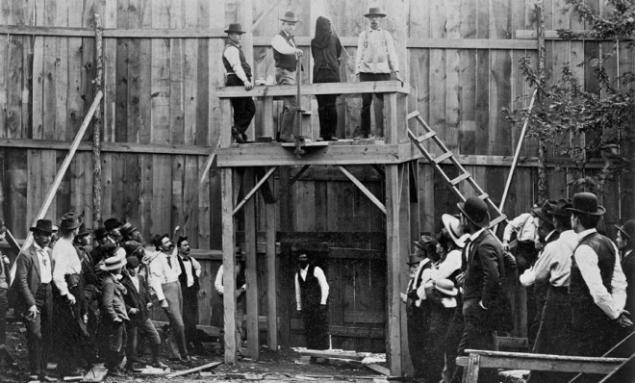
One of the Australian newspapers published a note in 1872 about how a murderer nicknamed "Franks the Man" survived his own execution due to the monstrous incompetence of the executors.
First, the execution itself was delayed by several hours, as the sheriff considered the scheduled time inconvenient. During the waiting time, it rained, and the wet rope prepared for the execution was taken to dry over the fire.
Because of this, the rope stopped sliding. Before putting the noose around the condemned man's neck, the executioner had to put his foot in the noose and jerk with all his might to move the knot that was stuck dead. Then the hapless executioner tried to fix the noose on Franks' neck, but, despite all his efforts, he could not make it as tight as the rules require.
In the end, the support was knocked out from under Franks, but after three minutes of unsuccessful attempts to suffocate, he began to twitch, asking to put an end to the suffering and finally finish him off. And since his hands were as "tightly" tied as his neck, it was not difficult for him to pull himself up and, moving the rope away from his throat, scold the organizers of the execution for their "hack work."
Finally, one of the employees cut the rope, and the long-suffering victim of justice met the solid ground with a dull thud, as no one thought to put something soft under him.
Needless to say, after everything they saw, no one wanted to bring the matter to an end, and Franks' sentence was commuted, replacing it with imprisonment, and the executive power of the new monarchical elite of Fiji became the subject of ridicule throughout the world.
2. Anna Green
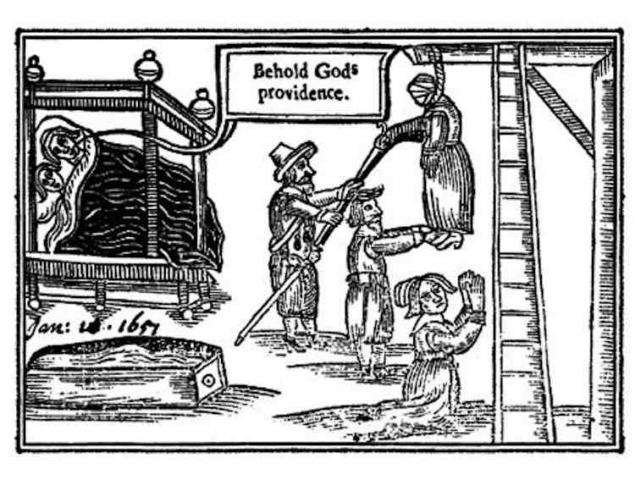
In 1650, twenty-two-year-old Anna Green was a maid in the house of Sir Thomas Read. She became pregnant by his grandson, but did not know that she was carrying a child in her womb. After 18 weeks, when Anna was grinding malt, she suddenly felt ill. She had a miscarriage in the toilet. In horror, the girl hid the body.
At that time, there was a law that any unmarried woman who concealed a pregnancy or a newborn was considered an infanticide. Despite the fact that the midwives recognized the fetus of the woman in labor as stillborn, Green was sentenced to execution by hanging in the courtyard of Oxford Castle.
During her last words, she asked to condemn "the debauchery in the family in which she lived." She asked her friends to hang on her body to speed up her death, and they did not refuse.
After the execution, the supposedly lifeless body was removed and taken to the anatomical theater to train students. But when the coffin was opened, the doctors found that the "corpse's" chest was making barely noticeable breathing movements. They forgot about their original purpose and began to perform resuscitation measures with the help of bloodletting, stimulation of respiratory reflexes, and the application of warm heating pads.
The public saw this as a sign from above and Green was pardoned. Taking the coffin with her as a souvenir, she settled in another town, got married and gave birth to a child.
3. Half-Hanged Maggie
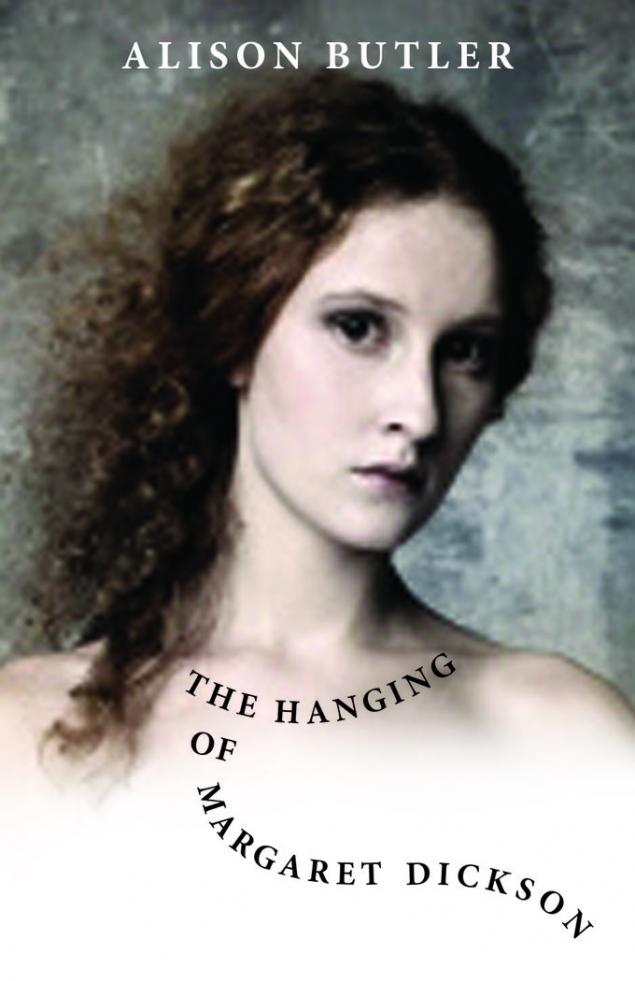
Maggie Dickson became pregnant while waiting for her sailor husband to return, which was not a very rosy situation for a woman in 1724. She, of course, tried to hide the pregnancy (concealment was punishable by law), but she failed and was sentenced to execution by hanging.
After the execution, her family managed to take the body, without giving it to the butchers of medicine for dissection. As they escorted Maggie on her final journey to the cemetery, they heard a knock from inside the closed coffin. Maggie's resurrection was perceived as nothing less than the will of God.
Thus, she became a celebrity and acquired the nickname "Half-Hanged Maggie." She lived for another 40 years, and to this day, near the place of her execution, there is a tavern named in her honor.
4. Inetta de Balsham
For harboring thieves, she was sentenced to death in August 1264. Sources say that she was hanged at 9 a.m. on Monday, August 16, and left hanging until the next morning.
When the rope was cut, it turned out that she was still alive. Her trachea was deformed in such a way that the knot could not completely restrict air access. Inetta's miraculous rescue attracted the attention of King Henry III, who bestowed her with royal mercy.

5. Romell Broom
Lethal injection was created as a humane, fast, painless, and guaranteed means of taking a person's life. However, Romell Broom proved that this is not quite the case.
In 2009, Romell was convicted of kidnapping, rape, murder, and became the first criminal to survive execution by lethal injection.
The executors spent two hours trying to find a suitable vein for the drip. After pricking Broom's entire body, they never found a vein, which made the effect of the drug not guaranteed. In the end, he was sent back to his cell with a stay of execution for a week.
During this time, Romell's lawyers began to argue that their client had experienced cruel and unusual treatment during the failed execution. They managed to initiate a major movement aimed at changing the US law on the use of lethal injection, and Romell in this case is the main witness who cannot be executed. Broom is still alive and awaiting amnesty.

6. Evan MacDonald
In 1752, Evan MacDonald quarreled with Robert Parker and cut his throat, which caused the latter to die. MacDonald was convicted of murder, sentenced to be hanged on the city wall in the English city of Newcastle.
His "corpse" was sent to the same place as the bodies of the other tortured criminals - to the anatomical theater of the local medical institution. In those days, doctors almost deliberately hunted for such corpses, as they were the only practical "aids" by which one could legally study human anatomy.
Perhaps that is why MacDonald was not destined to survive: when the entering surgeon saw the bewildered convict sitting on the operating table, he, without hesitation, grabbed a surgical hammer and finished the executioner's work, cleaving the criminal's skull.
They say that God's punishment befell this doctor when his own horse fatally wounded him in the head with its hoof.